
In this storyOpen index
Roald Amundsen: He Conquered the South Pole and Disappeared Trying to Save His Rival
He had navigated the Northwest Passage, reached the South Pole, and flown across the Arctic Ocean. When a former companion turned rival became stranded on the ice, Roald Amundsen returned one final time.
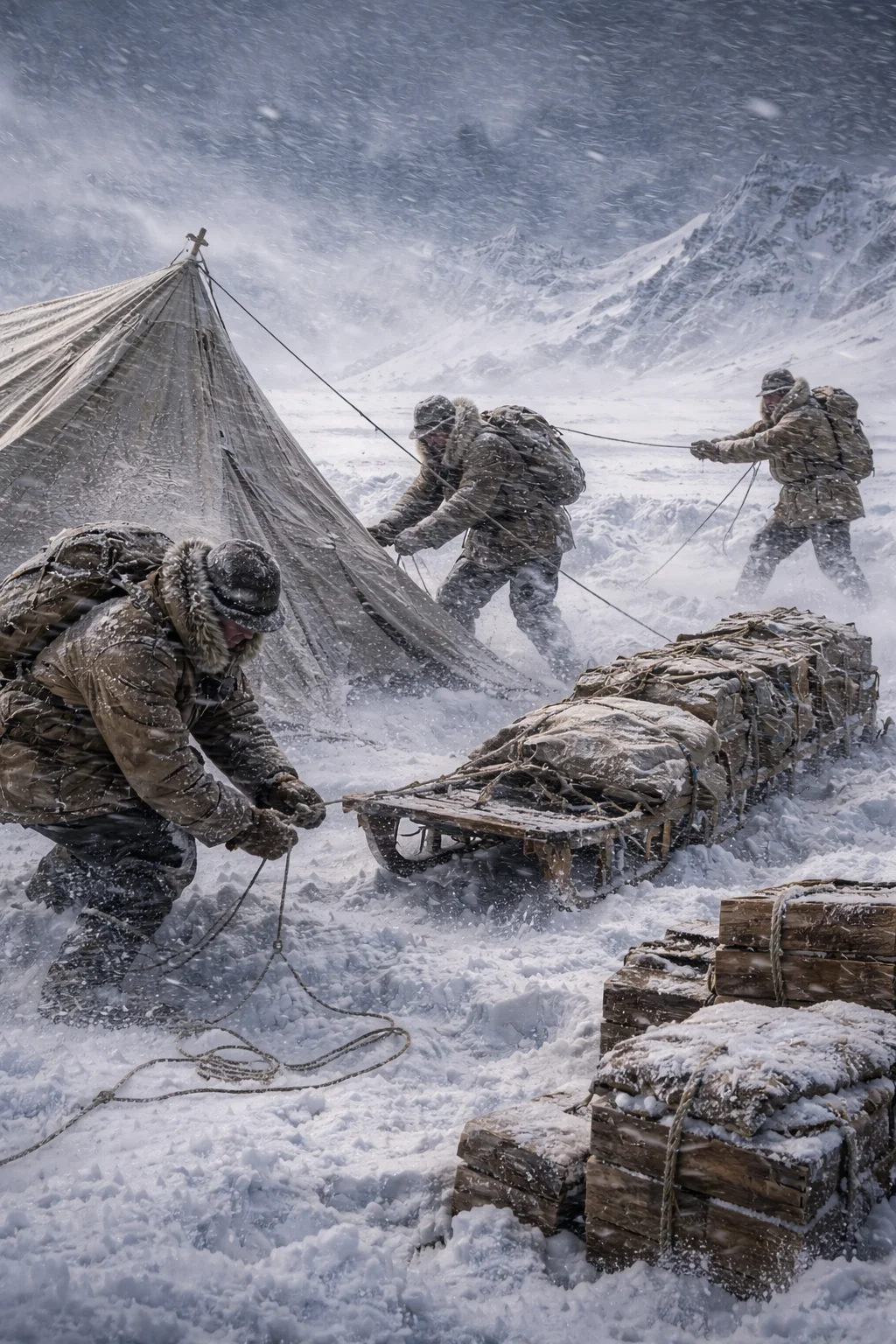
He had navigated the Northwest Passage, reached the South Pole, and flown across the Arctic Ocean. He then announced that he was finished with major expeditions. But when a former companion—now a bitter rival—became stranded on the ice, Roald Amundsen returned one final time.
On June 18, 1928, he departed Tromsø, Norway, aboard a French seaplane to join the search for Italian explorer Umberto Nobile. Several hours later, radio communication ceased. Amundsen and the other five men aboard disappeared over the Barents Sea.
Their bodies were never found, and the exact location where the aircraft went down remains unknown.
The man who had survived almost every danger the ice could create disappeared while trying to rescue someone with whom he could barely reconcile.
Roald Amundsen on video
Discover this story on our YouTube channel.
A life told through places and turning points
The young man who did not want to become a doctor
Roald Engelbregt Gravning Amundsen was born near Sarpsborg, Norway, on July 16, 1872, into a family connected to shipping and maritime commerce.
As a teenager, he became fascinated by polar expeditions, particularly the fate of John Franklin, whose ships and crews had disappeared while searching for the Northwest Passage. He also admired Fridtjof Nansen, who had crossed Greenland on skis.
His mother wanted him to study medicine and remain safely away from the sea. Amundsen entered university, but he devoted more attention to physical training and exploration narratives than to medical books. When she died in 1893, he abandoned his studies and became a sailor.
He did not merely want to visit the polar regions. He intended to prepare himself to master them.
He learned navigation, obtained his mate’s and captain’s qualifications, and subjected his body to long periods of skiing, cold, and deprivation. His obsession was not based on courage alone. He believed that every expedition had to be planned in detail and that survival depended on learning from people who understood the polar environment.
His first winter trapped in the ice
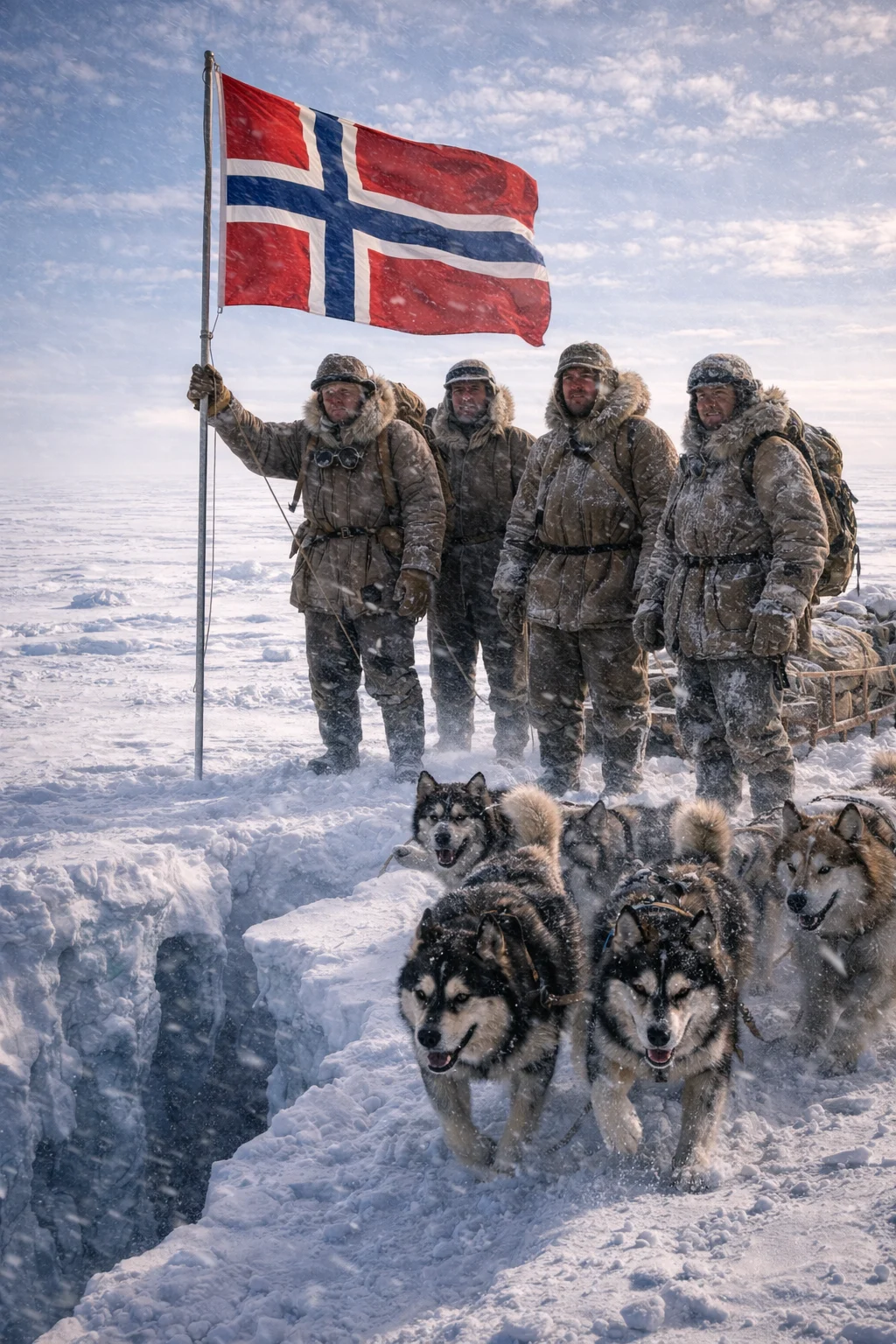
Between 1897 and 1899, Amundsen served as first mate on the Belgian Antarctic Expedition aboard the Belgica. The ship became trapped in the ice, and its crew became the first to spend an unplanned full winter in Antarctic waters.
Darkness, isolation, and an inadequate diet damaged the men’s physical and psychological health. American physician Frederick Cook encouraged them to eat fresh seal and penguin meat to combat scurvy. Amundsen carefully observed the crisis.
He learned that enthusiasm could not replace proper nutrition, clothing, discipline, and practical knowledge. The experience influenced every expedition he later commanded.
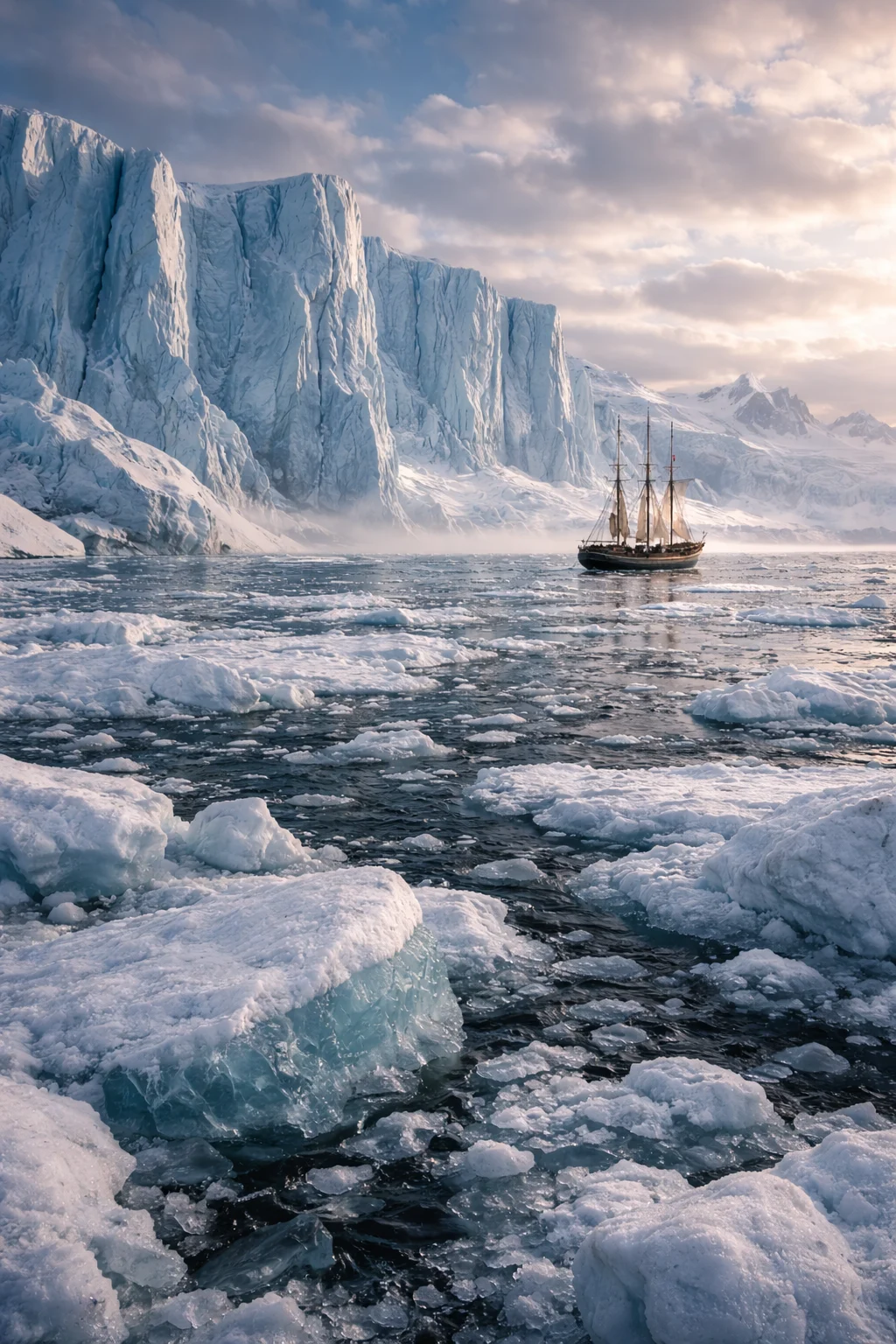
His first major objective was the Northwest Passage—the sea route linking the Atlantic and Pacific through the Canadian Arctic Archipelago.
In 1903, he departed aboard the small vessel Gjøa with six other men. He deliberately selected a small ship and crew. A compact party required fewer provisions and could respond more quickly to changing conditions.
The expedition spent two winters near what is now Gjoa Haven. There, Amundsen interacted with the Netsilik Inuit and learned essential techniques: traveling with sled dogs, wearing loose-fitting fur clothing, constructing shelters, and adapting movement to ice and weather.
This was not merely an interesting cultural encounter. The knowledge became a decisive advantage in Antarctica.
In 1906, the Gjøa reached Nome, Alaska. Amundsen had completed the first navigation of the Northwest Passage while also gathering important observations concerning the north magnetic pole (Fram Museum, n.d.).
The secret plan for the South
Amundsen’s next ambition was the North Pole. He obtained the use of Nansen’s celebrated ship, the Fram, and proposed allowing it to drift with the ice across the Arctic Ocean.
In 1909, however, Frederick Cook and Robert Peary separately claimed to have reached the North Pole. Both claims would later be seriously disputed, but at the time they destroyed much of the public and financial interest in Amundsen’s project.
He changed his destination.
Amundsen decided to attempt the South Pole but concealed the plan from sponsors, officials, and even much of his crew. When the Fram reached Madeira in 1910, he assembled his men and announced that they were sailing toward Antarctica. He also sent a telegram to Robert Falcon Scott, who was preparing a British expedition of his own.
His secrecy was effective but controversial. Amundsen knew that revealing his intentions too early could cost him the ship, his funding, and his chance to compete.
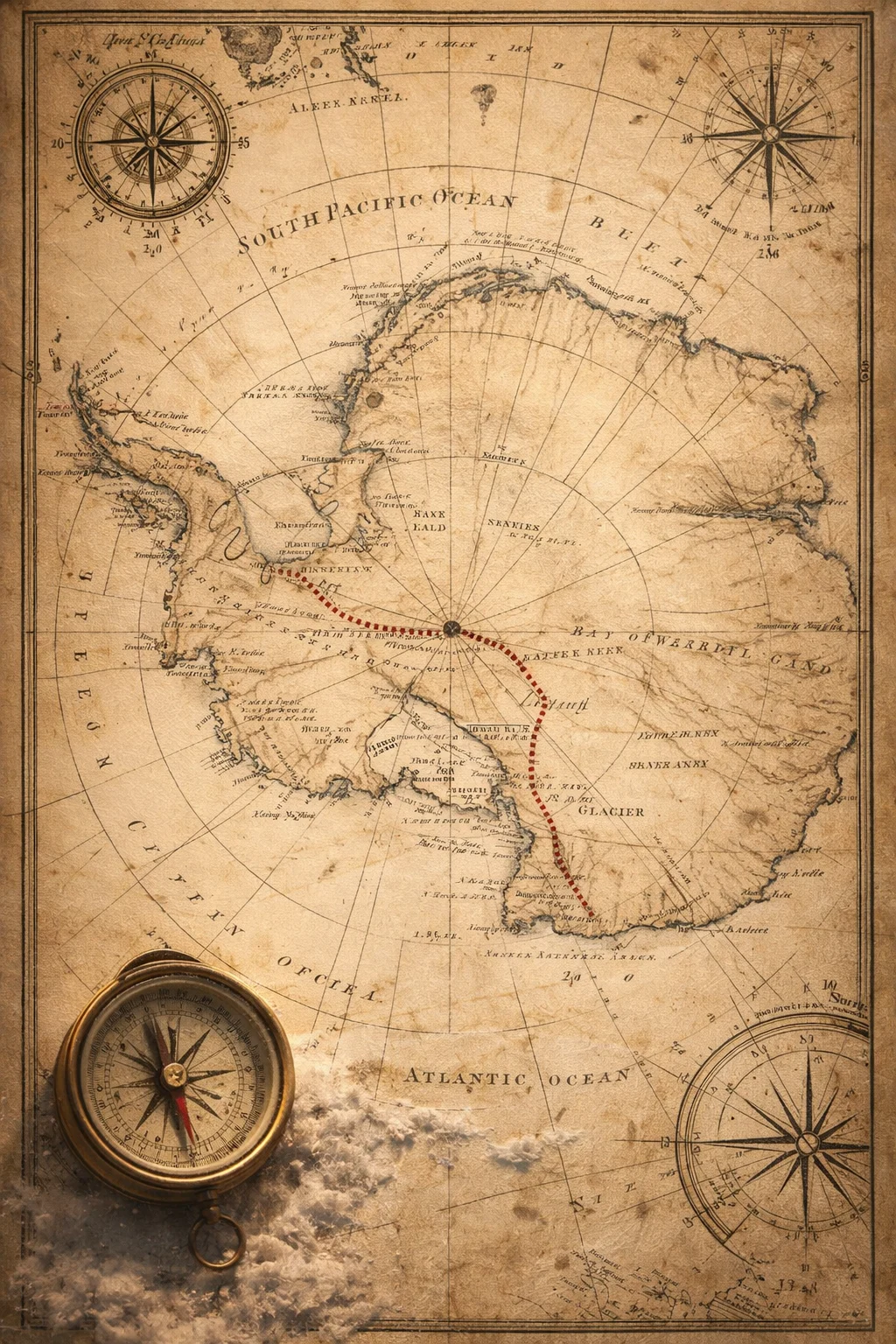
He established his base, Framheim, at the Bay of Whales, closer to the South Pole than Scott’s camp. For months, he placed depots of food and fuel along the intended route. He marked them with lines of flags extending to either side, reducing the danger of missing them on the return journey.
The precision that reached the South Pole
Amundsen launched an initial attempt in September 1911, too early in the Antarctic season. Extreme temperatures forced the party to retreat. The withdrawal produced a confrontation with experienced explorer Hjalmar Johansen, who openly criticized his leader’s decisions. Amundsen excluded him from the final polar team.
The episode reveals a less heroic side of his leadership. He was methodical and highly capable, but he was also authoritarian, sensitive to criticism, and willing to marginalize those who challenged him.
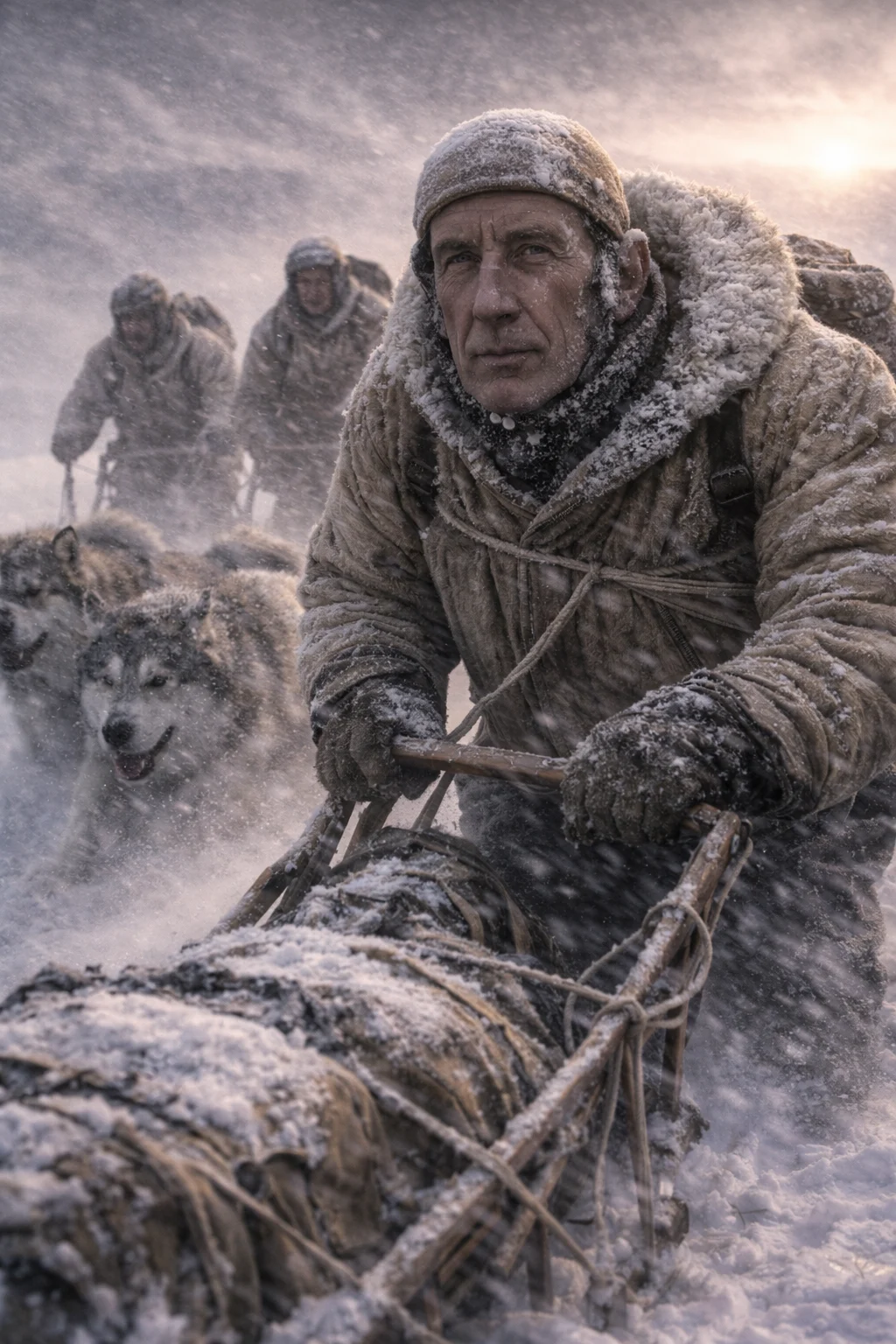
The second attempt began on October 19, 1911. The final team consisted of Amundsen, Olav Bjaaland, Helmer Hanssen, Sverre Hassel, and Oscar Wisting.
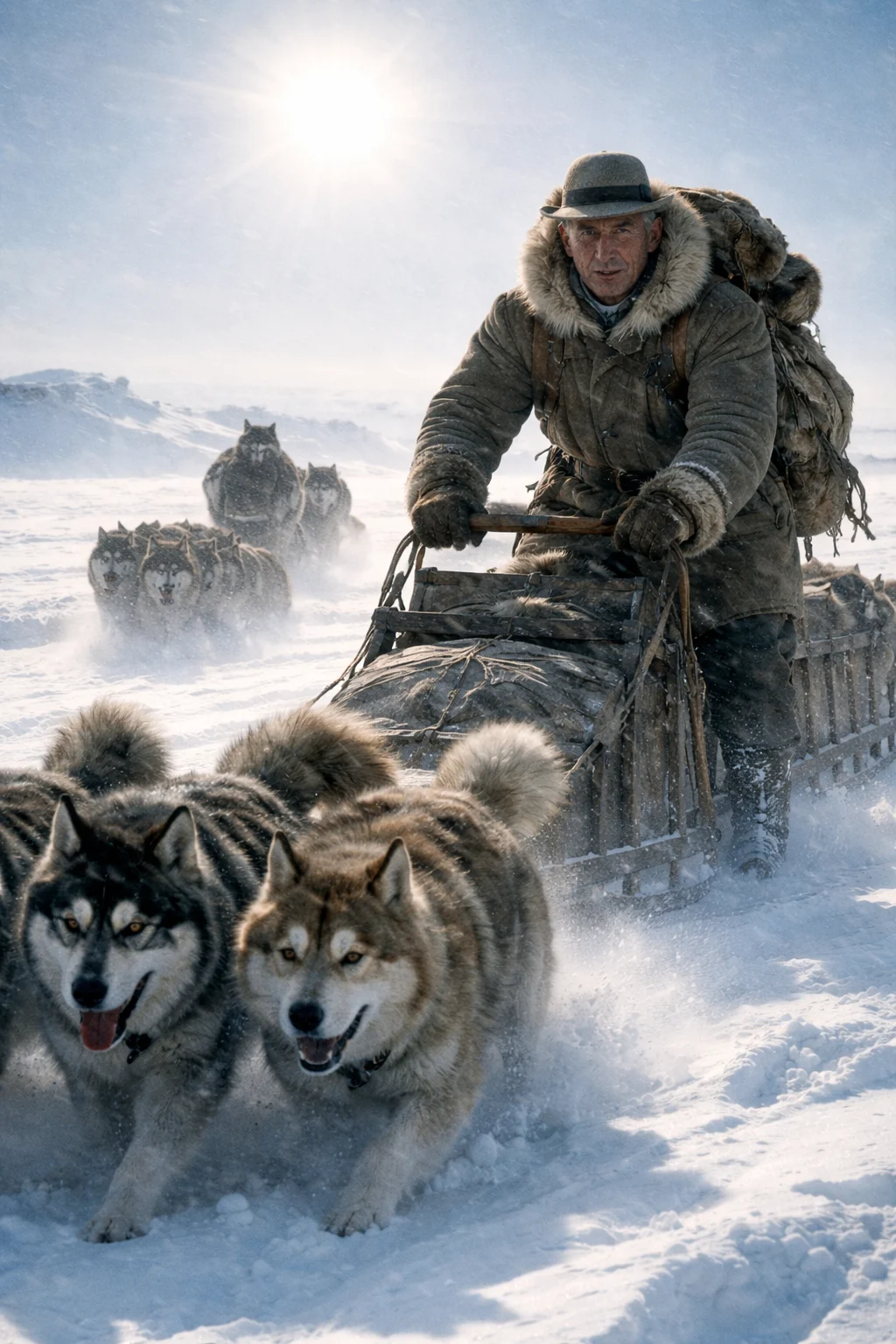
They traveled on skis with dog-drawn sledges. The animals were not simply transportation. The plan included killing some during the journey to feed the men and the remaining dogs. The decision appears brutal from a modern perspective, but it formed part of a calculated system for reducing the amount of food carried.
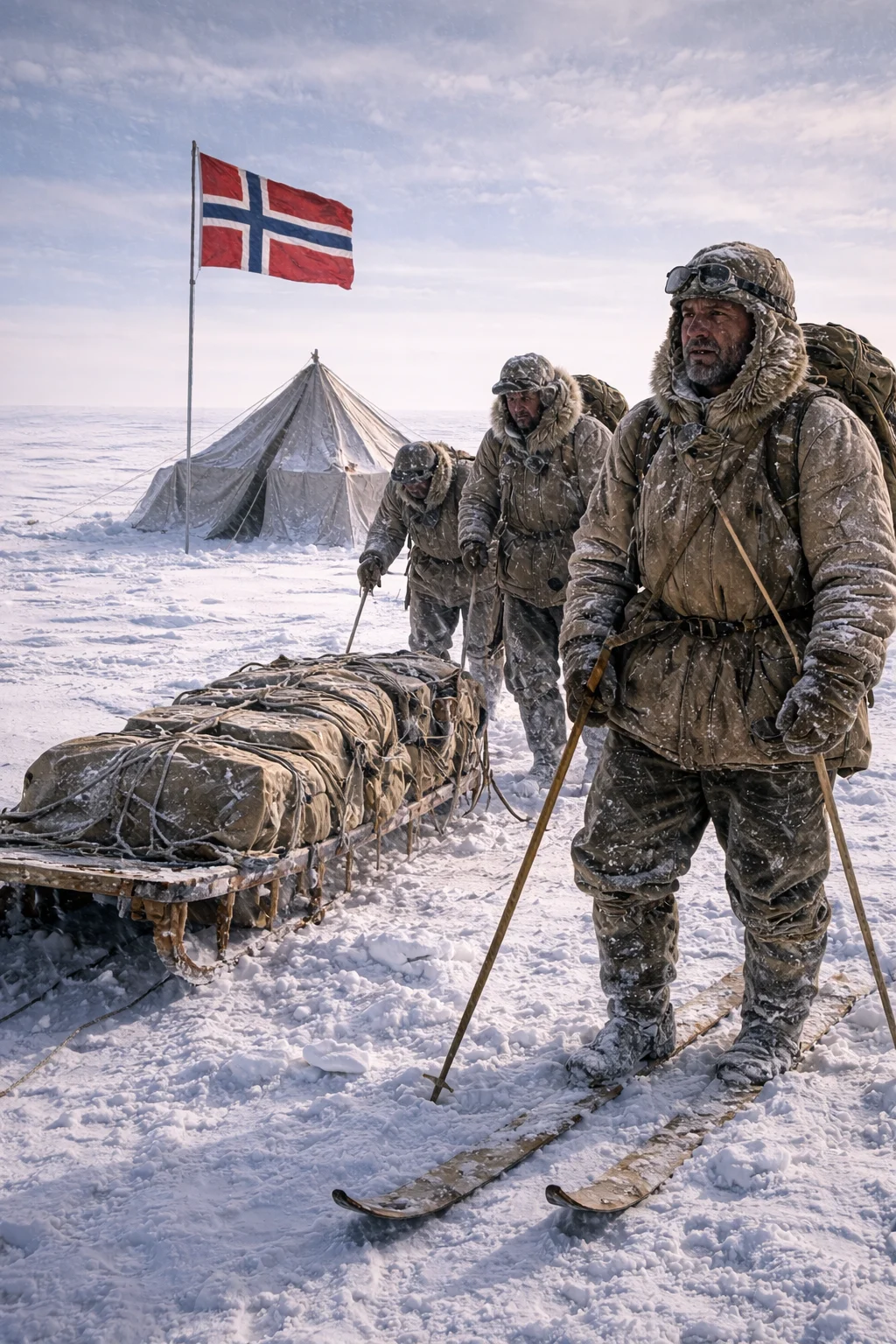
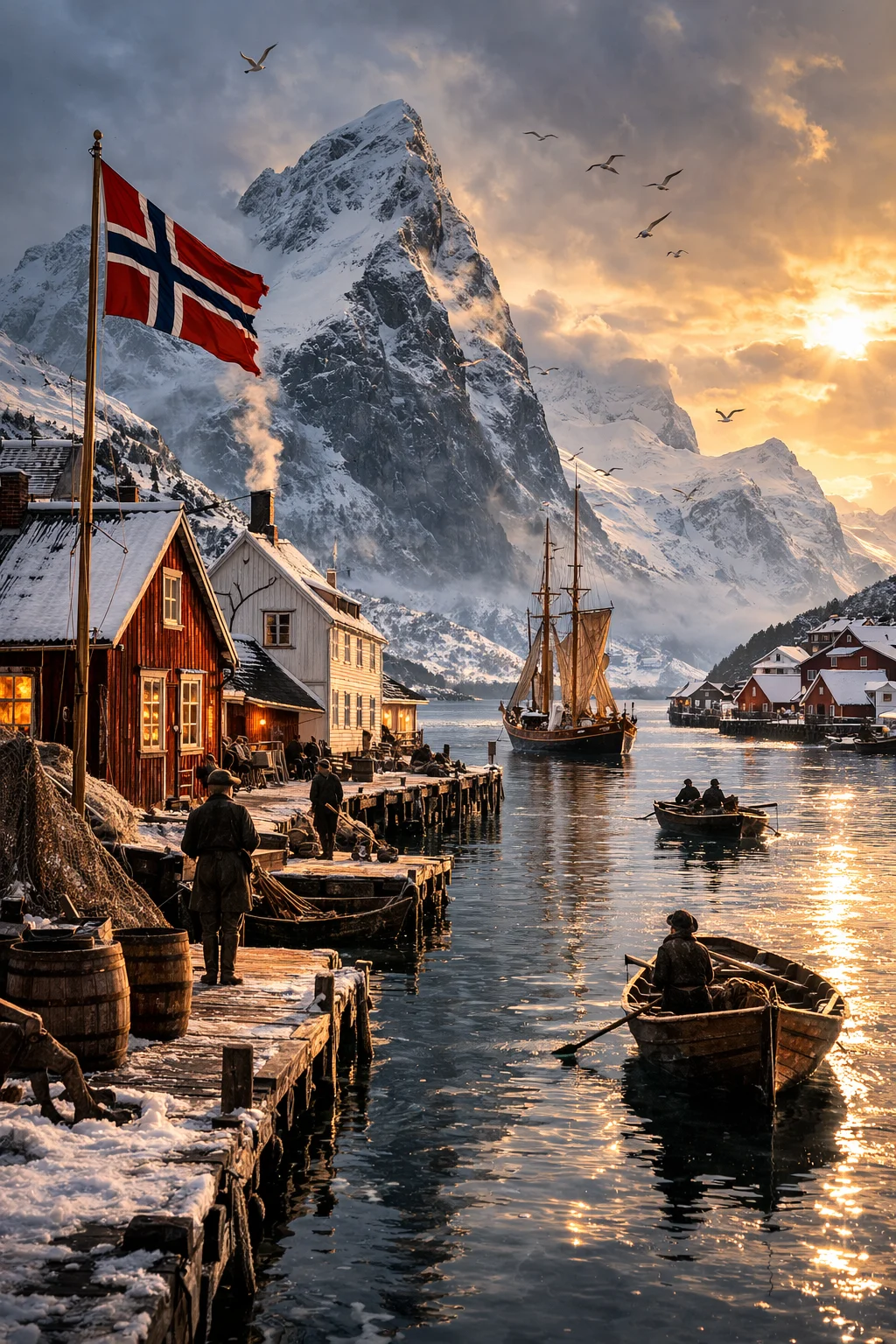
On December 14, 1911, the five men reached the South Pole. They erected a tent, raised the Norwegian flag, and left a letter for Scott in case they failed to return.
The expedition arrived back at Framheim on January 25, 1912. It had covered approximately 3,000 kilometers in ninety-nine days without losing a member of the polar party.
Scott reached the Pole thirty-four days later and found Amundsen’s tent. He and his four companions died on their return journey.
For years, parts of British culture portrayed Scott as the tragic hero and Amundsen as the cold professional. Yet the Norwegian’s success did not result from facing less danger. It came from exceptional preparation, expert use of dogs and skis, and a willingness to learn from Arctic communities.
A North Pole seen from the air
Reaching the South Pole did not end Amundsen’s obsession with the Arctic. Between 1918 and 1921, he navigated the Northeast Passage aboard the Maud, although he failed to complete the transpolar drift he had envisioned.
He then began viewing aviation as the future of polar exploration. In 1925, he attempted to approach the North Pole with two flying boats. One became unusable, leaving the six explorers stranded on the ice for several weeks.
To escape, they removed tons of ice and manually constructed an improvised runway. They eventually managed to take off in a single aircraft and return to Svalbard. Their survival was one of Amundsen’s greatest achievements, although it was overshadowed by the events of the following year.
In 1926, Amundsen, American financier Lincoln Ellsworth, and Italian engineer Umberto Nobile organized a crossing of the Arctic aboard the airship Norge. Nobile had designed the craft and served as its pilot.
On May 12, they passed over the North Pole and continued toward Alaska. Because the earlier claims of Cook, Peary, and Richard Byrd remain disputed, the Norge flight is generally regarded as the first undisputed, verified arrival at the North Pole and the first aerial crossing of the Arctic Ocean.
Success, however, destroyed the relationship between Amundsen and Nobile. They publicly argued over leadership and credit. Amundsen regarded Nobile as the airship’s contracted captain; Nobile viewed himself as one of the expedition’s central leaders. Their disagreement became bitter and personal.
The call for help
In 1928, Nobile returned to the Arctic commanding the airship Italia. On May 25, after reaching the North Pole, the aircraft crashed onto the ice northeast of Svalbard. Several crew members fell onto the frozen surface, while others were carried away inside the damaged airship, which disappeared.
The survivors established a camp and painted their tent red so that it could be seen from the air. An international rescue operation began.
When Amundsen learned what had happened, he put aside his dispute with Nobile and volunteered to participate. He did not receive command of the Norwegian operation as he had hoped, but he accepted a place aboard the French flying boat Latham 47.
On June 18, it departed Tromsø carrying Amundsen, pilot René Guilbaud, Norwegian aviator Leif Dietrichson, and three other French crew members. Radio contact continued for several hours. Then came silence.
Searchers later recovered a float and other fragments attributed to the aircraft. The main wreckage was never located, and none of the six men was found. It remains unknown whether they died during the impact or survived for some time on the sea or ice.
Nobile was rescued five days after Amundsen disappeared. The remaining survivors from his group were later evacuated by the Soviet icebreaker Krasin.
The man who always continued
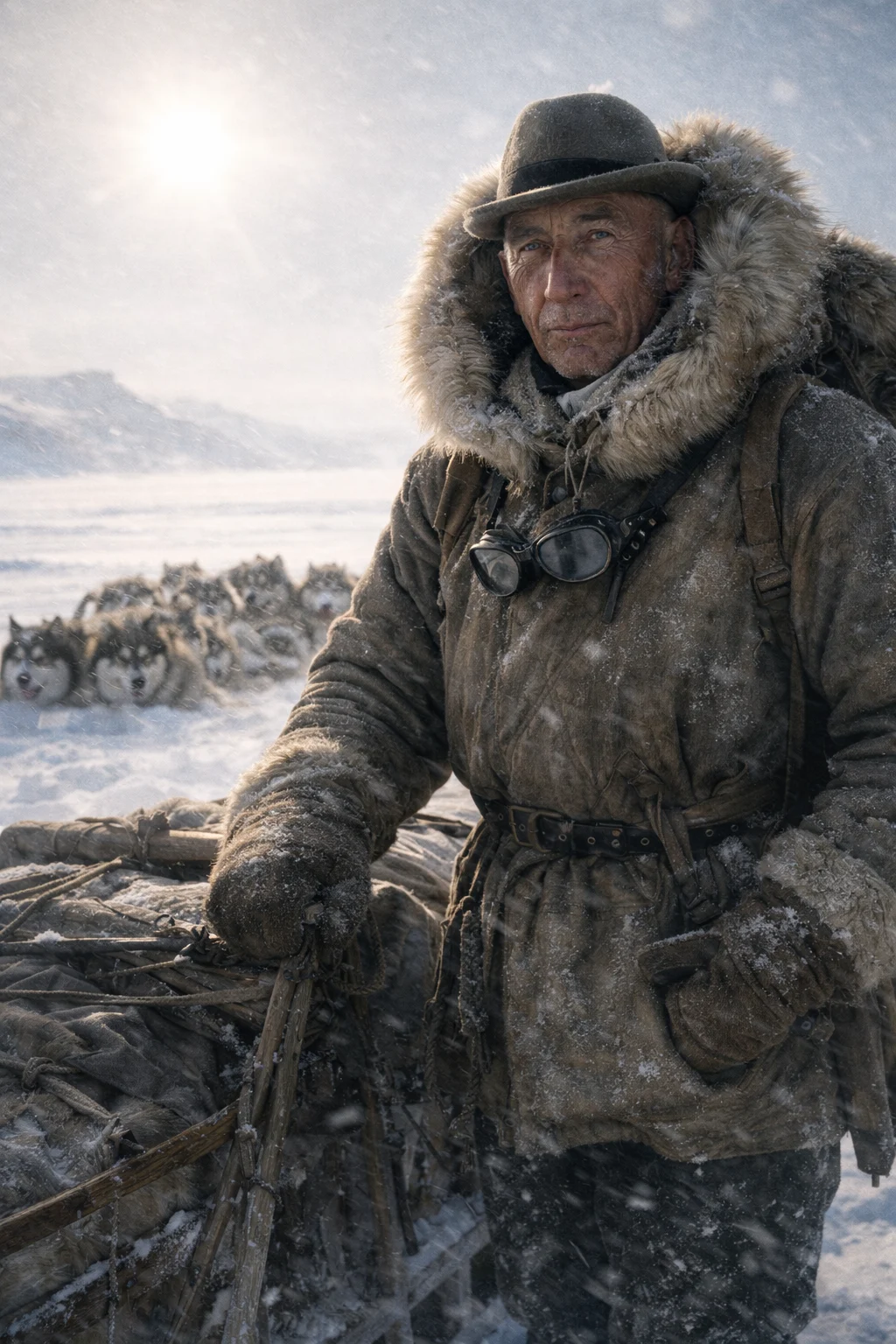
Roald Amundsen was not an adventurer who depended only on luck. His greatest skill was reducing chance through preparation, observation, and adaptation. He understood that in the polar regions a poorly made seam, a misplaced depot, or a decision taken several hours too late could kill an entire expedition.
He was also a difficult man. He concealed plans, damaged relationships, treated some companions harshly, and transformed exploration into a personal competition. Yet when Nobile became stranded, hostility was not enough to keep him on land.
Amundsen had promised to retire. He had navigated both great Arctic passages, reached the South Pole, and crossed the North Pole by air. He did not require another victory.
His final journey was not an attempt to conquer a place. It was an attempt to find people.
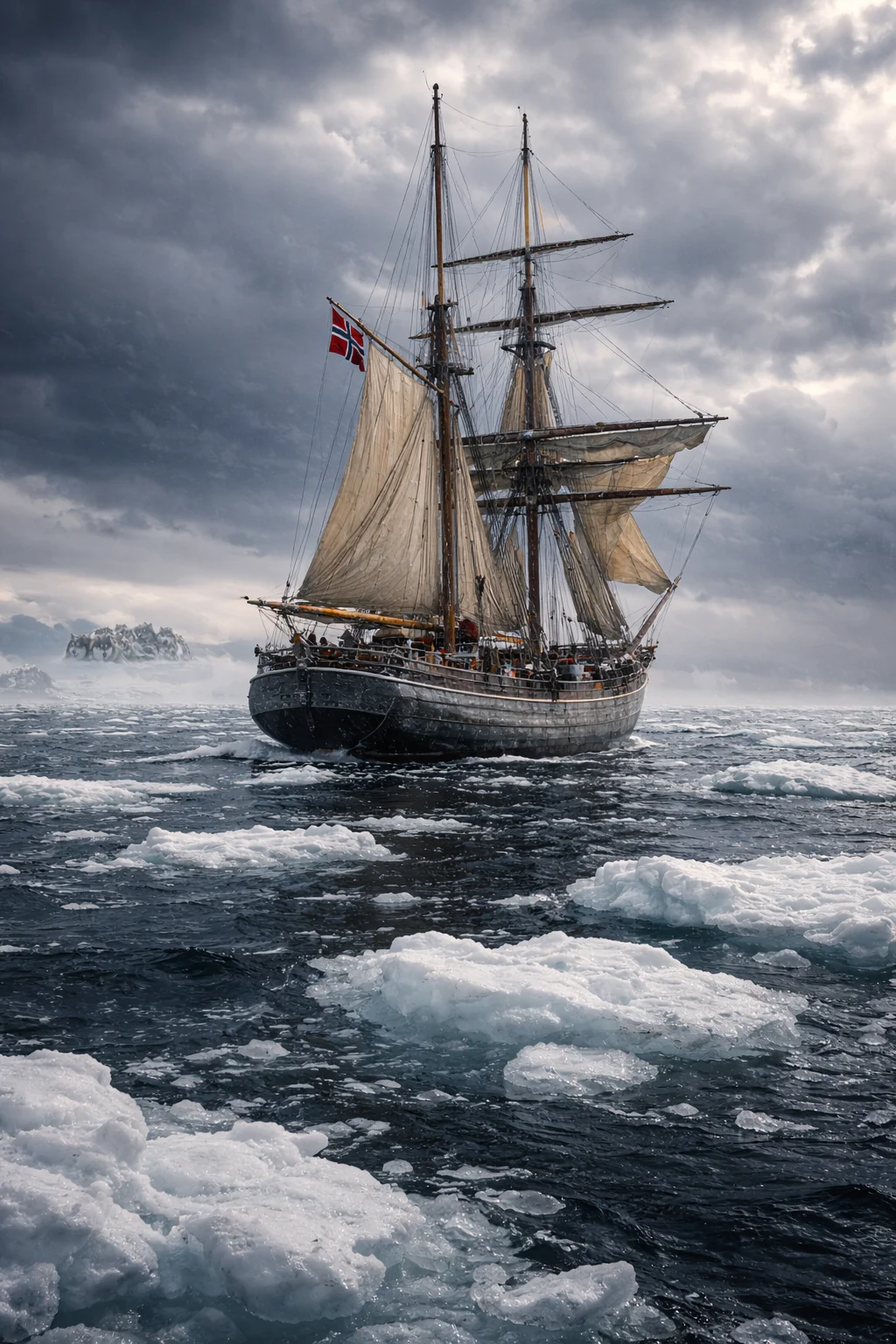
That may be why his disappearance remains so powerful: the man who devoted his life to arriving first finally flew toward the ice without any certainty of returning—not to plant a flag, but to rescue a rival.
References
- Amundsen, R. (1912). The South Pole: An account of the Norwegian Antarctic Expedition in the “Fram,” 1910–1912. John Murray.
- Amundsen, R. (1927). My life as an explorer. Doubleday, Page & Company.
- Bown, S. R. (2012). The last Viking: The life of Roald Amundsen. Da Capo Press.
- Fram Museum. (n.d.). Roald Amundsen.
- Huntford, R. (1999). The last place on Earth: Scott and Amundsen’s race to the South Pole. Modern Library.
- Norwegian Polar Institute. (2011). Roald Amundsen.
- Norwegian Polar Institute. (n.d.). Ny-Ålesund: History of polar exploration.
- Polarhistorie.no. (n.d.). Umberto Nobile: Airship expert and polar explorer.
More from this collection
Antoine de Saint-Exupéry: The Writer Who Crossed Deserts, Wars, and Skies Until He Disappeared Into His Own Legend
Read story →
Amelia Earhart: The Woman Who Tried to Measure the World From the Air and Vanished at Her Final Frontier
Read story →