
In this storyOpen index
Gérard de Nerval: The Writer Who Could Not Escape His Own Mind
Goethe, Romanticism, and memory: a life of travel, writing, and the exploration of dreams.
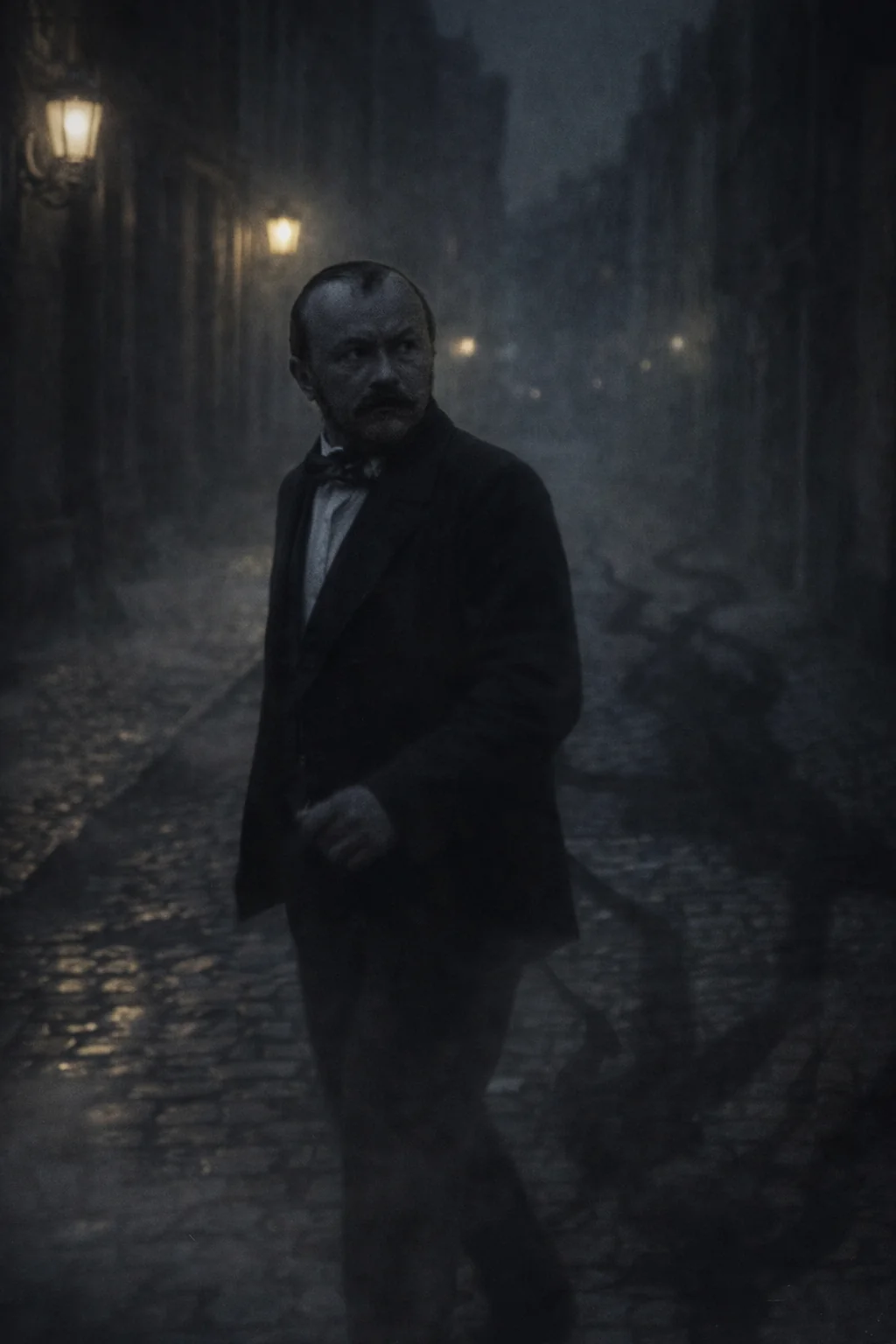
Early one morning in January 1855, Paris found one of its strangest writers dead in a street so narrow and dark that it would later disappear beneath the city’s reconstruction. In Aurélia, he had attempted to explore the relationship between dreams and life.
The man was Gérard de Nerval. He had translated Goethe when he was barely twenty, traveled through Europe and the Middle East, participated in the Romantic revolution, and written some of the nineteenth century’s most enigmatic texts. He had also spent time in psychiatric institutions, lost nearly all his money, and lived for years between literary creation and episodes of severe mental disturbance.
His tragedy was not merely that he could not escape himself. It was that he turned that impossibility into a new kind of literature.
Gérard de Nerval
Memory, journeys, and dreams

Carnet du Caire · 1843
The Bibliothèque nationale de France preserves this travel notebook: 25 leaves containing reading notes, impressions, and expenses. It offers a glimpse of the daily work behind his writing. The institutional record explains its organization and links to the digitized manuscript. This card’s image is an artistic recreation, not a reproduction of the notebook.
The Child Who Lost His Mother
Gérard Labrunie was born in Paris on May 22, 1808. His father, Étienne Labrunie, was a military physician who accompanied Napoleon’s army during its European campaigns. His mother, Marie-Antoinette Laurent, traveled with him and died in Silesia in 1810, when Gérard was only about two years old.
The child was raised primarily by a maternal great-uncle in the Valois region north of Paris. Its forests, old abbeys, castles, and popular celebrations remained embedded in his memory. Decades later, that territory would reappear transformed in Sylvie, where actual geography merges with nostalgia, lost love, and the impossibility of returning to the past.
His mother’s absence became one of the central voids in his imagination. Nerval developed a body of work filled with female figures who seem to exist simultaneously as lovers, mothers, saints, actresses, and mythological beings. His entire literature cannot be reduced to a childhood wound, but that early loss helps explain why memory and the search for a vanished presence occupy such a profound place in his writing.
After returning to Paris for his education, he attended the Collège Charlemagne. There he met Théophile Gautier, who became one of his most loyal friends and, after his death, one of the principal guardians of his memory.
The Young Man Who Translated Goethe
Gérard displayed an exceptional gift for literature and languages at an early age. In 1828, he published a French translation of Goethe’s Faust. He was still a very young writer.
The version was not entirely literal and included poetic liberties, but it conveyed the play’s atmosphere with a musical quality that impressed many French readers. Goethe became familiar with the translation and appreciated its ability to communicate the spirit of the drama. Decades later, composer Hector Berlioz incorporated passages from Nerval’s version into La Damnation de Faust.
This was one of Nerval’s less remembered but most important achievements. He helped introduce German literature to French Romanticism at a time when foreign works depended heavily upon translators capable of recreating, rather than merely transferring, a text.
He also translated poems by Heinrich Heine and became interested in German ballads, legends, and traditions. For him, translation did not mean remaining outside a text. It meant entering another imagination and allowing it to alter his own.
The Romantic Revolution
In February 1830, Nerval joined Gautier and other young writers in the famous “battle of Hernani.” The premiere of Victor Hugo’s play brought defenders of classical theater into conflict with a generation demanding formal freedom, mixed genres, and new subjects.
It was not a battle in the military sense, although the theater witnessed shouting, insults, and interruptions. The event became the public symbol of an aesthetic revolution. Nerval belonged to the circle of young Romantics who transformed Parisian literary life through newspapers, salons, theaters, and publishing ventures.
He also participated in the political atmosphere surrounding the July Revolution of 1830. His real revolution, however, would take place in the imagination. Unlike Hugo, who constructed a monumental public identity, Nerval seemed inclined to disappear behind pen names, collaborations, and scattered publications. His work ranged across translation, journalism, and literary projects.
The Invention of Gérard de Nerval
His actual name was Gérard Labrunie. During his early career, he signed his work with variations of his name and used several pseudonyms. He eventually adopted “Gérard de Nerval,” probably inspired by family land in the Valois associated with the name Nerval or Clos de Nerval.
The word “de” could suggest aristocratic origins, an attractive quality within the medievalizing sensibility of certain Romantics, but the pseudonym ultimately meant much more. It allowed him to construct a literary identity separate from the bourgeois life his father would have preferred for him.
That separation was never complete. Labrunie and Nerval coexisted as the man who had to pay debts and the writer who pursued hidden correspondences among dreams, religions, and memories.
In 1834, he received an inheritance from his maternal grandfather. Instead of securing his future, he invested a substantial part of it in Le Monde dramatique, an expensive and ambitious theatrical journal. The project failed and consumed much of his money. The decision reveals both his financial recklessness and his desire to live entirely within the artistic world (Larousse, n.d.).

Jenny Colon and the Woman Transformed into Myth
During the 1830s, Nerval fell in love with actress and singer Jenny Colon. The precise nature of their relationship remains disputed. Some biographies portray her as his great unrequited love, while others warn that the writer and his early commentators transformed a possibly limited connection into a far more absolute romantic story.
Jenny married another man in 1838 and died in 1842. Within Nerval’s imagination, her figure appears to merge with several actual and mythical women. She seems to stand indirectly behind Aurélia, Adrienne, and other female presences that connect love, loss, and transcendence.
The danger lies in treating every character as a secret portrait of Jenny. Nerval worked through associations, doublings, and altered memories. His literary women are not simple copies of one person but composite figures through whom he attempted to connect his biography with myths from different cultures.
The First Major Crisis
In February 1841, Nerval experienced a severe mental crisis. He received treatment in specialized institutions, including the clinic of Dr. Esprit Blanche, who was known for treating writers and artists. Contemporary records use terms such as “madness,” “delirium,” and “alienation,” but they do not permit a secure modern psychiatric diagnosis.
This distinction matters. Nerval has retrospectively been described as having schizophrenia, bipolar disorder, and different forms of psychosis. Such possibilities may help frame questions, but none should be presented as a proven diagnosis. What can be verified is that he experienced episodes of exaltation, disorientation, delusional beliefs, and altered perception, separated by periods in which he wrote, traveled, and worked with remarkable lucidity.
Hospitalization also threatened his public standing. In the nineteenth century, being declared mentally ill could destroy a person’s social credibility. Nerval responded through literature. He did not simply deny his experiences; he sought to transform them into a form of knowledge.
Traveling to Prove That He Was Still Himself
Between late 1842 and 1843, Nerval traveled through Egypt, Lebanon, and Constantinople. The journey produced articles and notes eventually incorporated into Voyage en Orient, published in 1851. Among its Nerval holdings, the National Library of France preserves his Cairo notebook (Arcemisbéhère, n.d.).
The book combines observation, autobiography, traditional stories, history, fantasy, and literary reconstruction. It cannot be read as an entirely reliable modern report. Nerval altered itineraries, incorporated material from other sources, and converted physical travel into spiritual exploration.
He also shared the European Orientalist perspective of his period, which frequently represented the East as mysterious, sensual, and suspended outside history. Nevertheless, his narrative displays curiosity about religions, stories, and cultural forms that he did not consider inferior, but parts of a lost universal tradition.
The journey served a personal purpose as well. After being publicly identified as mentally ill, traveling, writing, and sending reports demonstrated that he could still work and orient himself in the world. Travel was a form of knowledge, but also a defense of his identity.
Sylvie: Returning Is Impossible
In 1853, Nerval published Sylvie, later included in Les Filles du feu. Its narrator, disillusioned with a Parisian actress, remembers two women from his youth in the Valois: the earthly Sylvie and the nearly supernatural Adrienne.
Driven by nostalgia, he attempts to return to the place of his childhood. But the past no longer exists as he remembers it. People have changed, opportunities have been lost, and memory has beautified what life cannot restore.
The story appears simple, but its structure continually rearranges time. One recollection leads into another, the present becomes contaminated by the past, and the narrator can no longer determine whether he loves an actual woman or an image constructed by memory. Marcel Proust deeply admired this mechanism, and later writers recognized Nerval as a precursor of modern explorations of consciousness.
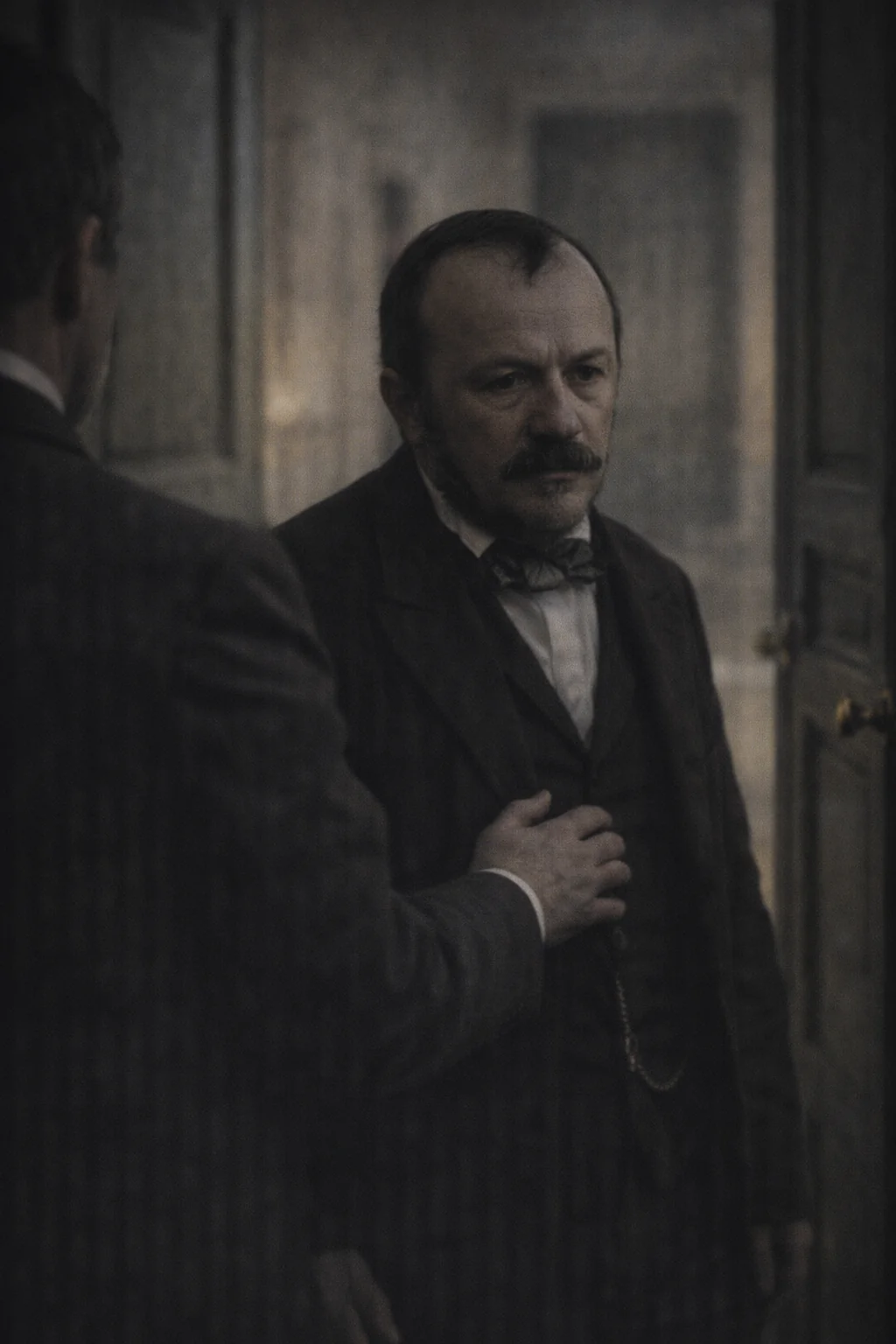
The Chimeras and Encoded Language
In 1854, Nerval published Les Filles du feu, accompanied by a sequence of sonnets known as Les Chimères. These included “El Desdichado,” “Myrtho,” “Horus,” “Anteros,” and “Artemis.”
The poems combine Christian, classical, Egyptian, alchemical, and esoteric references. Their difficulty does not arise simply because Nerval was ill. They were constructed with great formal precision and compress multiple symbolic systems into a few lines.
In “El Desdichado,” the speaker presents himself through contradictory identities: a prince, a widower, an inconsolable man, a shadowed figure, and the bearer of several mythical genealogies. No single key resolves the poem. That instability is precisely its power: identity appears fragmented and can only be expressed through masks.
The twentieth-century Surrealists recognized Nerval as a predecessor. André Breton and other writers admired the way he allowed dreams, association, and irrationality to enter artistic creation without completely surrendering conscious control.

Aurélia: Writing from Inside Delirium
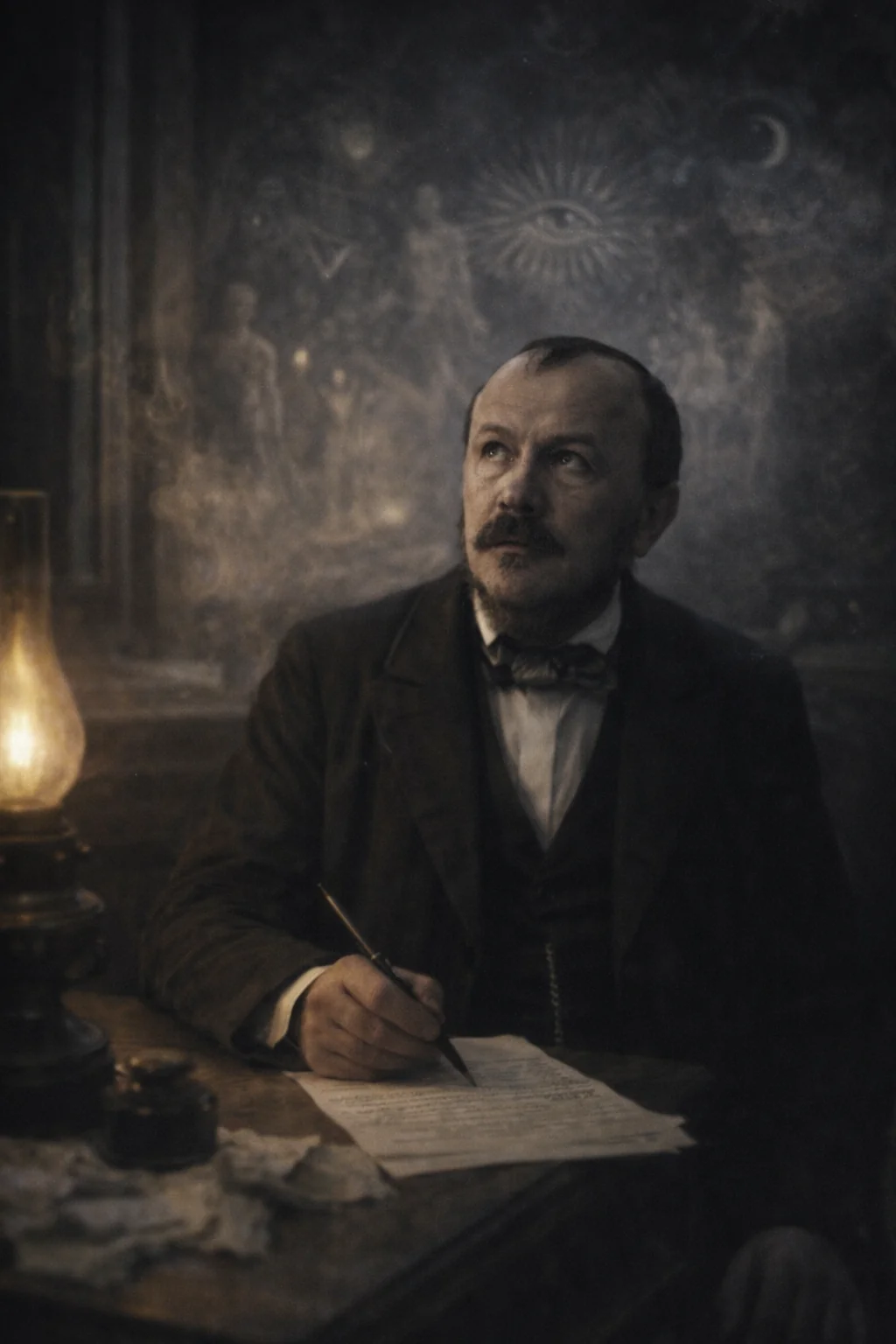
Nerval’s most daring work was Aurélia ou le Rêve et la Vie. It appeared in two parts in 1855; the second was published after his death. Its celebrated opening declares that dreams constitute a second life.
The narrator describes visions, coincidences, religious transformations, and the sensation that the universe is sending him personal messages. Yet Aurélia is not a disorderly transcription of a crisis. Nerval reorganized his experiences, created a narrative sequence, and examined his own beliefs from a degree of distance.
This is where its modernity lies. Instead of describing mental illness exclusively from the physician’s or observer’s perspective, he attempted to represent the internal logic of the person experiencing it. Readers enter a world in which an ordinary sign can acquire cosmic meaning and the boundary between dream and reality becomes unstable.
Writing did not cure him. It did, however, allow him to transform an experience that could have isolated him completely into a work capable of reaching other people.

The Lobster and the Writer’s Legend
A frequently repeated anecdote depicts Nerval walking a lobster through Paris. Its many versions have made that walk an emblem of Romantic eccentricity. The popularity of a story should be distinguished from certainty about each of its details.
The anecdote should not be used as evidence of a medical diagnosis. Nor should it eclipse his work as a translator of Goethe, journalist, and reader of old French songs. The eccentric image has often obscured the discipline of his work.
The Final Night
During his last years, Nerval endured further hospitalizations and financial hardship. Still, he continued writing and considered another journey to the Middle East (Arcemisbéhère, n.d.).
He was found dead in Paris on January 26, 1855, in the rue de la Vieille-Lanterne. His death is regarded as suicide. Speculation about his final minutes is not necessary to acknowledge the seriousness of his suffering.
The second part of Aurélia appeared after his death. His legacy extends beyond that ending to the precision with which he transformed memories, reading, and dreams into literature.
The Writer Who Entered the Dream
Gérard de Nerval should not be remembered as a man automatically destroyed by madness, as though his writing were merely a symptom. Nor should his suffering be romanticized as the necessary price of genius.
His importance lies in the work he performed upon those experiences. He revised, structured, and transformed memories and visions into literature. Where others saw only incoherence, he sought relationships among mythology, religion, love, and memory.
He could not escape himself because his primary literary territory was his own consciousness. Every journey eventually led him back to the past; every woman seemed to reflect another; every myth revealed a possible identity. His entire body of work can be read as one man’s attempt to find a stable way of existing among all those images.
He never found it. But he left a map of the labyrinth.

References
- Arcemisbéhère, R. (n.d.). Gérard de Nerval (1808–1855). Bibliothèque nationale de France, Bibliothèques d’Orient.
- Larousse. (n.d.). Gérard Labrunie, dit Gérard de Nerval. Encyclopédie Larousse.
More from this collection

Miguel Hernández: The Poet Whose Voice Survived Prison
Read story →
Sylvia Plath: The Poet Who Lived Beneath a Bell Jar and Hid Spring Inside Her Final Poems
Read story →