In this storyOpen index
Ben Turpin: The Man Who Turned an Impossible Gaze into Cinematic Language
From vaudeville to Essanay and Mack Sennett: the physical craft and public image of a silent-comedy pioneer.
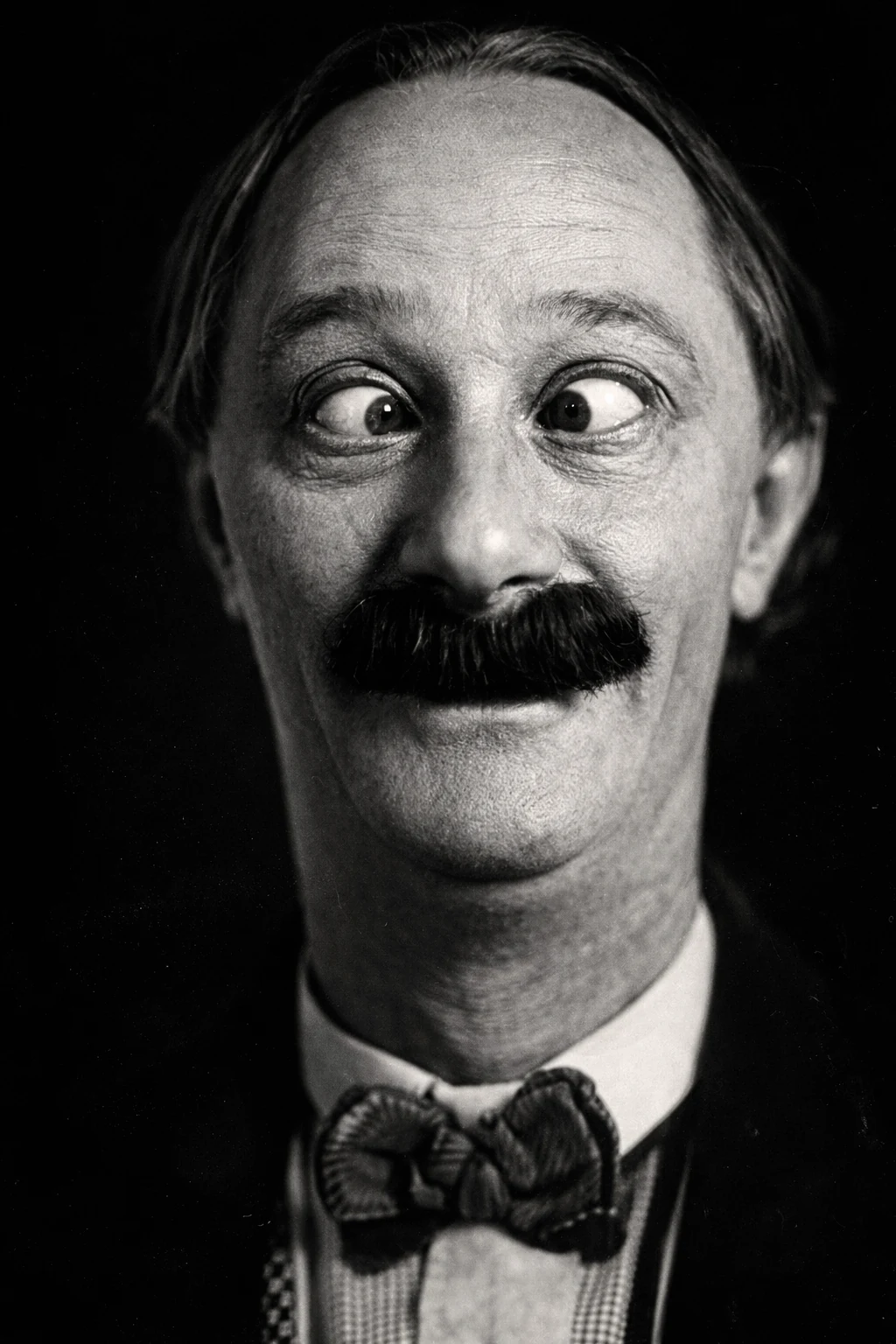
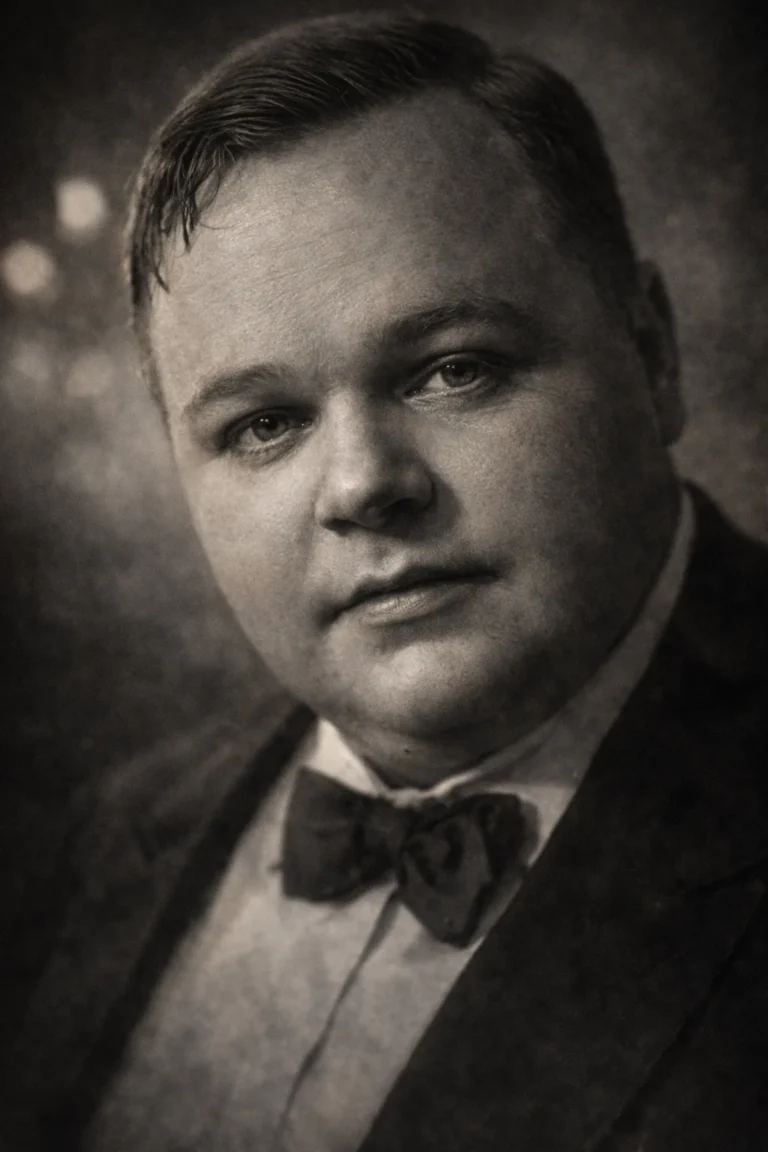
Before motion pictures could speak, they needed faces capable of telling an entire story in a few seconds. A raised eyebrow, a spectacular fall, or a gaze apparently directed toward two different places could replace pages of dialogue. Among those pioneers was Ben Turpin, a small comedian with an enormous mustache and crossed eyes whose appearance became one of silent cinema’s most recognizable images.
Reducing him to his strabismus, however, would repeat the injustice frequently done to comic performers: mistaking the instrument for the talent. Turpin understood very early that the camera did not record reality in the same way that a theater audience experienced it. It enlarged details, isolated gestures, and turned the human face into a landscape. He learned to use that new language while the motion-picture industry was still discovering its rules.
Ben Turpin
A face and a craft
The Shriek of Araby · 1923
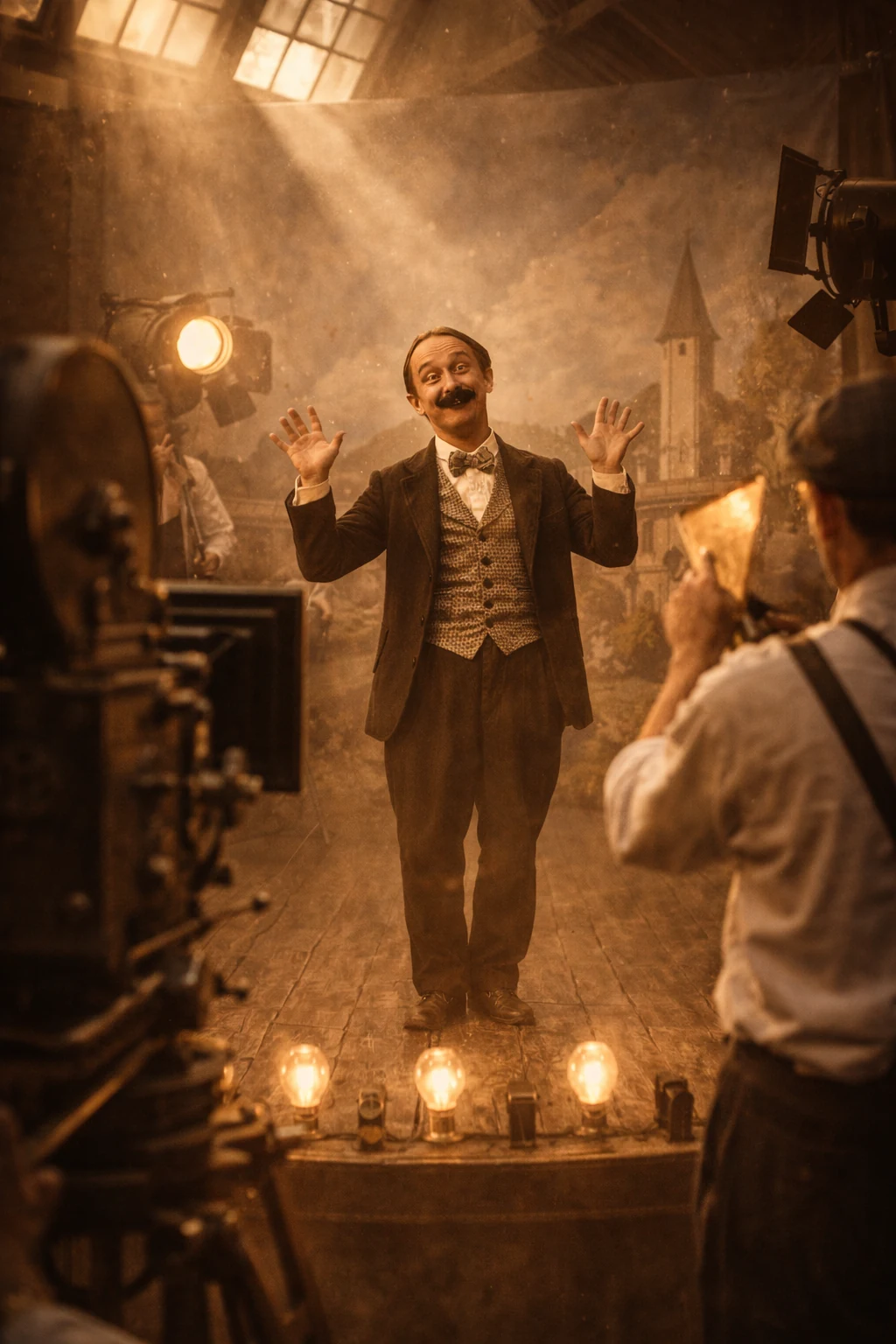
The American Film Institute catalog places this Valentino parody in context. It identifies F. Richard Jones as director and Ben Turpin, Kathryn McGuire and George Cooper among the cast. It records a March 5, 1923 release and cites production reports from 1922. The record helps distinguish the actual film from inaccurate titles and dates repeated in later biographies. The accompanying illustration is an artistic recreation, not a frame from the film.
From New Orleans to Popular Entertainment
Ben Turpin was born in New Orleans on September 19, 1869, although different dates—especially 1874—circulated for decades because of publicity and the contradictory records common among vaudeville performers. His full name was Bernard Turpin, and he was the son of a confectioner of French origin. (Rydzewski, 2013).
Before entering motion pictures, Turpin worked in circuses, variety theaters, burlesque shows, and traveling companies. Those venues were unforgiving schools. Performers had to capture the attention of noisy audiences who were often distracted or impatient. When an act failed, the silence of the house delivered an immediate verdict.
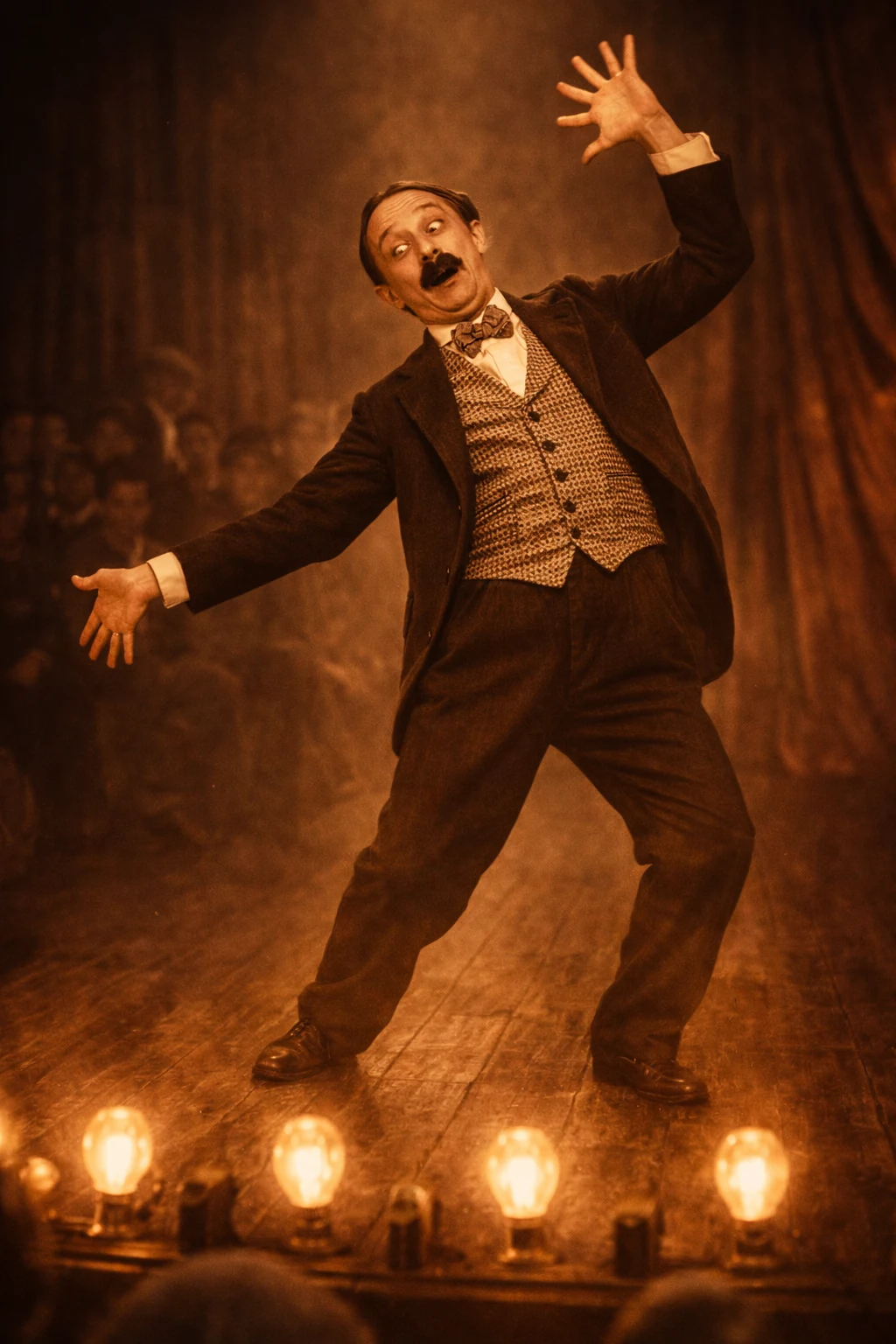
Turpin developed his mastery of falls, chases, and comic bodily distortion in this environment. One of his specialties was an interrupted somersault that ended with him landing violently on his back or in a seated position. He called it “the hundred an’ eight,” possibly because it represented a half-turn rather than a complete rotation. Although it appeared to be a total loss of control, it required considerable physical precision to avoid serious injury.
His crossed eyes intensified the character’s bewilderment. Turpin said on different occasions that his eyes had become crossed after an accident when he was young, but accounts of the condition’s exact origin vary. No known medical documentation establishes a definitive version. What can be verified is that he transformed the characteristic into a theatrical instrument and did not allow others to decide what he could do with his body.
Essanay and the First Years of Film Comedy
In the early twentieth century, Turpin joined Chicago’s Essanay company, one of the most important businesses in the emerging American film industry. The studio’s name came from the initials of its founders, George K. Spoor and Gilbert M. “Broncho Billy” Anderson—the letters S and A pronounced aloud.
Turpin did not immediately enter the company as a star. He performed several jobs around the studio, including maintenance, carpentry, and cleaning, while beginning to appear in small films. This combination illustrates the handmade character of early filmmaking. Studios did not yet operate with rigid professional divisions, and an employee might build a set, move equipment, and stand before the camera during the same working day.
In 1909, Turpin starred in numerous Essanay shorts. Trade publications already identified him as one of the company’s regular comedians. In A Midnight Disturbance, for example, he played a burglar attacked by Jack, the studio’s bulldog, which had been trained to bite the padded seat of an actor’s trousers and remain attached to it. Turpin discussed this physically demanding work in an interview published by Moving Picture World, providing early evidence of how film comedians converted bodily risk into entertainment (American Film Institute, n.d.-a).
That same year, he appeared in Mr. Flip, playing a man who harasses several women and receives a succession of punishments. In one scene, a woman smashes a pie into his face. The film is often described as the first cinematic use of the famous pie-in-the-face gag. That assertion requires caution: it is one of the earliest surviving, documentable examples, but it is difficult to prove that no earlier—and now lost—film used the same device .
This qualification reveals one of the fundamental problems in writing silent-film history. Many American movies produced during the era disappeared because of deterioration, fires, the recycling of film stock, and simple neglect. Claims about a “first” therefore require historians to distinguish between the first event ever and the earliest example that survives or can be verified.
An Uneasy Encounter with Chaplin
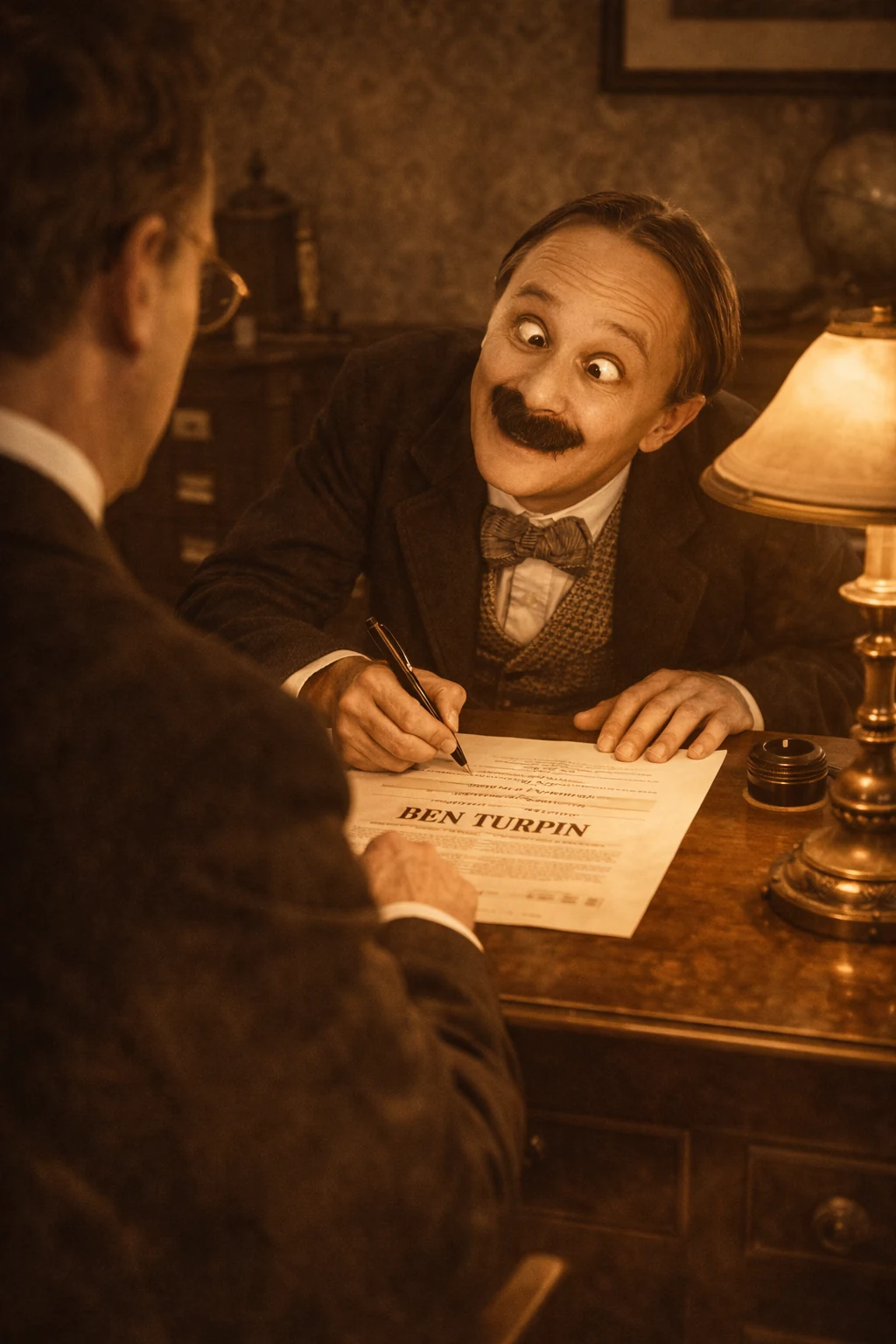
In 1915, Charlie Chaplin signed with Essanay after becoming a popular figure at Keystone Studios. Turpin appeared alongside him in His New Job, the first picture Chaplin made for the company.
The collaboration did not develop into a permanent partnership. The two represented different approaches to comedy. Turpin came from vaudeville and trusted speed, falls, and immediate reactions. Chaplin was beginning to perfect a slower method based on repeating scenes, exploring emotions, and turning a simple gesture into a carefully constructed sequence.
There is no need to describe this difference as a conflict between a sophisticated artist and a primitive one. Turpin commanded another tradition. His comedy did not always seek the melancholy or psychological depth of Chaplin’s Tramp. It sought instantaneous impact: the body transformed into a projectile, the romantic hero reduced to absurdity, and dignity destroyed by an everyday object.
Essanay attempted to profit from Chaplin’s popularity even after he left the company. The studio expanded A Burlesque on Carmen by adding new material featuring Turpin, although the two comedians did not appear together in those scenes. The maneuver led to a dispute with Chaplin and demonstrated how early movie stars were beginning to challenge studios for control over their work.
Mack Sennett’s Comedy Factory
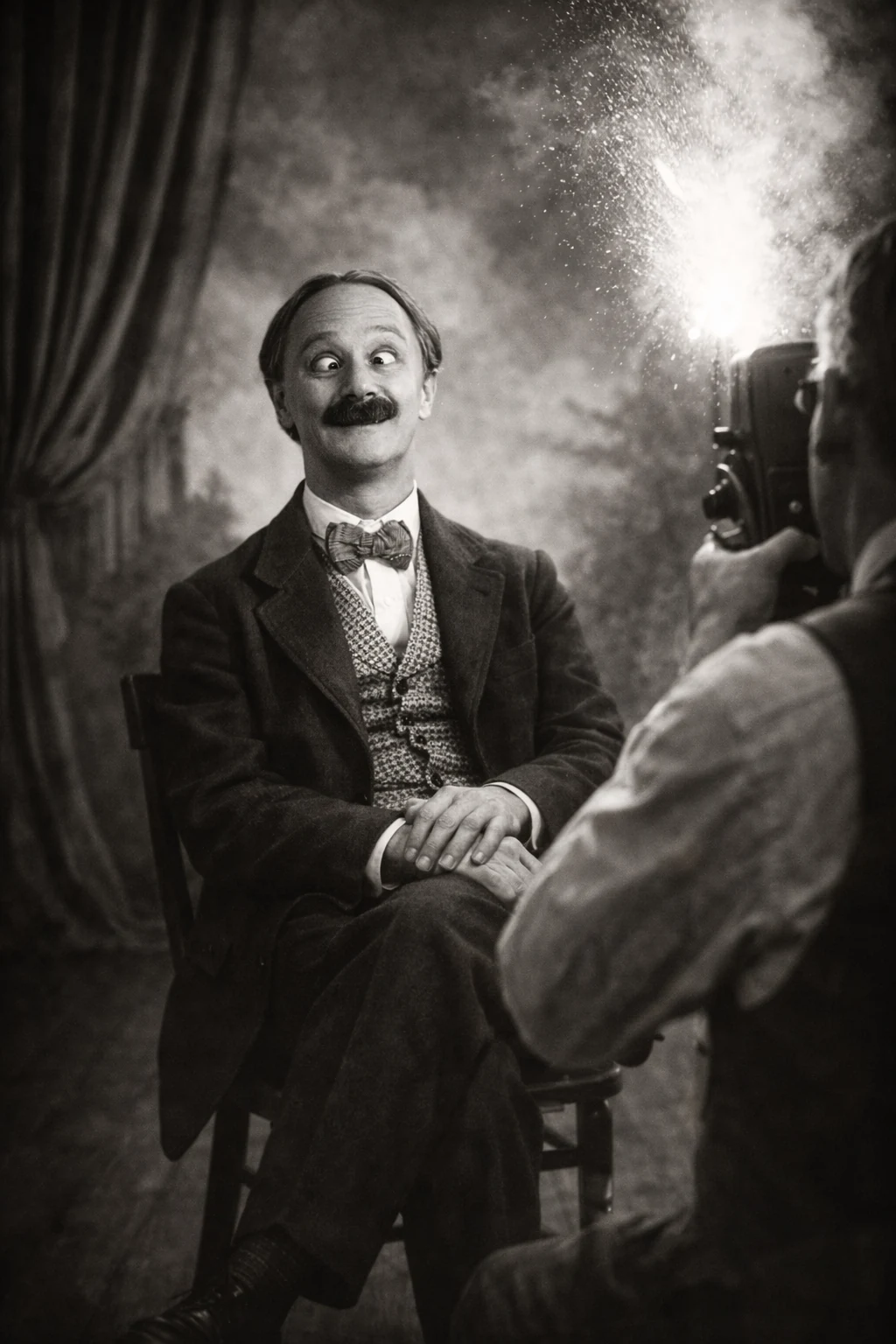
After working for other companies, Turpin joined Mack Sennett’s studio in 1917. There he found the ideal environment in which to develop his screen personality.
Sennett had created a form of comedy built around chases, incompetent policemen, runaway automobiles, bathing beauties, explosions, and precisely organized disasters. Beneath the apparent anarchy was a remarkably modern understanding of cinematic rhythm. The jokes did not depend on the performer alone; they also emerged from editing, camera placement, and the speed with which one action produced another (King, 2009).
Turpin fit naturally into this universe. His most effective device was the contradiction between his appearance and the roles he attempted to embody. He could present himself as an irresistible seducer, a desert hero, a formidable cowboy, or an adventurer in the frozen north. The joke was not simply that his eyes were crossed. It came from the absolute confidence with which the character assumed an identity that the audience knew he could not sustain.
In The Shriek of Araby (1923), a parody of The Sheik, the movie that had turned Rudolph Valentino into a screen idol, Turpin attacked the solemnity of the exotic lover. In Yukon Jake (1924), he played an absurd version of the virile hero found in northern adventure stories. He also appeared in productions such as A Small Town Idol (1921), The Pride of Pikeville (1927), and numerous short films in which parody dismantled the most popular genres of the period.
His contribution mattered because it helped establish one of cinematic comedy’s essential techniques: using the recognizable codes of another film to make them ridiculous. Long before parody became a clearly defined genre, Turpin was imitating poses, costumes, and plots that audiences could identify instantly.
The Eye Insurance: Fact, Publicity, and Exaggeration
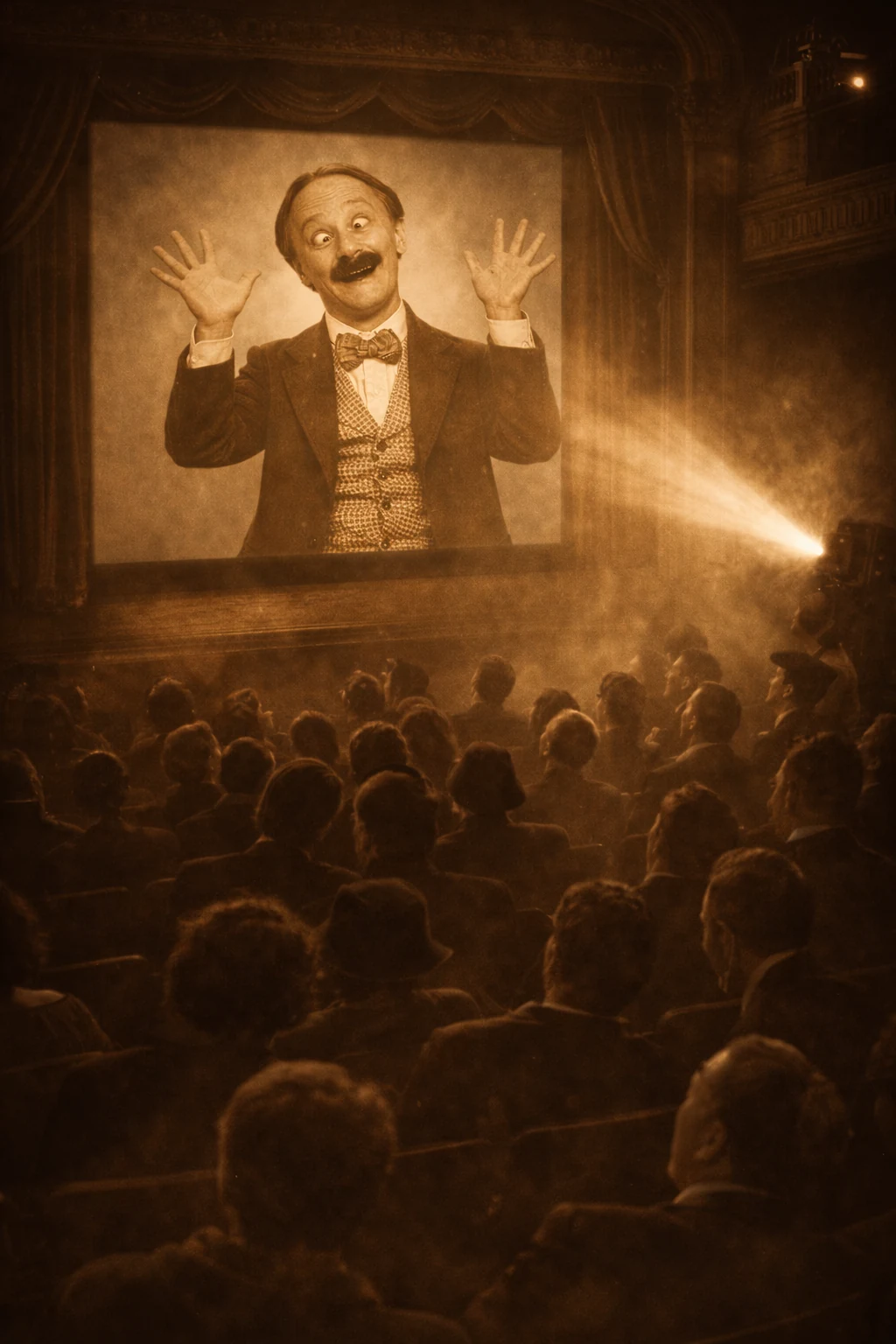
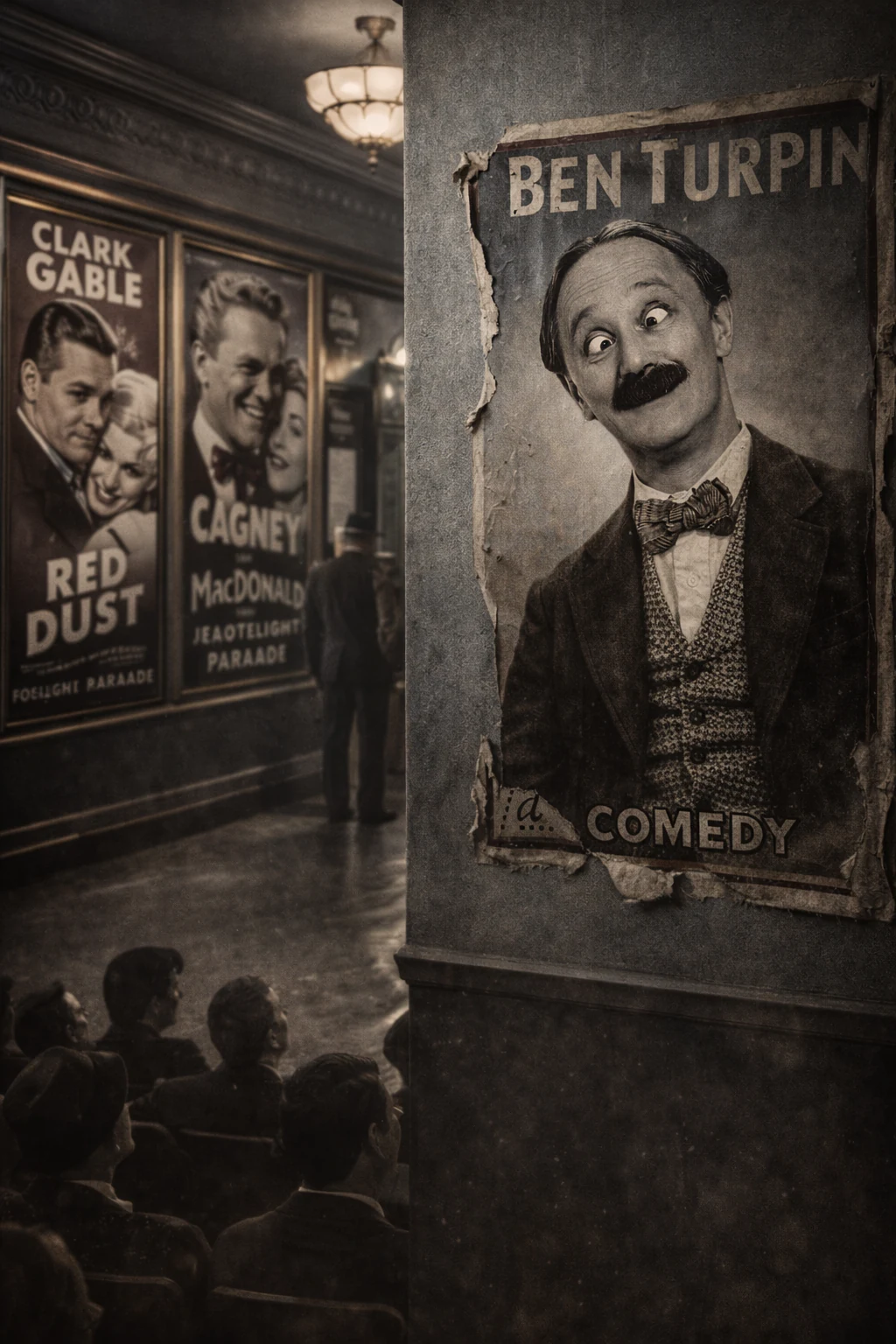
The most frequently repeated story about Turpin claims that he insured his eyes against the possibility that they might return to normal alignment. This was not merely a legend invented decades later. In 1928, Time reported that Turpin’s eyes had been insured for $100,000 and that Mack Sennett would receive the payment if they became normal. Other contemporary and later accounts, however, gave figures of $20,000 (Silver, 2010).
The conflicting amounts require caution. The report establishes that insurance was part of his public image; without examining the original contract, its terms should not be treated as independently verified. It is less safe to insist upon one exact figure or to repeat every colorful detail as established fact.
The story’s true significance lies elsewhere. Hollywood had already understood that a recognizable body could become a commercial trademark. Turpin’s eyes were presented as an economic asset, just as Chaplin’s silhouette, Buster Keaton’s expressionless face, and Harold Lloyd’s glasses immediately identified other comedians.
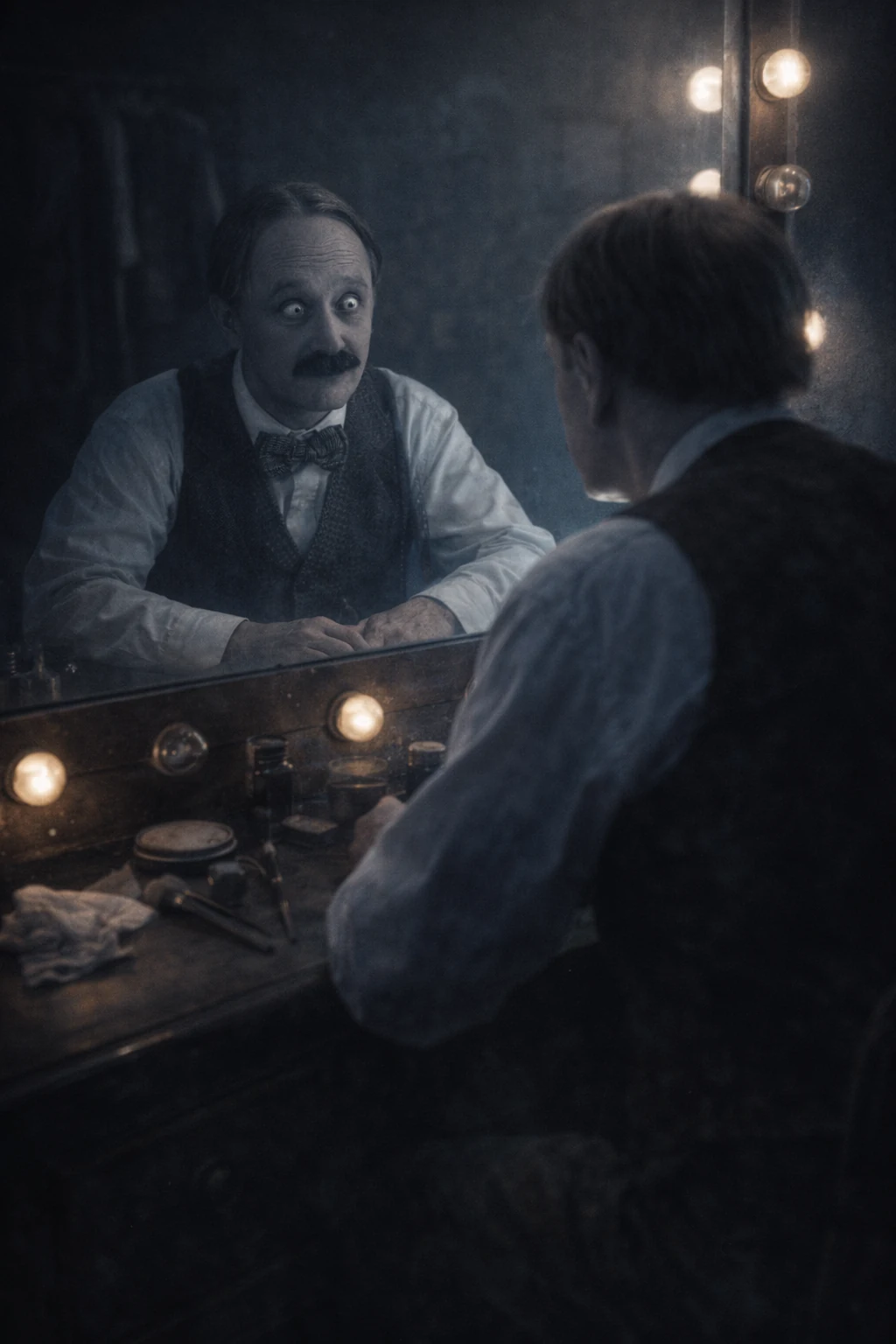
It was also said that Turpin checked himself in a mirror after receiving a blow to make certain that his eyes were still crossed. The anecdote suits his public character but is difficult to confirm independently. Like many stories from early Hollywood, it probably combined real behavior, journalistic exaggeration, and publicity designed to make audiences remember the performer.
A Man More Careful Than His Characters
On screen, Turpin portrayed men who could not understand what was happening around them. Away from the camera, he appears to have been far more sensible. He earned substantial salaries during his years of fame and invested part of his income in real estate. That financial caution allowed him to reduce his workload when synchronized sound transformed the industry.
He did not disappear immediately after the arrival of talking pictures. He acted in several sound shorts and made brief appearances in later productions. His image was so familiar that only a few seconds on screen were needed to produce a reaction from an audience. In Million Dollar Legs (1932), for example, he appeared as one of the many eccentric characters in a comedy that preserved some of silent film’s absurdist energy.
He also appeared in Hollywood Cavalcade (1939), a nostalgic recreation of the movie industry’s early years. By then, the world that had made him famous was itself being transformed into legend. Former silent comedians were no longer always invited to be protagonists; they were increasingly used as living symbols of an era remembered as both heroic and chaotic.
Turpin died in Santa Monica, California, on July 1, 1940. He was seventy years old. His death came after sound cinema had reached maturity and silent pictures were beginning to look like relics of a distant past.
The Face That Taught Audiences How to Look
Ben Turpin did not invent physical comedy, nor was he the only performer to turn a bodily characteristic into a screen personality. His importance lies in his understanding of film’s visual possibilities during a period when the medium had not yet established a settled grammar.
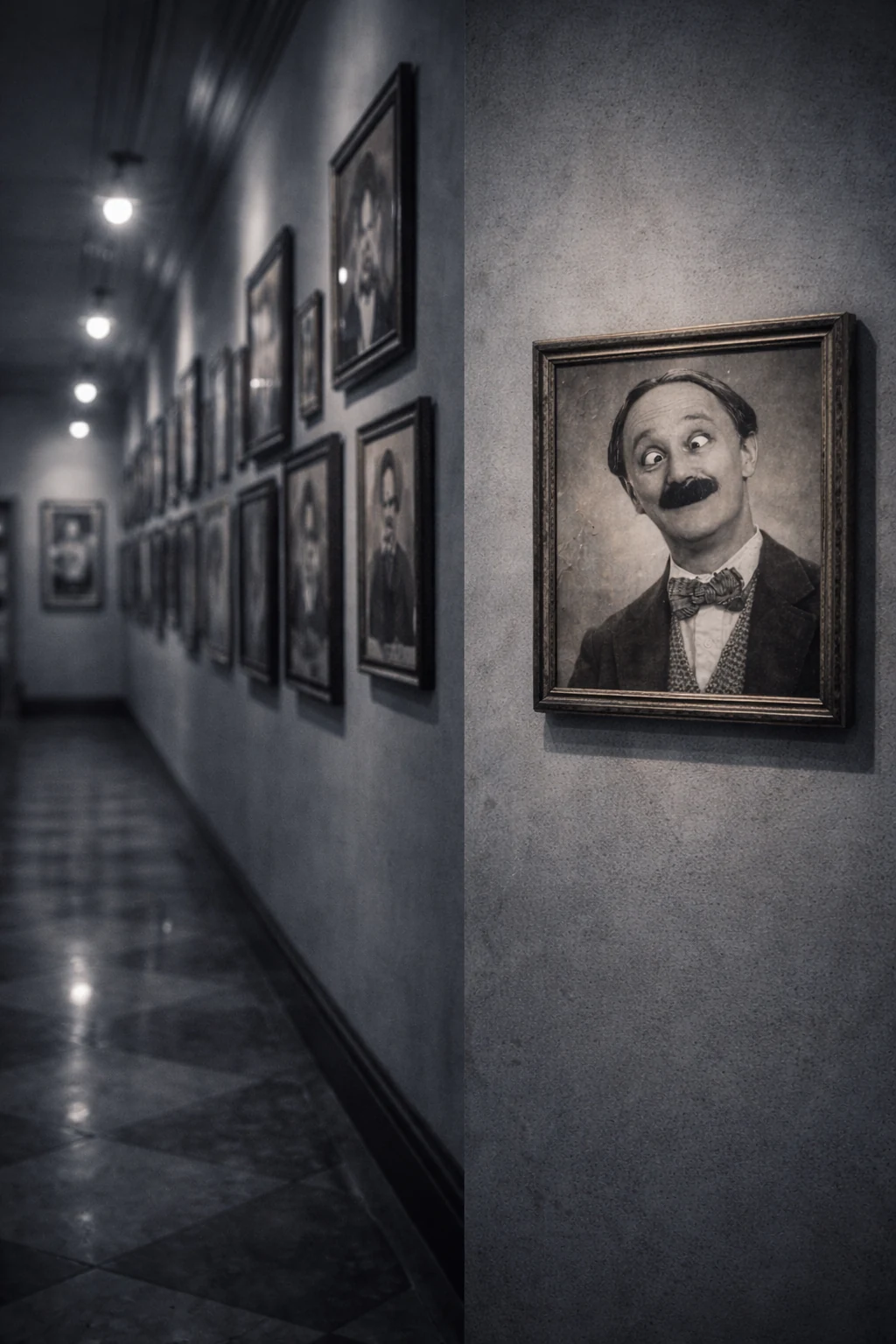
His face worked even without intertitles. Audiences saw a man who believed he was staring directly at his objective while his eyes appeared to escape in separate directions. That contradiction produced immediate comedy that could be understood across different countries and languages. Cinema was discovering one of its greatest powers: the ability to cross borders without translation.
From a modern perspective, some of this comedy can be uncomfortable because it made a physical condition part of the joke. That fact should be acknowledged without erasing historical context or denying Turpin’s agency. He was not merely displayed by other people. He constructed, managed, and protected his image, converted a characteristic that might have led to exclusion into a profession, and used his success to achieve financial independence.
The lesser-known fact in his story may therefore be more revealing than the extravagant insurance policy: before he became a star, Turpin worked as a maintenance employee at Essanay. The man who would eventually personify silent comedy literally helped keep the studio standing behind the camera before taking his place at the center of the screen.
Many later actors would be remembered for a voice, a line of dialogue, or a song. Ben Turpin belonged to an earlier generation. One impossible gaze was enough for him to demonstrate that, in the cinema, a face could be a plot, a special effect, and an artistic signature at the same time.
References
- American Film Institute. (n.d.-a). A Midnight Disturbance. AFI Catalog. View source
- American Film Institute. (n.d.-b). The Shriek of Araby. AFI Catalog. View source
- American Film Institute. (n.d.-c). Ben Turpin. AFI Catalog. View source
- King, R. (2009). The fun factory: The Keystone Film Company and the emergence of mass culture. University of California Press.
- Louisiana Historical Association. (n.d.). Turpin, Ben. Dictionary of Louisiana Biography. View source
- Rydzewski, S. (2013). For art’s sake: The biography & filmography of Ben Turpin. BearManor Media.
- Silver, A. (2010, September 1). Ben Turpin’s cross-eyes. TIME. View source
More from this collection
Bela Lugosi: The Man Imprisoned Inside Dracula
Read story →
Lillian Gish: The Face That Taught Cinema to Think in Silence
Read story →