In this storyOpen index
Arthur Conan Doyle: The Man Who Invented Reason and Sought Comfort in the Invisible
The creator of Sherlock Holmes between observation, justice and the desire to believe.
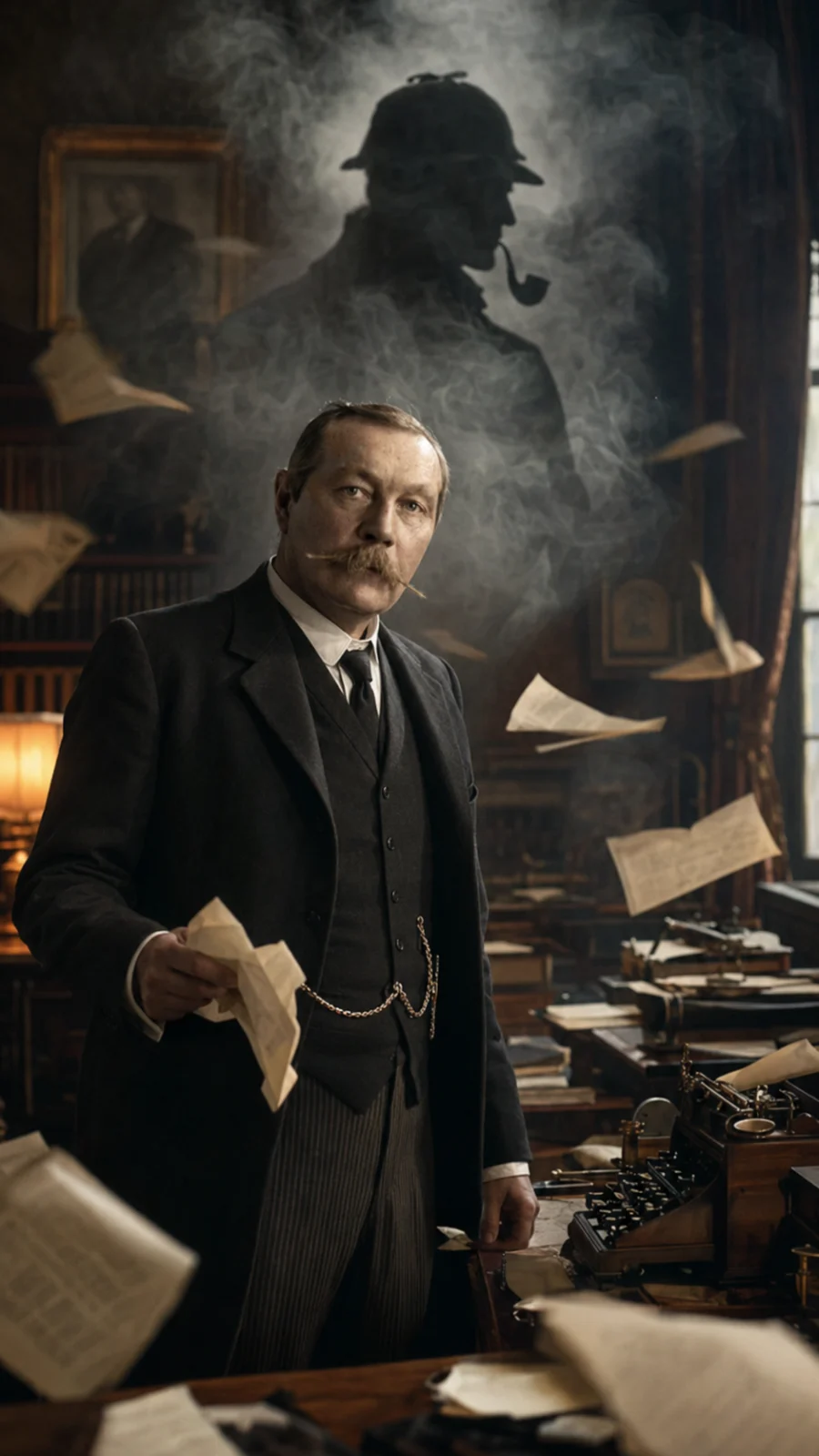
Arthur Conan Doyle created the most logical detective in world literature. Sherlock Holmes could examine a sleeve, a footprint, or a speck of mud and reconstruct an entire life with seemingly scientific precision. Yet the man who imagined him eventually devoted much of his own life to defending séances, messages from the dead, and photographs of fairies.
This contradiction was not merely an eccentricity. It reveals Conan Doyle’s deepest wound: the struggle between a mind trained to demand evidence and a heart unable to accept that death was the end.
Arthur Conan Doyle
A Life Told Between Reason and Belief
The manuscript of The Narrative of John Smith
Four handwritten volumes preserve Conan Doyle’s early novel, reconstructed after the original was lost in the mail. The official British Library record dates the manuscript to 1883–1887. This card shows an AI reconstruction, not the manuscript.
AI-generated visual reconstruction; not a historical document.
A childhood of stories and silences
Arthur Ignatius Conan Doyle was born in Edinburgh on May 22, 1859, into a Catholic family of Irish descent. His mother, Mary Foley Doyle, possessed an extraordinary gift for storytelling. Arthur would later remember how her voice transformed family history into a world of knights, danger, and adventure.
His father, Charles Altamont Doyle, was a sensitive and talented illustrator, but his life was marked by alcoholism, financial hardship, and declining mental health. He eventually entered a succession of institutions, separated from his family. Conan Doyle rarely turned this experience into a direct confession, but he grew up watching how a person could disappear long before death (Lycett, 2007).
Educated by Jesuits, he soon moved away from the Catholicism of his childhood. He never lost, however, the need to believe that some form of order existed behind the visible world. That tension between intellectual doubt and the desire for transcendence remained with him throughout his life.
The doctor who learned to observe
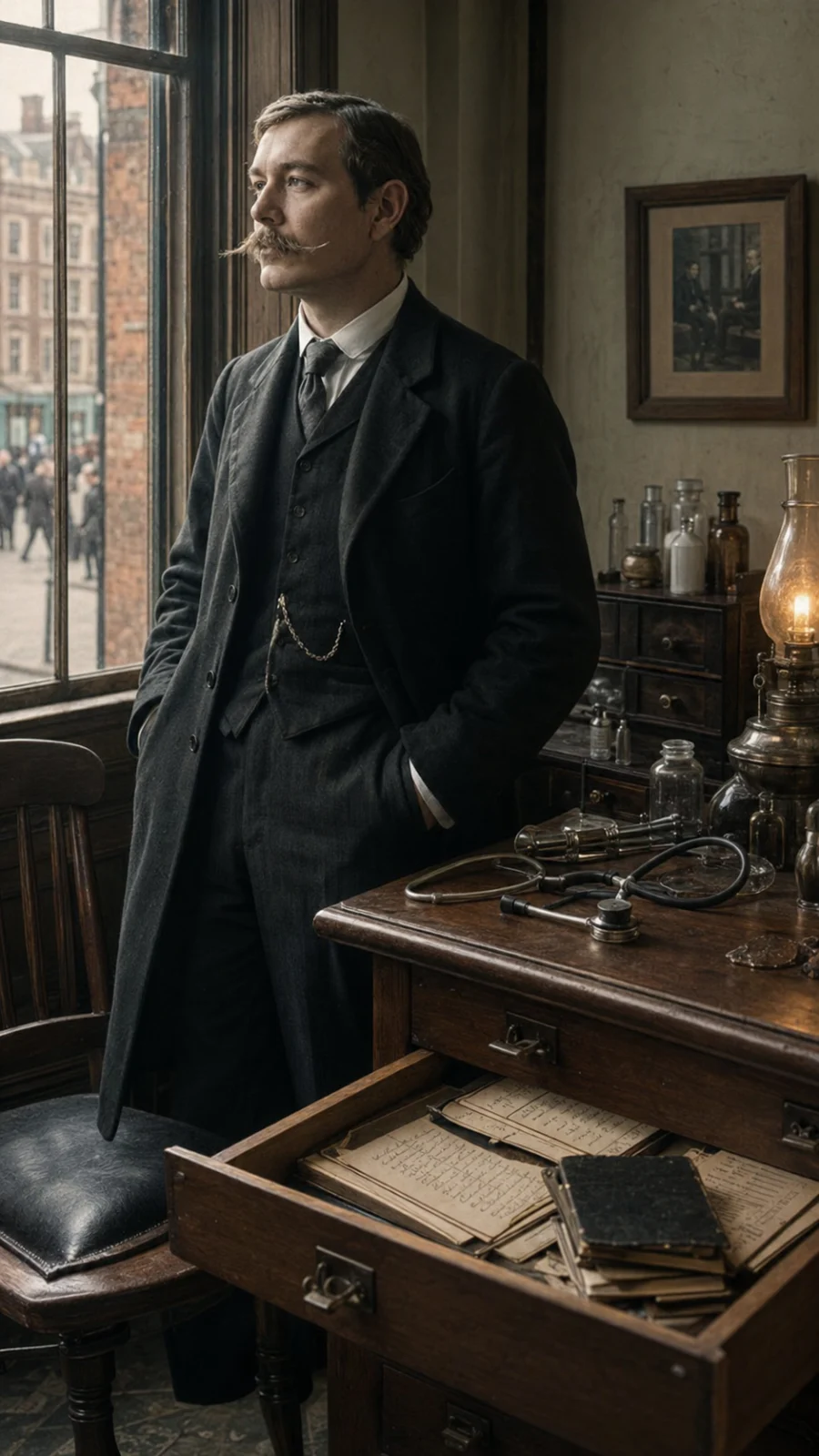
In 1876, Conan Doyle entered the University of Edinburgh Medical School. There he met the surgeon Joseph Bell, famous for his ability to infer a patient’s occupation, origins, and habits from seemingly insignificant clues. Bell insisted that observing was not the same as merely looking.
Conan Doyle worked for a time as Bell’s assistant. Decades later, he acknowledged that the professor had been one of the principal inspirations for Sherlock Holmes. Bell’s method—close observation, specialized knowledge, and deductive reasoning—moved from the medical consulting room into the rooms at 221B Baker Street (Conan Doyle, 1924; Stashower, 1999).
Before establishing a medical practice, Conan Doyle served as a surgeon aboard a whaling ship sailing into the Arctic. He later traveled to the west coast of Africa as a ship’s doctor. These journeys provided adventures, characters, and landscapes that would reappear throughout his fiction.
In 1882, he opened a practice in Portsmouth. Patients were scarce and empty hours abundant. To fill that silence, he began writing with greater discipline.
Sherlock Holmes, sold for twenty-five pounds
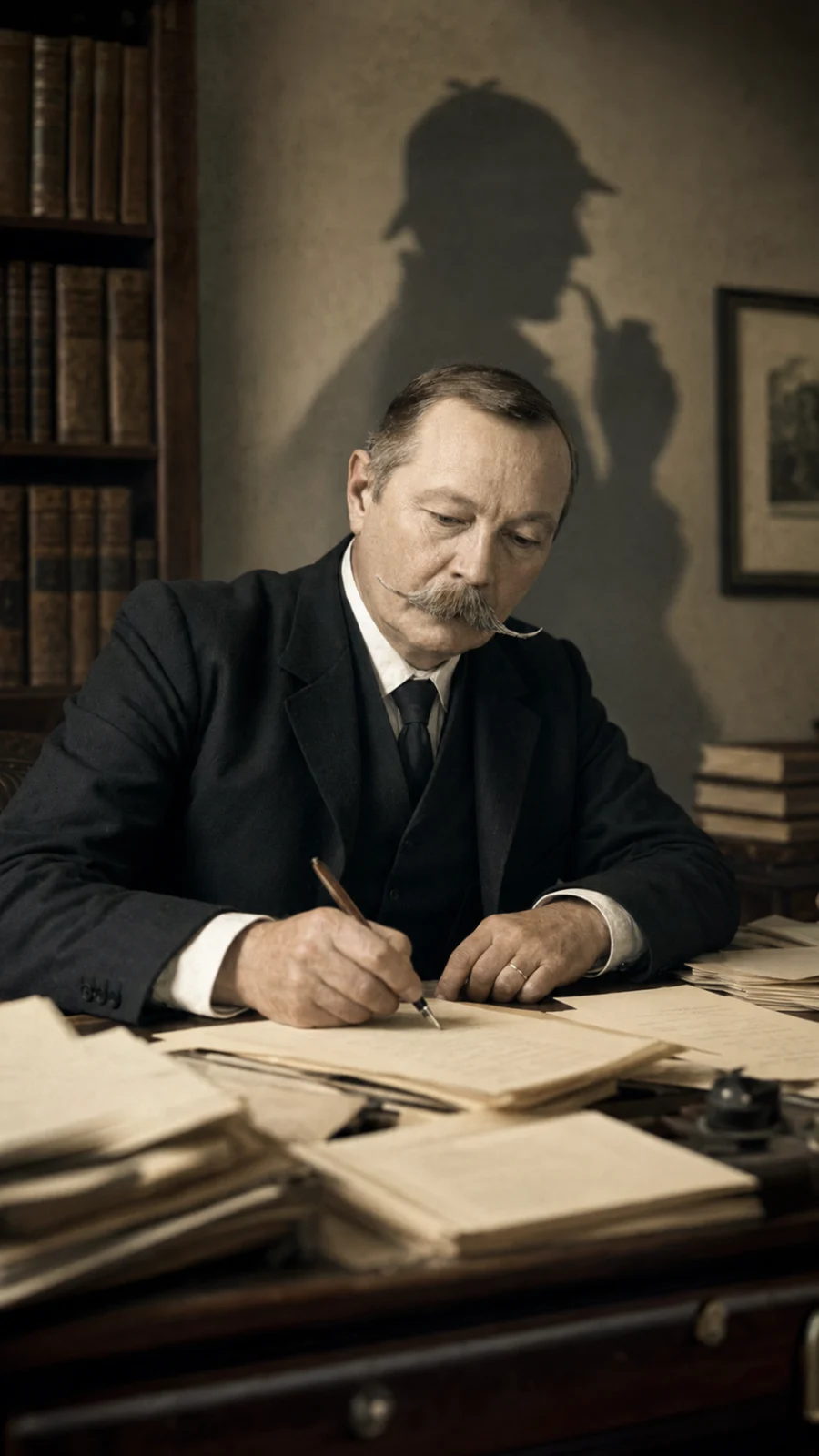
A Study in Scarlet, the first adventure of Sherlock Holmes and Dr. John Watson, appeared in 1887. The publisher Ward, Lock & Co. had purchased its rights for only twenty-five pounds. Conan Doyle accepted the offer because he had spent months trying to place the manuscript and needed the money.
That single payment became one of the most unfavorable bargains in literary history. The transfer concerned the rights to that novel, not ownership of Sherlock Holmes as a character or his future adventures.
Holmes did not become famous immediately. The true phenomenon began in 1891, when The Strand Magazine published the first short stories featuring the detective. Sidney Paget’s illustrations helped establish his appearance: angular face, penetrating gaze, and dramatically cut clothing.
Conan Doyle eventually wrote four novels and fifty-six short stories about Holmes. Curiously, the sentence most closely associated with him—“Elementary, my dear Watson”—never appears in that exact form in the original canon. It gradually emerged through stage and screen adaptations.
The author who tried to murder his own creation
Conan Doyle wanted recognition for his historical novels, particularly The White Company and, later, Sir Nigel. He believed Sherlock Holmes was consuming time that should have been devoted to more important work.
He tried to discourage publishers by demanding exceptionally high fees, but The Strand agreed to pay them. Unable to escape his detective, he decided to kill him.
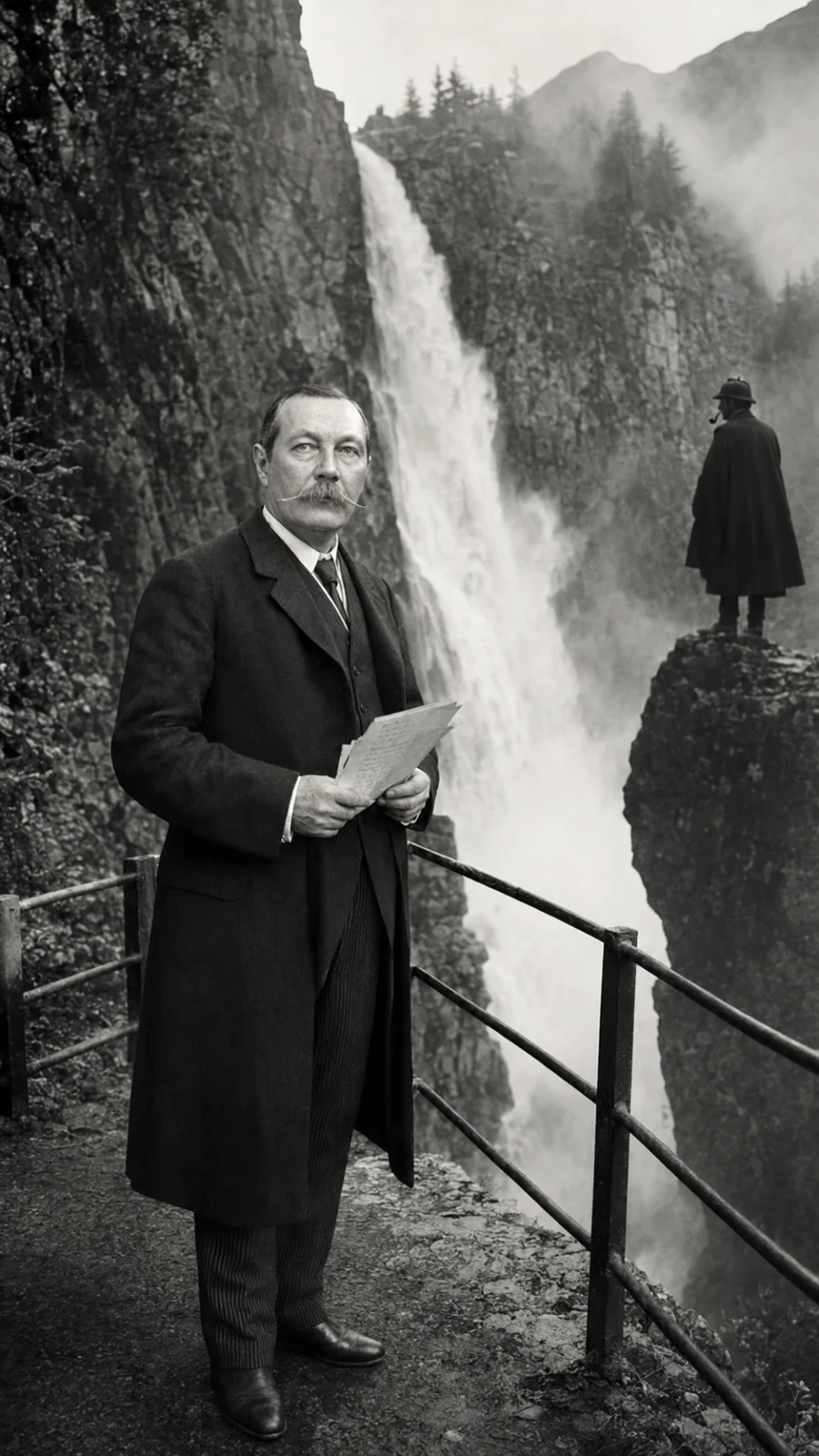
In “The Final Problem,” published in 1893, Holmes and Professor Moriarty disappeared at Reichenbach Falls. For Conan Doyle it was a liberation; for his readers, a betrayal. Public pressure and financial incentives eventually prevailed. He first published The Hound of the Baskervilles, set before Holmes’s supposed death, and then permanently resurrected the detective in “The Empty House” in 1903 (Lellenberg, Stashower, & Foley, 2007).
The irony was complete: Holmes’s creator could choose his words, but he could no longer control his existence.
Far more than Baker Street
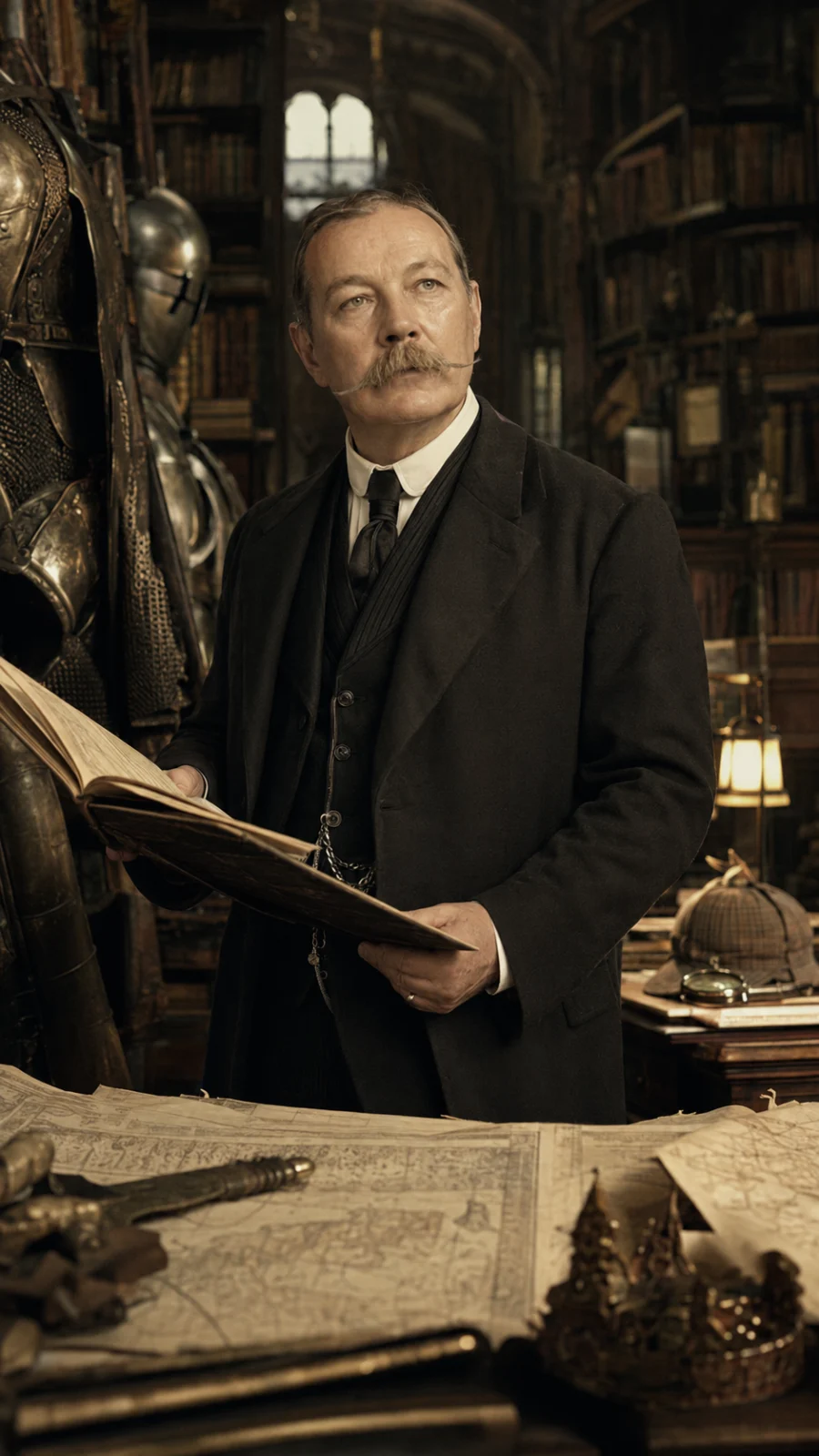
Conan Doyle wrote science fiction, drama, poetry, boxing stories, military history, and adventure novels. In Professor Challenger, the protagonist of The Lost World, he created a character nearly as forceful as Holmes, though considerably less disciplined.
He also left behind a novel that remained unpublished for decades: The Narrative of John Smith. He had written it as a young doctor, but the original manuscript was lost in the mail. Conan Doyle reconstructed it from memory but never published it. The work remained in the family archives until the British Library issued it in 2011, more than eighty years after his death.
Empire, war, and an unexpected title
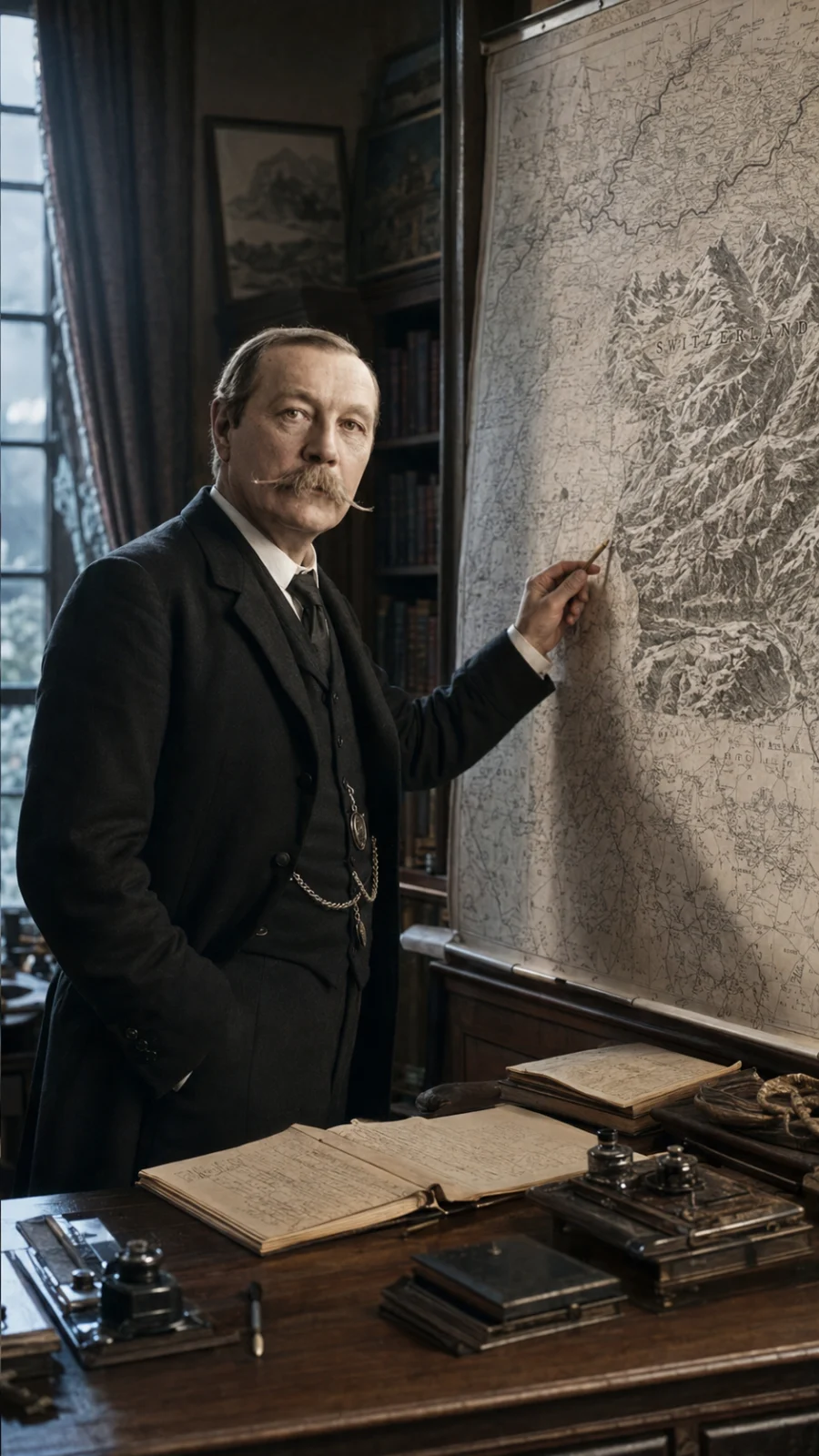
During the Second Boer War, Conan Doyle traveled to South Africa as a volunteer physician. He later wrote The War in South Africa: Its Cause and Conduct, defending British actions against international accusations.
He was knighted in 1902. Although the public associated his fame with Sherlock Holmes, the honor was primarily connected to his wartime service and defense of the British Empire rather than to his detective fiction (Lycett, 2007).
This part of his life can be uncomfortable for modern readers. Conan Doyle was capable of denouncing individual injustices, yet he also shared many of the imperialist and paternalistic assumptions of his age. His sense of justice could be passionate while still being limited by the world to which he belonged.
When Sherlock Holmes stepped off the page
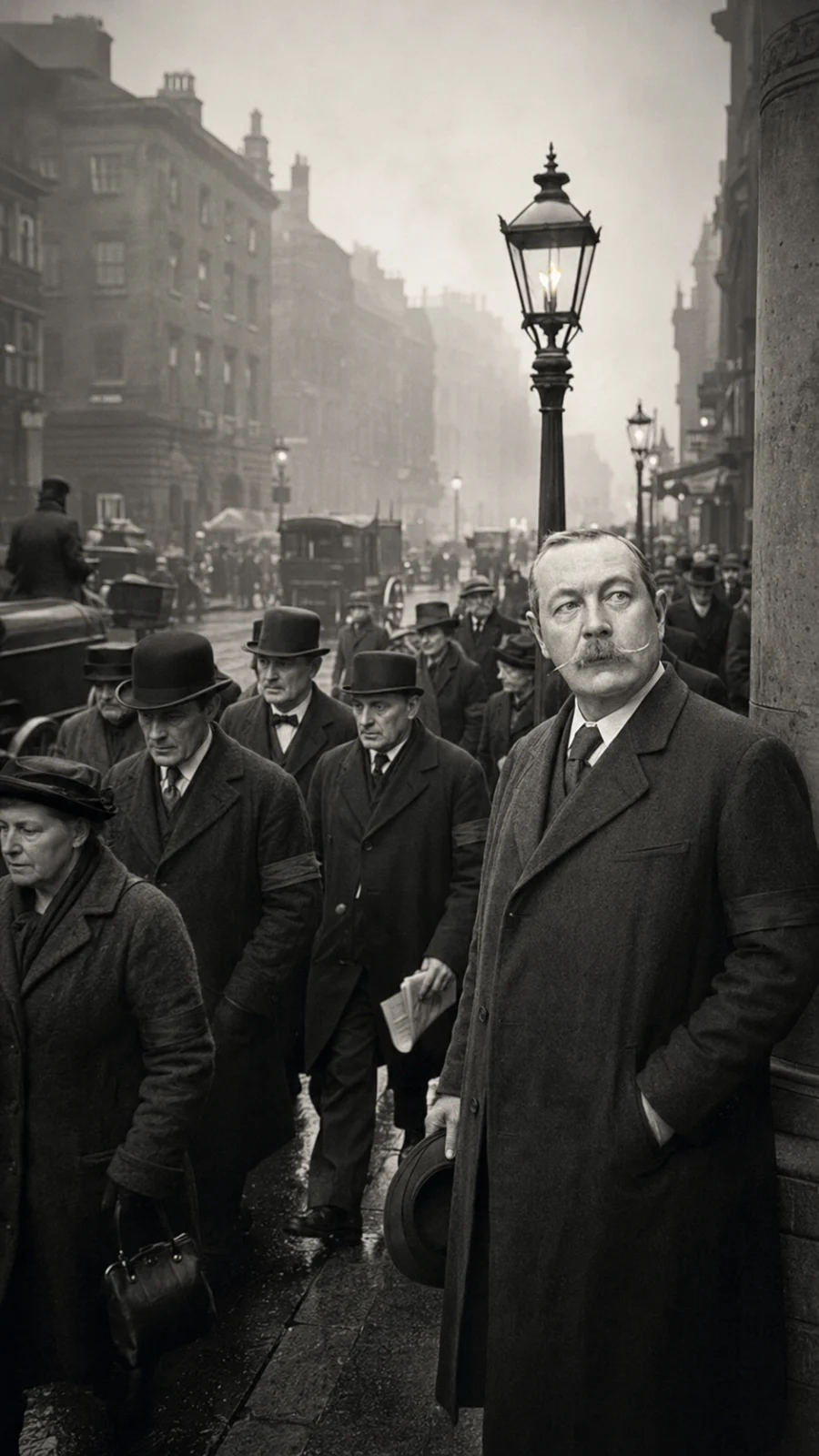
In 1906, Conan Doyle learned about George Edalji, a British solicitor of Parsi descent who had been convicted of mutilating animals and sending threatening letters. The evidence was weak, and racial prejudice had shaped the investigation.
Conan Doyle examined documents, visited locations connected with the case, and emphasized a crucial detail: Edalji was so severely shortsighted that he could hardly have committed the nighttime offenses attributed to him. Conan Doyle’s public campaign helped bring about a review. Edalji recovered his professional standing, although the authorities never granted him complete redress (Conan Doyle, 1924).
Conan Doyle later intervened on behalf of Oscar Slater, a German-Jewish immigrant convicted in Scotland of murdering Marion Gilchrist. He examined contradictions in the witnesses’ accounts and published The Case of Oscar Slater in 1912. Slater’s conviction was eventually quashed in 1928, after he had spent nearly twenty years in prison (Conan Doyle, 1912; Stashower, 1999).
These episodes demonstrated that Conan Doyle did not merely know how to write investigations. He could also use observation, public pressure, and critical reasoning against genuine failures of the justice system.
A faith that preceded tragedy
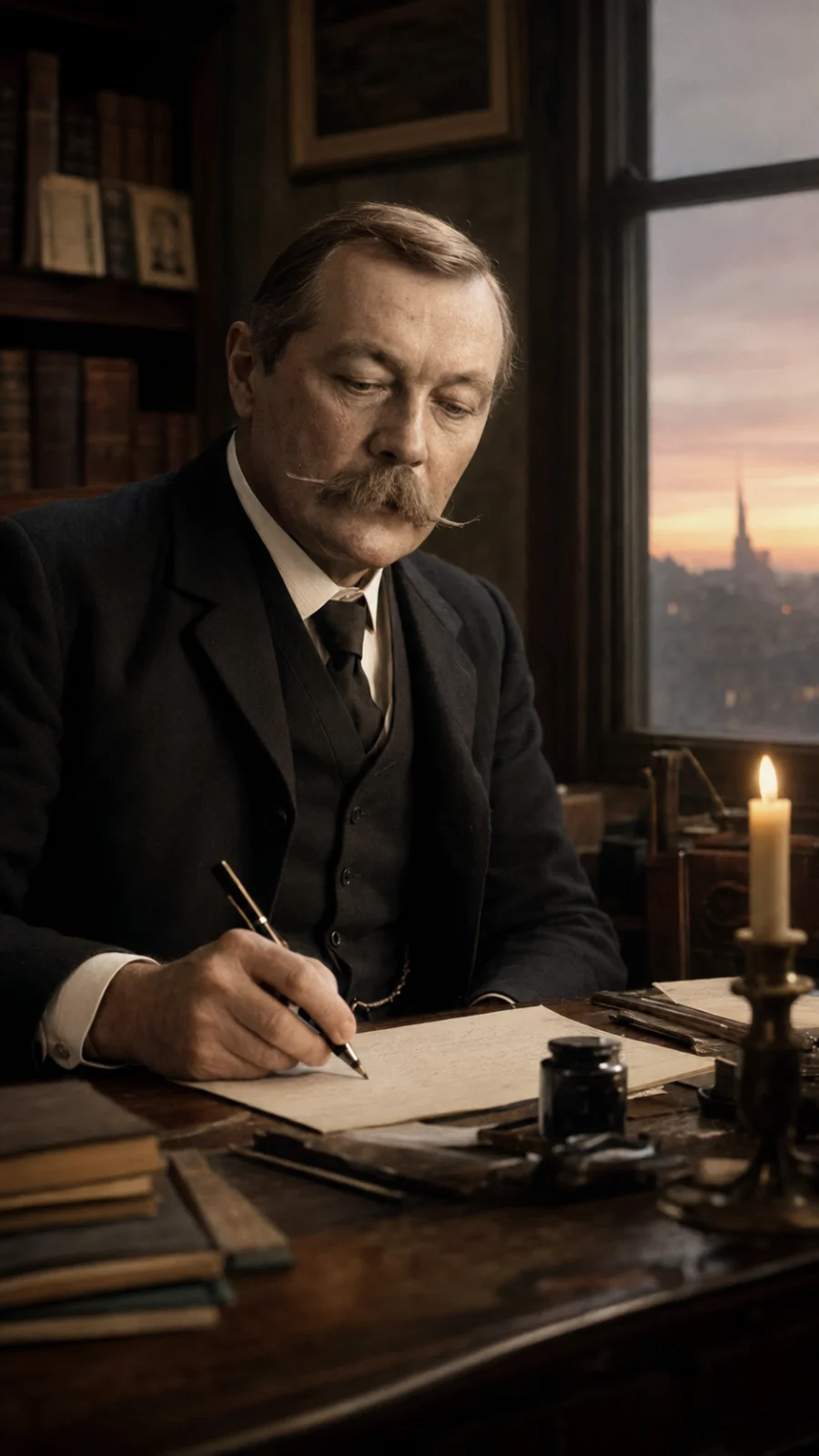
It is often said that Conan Doyle became a Spiritualist after the death of his son Kingsley. The real story is more complex.
He had investigated psychic phenomena as early as the 1880s and joined the Society for Psychical Research in 1893. During the First World War, however, he turned that curiosity into a public defense of Spiritualism: he announced his position in 1916, two years before Kingsley’s death.
Kingsley, who had been wounded during the Battle of the Somme, died in 1918 from pneumonia aggravated by the influenza epidemic. Conan Doyle also lost his brother Innes, two brothers-in-law, and other close relatives. For a man surrounded by the dead, Spiritualism offered something neither medicine nor conventional religion could provide: the possibility of continuing the conversation (Lellenberg et al., 2007).
From then on, he traveled widely, lecturing on the survival of the soul. He invested time, prestige, and a considerable amount of money in the cause. He did not present his beliefs as an abandonment of reason, but as a science that humanity did not yet understand.
The fairies that deceived Holmes’s creator
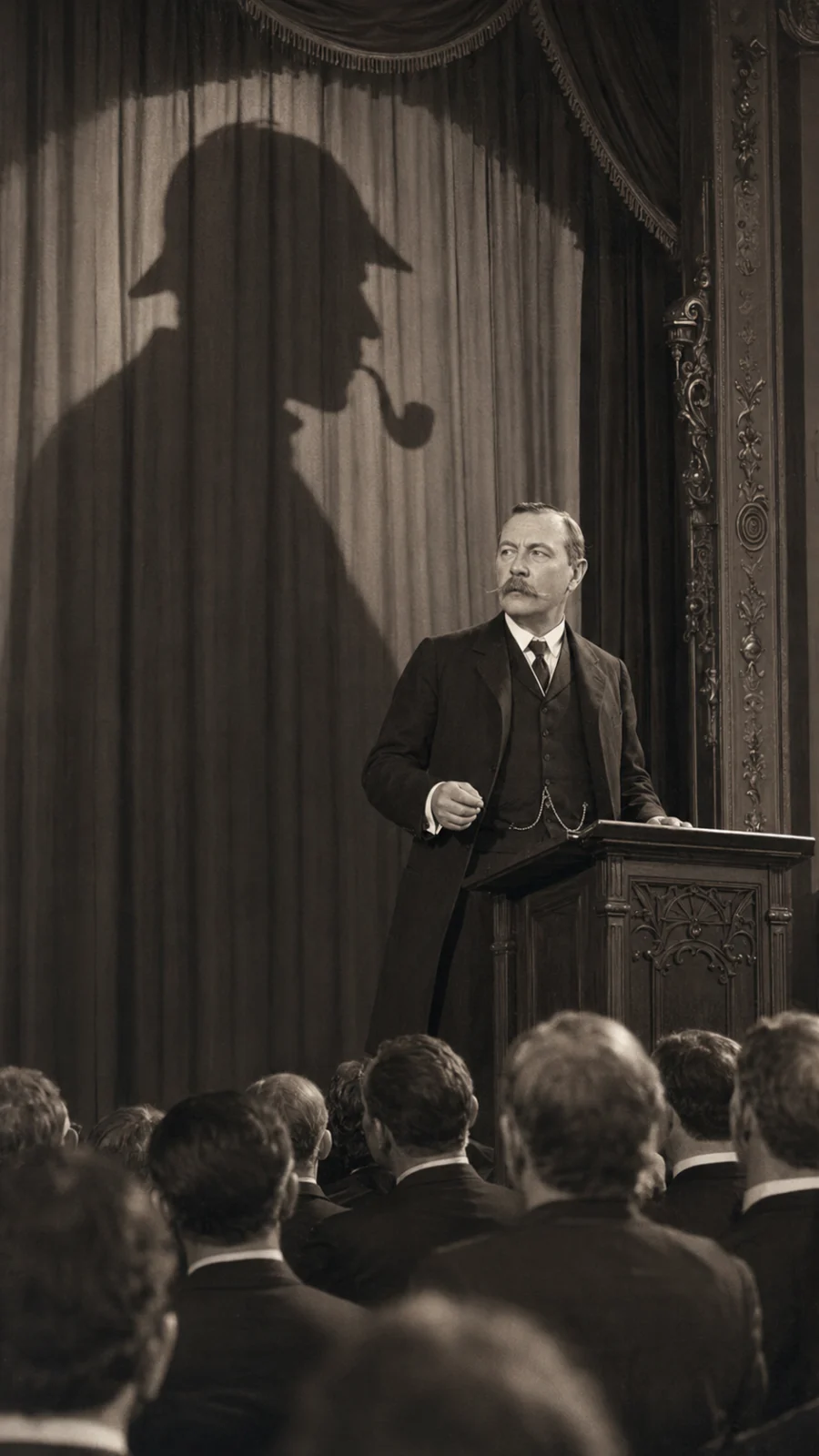
One of the most astonishing episodes of Conan Doyle’s life began with photographs taken in Cottingley, England. They showed two girls in the company of small, winged figures.
Conan Doyle believed that the images might prove the existence of supernatural beings. He published an article about them in 1920 and later wrote The Coming of the Fairies. Decades afterward, both admitted using cutouts supported by pins in the first four photographs. Elsie said all five were faked, while Frances continued to defend the last one; that claim is not evidence of supernatural beings.
Conan Doyle was not incapable of detecting fraud. In other circumstances, he had rejected dishonest mediums and questionable evidence. But when confronted with something that confirmed his hopes, he lowered his own standards. The creator of literature’s greatest skeptic became vulnerable to the very desire for belief that Holmes would have recognized immediately.
His friendship with the escape artist Harry Houdini deteriorated for a similar reason. Houdini explained that his apparent miracles were tricks; Conan Doyle became convinced that the magician possessed supernatural powers and was concealing them.
The wound behind the detective
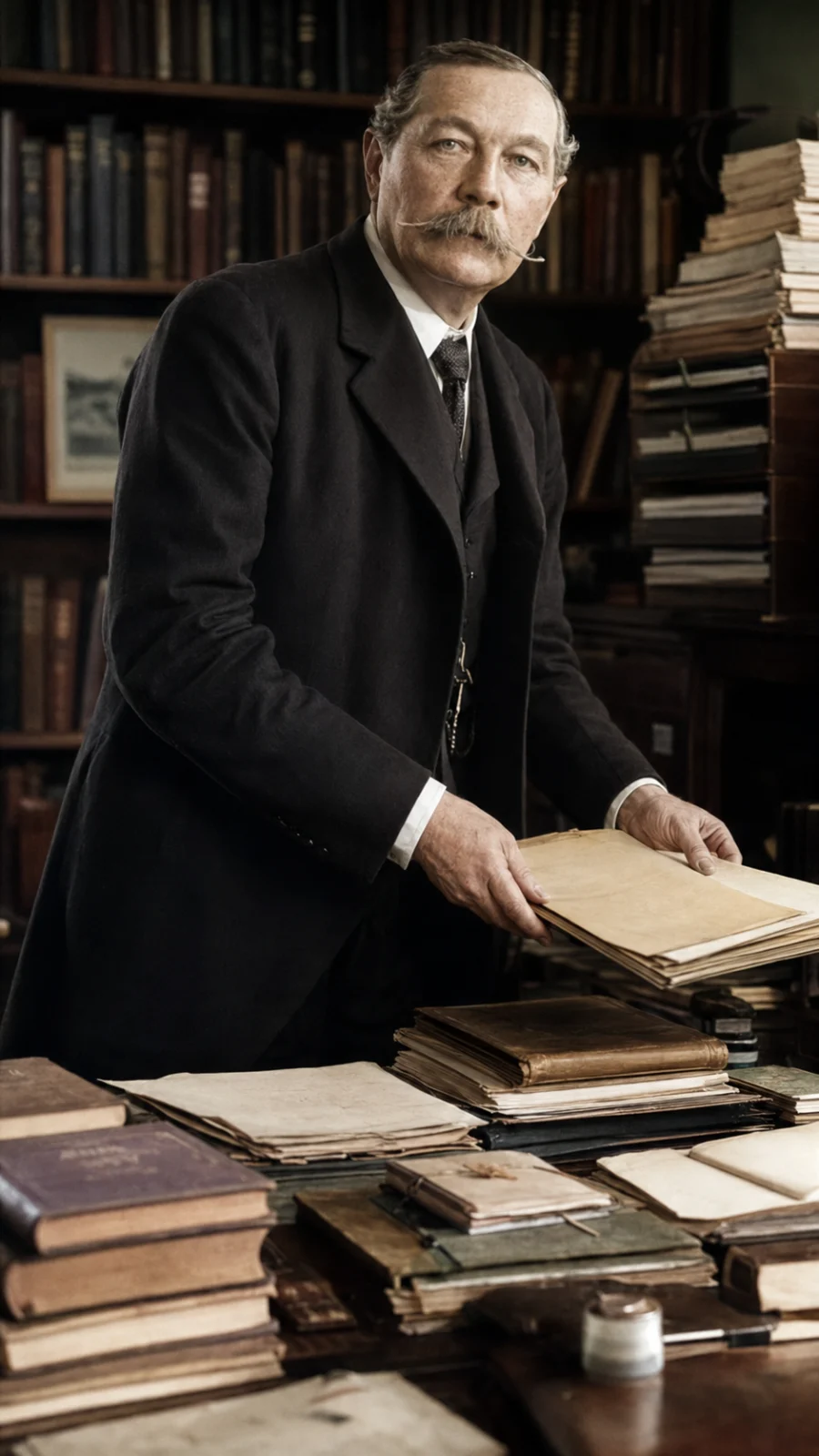
Arthur Conan Doyle died on July 7, 1930. He left behind an enormous body of work, but none of it entirely escaped Sherlock Holmes’s shadow.
His life is often described as a contradiction between science and superstition. Perhaps it was something more human: the story of a man who could endure uncertainty while investigating a crime but not while confronting loss.
Conan Doyle wrote from a wound he never fully exposed. His father’s illness, his first wife’s prolonged decline, the deaths caused by war, and the repeated passage of loved ones into silence fed his need to discover continuity beyond death.
Sherlock Holmes represented the world that could be explained. Spiritualism promised that an explanation also existed for what hurt the most.
Between them stood Arthur Conan Doyle: physician and storyteller, investigator and believer, defender of the innocent and prisoner of his own hopes. A man who taught millions of readers to search for evidence but who, when faced with the absence of those he loved, began searching for signs.
References
- Conan Doyle, A. (1912). The case of Oscar Slater. Hodder & Stoughton. View source
- Conan Doyle, A. (1924). Memories and adventures. Hodder & Stoughton. View source
- Cooper, J. (1990). The case of the Cottingley fairies. Robert Hale. View source
- Lellenberg, J., Stashower, D., & Foley, C. (Eds.). (2007). Arthur Conan Doyle: A life in letters. Penguin Press. View source
- Lycett, A. (2007). The man who created Sherlock Holmes: The life and times of Sir Arthur Conan Doyle. Free Press. View source
- Stashower, D. (1999). Teller of tales: The life of Arthur Conan Doyle. Henry Holt and Company. View source
- British Library. (n.d.). The Narrative of John Smith by Arthur Conan Doyle. Add MS 88924/2/2–5. View source
- Bradford District Museums & Galleries. (2017). Cottingley fairies. View source
More from this collection
William Shakespeare: The Man Who Turned the Human Wound into Words
Read story →
Miguel de Cervantes: The Captive Who Tried to Leave for America Before Creating Don Quixote
Read story →