In this storyOpen index
Alain Delon: Cinema’s Most Beautiful Man Turned His Face Into a Threat
From Purple Noon to Le Samouraï, beauty became a language of desire, danger, and solitude.
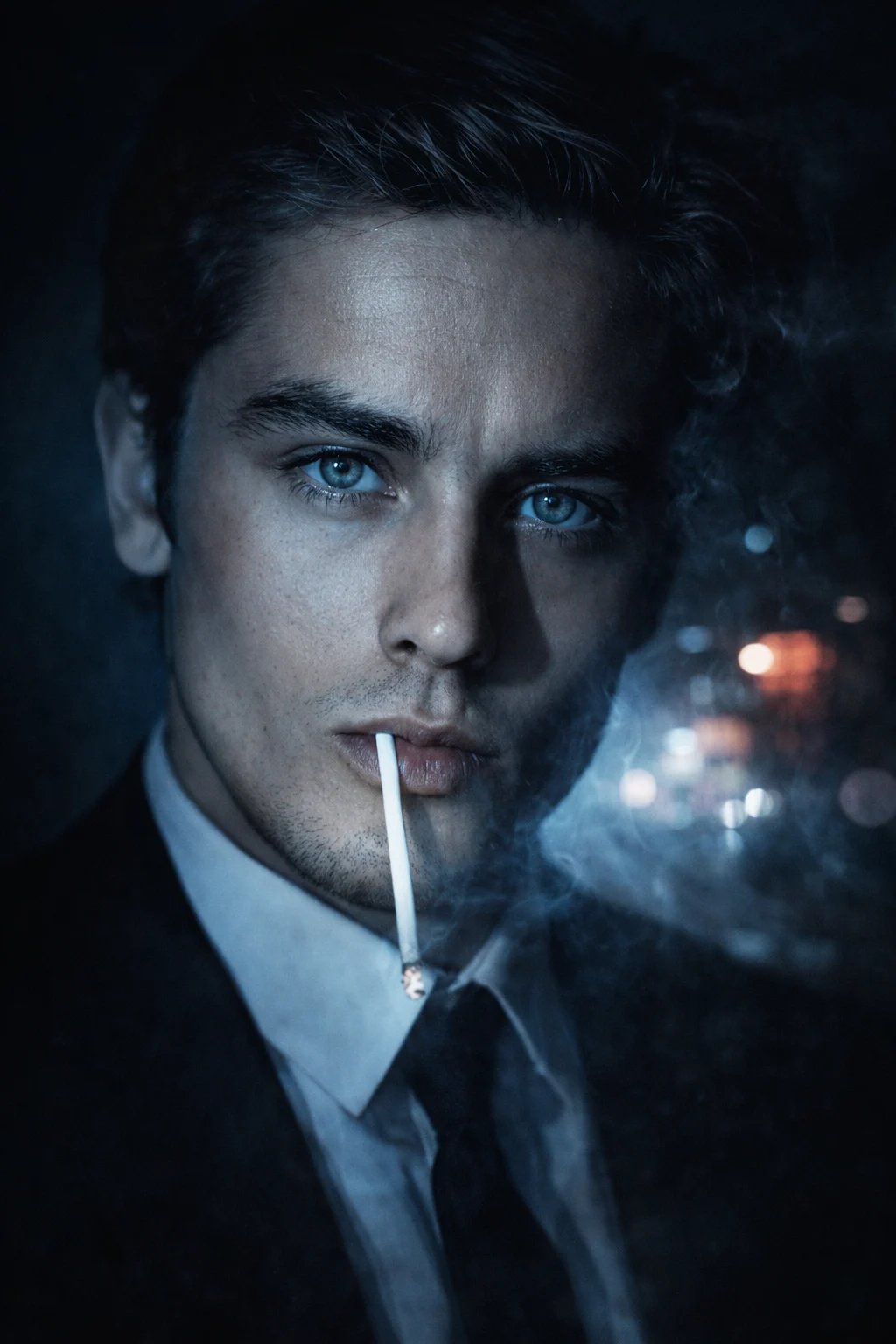
Alain Delon possessed a beauty that seemed capable of opening every door, but it also threatened to imprison him within his own face. Cinema could easily have made him nothing more than a romantic leading man. Instead, he used that perfection as a mask for murderers, impostors, police officers, decaying aristocrats, and men condemned to solitude.
His face promised innocence. His gaze introduced danger.
For more than half a century, Delon remained one of the defining images of European cinema. He worked with René Clément, Luchino Visconti, Michelangelo Antonioni, Jean-Pierre Melville, and Joseph Losey. He had no formal acting education and readily acknowledged that he learned while working. Yet he understood more clearly than many trained performers how silence could function before a camera.
His greatest creation ultimately became Alain Delon himself: an elegant, distant, morally ambiguous figure whom audiences could never entirely separate from the real man.
Alain Delon
A Life Between Beauty and Shadow
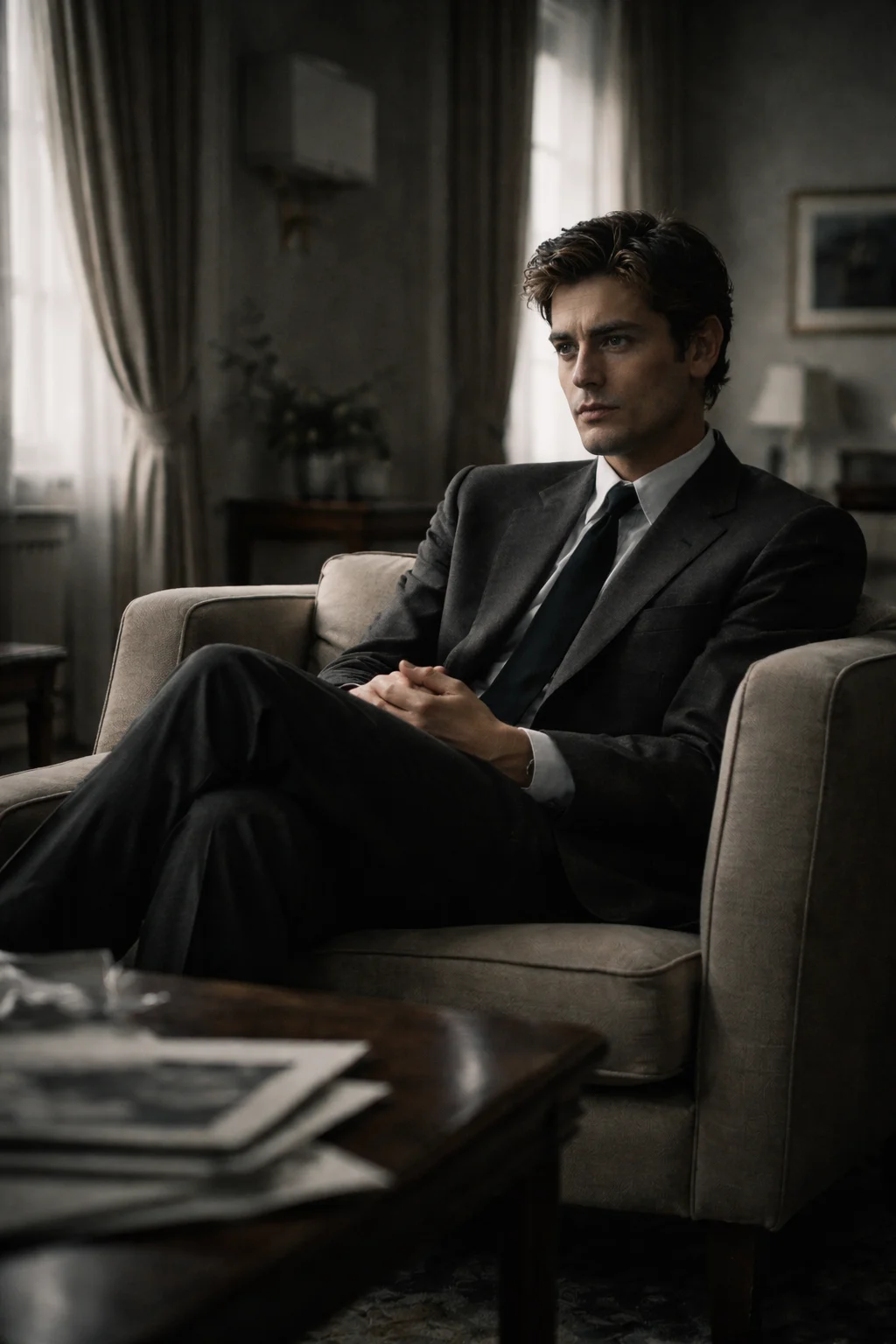
The 2019 Honorary Palme d’Or
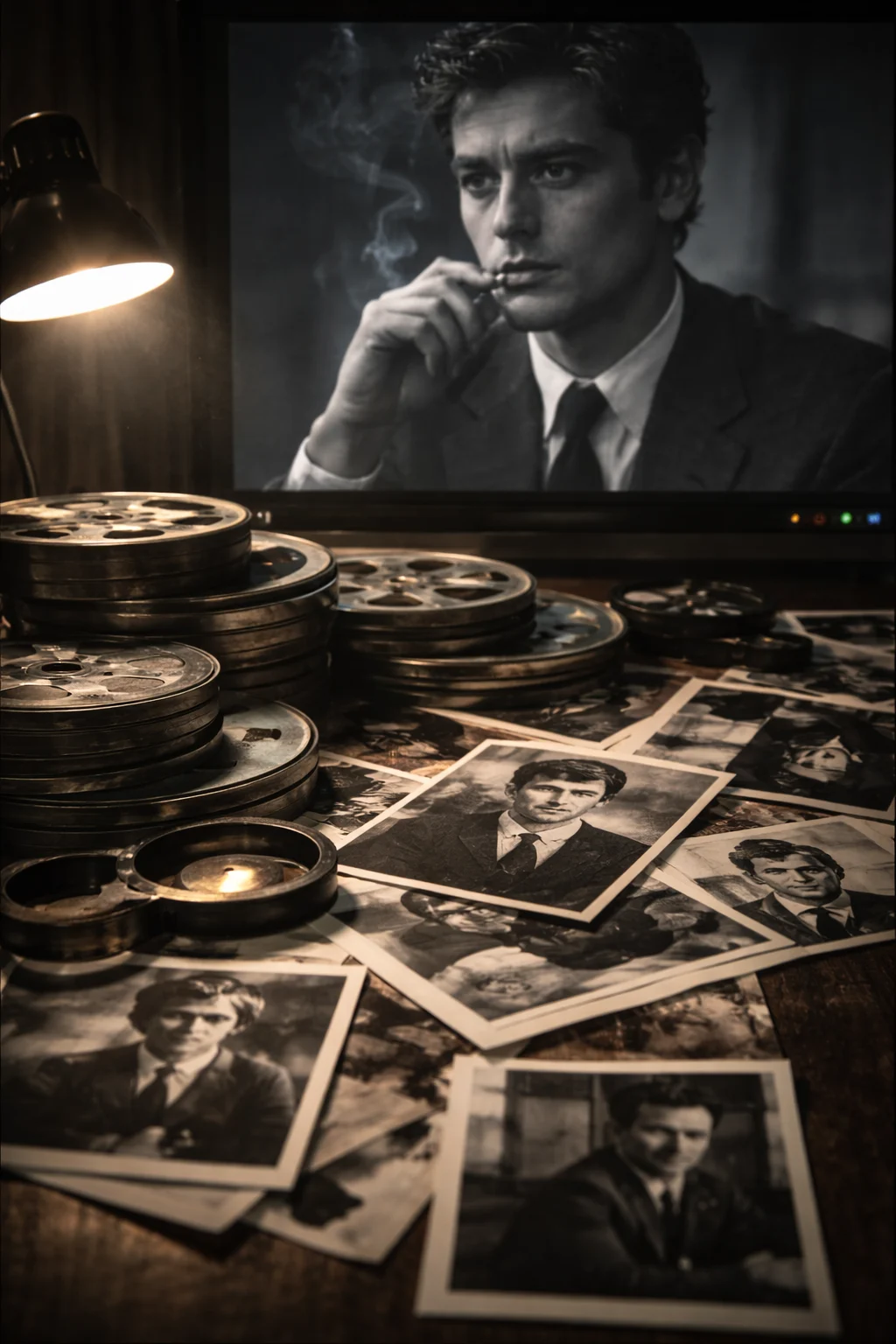
The Festival de Cannes preserves a visual record of Alain Delon receiving its honorary Palme d’Or on May 19, 2019. The link opens the festival’s original archive; the image on this card is an AI reconstruction and does not reproduce the ceremony.
AI-generated visual reconstruction; not a historical document.
A Childhood Without a Permanent Home
Alain Fabien Maurice Marcel Delon was born on November 8, 1935, in Sceaux, near Paris. His father, Fabien Delon, managed a small cinema, while his mother, Édith Arnold, worked in a pharmacy before becoming a theater usher.
His parents separated when he was four. The child was sent to live with foster parents, an experience he later interpreted as abandonment. After his foster parents died, he returned to his mother and her new husband, who owned a butcher shop.
Delon was expelled from several schools. For a time, he trained to become a butcher, a future far removed from the one awaiting him. At seventeen, he joined the French Navy and was eventually sent to Indochina during the final years of France’s colonial war.
His military record was far from exemplary. He received disciplinary punishments and later admitted that the period had been marked by disorder. When he returned to France in 1956, he had no established profession, little money, and no stable plan. He took casual jobs and became familiar with the nightlife of Paris (Bantcheva & Rosca, 2023).
He would later say that, under those circumstances, he might easily have died young. Cinema arrived almost accidentally.
The Face That Arrived Before the Actor
Delon accompanied actress Brigitte Auber to the Cannes Film Festival in the second half of the 1950s. There, agents and producers noticed him, although he had not yet demonstrated that he could act. His appearance functioned as a complete introduction: he barely needed to speak before others began imagining stories around him.
American producer David O. Selznick expressed interest in signing him, on the condition that Delon learn English and move to the United States. Delon chose to remain in France. Director Yves Allégret soon gave him a small role in Quand la femme s’en mêle (1957).
Allégret offered advice Delon repeated for the rest of his life: he should not manufacture a performance but live naturally before the camera. Delon turned that instruction into a philosophy. He insisted that he was not a performer who constructed characters from the outside, but an actor who absorbed and lived them (Delon, as cited in Blumenfeld, 2018).
His education was remarkably rapid. In Christine (1958), he worked opposite Romy Schneider, already one of Europe’s most popular actresses. They fell in love and became engaged. They never married, but their relationship made them one of the continent’s most closely watched couples.
Their romantic relationship ended in 1963, although their lives would later meet again before the cameras.
Tom Ripley: Beauty Discovers Crime
The decisive breakthrough came with Plein soleil, released in English as Purple Noon, René Clément’s adaptation of Patricia Highsmith’s The Talented Mr. Ripley.
Delon later claimed that he had initially been intended to play Philippe Greenleaf, the victim, while Maurice Ronet would portray Tom Ripley. The young actor insisted that he should play the murderer. According to Delon’s recollection, Clément’s wife, Bella, supported his instinct and helped reverse the decision (Blumenfeld, 2018).
Released in 1960, the film demonstrated that his beauty could be disturbing. Ripley was not dangerous despite being handsome; he was dangerous because his appearance inspired trust. Delon communicated desire, envy, and deception through minimal gestures.
That same year, he appeared in Luchino Visconti’s Rocco and His Brothers. Rocco was almost the opposite of Ripley: a gentle young man willing to sacrifice himself for his family. Visconti found in Delon not only a photogenic face but a vulnerability capable of coexisting with his physical presence.
Within months, Delon had portrayed both a seductive murderer and a moral victim. He could no longer be dismissed as a handsome man who had wandered into cinema by accident.
Between Visconti and Antonioni
Michelangelo Antonioni selected him for L’Eclisse (1962), opposite Monica Vitti. Delon played Piero, an energetic but emotionally superficial stockbroker in a film about modern alienation. His attractiveness became part of the character’s emotional emptiness.
A year later, he returned to Visconti for The Leopard. He portrayed Tancredi Falconeri, a flexible and opportunistic young aristocrat who understands that a social class must accept limited change in order to preserve its power. His famous smile concealed political intelligence and a powerful instinct for survival.
The film won the Palme d’Or at Cannes in 1963 and became one of the defining works of European cinema. Visconti used Delon to represent a form of historical beauty approaching extinction: the splendor of an aristocracy surviving through transformation.
Hollywood attempted to turn him into an international star through films such as Once a Thief and Lost Command. His American projects, however, never achieved the impact of his European work. Delon functioned best within a cinema that allowed silence, mystery, and moral ambiguity.
The Samurai Who Barely Spoke
His collaboration with Jean-Pierre Melville produced the definitive image of his career. In Le Samouraï (1967), Delon played Jef Costello, a professional killer living alone in an almost empty apartment and performing every action according to a private code.
The character speaks very little. His hat, trench coat, gloves, and manner of observing create a presence more powerful than any psychological explanation. Melville transformed Delon’s stillness into cinematic language.
Jef Costello is not merely cold. He appears to have removed from his life everything that might make him vulnerable. Yet beneath the precision of his actions lies a profound loneliness.
The performance influenced generations of filmmakers and later screen characters. The silent, elegant, methodical assassin of contemporary cinema owes much to the combination of Melville and Delon.
They worked together again on Le Cercle rouge (1970) and Un flic (1972). In those films, Delon perfected a type of character suspended between law and crime, governed by codes of loyalty that mattered more than institutions.
Romy Schneider’s Return
In 1968, Delon promoted Romy Schneider for the leading female role in Jacques Deray’s La Piscine, released in 1969. Schneider was experiencing a difficult period in her career, and other actresses had been considered. Delon insisted that she receive the part.
The decision helped reintroduce Schneider to French audiences as a complex adult performer, decisively separated from the Princess Sissi image that had first made her famous. In the film, the former couple played lovers whose tranquility collapses after the arrival of a friend and his daughter.
Their tension appeared to contain the memory of their real relationship, although reducing Schneider’s achievement to Delon’s presence would be inaccurate. She independently built one of European cinema’s most significant careers.
The episode nevertheless reveals a less frequently discussed aspect of Delon. He did not merely act. He influenced casting, protected certain projects, and understood the commercial value of his image. He eventually produced numerous films and directed Pour la peau d’un flic and Le battant during the 1980s.
The Scandal That Blurred Life and Cinema
In October 1968, Delon’s former bodyguard Stevan Marković was found dead. The “Marković affair” caused a major scandal in France because it generated rumors involving criminals, celebrities, and individuals close to political power.
Delon was questioned but never charged with the killing. The investigation produced conflicting stories and did not establish his participation in the crime (Reuters, 2024).
Nevertheless, the scandal permanently altered his public image. Because Delon had moved through social environments where actors, business figures, and members of the criminal underworld sometimes overlapped, audiences could imagine that the universe of his films continued beyond the screen.
That association strengthened his cinematic magnetism while encouraging stories that could not be substantiated. Delon understood that a dangerous reputation could become part of his public identity. Over time, the difficulty lay in determining where the constructed persona ended and the real man began.
More Than a Perfect Image
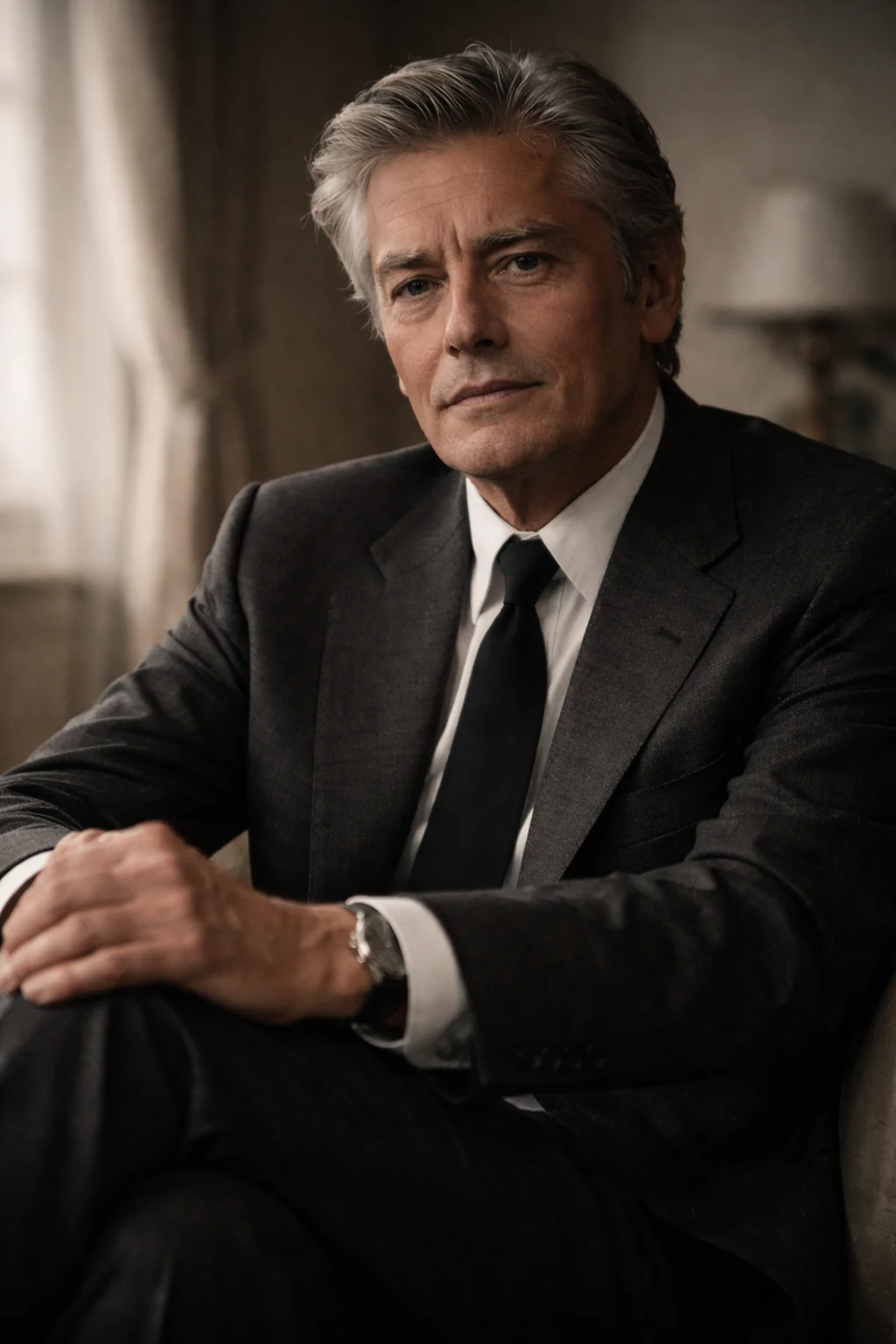
In 1976, Delon starred in Joseph Losey’s Mr. Klein. He played an art dealer in occupied Paris who profits from the persecution of Jewish citizens until he discovers that another man sharing his name appears to be compromising his identity.
Delon also participated as a producer. The film was a risky, cold, disturbing project about indifference, collaboration, and disappearing identity under Nazi occupation. It eventually became one of the most respected works in his filmography.
In 1985, he won the César Award for best actor for Bertrand Blier’s Notre histoire. The recognition confirmed something his beauty had long obscured: Delon could embody exhaustion, humiliation, and failure, not merely elegance and control.
He also achieved an unexpected success outside cinema. In 1973, he recorded “Paroles, paroles” with Dalida. She sings while he answers with seductive promises. Delon did not need to sing; his speaking voice alone helped turn the recording into a popular classic.
The Man Behind the Myth
Delon’s romantic life attracted scrutiny comparable to his film career. He married only once, to Nathalie Barthélémy, from 1964 to 1969. Their son was Anthony Delon. He later had a long relationship with Mireille Darc and, years afterward, with Rosalie van Breemen, the mother of Anouchka and Alain-Fabien.
Another man, Ari Boulogne, maintained for decades that he was the son of Delon and the singer Nico. Delon never recognized him. The legal dispute continued even after Boulogne’s death in 2023, so presenting that paternity as an established fact would be inaccurate.
Delon’s relationship with his acknowledged children was complicated and sometimes openly conflictual. Anthony and Alain-Fabien publicly described a harsh upbringing, while Anouchka maintained an especially close relationship with her father for long periods. These accounts reflect individual experiences and cannot be reduced to a single uncomplicated family narrative.
Delon was not politically neutral. He voiced sympathy for figures on the French right and made statements about women, homosexuality, and society that generated strong criticism. When Cannes awarded him an honorary Palme d’Or in 2019, the tribute produced protests alongside defenses of his historical importance to cinema.
Recognizing his cinematic greatness does not require defending every opinion he expressed or presenting him as a moral example.
The Actor Who Outlived His Youth
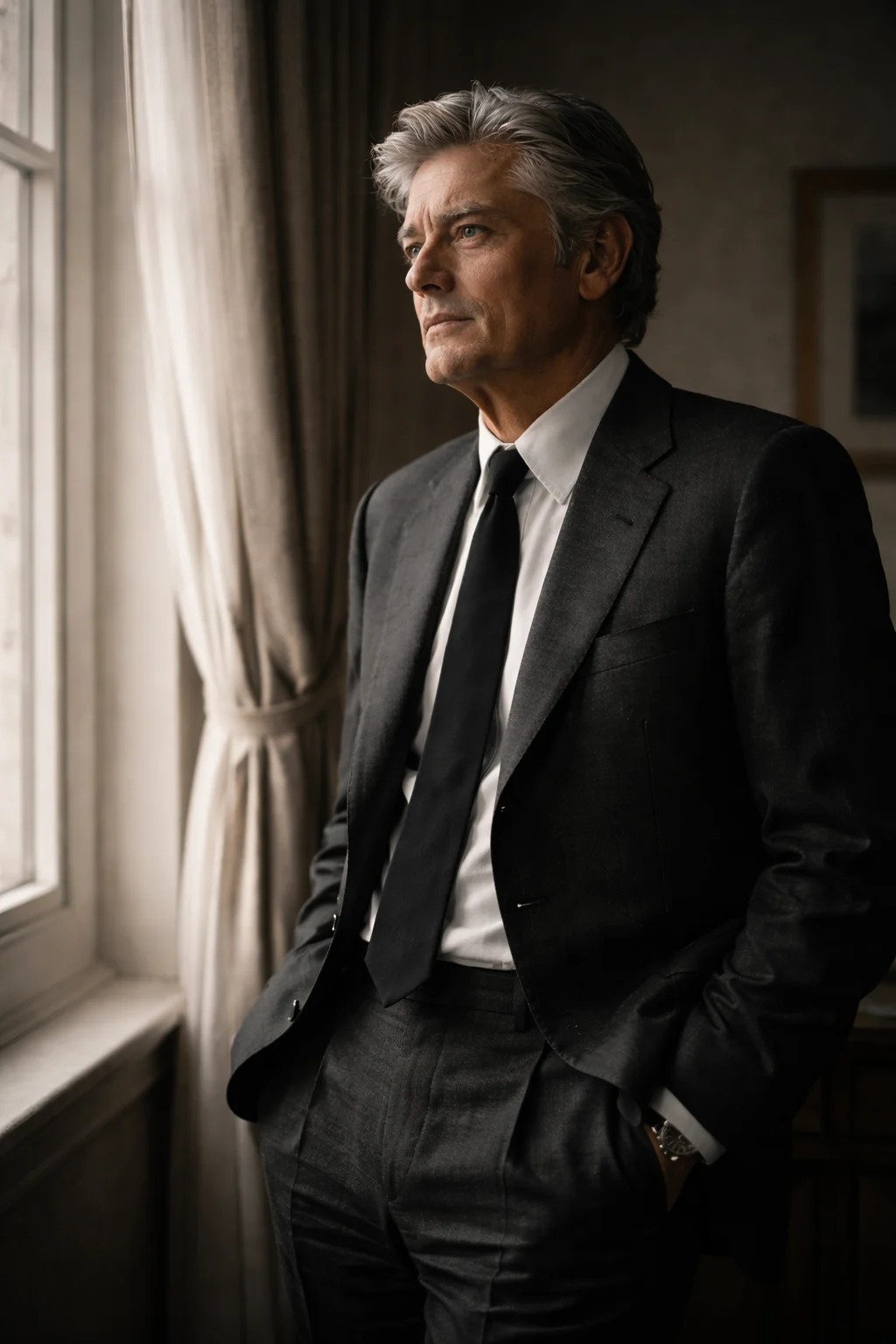
Delon suffered a stroke in 2019 that seriously damaged his health. His final years were marked by illness, seclusion, and public conflict among his children over his care, property, and the people surrounding him.
He died on August 18, 2024, at his estate in Douchy. According to the family announcement, his children were with him. He was eighty-eight.
Tributes appeared across the world. For many viewers, the loss represented more than the death of a French actor. It marked the disappearance of a particular kind of film star: distant, inaccessible, and larger than ordinary life.
Alain Delon shone too brightly because cinema preserved his youth in a form that seemed incapable of aging. While the man accumulated wounds, illnesses, conflicts, and contradictions, the screen continued to preserve the young figure from Purple Noon, the aristocrat from The Leopard, and the silent killer from Le Samouraï.
Beauty began his career, but it does not fully explain it. Great directors understood that his face could express innocence and cruelty, desire and emptiness, mastery and abandonment.
Delon became both the prisoner and the owner of his own image. Perhaps that is why he remains magnetic: behind the perfection, something always seemed broken—something the camera could observe but never completely explain.
References
- Bantcheva, D., & Rosca, L. (2023). Alain Delon : Amours et mémoires. Éditions de La Martinière. View source
- Blumenfeld, S. (2018, September 21). Alain Delon : « Tout ce que j’ai fait au cinéma, je l’ai vécu ». Le Monde. View source
- Vincendeau, G. (2024, August 20). Alain Delon obituary: an ice-cold angel of French cinema. British Film Institute. View source
- Kiang, J. (2021, July 20). La piscine: Savage Water. The Criterion Collection. View source
- Reuters. (2024, August 18). French movie giant Alain Delon dies aged 88. View source
- Festival de Cannes. (2019). Alain Delon, Honorary Palme d’or at the 72nd Festival de Cannes. View source
- Académie des Arts et Techniques du Cinéma. (n.d.). Alain Delon. View source
More from this collection
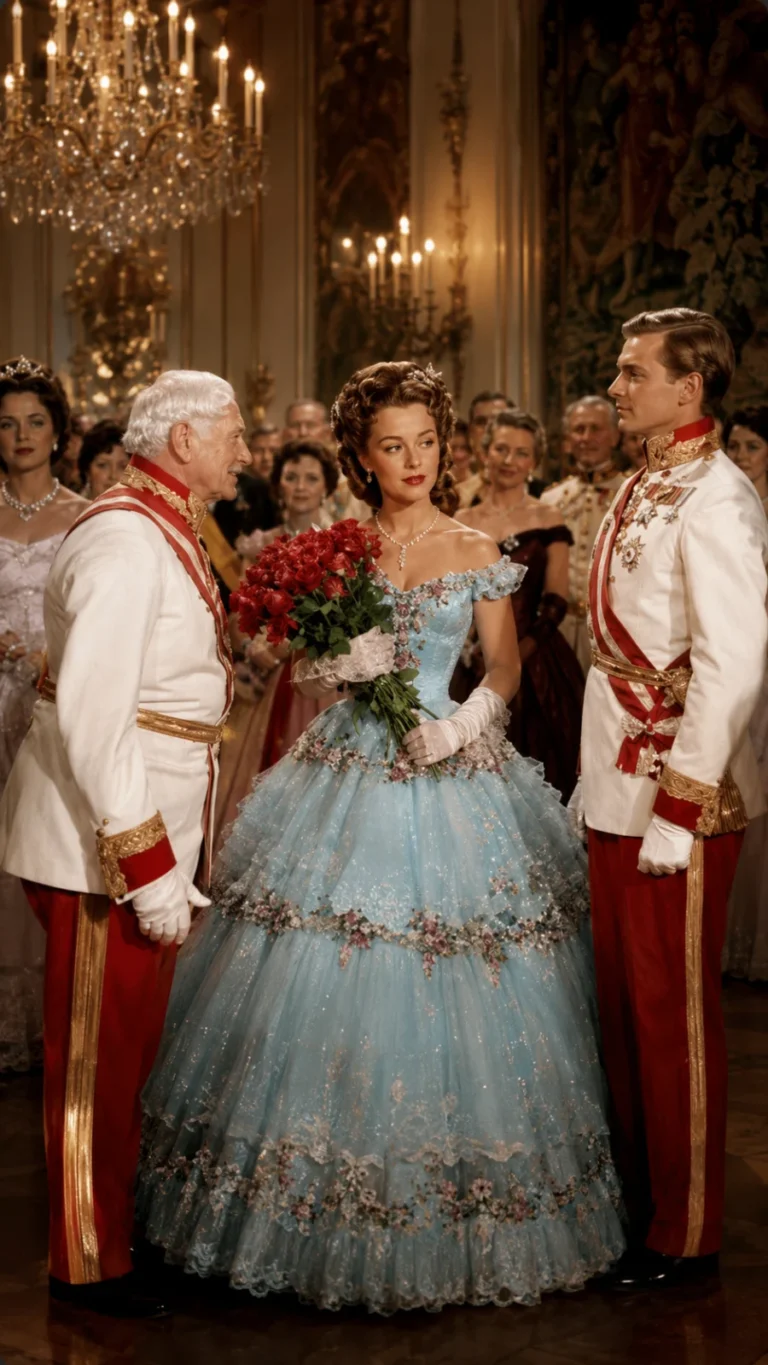
Romy Schneider: The Actress Who Escaped a Princess and Lent Her Name to a Rebellion
Read story →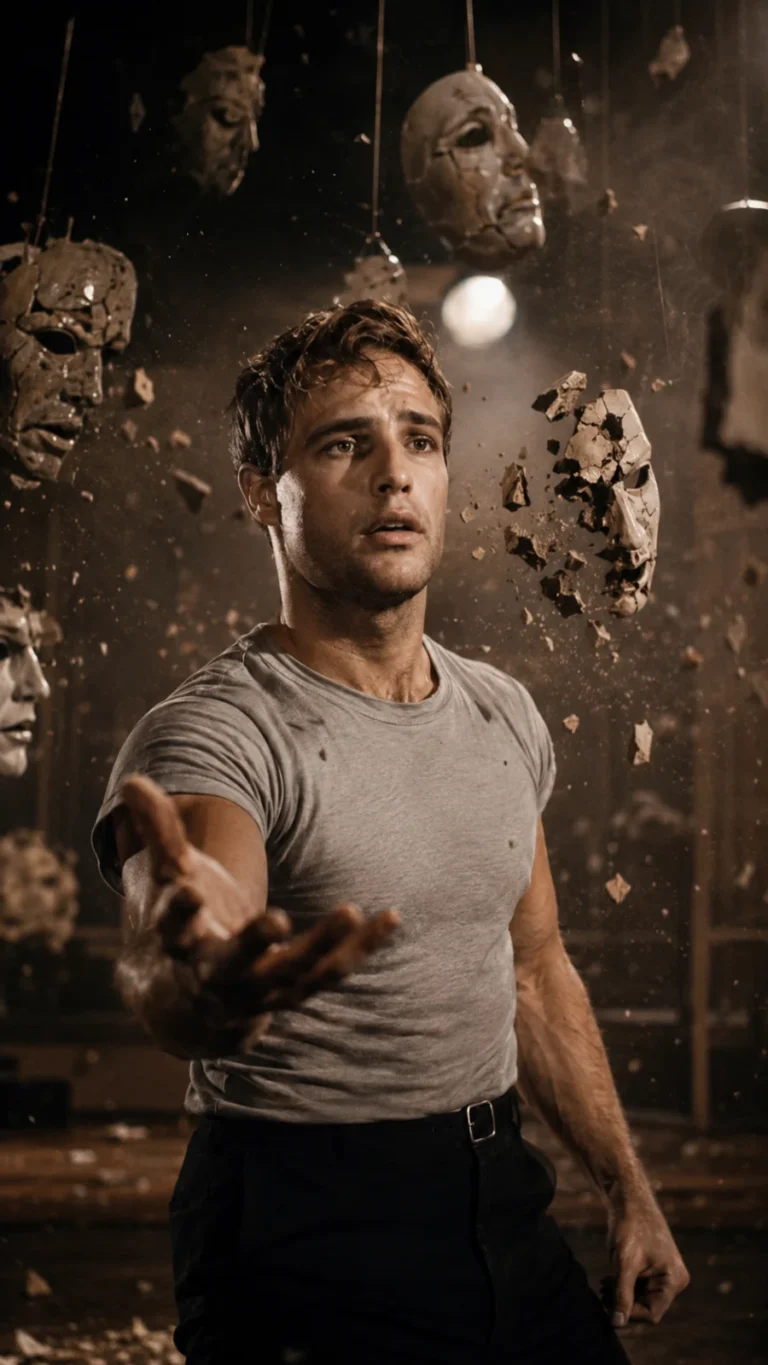
Marlon Brando: The Actor Who Turned an Oscar into a Protest
Read story →