In this storyOpen index
Violeta Parra: The Woman Who Traveled Across Chile to Return Its Vanishing Songs to the People
From rural songs to embroidered art and the La Reina Tent: an artist who transformed popular memory into a voice of her own.
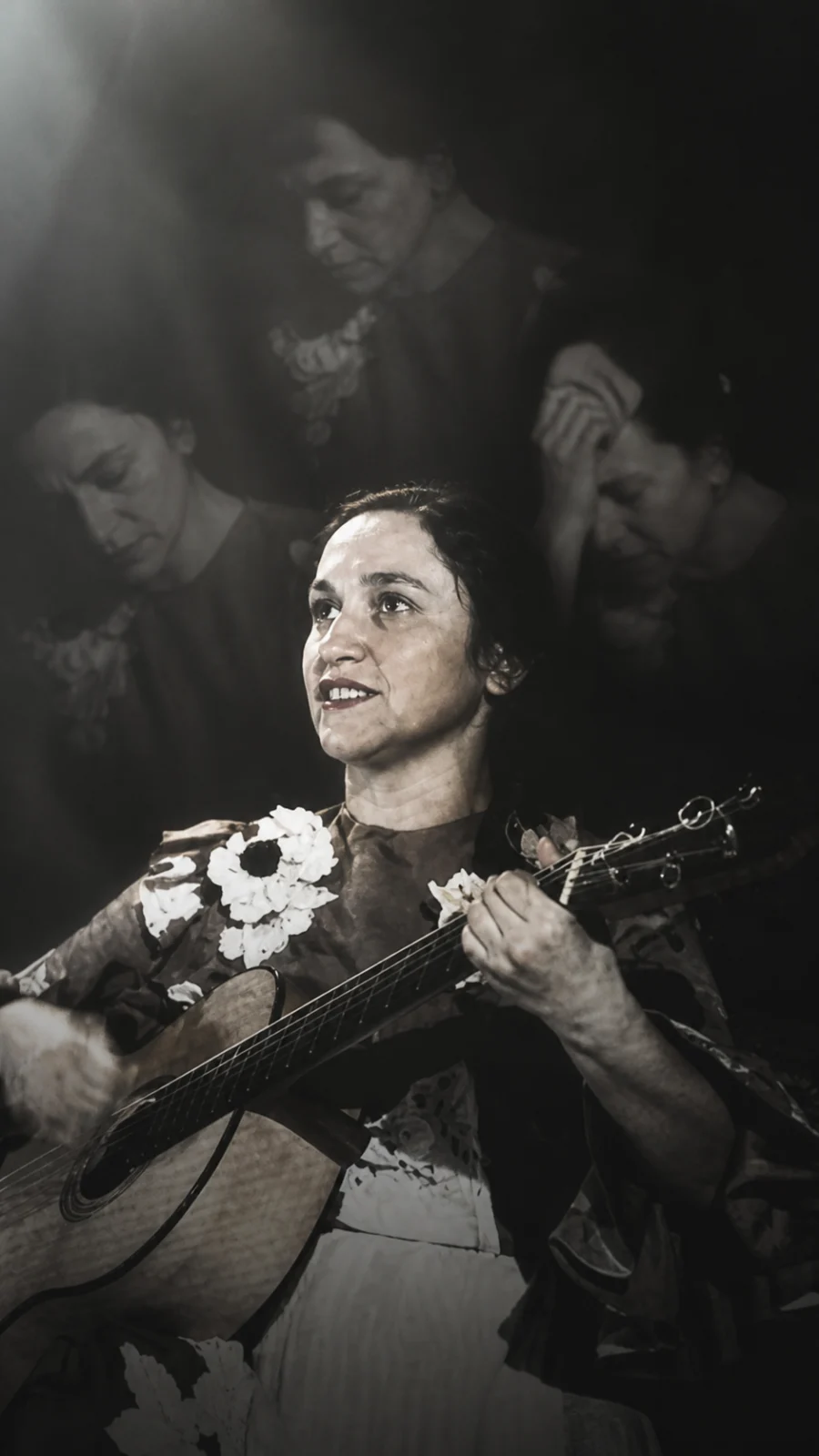
Before writing some of Latin America’s most profound songs, she traveled along rural roads asking farmers and elderly singers what they could still remember.
She was not searching for radio hits. She was looking for tonadas, décimas, cuecas, wedding songs, blessings, and ceremonial chants that might disappear when the last person capable of singing them died. Violeta Parra listened, recorded, and copied verses while discovering that a country’s culture could also vanish in silence.
She was a singer, composer, poet, folklorist, ceramicist, embroiderer, and painter. She transformed personal experience into universal songs and anonymous traditions into a form of cultural resistance.
Her voice was not perfect by commercial standards. It was something much harder to find: a voice impossible to mistake for anyone else’s.
Violeta Parra: Memory That Sings Again
A Life Told Through Songs and Embroidery
El circo
This 1961 arpillera introduces Violeta’s storytelling through wool and fabric. The Violeta Parra Museum documents the work’s preservation and its inclusion in the 2022 Venice Biennale. The link opens the institutional report; the displayed image is a reconstruction of her artistic world, not a reproduction of the artwork.
AI-generated visual reconstruction; not a historical document.
A Childhood Between Music and Poverty
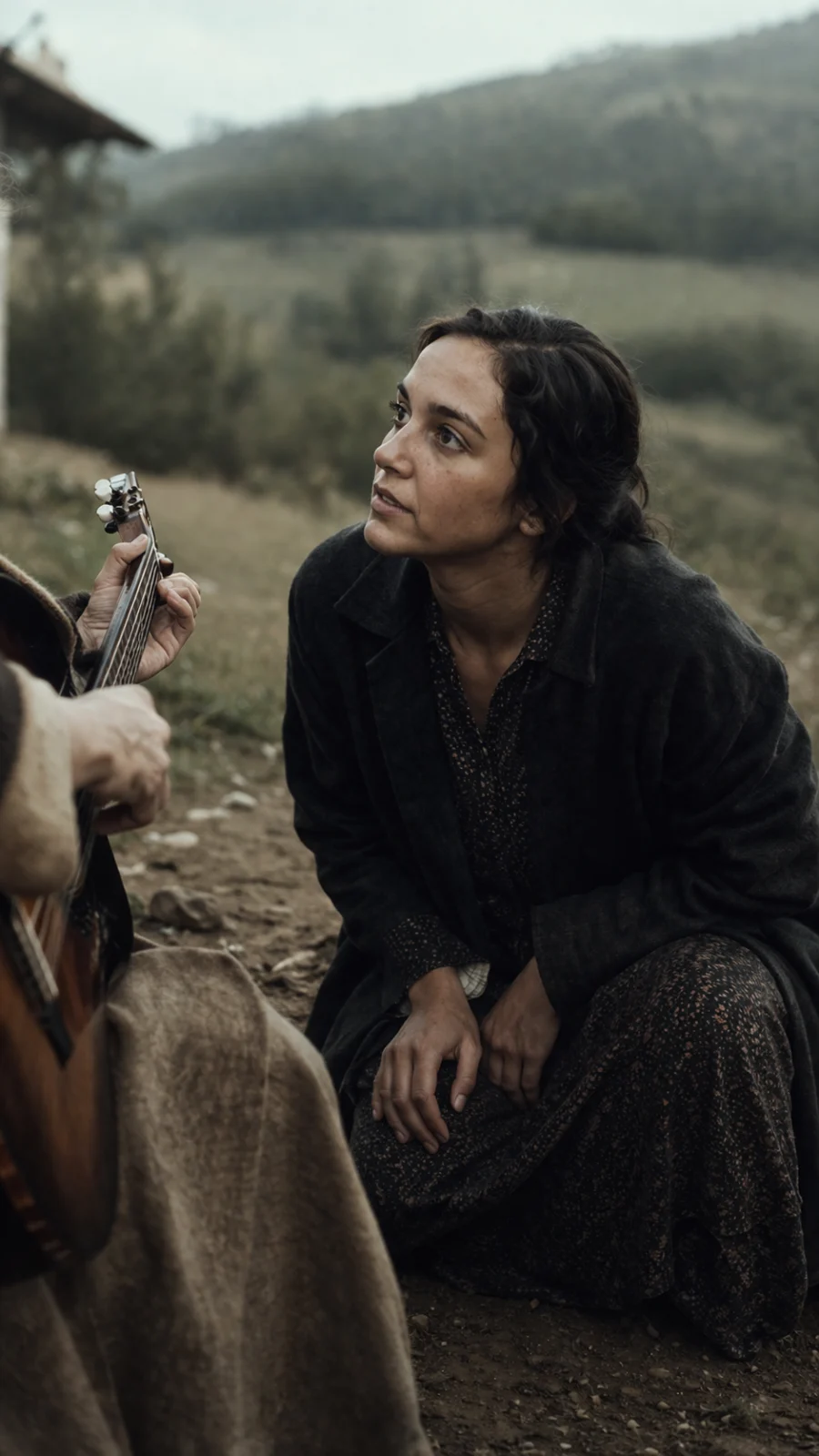
Violeta del Carmen Parra Sandoval was born on October 4, 1917, in the Ñuble area of southern Chile. The Violeta Parra Foundation places her birth in San Fabián de Alico; Memoria Chilena’s chronology records San Carlos. She was the daughter of Clarisa Sandoval, a peasant woman and seamstress, and Nicanor Parra, a music teacher. She grew up in a large family where songs, instruments, and poetry existed alongside serious economic hardship (Fundación Violeta Parra, n.d.).
Her father played several instruments and taught music to his children, but alcoholism and poverty marked the family’s life. After his death, which occurred while Violeta was still an adolescent, the need to help support the household became urgent.
Her siblings included Nicanor Parra, the future creator of “antipoetry,” and the musicians Eduardo, Roberto, and Hilda Parra. The family did not constitute an artistic school in any academic sense. Their education came from living together, popular celebrations, public performances, and the necessity of earning money.
Violeta began singing with Hilda in restaurants, circuses, bars, and modest venues. They performed boleros, rancheras, cuecas, and popular songs of the period. At that stage, singing was not yet a cultural mission. It was work.
That distinction would become crucial. Violeta learned from within which music venue owners would pay for and which songs remained hidden in courtyards, kitchens, and rural communities.
The Artist Who Had to Unlearn Radio
In Santiago, Violeta performed with different groups, recorded popular songs, and appeared on radio programs. She might have continued as an interpreter of commercial repertoires, but during the 1950s she changed direction.
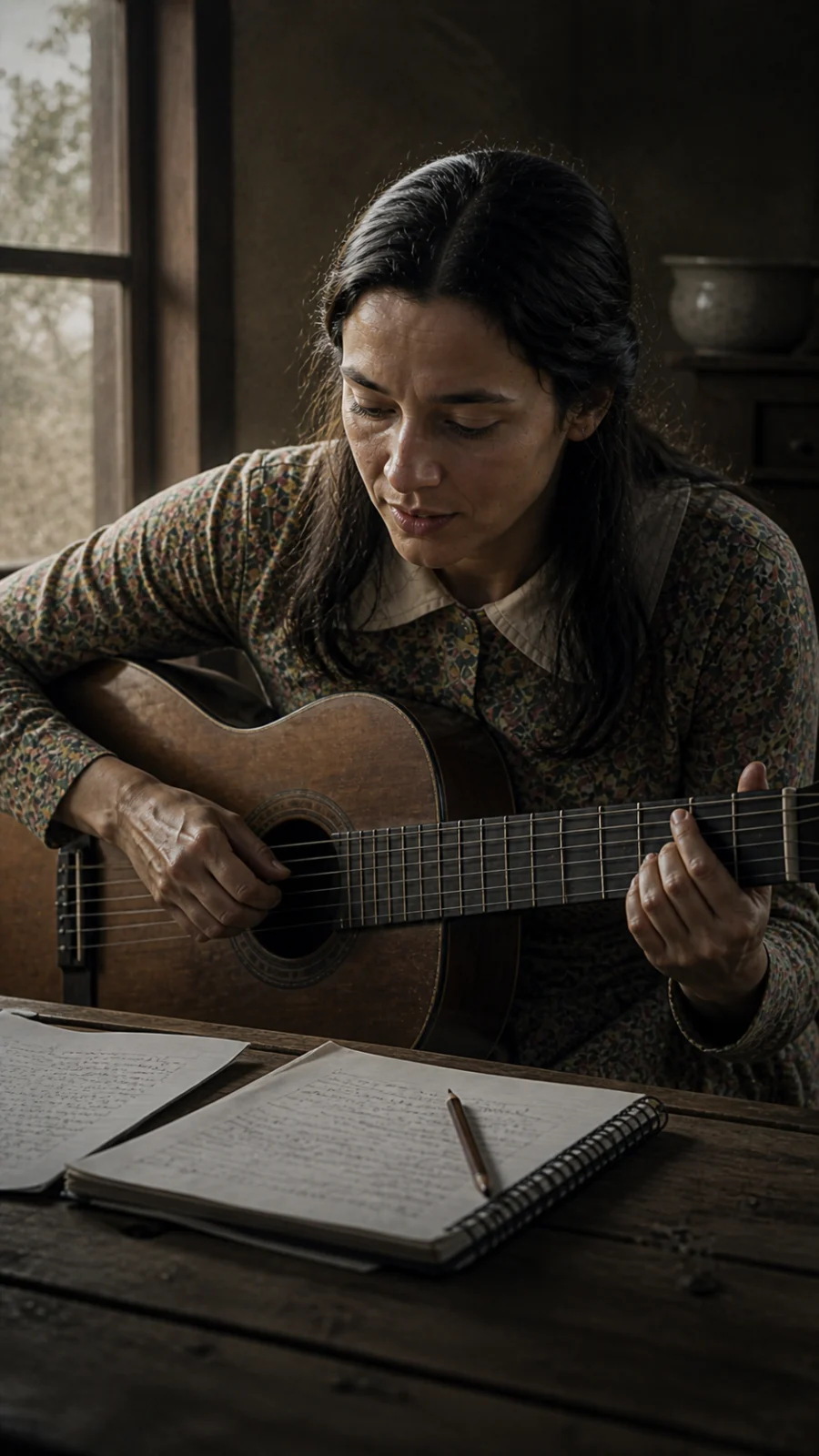
Her brother Nicanor encouraged her to investigate Chilean folklore beyond the polished versions performed in urban entertainment. Violeta began traveling through rural communities with notebooks and recording equipment, searching for singers who preserved orally transmitted repertoires (Parra, 1985).
She did not simply request a song and leave. She spoke with performers, documented variations, learned guitar tunings, and tried to understand the occasions for which the songs were used. Her research included music associated with births, weddings, funerals, agricultural labor, religious celebrations, and romantic conflict.
She worked especially throughout central and southern Chile. Among the people she encountered was Rosa Lorca, a singer, guitarist, and midwife—one of the many women whose memories nourished Violeta’s collections.
The research changed her way of singing. She moved away from some of the refinement imposed by radio and approached vocal colors, melodic turns, and poetic structures that the music industry considered old-fashioned or commercially unsuitable.
She was not copying a motionless past. She was discovering materials with which to construct new music.
Recording Before Memory Disappeared
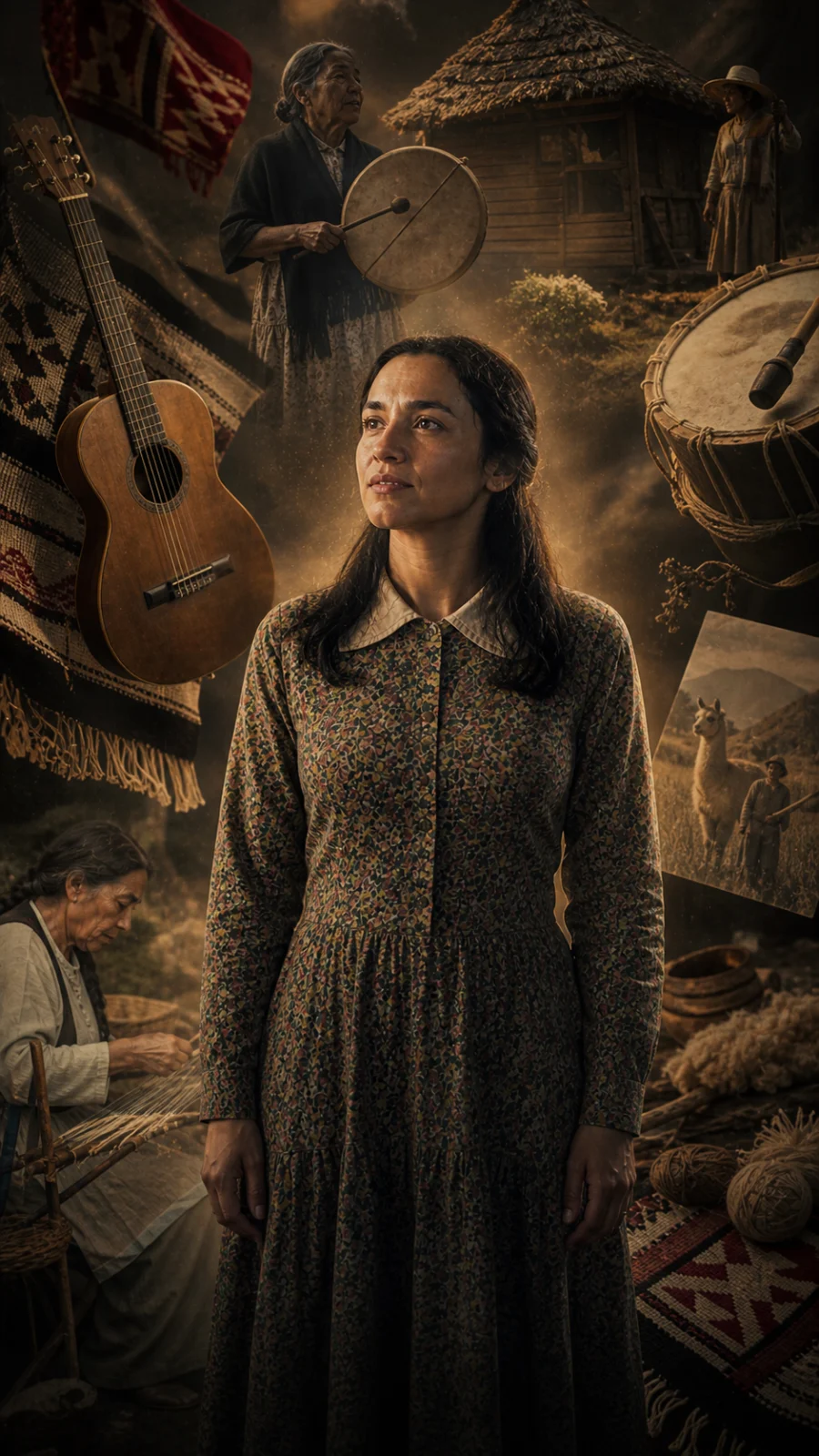
Violeta Parra’s folkloric research was one of her most important achievements, although it was later overshadowed by her original compositions.
She documented hundreds of songs and testimonies. Precise totals vary depending on whether complete pieces, fragments, alternate versions, and materials preserved in different archives are counted. Absolute figures frequently repeated without explanation should therefore be treated cautiously.
Her radio program Así canta Violeta Parra helped circulate some of this repertoire. Instead of presenting folklore as picturesque decoration, she identified singers and explained the songs’ contexts. In doing so, she acknowledged that these works had not originated in cultural institutions but among specific people whose voices rarely entered a recording studio (González et al., 2009).
Violeta understood something that now seems obvious but was not widely accepted within the official culture of her time: collecting did not have to mean taking possession of someone else’s voice. It could mean listening, preserving, and allowing that voice to circulate again.
Because of her work, traditions in danger of disappearing reached new audiences. Her influence would later extend to musicians associated with the Chilean New Song movement, including Víctor Jara, Quilapayún, and Inti-Illimani.
Europe and a Loss Experienced From Afar
In 1955, she received the Caupolicán Prize as folklorist of the year. The recognition helped make her first journey to Europe possible in 1955. She attended the World Festival of Youth and Students in Warsaw and later lived temporarily in Paris, where she performed, recorded, and introduced audiences to Chilean music.
While she was abroad, her youngest daughter, Rosita Clara, became ill and died in Chile. Distance made the loss especially painful. Violeta could not be with her child during her final moments (Parra, 1985).
Europe expanded her artistic horizons without separating her from the traditions she had collected. She recorded Chilean repertoire for European labels and appeared in settings where her manner of singing was received as something different from the exportable, picturesque image of Latin American folklore.
After returning to Chile, she continued researching and composing. Her songs increasingly united traditional forms with contemporary subjects: inequality, exploitation, injustice, religion, love, and abandonment.
Violeta was no longer merely an interpreter of folklore. She had become an author capable of arguing with it.
Songs That Asked No Permission
In compositions such as La carta, Arriba quemando el sol, Qué dirá el Santo Padre, and Arauco tiene una pena, Violeta used popular structures to address repression, poverty, institutional violence, and the dispossession of Indigenous people.
She did not write from the distance of a manifesto. Her criticism was constructed through concrete images, irony, storytelling, and a voice that appeared to speak directly to the listener.
La carta emerged after she learned that her brother Roberto had been imprisoned during the government of Jorge Alessandri. The song transforms family news into a political accusation. Arriba quemando el sol drew upon her experiences in Chile’s mining north and contrasts the wealth extracted from the earth with the poverty of those who labored there.
Her politics were close to communism and popular movements, but her work cannot be reduced to party propaganda. Violeta could also challenge religious institutions, cultural hierarchies, and the indifference of people who claimed to represent the poor.
She sang against the shadow because she refused to allow suffering to remain unnamed.
The Visual Artist Who Worked Through Illness
In the late 1950s, hepatitis forced Violeta to rest. During this period, she developed her visual art more intensely, producing embroidery, burlap tapestries, paintings, wire sculptures, and ceramics.
She did not treat these works as a secondary pastime. Musicians, animals, family scenes, wakes, legends, and popular characters reappeared within them. She used simple materials and techniques frequently associated with women’s domestic labor, transforming them into powerful visual narratives.
The burlap works did not attempt to reproduce the rules of academic painting. Wool, fabric, and thread formed surfaces on which figures appeared to move like characters inside a song.
Violeta did not establish strict boundaries between artistic media. A story could become a décima, a song, a painting, or an embroidered picture. What mattered was not the artistic category, but finding a form capable of containing the story.
This part of her career demonstrates why describing her only as a “singer-songwriter” is insufficient. Her project was broader: she sought an artistic language made from sound, words, color, and physical materials.
The Truth About Her Louvre Exhibition
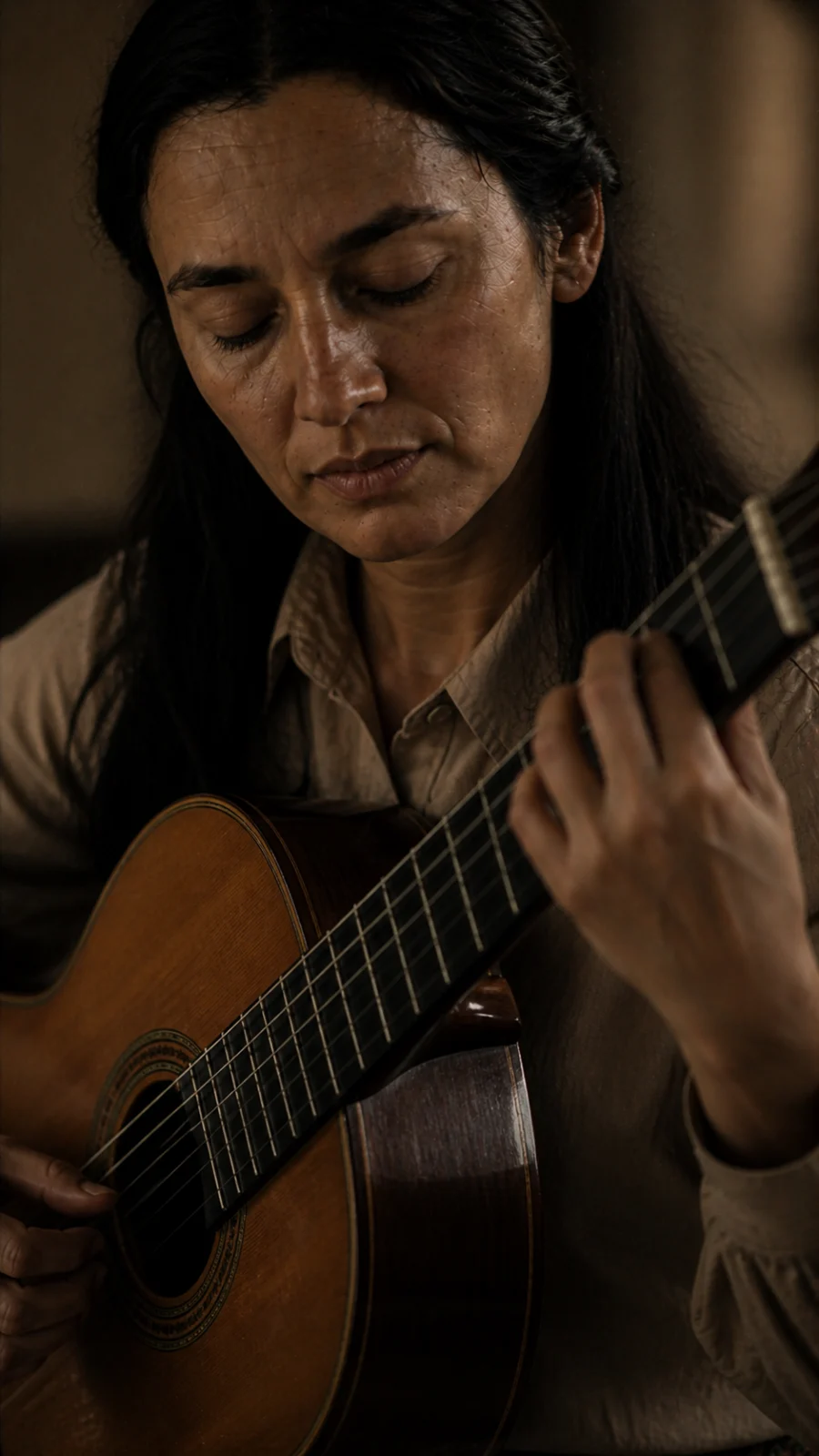
In 1964, Violeta Parra presented a solo exhibition of burlap works, paintings, and wire sculptures in Paris. The achievement is usually summarized by saying that she was “the first Latin American artist to have a solo exhibition at the Louvre.”
That statement requires clarification.
The exhibition took place at the Musée des Arts Décoratifs, an institution located inside the Louvre Palace but administratively separate from the Musée du Louvre. It was not an exhibition installed in the famous museum’s painting galleries.
This does not diminish the achievement. Violeta was recognized as the first Latin American artist to hold a solo exhibition at that decorative arts museum within the Louvre complex. Presenting tapestries, paintings, and sculptures created by a self-taught Chilean artist in such a setting was extraordinary (Fundación Violeta Parra, n.d.).
The lesser-known fact is that European recognition did not resolve her economic insecurity. Violeta could exhibit in Paris and then return to Chile to struggle with sustaining an arts venue and attracting an audience.
Prestige does not always pay bills or overcome loneliness.
Gilbert Favre and Love Transformed Into Song
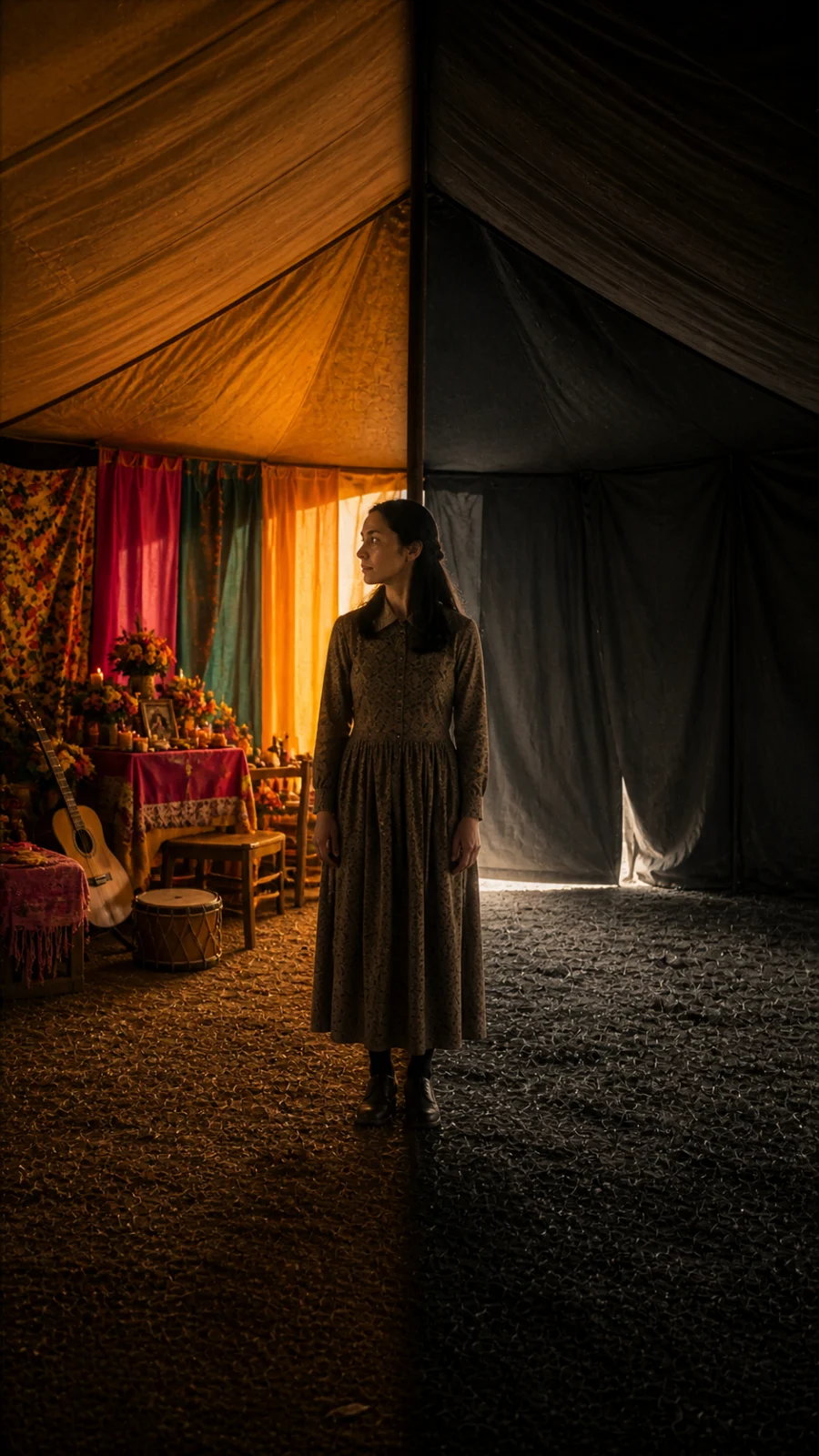
During her second extended stay in Europe, Violeta had a relationship with Gilbert Favre, a Swiss musician and anthropologist. They shared travel, music, and projects, but the relationship was also marked by separation and conflict.
Favre later moved to Bolivia, where he became involved in the musical life of La Paz. Violeta traveled there to see him, but the relationship was not permanently restored.
Some of her most painful compositions emerged from this experience. Run Run se fue pa’l norte turns romantic distance into geography. Maldigo del alto cielo transforms abandonment into a curse extending across the natural world. Volver a los 17, by contrast, describes love as a force capable of restoring vulnerability and wonder to an adult.
It would be unfair to explain these songs solely through Favre’s biography. Violeta transformed a specific experience into something larger: desire, dependence, absence, and the contradiction of loving something capable of destroying us.
The La Reina Tent: A Dream Too Large for Its Audience
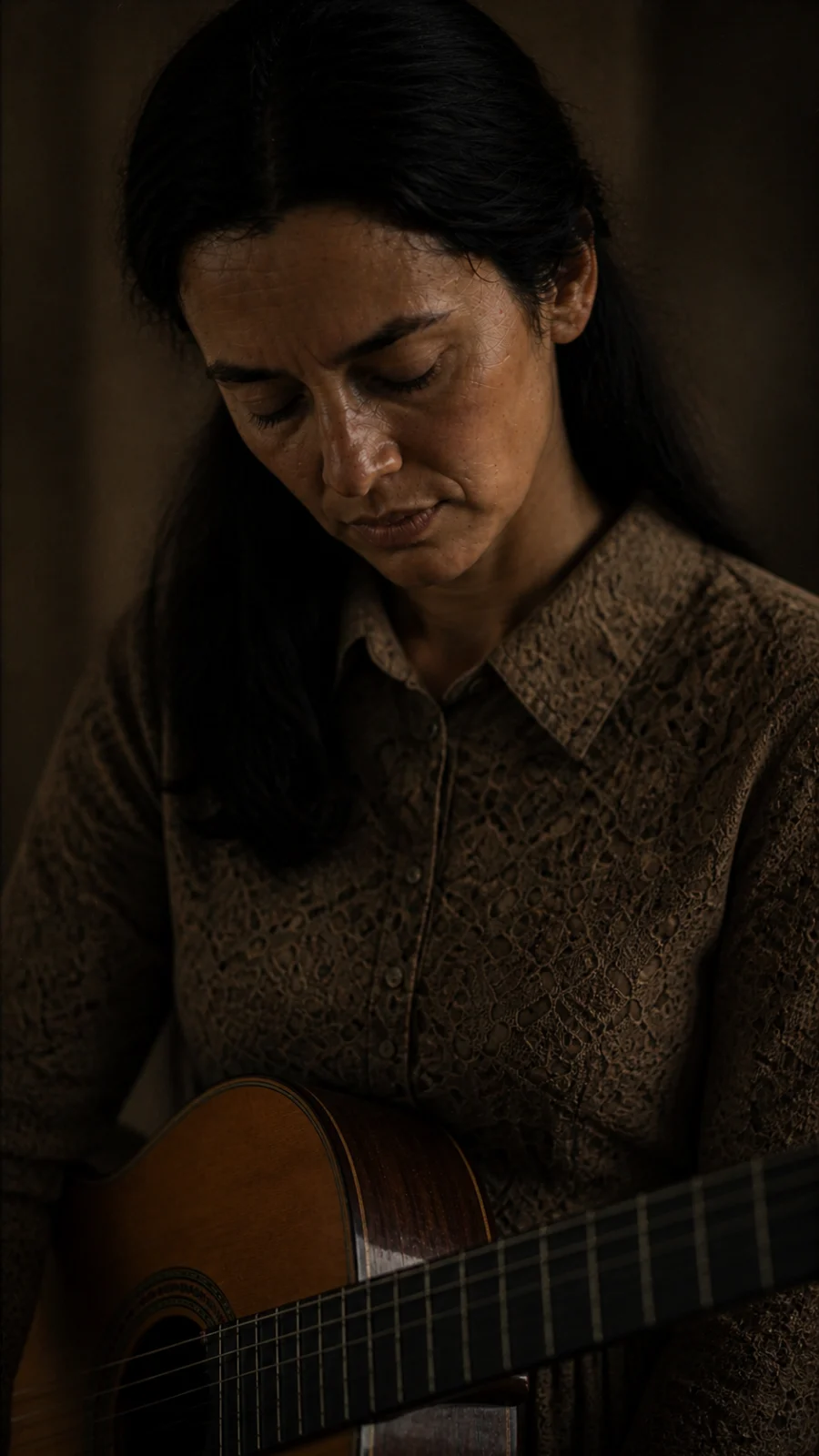
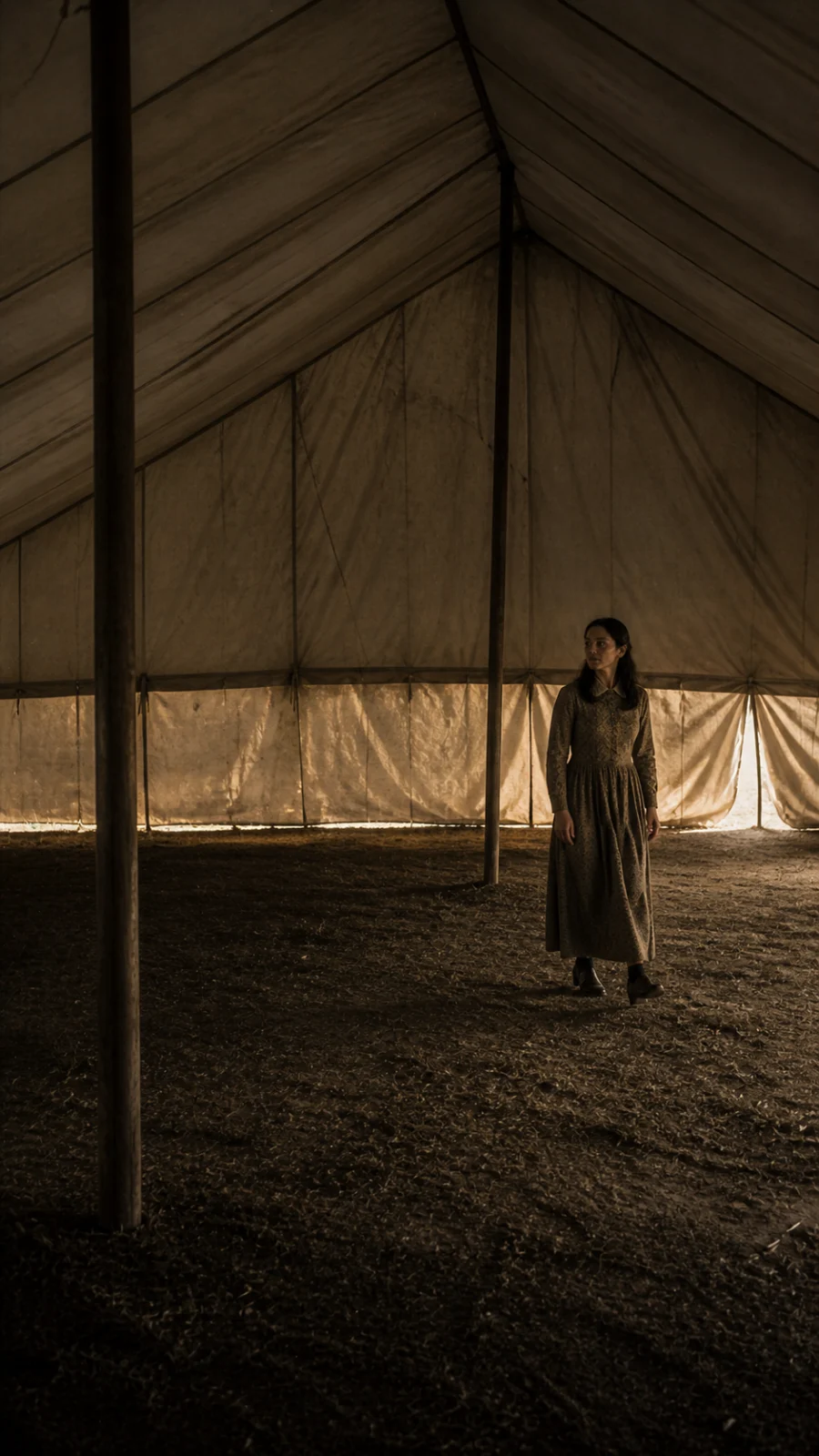
After returning to Chile, Violeta attempted to create a permanent center for popular culture. In the Santiago municipality of La Reina, she erected a large tent intended as a space for music, food, conversation, and encounters among artists.
The La Reina Tent was an ambitious cultural project. Violeta imagined a living place where folklore would not be locked inside a display case or altered to satisfy the expectations of elegant concert halls.
The public did not attend in the numbers she expected. Its location, transportation difficulties, weather, and financial problems complicated the project. Keeping the tent operating required money and energy that Violeta did not always possess (García, 2017).
The same society that would later transform her into a national symbol did not regularly fill the space she had created.
That failure carried both material and emotional weight. It was not the sole cause of her final crisis, but it intensified her isolation.
Gracias a la vida Should Not Be Reduced to a Farewell
In 1966, she recorded Las últimas composiciones, one of the foundational albums of Latin American music. It included Gracias a la vida, Volver a los 17, Run Run se fue pa’l norte, Maldigo del alto cielo, Rin del angelito, and other works of extraordinary maturity.
After her death, Gracias a la vida was interpreted as a deliberate farewell or a suicide note transformed into song. The interpretation is understandable because of the timing, but it cannot be established as Violeta’s definitive intention.
The song gives thanks for the senses, language, movement, love, laughter, and tears. Its final verse unites the individual singer’s voice with the voices of everyone else. It does not express uncomplicated happiness. It recognizes that life contains gratitude and pain simultaneously.
Removing it from the context of the album also distorts its meaning. The same record contains both the blessing of Gracias a la vida and the fury of Maldigo del alto cielo. Violeta did not have to choose between loving existence and suffering through it. She could sing both truths.
Mercedes Sosa’s later recording played a decisive role in carrying the song to international audiences. Its author, however, was Violeta Parra—a necessary clarification because the work is still sometimes mistakenly attributed to the Argentine singer.
Her Death and the Danger of Turning It Into an Explanation
On February 5, 1967, Violeta Parra died by suicide at the La Reina Tent. She was forty-nine.
Economic hardship, poor attendance at the tent, romantic conflict, and earlier emotional crises formed part of her final years. No single cause, however, can fully explain a decision of that nature.
Presenting her death as the inevitable end of a tormented artist can turn genuine suffering into a romantic legend. It also risks making her entire body of work appear to be preparation for her final act.
Violeta did not create because she was destined to die. She created because she was intensely committed to life, even when life became unbearable.
She had conducted research, traveled, raised children, loved, argued, embroidered, painted, built a tent, and composed songs that would pass from one generation to the next. Her death belongs to her history, but it does not contain the complete explanation of her art.
The Voice That Returned Multiplied
Violeta Parra died before the Chilean New Song movement reached its best-known period of expansion. Her influence continued through her children Isabel and Ángel Parra and through countless Latin American artists.
Her songs were performed by Mercedes Sosa, Víctor Jara, Joan Baez, Inti-Illimani, Quilapayún, Milton Nascimento, and many other voices. Each version expanded her reach, although better-known international performers sometimes obscured the original author.
Her legacy consists of more than a collection of songs. She also changed the understanding of folklore. She demonstrated that tradition was not a motionless relic, but a language capable of speaking about the present.
The woman who asked elderly rural singers which verses they still remembered eventually became part of that same collective memory. Her songs moved beyond recordings and returned to gatherings, protests, stages, and anonymous voices.
Violeta sang against the shadow, but she never pretended she could eliminate it. She gave it sound, words, and color so that no one could mistake it for silence.
References
- Biblioteca Nacional de Chile. (n.d.). Violeta Parra (1917–1967). Memoria Chilena. View source
- Dillon, L. (Ed.). (2017). Violeta Parra: Life and work. Tamesis Books. View source
- Fundación Violeta Parra. (n.d.). Trayectoria. View source
- García, M. (Ed.). (2017). Violeta Parra en sus palabras: Entrevistas (1954–1967). Catalonia / Periodismo UDP. View source
- González, J. P., Ohlsen, O., & Rolle, C. (2009). Historia social de la música popular en Chile, 1950–1970. Ediciones Universidad Católica de Chile.
- Museo Violeta Parra. (2023). Memoria anual 2022. Fundación Museo Violeta Parra. View source
- Parra, I. (1985). El libro mayor de Violeta Parra. Ediciones Michay.
- Parra, V. (1970). Décimas: Autobiografía en versos. Pomaire. View source
- Subercaseaux, B., Stambuk, P., & Londoño, J. (1982). Gracias a la vida: Violeta Parra, testimonio. Granizo / CENECA.
More from this collection
Chavela Vargas: The Woman Who Turned Her Wounds Into a Form of Freedom
Read story →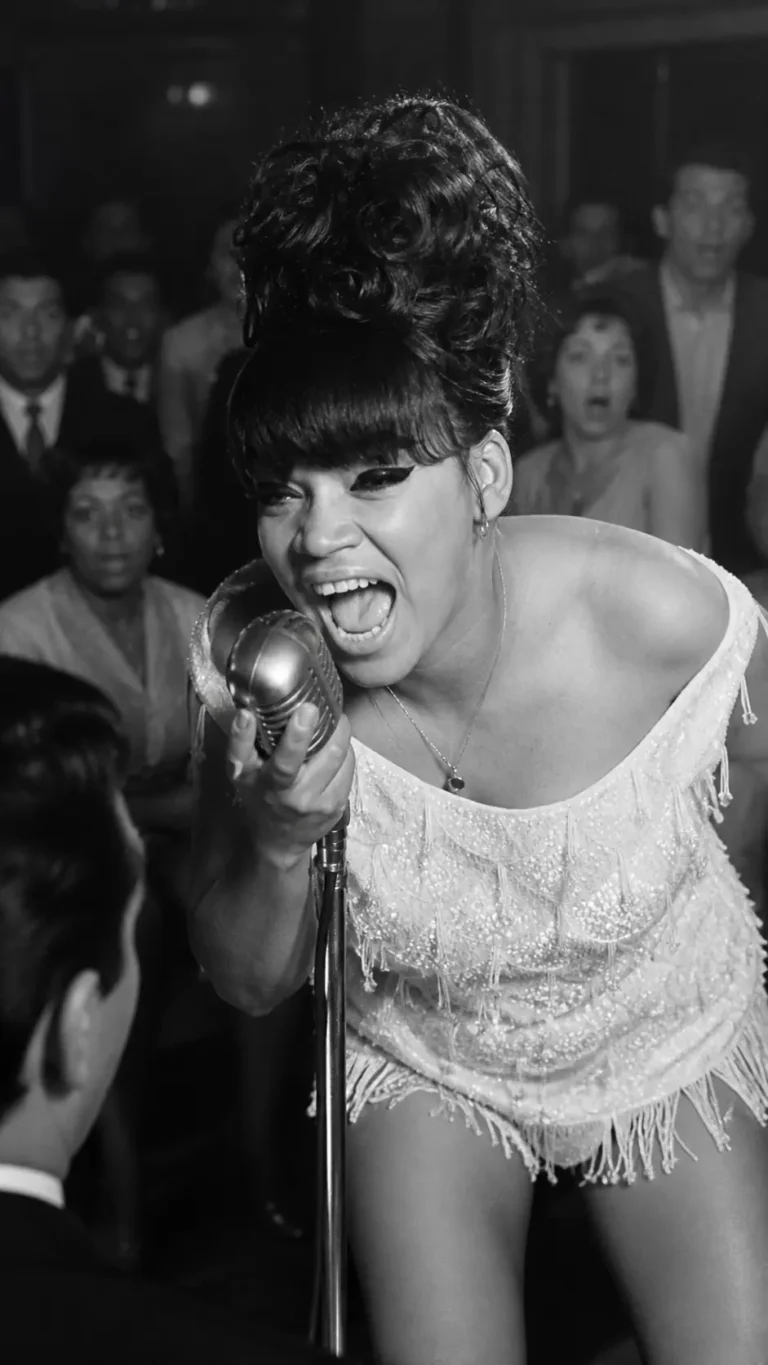
La Lupe: The Woman Who Turned Bolero into a Battle
Read story →