
In this storyOpen index
Rasputin: The Man Russia Turned Into a Demon Before Turning Him Into a Legend
A Siberian pilgrim, a terrified imperial family, and a murder turned into legend. Rasputin’s power becomes clearer when evidence is separated from rumor.

He was murdered by aristocrats who claimed they were trying to save the monarchy. Three months later, the monarchy collapsed.
The irony summarizes the story of Grigori Yefimovich Rasputin. For years, he was accused of secretly ruling Russia, seducing the empress, manipulating the tsar, and corrupting the imperial court. After his death, his killers claimed that he had survived poison, repeated gunshots, and a beating before finally drowning beneath the ice.
Much of that story was false.
Rasputin did acquire extraordinary access to Russia’s last imperial family. He also drank heavily, pursued relationships with numerous women, and used his proximity to the throne to interfere in appointments and personal disputes. But he was never Russia’s secret ruler or the supernatural monster portrayed by his enemies.
His real power was more disturbing: he convinced a terrified family that the life of its only male heir depended upon him.
Rasputin: the man behind the legend
A life told between faith, the court, and myth
A letter against war
Yale’s Beinecke Library Romanov collection includes a letter from Rasputin to the emperor warning against involvement in the First World War. It is documentary evidence of his opposition to war, distinct from prophecies later attached to his name. The image is a reconstruction, not the original letter.
AI-generated visual reconstruction; not a historical document.
The Peasant Who Was Never a Monk

Grigori Rasputin was born in Pokrovskoye, a small village in western Siberia, on January 21, 1869, according to the Gregorian calendar. Parish records establish this date more securely than the contradictory chronologies circulated later (Smith, 2016).
He was the son of peasants and received little formal education. As a young man, he acquired a reputation for drinking, fighting, and minor theft, although many stories about his early life came from testimony collected after he had already become a hated public figure.
He married Praskovia Dubrovina in 1887. They had several children, three of whom survived into adulthood. Rasputin never permanently abandoned his family. He returned to Pokrovskoye, sent money home, and received visitors and followers there.
After experiencing a religious crisis, he began making pilgrimages and spent time near the Verkhoturye monastery. He traveled to holy sites, spoke with members of the clergy, and developed a personal style of preaching centered on repentance, prayer, and direct contact with the divine.
He was never ordained as a priest or professed as a monk. The famous “mad monk” was not actually a monk. He was a lay religious pilgrim, one of the many spiritual wanderers who moved throughout the Russian Empire (Fuhrmann, 2013).
He was also accused of belonging to the Khlysty, a clandestine religious sect associated by its enemies with ecstatic rituals and sexual practices. Church investigations failed to prove that he was a member. The accusation, repeated for decades, helped fuse religion, sexuality, and danger around his name.
Arrival in St. Petersburg
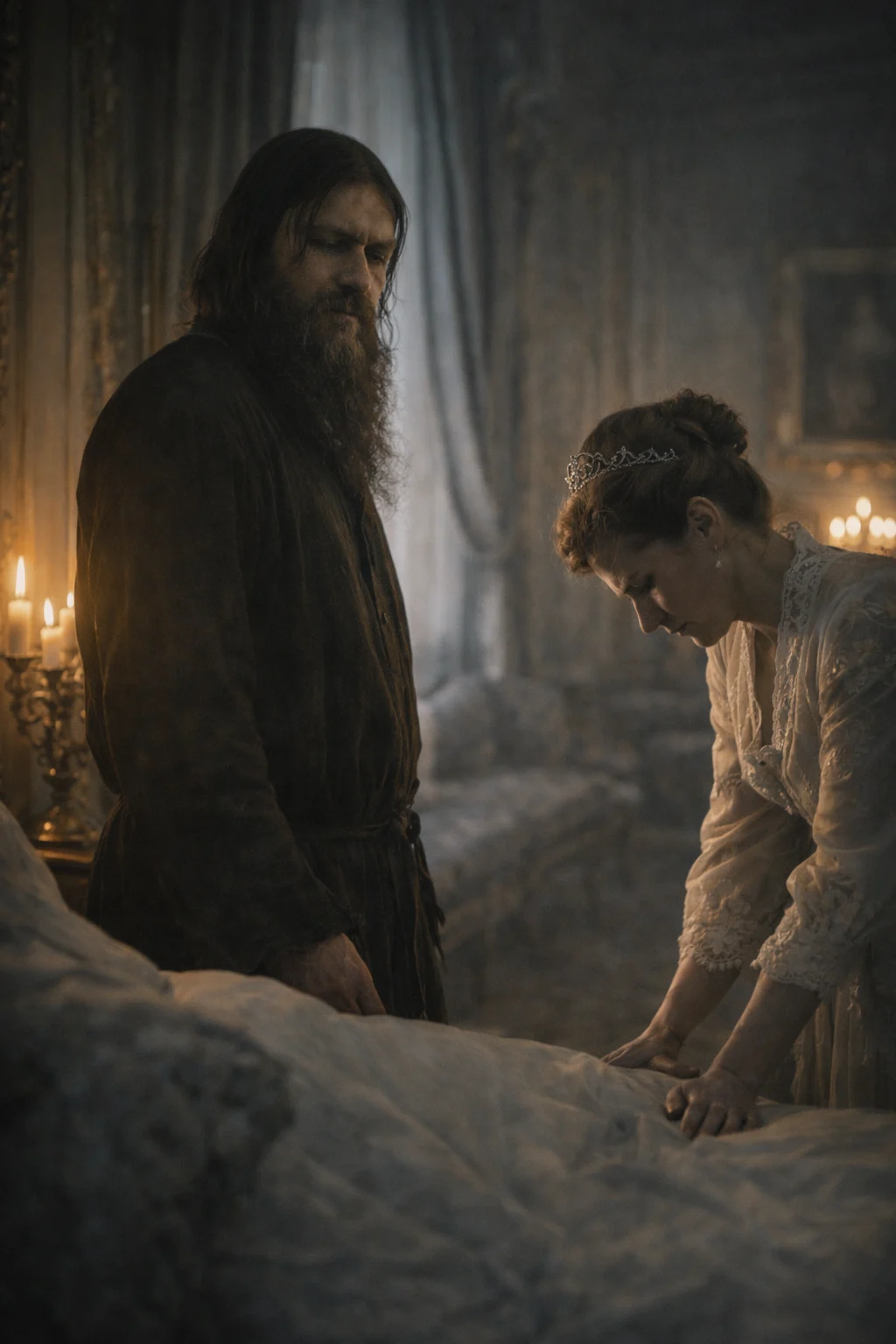
Rasputin reached St. Petersburg in the early twentieth century carrying recommendations from religious figures impressed by his spiritual intensity. The imperial capital was experiencing a fascination with mysticism, séances, healers, and alternative forms of religious experience.
His peasant origins increased his appeal. To certain aristocrats, the man with an unkempt beard and penetrating gaze seemed to represent an authentic Russia they barely understood. He spoke without refinement, addressed powerful people with unsettling familiarity, and gave the impression that he could recognize their private fears.
In November 1905, he was introduced to Tsar Nicholas II and Empress Alexandra. The meeting was brief, but Rasputin gradually entered a private circle defined by a secret the imperial family desperately protected.
Tsarevich Alexei, the only son of Nicholas and Alexandra, suffered from hemophilia. A seemingly minor injury could produce prolonged and potentially fatal bleeding. The illness was concealed because it cast doubt upon the dynasty’s future (Massie, 1967).
The Boy Whose Blood Opened the Palace Doors

Rasputin did not discover hemophilia and could not cure it. Nevertheless, during several crises, he appeared to relieve Alexei’s suffering.
The explanation remains disputed. His calm voice may have reduced the anxiety of both the child and his mother. He may also have persuaded doctors to stop harmful treatments. It has been suggested that he ordered the withdrawal of medicines containing aspirin, which could worsen bleeding, but there is insufficient documentation to establish this as the decisive explanation in every episode.
What matters historically is not whether he possessed healing powers, but that Alexandra believed he did.
The most extraordinary episode occurred in 1912, when Alexei experienced a severe hemorrhage while the imperial family was staying at Spala, then within the Russian Empire. His physicians feared he would die. Alexandra appealed to Rasputin, who was far from the palace. After receiving a message from him assuring her that the child would survive, Alexei’s condition began to improve (Smith, 2016).
The recovery may simply have coincided with the natural course of the bleeding. To Alexandra, however, it was a miracle.
From that moment, driving Rasputin away meant, in her mind, risking her son’s life. Ministers, relatives, and priests could submit reports about his conduct, but they were competing against something more powerful than any document: the memory of a dying child who had improved after Rasputin’s reassurance.
The Private Man and the Public Character
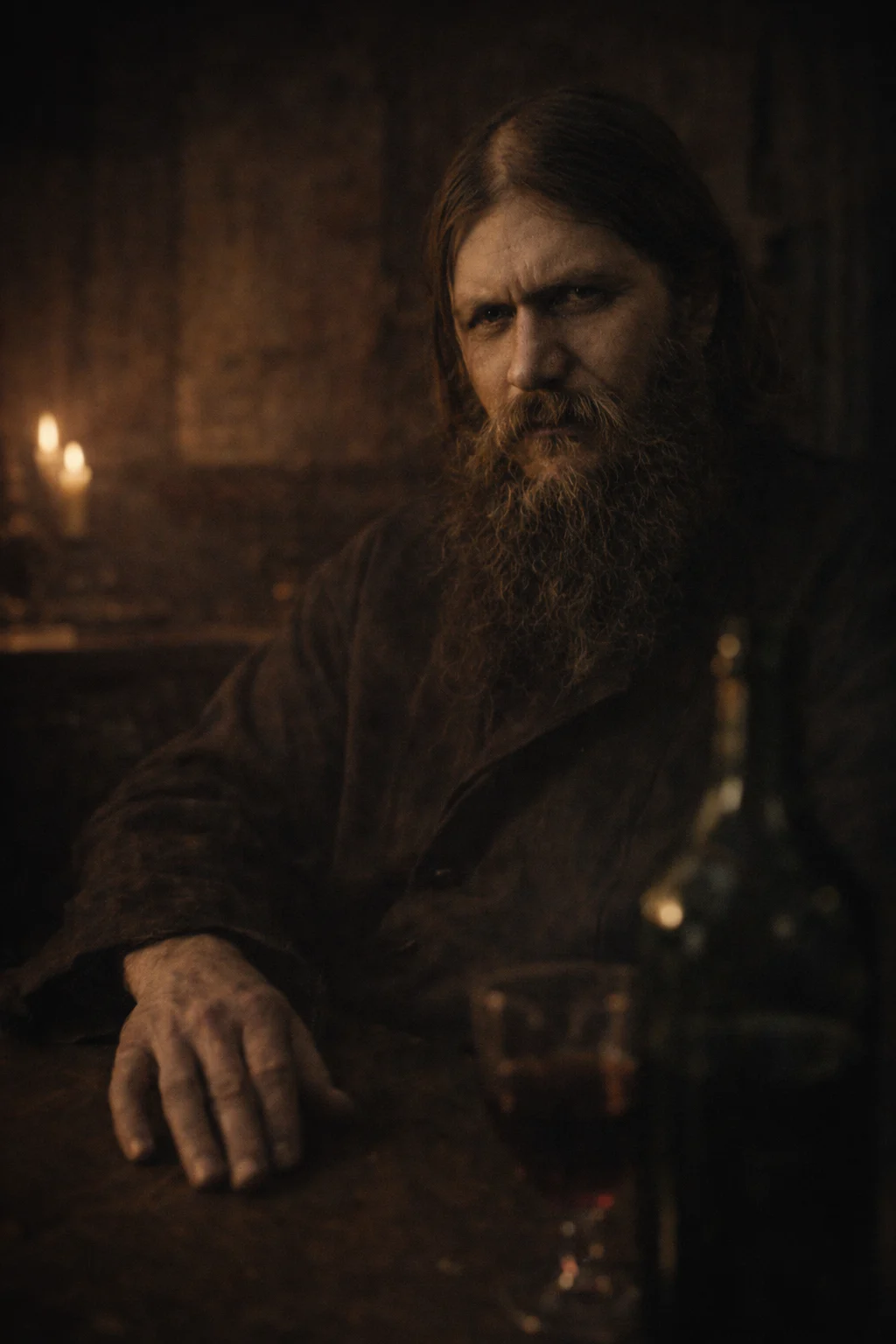
Rasputin preached about sin and repentance while drinking heavily and pursuing women who came to him seeking spiritual guidance, favors, or access to the imperial court. Some testimony suggests abusive conduct and exploitation of his spiritual authority. Other stories were expanded or fabricated by political opponents, former followers, and newspapers eager for scandal (Smith, 2016).
There is no need to turn him into a supernatural monster to recognize his contradictions. He could show compassion toward people rejected by respectable society while also behaving manipulatively. He preached humility while enjoying access to ministers, aristocrats, and members of the imperial family.
The secret police monitored his movements and recorded visits to restaurants, women’s residences, and places of entertainment. Some reports were genuine; others mixed observation, rumor, and possible impersonation. Rasputin was not the only bearded man capable of entering a public establishment while claiming to be the empress’s favorite.
Stories that he had a sexual affair with Alexandra lack evidence. Her letters expressed religious devotion and intense emotional trust, but enemies of the monarchy deliberately interpreted them as proof of adultery. The supposed affair became powerful propaganda because it united everything capable of discrediting the regime: sex, betrayal, superstition, and a German-born empress.
Did He Really Rule Russia?
Rasputin exercised influence, but he did not rule Russia.
He recommended candidates for civil and church offices, requested favors, intervened for acquaintances, and expressed opinions about ministers. During the First World War, when Nicholas II moved to military headquarters and Alexandra became more directly involved in government affairs, Rasputin’s recommendations gained greater importance.
Many of his proposals were nevertheless ignored. He controlled no administration, drafted no laws, and could not compel the tsar to obey him. Nicholas II made disastrous decisions because of his own convictions, not because he had become a helpless puppet incapable of acting without Rasputin (Lieven, 1993).
The distinction eventually ceased to matter. In politics, perception can destroy a government even when it does not match reality.
To millions of Russians, the mere fact that a peasant with a scandalous reputation could enter the imperial family’s private rooms proved that the state was diseased. Rumors about Rasputin spread among legislators, soldiers, nobles, and ordinary citizens. He became a convenient explanation for a crisis with much deeper causes: military defeats, food shortages, social inequality, administrative incompetence, and Nicholas II’s refusal to accept reforms that limited his authority (Figes, 1996).
Rasputin did not destroy the Russian Empire. He gave its enemies the perfect face with which to represent its decay.
The Lesser-Known Story: He Tried to Keep Russia Out of the War
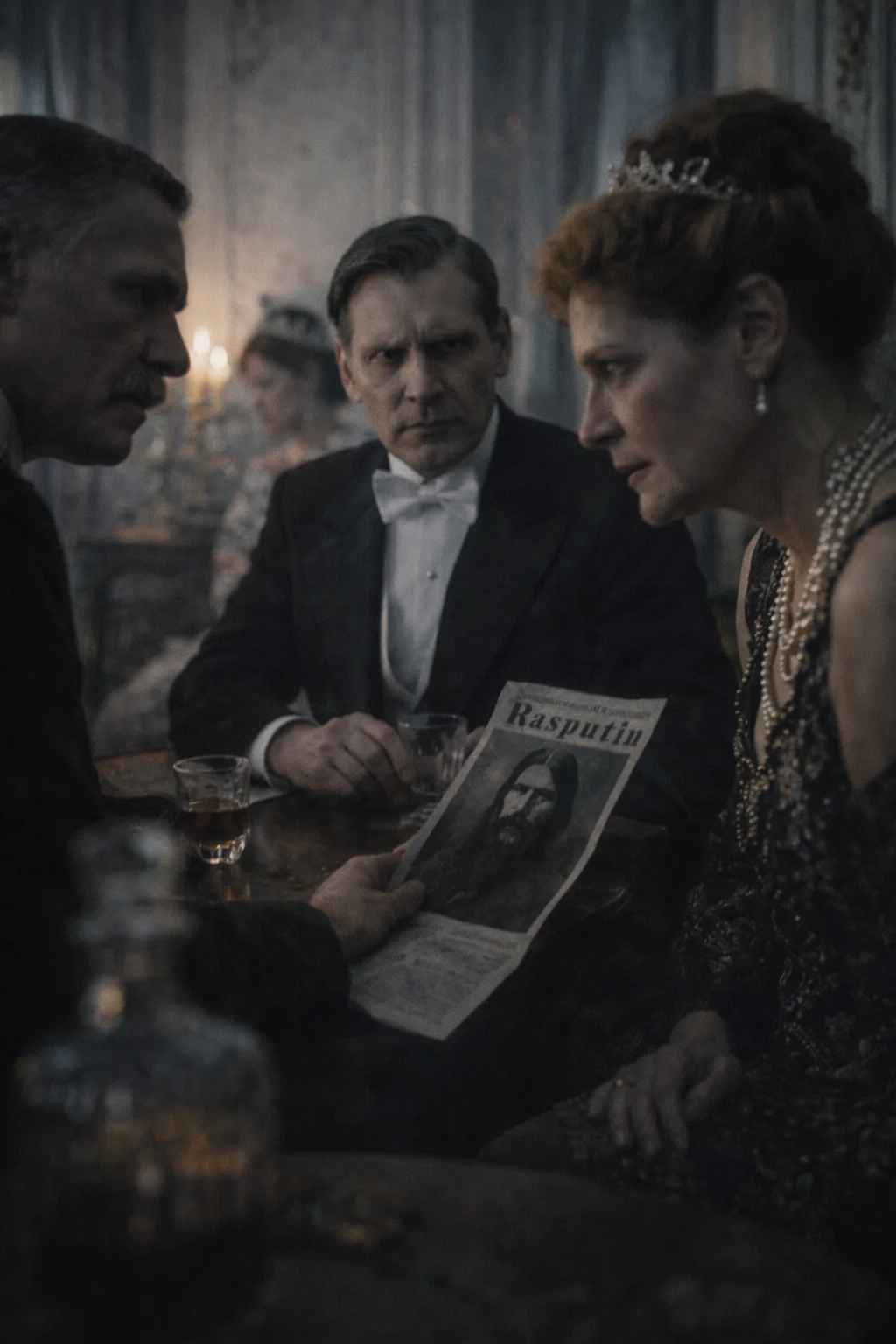
Rasputin is often portrayed as an intriguer who hoped to increase his power through chaos. Before the outbreak of the First World War, however, he tried to convince Nicholas II to avoid a European conflict.
In July 1914, he was nowhere near the tsar. A woman named Khioniya Guseva, a follower of a former religious ally who had become Rasputin’s enemy, attacked him with a knife in Pokrovskoye. Rasputin suffered a severe abdominal wound and nearly died.
While recovering, he sent messages to the tsar warning that war would bring suffering and threaten the dynasty. Nicholas did not follow his advice, and Russia ordered mobilization against Austria-Hungary and Germany (Smith, 2016).
There is no basis for claiming that Rasputin alone could have prevented the war. Decisions were driven by alliances, military timetables, and international pressures far beyond his influence. His opposition does, however, reveal a side of him incompatible with the caricature of a demon hungry for destruction.
His absence also created an impossible historical question: Would Nicholas have hesitated longer if Rasputin had been physically present? History provides no answer.
War, Alexandra, and the “Dark Forces”
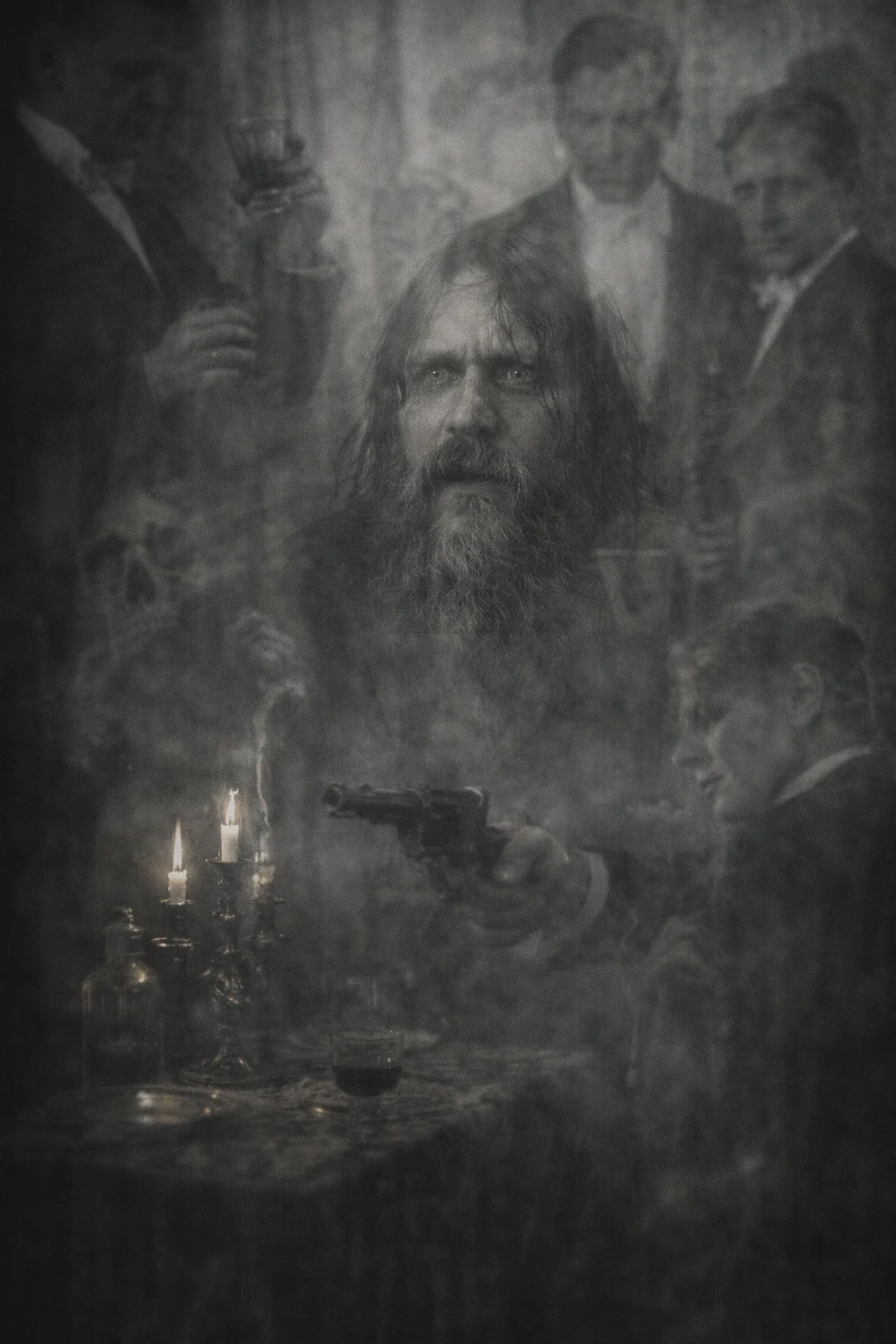
The First World War intensified every weakness of the regime. Millions of soldiers were mobilized, casualties mounted, supplies to the cities deteriorated, and the government’s prestige collapsed.
In 1915, Nicholas II decided to assume personal command of the army and spent long periods away from the capital. The decision associated him directly with military defeats and left Alexandra as a central figure in Petrograd.
The empress trusted Rasputin deeply and passed some of his recommendations to the tsar. Ministers changed rapidly, creating the impression that government obeyed a private circle. Although Rasputin did not personally select every official, his name became associated with the “dark forces” supposedly controlling the state (Steinberg & Khrustalev, 1995).
Alexandra’s German origins encouraged rumors of treason. There was no evidence that she worked for Germany, but the accusations merged with her relationship with Rasputin. He was portrayed simultaneously as a German agent, a traitorous pacifist, a sexual predator, and Russia’s secret ruler.
For part of the aristocracy, killing him seemed a means of restoring the throne’s reputation.
A Conspiracy Within the Elite

The conspirators included Prince Felix Yusupov, who was married to the tsar’s niece; Grand Duke Dmitri Pavlovich, a cousin of Nicholas II; monarchist legislator Vladimir Purishkevich; and several associates.
They were not Bolshevik revolutionaries. They belonged to, or defended, the imperial elite. They believed that eliminating Rasputin would separate the monarchy from scandal and restore its authority.
During the night of December 16–17, 1916, according to the Russian calendar then in use—December 29–30 in the Gregorian calendar—Yusupov lured Rasputin to his Petrograd palace. Rasputin was murdered there, and his body was later thrown into the Malaya Nevka River.
The killers failed to maintain a consistent account. Yusupov later transformed the crime into a spectacular narrative in which he battled a creature who seemed impossible to kill.
According to his version, Rasputin consumed cakes and wine laced with cyanide without displaying symptoms. He was then shot, appeared to die, rose again, attacked Yusupov, fled into the courtyard, and survived additional bullets. Finally, he was beaten, bound, and thrown into the river while still alive (Yusupov, 1953).
The story made the killer a hero and his victim a monster.
The Death That Never Happened as Told
The available evidence contradicts the most famous elements of Yusupov’s account.
The autopsy report did not conclude that Rasputin drowned and did not confirm poisoning. The physician documented several gunshot wounds, including one fired into the forehead at close range. The evidence cannot reconstruct every minute of the crime, but it indicates that Rasputin died from gunfire before his body was thrown into the river (Smith, 2016).
It cannot even be established that he consumed cyanide. The poison may never have been used, may have been compromised during preparation, or the entire episode may have been invented later. The accounts of Yusupov and Purishkevich changed over time and contradicted one another.
Claims that British agents directly participated in the murder have also become popular, but the evidence is not conclusive enough to present their involvement as fact.
Rasputin was difficult to kill only within the story created by the men who killed him. His supposed supernatural endurance magnified their achievement and justified the brutality of the crime.
The Prophecy That May Have Been Constructed Later
One of the most frequently repeated stories claims that Rasputin wrote a prophetic letter announcing that if peasants killed him, the tsar would continue to reign, but if nobles murdered him, the entire imperial family would die within two years.
Events appear to have fulfilled the prediction. Aristocrats murdered Rasputin in December 1916, and the Bolsheviks executed Nicholas, Alexandra, and their children in July 1918.
The document’s authenticity and precise date are disputed, however. The letter emerged amid family interests and may have been altered or presented after the events. It should not be treated as proof that Rasputin accurately predicted the future (Fuhrmann, 2013).
He needed no supernatural abilities to recognize that the dynasty was in danger. Russia was fighting a devastating war, the government had lost credibility, and members of the aristocracy were conspiring to murder a man protected by the empress.
Rather than a prophecy, it may have been a political conclusion.
A Murder That Saved Nothing
Rasputin’s death did not restore public confidence in Nicholas II. Instead, it demonstrated that the regime could no longer control even members of its own dynasty and aristocracy.
Alexandra was devastated. Nicholas imposed only limited punishment on the killers because of their family connections. Yusupov was sent to one of his estates, while Dmitri Pavlovich was assigned to Persia. Neither received the treatment an ordinary citizen would have faced for murdering someone close to the imperial family.
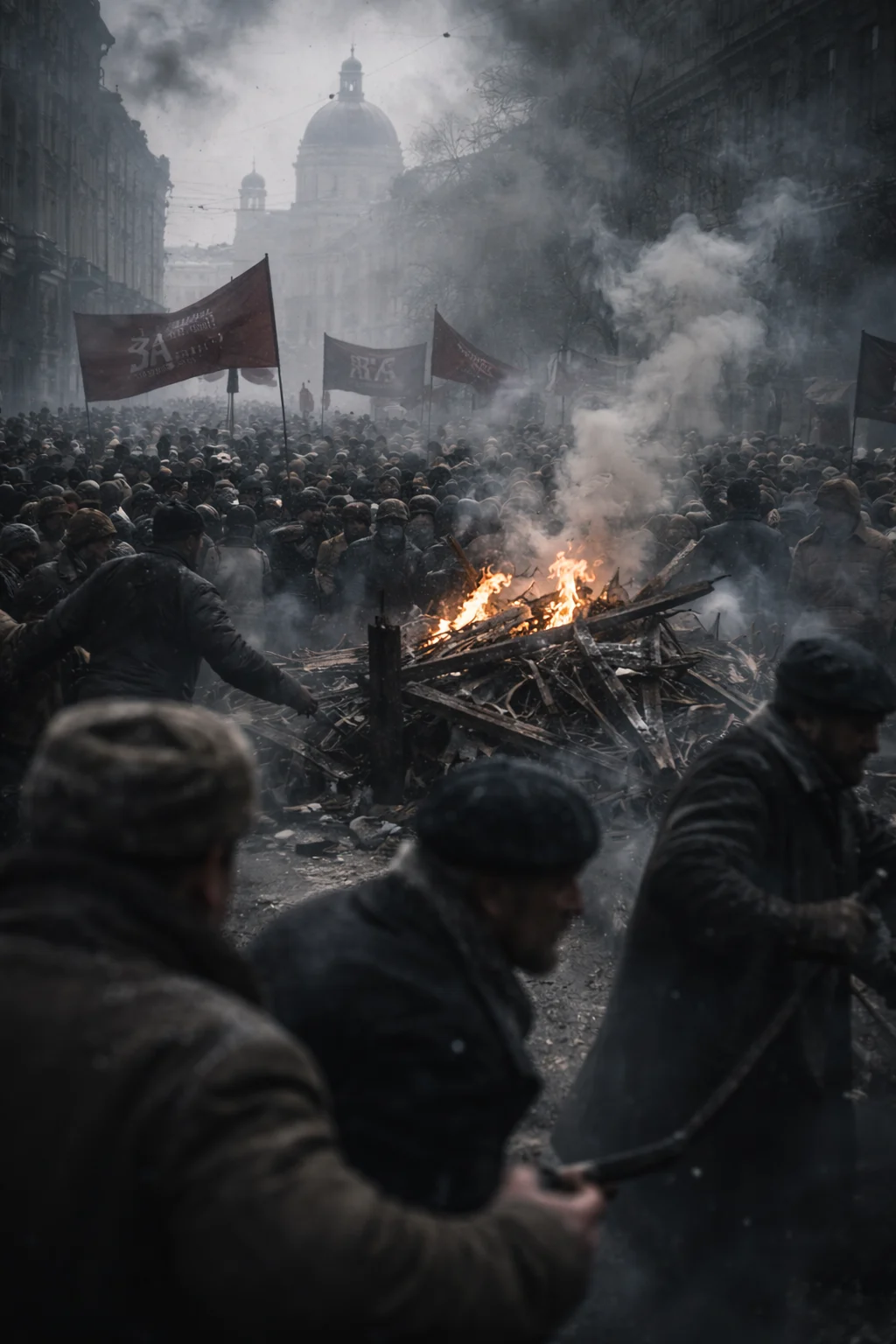
In March 1917, only weeks after the crime, strikes, demonstrations, food shortages, and military mutinies forced Nicholas II to abdicate. The autocracy the conspirators claimed to be protecting disappeared.
Rasputin was dead, but the conditions that had made him possible remained intact.
The Man Behind the Demon
Rasputin was not a misunderstood saint. He exploited his access to power, interfered in matters he did not understand, and benefited from Alexandra’s emotional dependence. His private behavior provided genuine grounds for scandal.
But neither was he the all-powerful sorcerer of legend. He did not govern Russia, no sexual affair with the empress has been demonstrated, and he did not miraculously survive a succession of murder methods.
He was a peasant with intuitive intelligence who understood people’s fears. He knew how to comfort a mother who believed she was losing her son, and he transformed that trust into a position no official title could adequately describe.
His direct political influence was limited, but his symbolic power became immense. He embodied everything Russians feared about the imperial court: secrecy, superstition, corruption, and authority separated from reality.
The aristocrats believed that killing him would erase that image. Instead, by inventing the story of a man who could not die, they ensured that he outlived them all.
Rasputin crossed the boundary between faith and manipulation, access and influence, man and myth. The real horror was not that he possessed supernatural powers, but that an entire empire needed to imagine that he did in order to explain its own collapse.
References
- Figes, O. (1996). A people’s tragedy: The Russian Revolution, 1891–1924. Jonathan Cape.
- Fuhrmann, J. T. (2013). Rasputin: The untold story. John Wiley & Sons.
- Lieven, D. (1993). Nicholas II: Emperor of all the Russias. John Murray.
- Massie, R. K. (1967). Nicholas and Alexandra. Atheneum.
- Smith, D. (2016). Rasputin: Faith, power, and the twilight of the Romanovs. Farrar, Straus and Giroux.
- Steinberg, M. D., & Khrustalev, V. M. (1995). The fall of the Romanovs: Political dreams and personal struggles in a time of revolution. Yale University Press.
- Yusupov, F. (1953). Lost splendor: The amazing memoirs of the man who killed Rasputin. G. P. Putnam’s Sons.