In this storyOpen index
Vlad the Impaler: The Prince Who Turned Terror Into Propaganda and Lent His Name to Dracula
Between the Danube and the Carpathians, Vlad III made public punishment an instrument of power. Pamphlets amplified his reputation; centuries later, a novelist borrowed his name.
Centuries before Dracula drank blood in a novel, a prince of Wallachia used impaled bodies to send political messages. He did not need to be a vampire. It was enough to make his enemies see what would happen if they advanced.
Vlad III ruled a territory trapped between the Ottoman Empire and the Kingdom of Hungary. He fought invasions, eliminated rivals, punished merchants, and used terror as an instrument of state. His enemies circulated stories in which he dined among corpses, while other traditions transformed him into a severe ruler who protected order.
Both images emerged from real events, exaggeration, and political necessity.
More than four centuries later, Bram Stoker found his name, gave it to a vampire count, and completed the erasure of the boundary between history and nightmare.
Vlad III: the prince behind the name Dracula
A life between the throne, war, and myth
Enter the archive
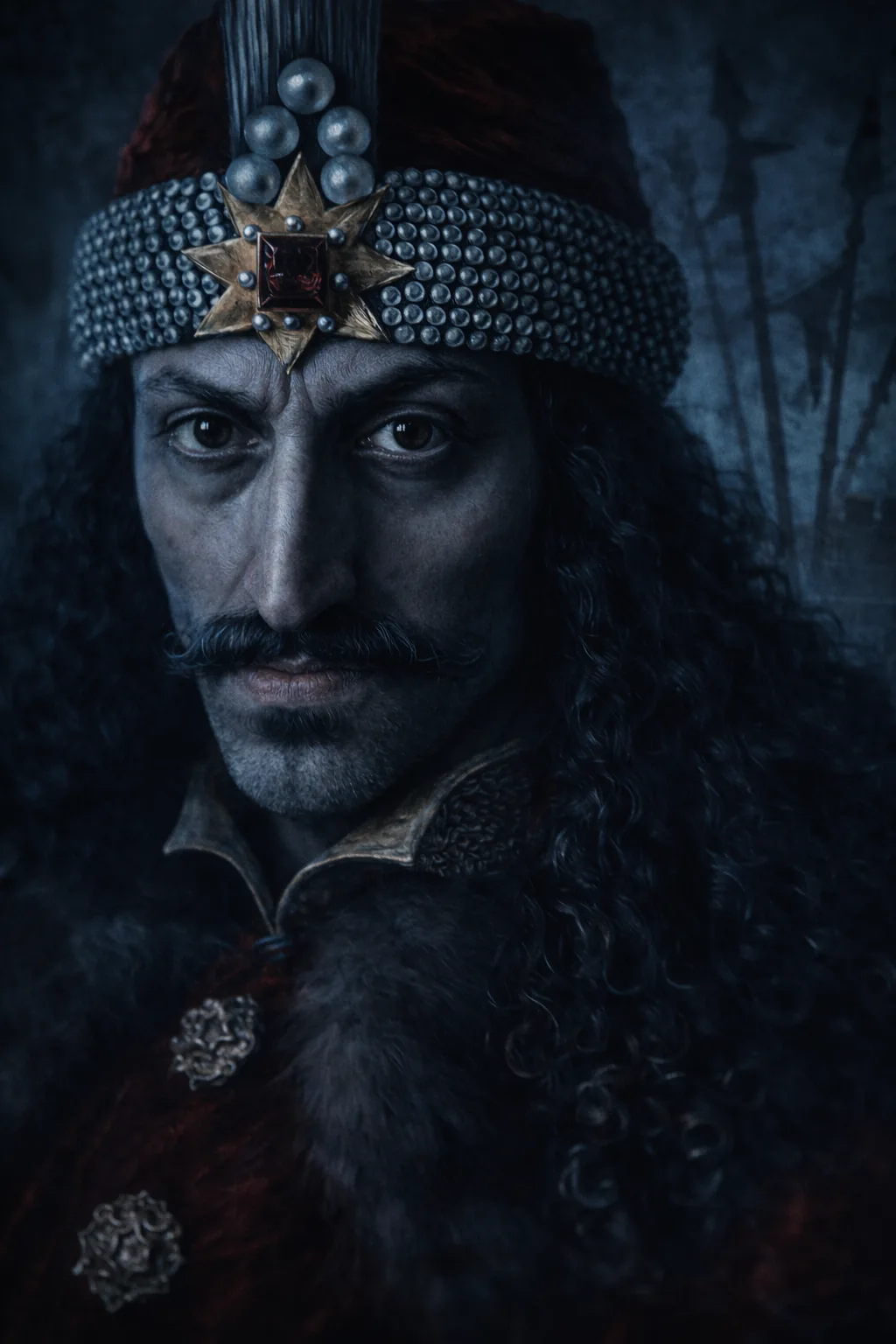
This anonymous portrait of Vlad III is held in the collections at Schloss Ambras. The image beside this record is an AI-generated reconstruction: open the museum record to view the authentic painting.
- Collection
- Ambras Collection
- Institution
- Kunsthistorisches Museum Wien
AI-generated visual reconstruction; not a historical document.
The Son of the Dragon
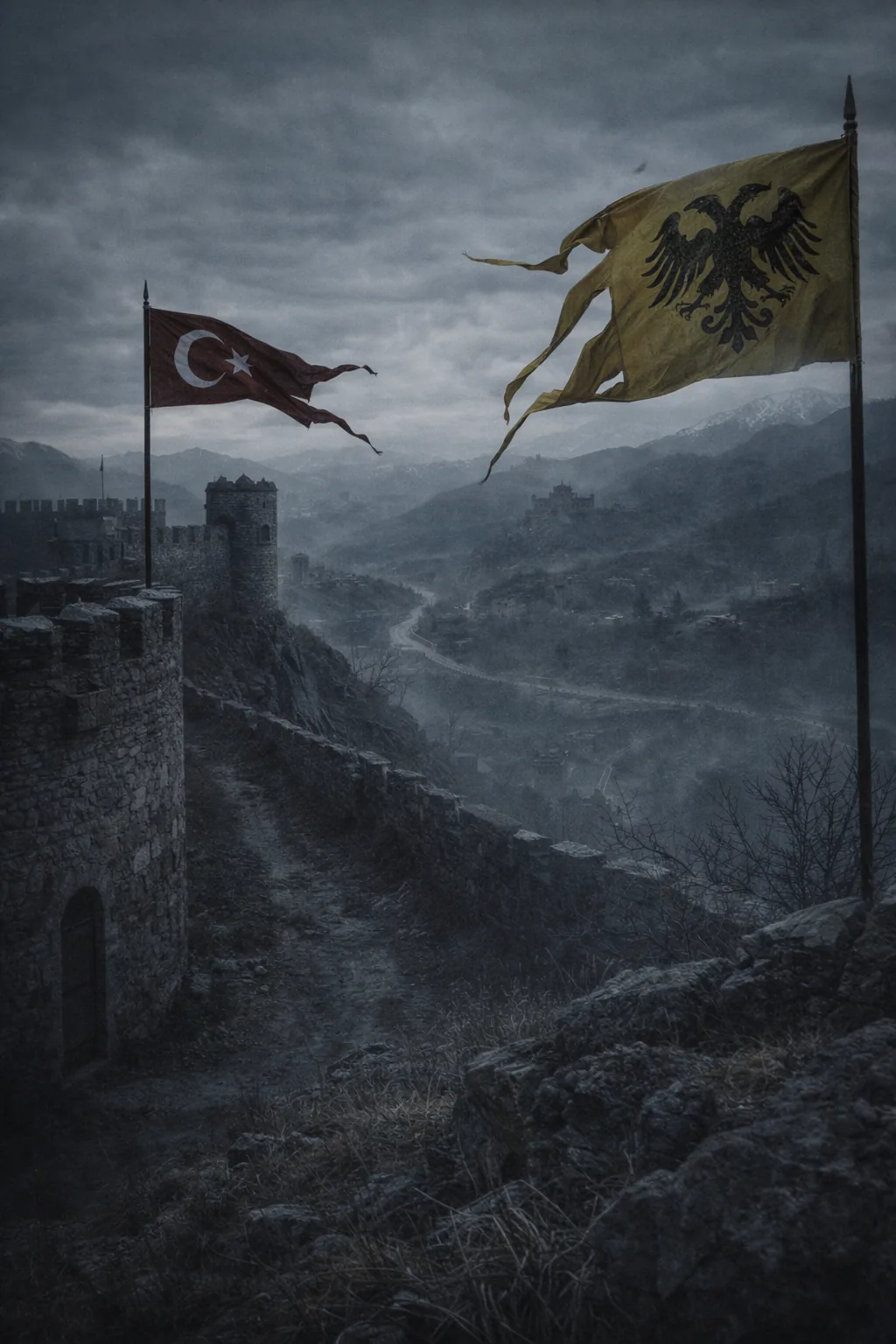
Vlad III was born around 1431, probably in Sighișoara, a Transylvanian city then belonging to the Kingdom of Hungary. His exact birthplace cannot be established with complete certainty. He was the son of Vlad II, ruler of Wallachia, and belonged to the Basarab dynasty (Cazacu, 2017).
Wallachia was not yet part of a unified Romania. It was a principality located between the Carpathians and the Danube, pressured by Hungary from the north and the expanding Ottoman Empire from the south. Its rulers depended upon unstable alliances, tribute payments, and the support of noble families known as boyars.
In 1431, Vlad II had joined the Order of the Dragon, a chivalric organization connected with the defense of Christendom against the Ottomans. From this, he received the name Dracul, derived from the Latin draco, meaning “dragon.” His son became known as Drăculea: “son of Dracul” or “son of the Dragon” (Treptow, 2000).
Over time, the Romanian word drac also acquired the meaning “devil.” That ambiguity would prove irresistible to Bram Stoker, but in the fifteenth century Vlad’s name was primarily connected to his father’s political identity.
The historical Dracula was not named for drinking blood. He inherited the name from an order of knights.
The Sultan’s Hostage
In 1442, the Ottoman sultan Murad II summoned Vlad II. To guarantee the Wallachian prince’s obedience, the Ottomans retained two of his sons as hostages: Vlad and his younger brother Radu.
The young men remained under Ottoman control for several years. They received an education, learned languages, encountered court military practices, and observed from within the power of the empire dominating the Balkans. The sources do not allow every detail of their captivity to be reconstructed securely, nor do they support stories of constant torture found in popular accounts (Cazacu, 2017).
The brothers responded differently. Radu formed close ties with the Ottomans and would later govern Wallachia with their support. Vlad eventually became one of their most ferocious enemies.
His youth taught him an essential lesson: small principalities survived not by being stronger, but by making themselves too costly to control.
He also encountered impalement during those years. The Ottomans, however, were not his only teachers. Recent research shows that the punishment also existed within Hungarian and Saxon legal traditions. Vlad did not invent impalement; he used it more frequently and visibly than other rulers around him (Harai, 2025).
A Throne That Constantly Changed Hands
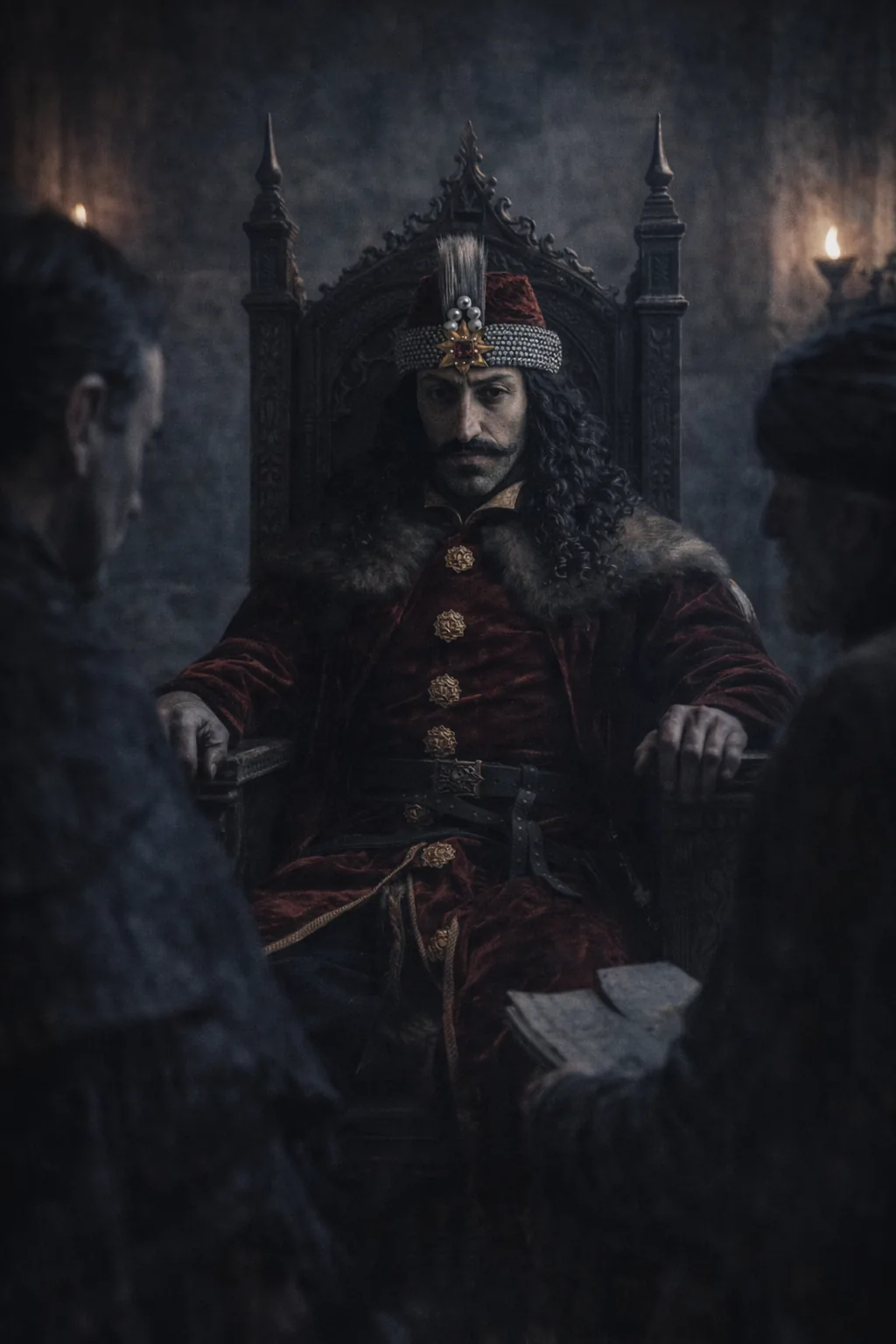
In 1447, Vlad II was assassinated, and his eldest son Mircea died at the hands of enemies connected with boyar factions. Wallachian politics operated through a succession of conspiracies, invasions, and candidates supported by foreign powers.
Vlad occupied the throne for the first time in 1448 with Ottoman backing, but was expelled after only a few weeks. He spent the following years seeking allies in Moldavia and Hungary. In 1456, taking advantage of another political shift, he defeated Prince Vladislav II and began his second and most important reign (Treptow, 2000).
Governing Wallachia required control over the boyars, whose alliances could raise or destroy a prince. Vlad responded with a policy of intimidation and the elimination of rivals.
A famous account claims that he invited numerous boyars to an Easter banquet, asked how many princes they had seen rule, then ordered some executed and forced others to work on his fortifications. German pamphlets raised the number of victims to five hundred. Analysis of documents and the available space in the hall suggests a much lower figure, perhaps between forty and fifty people (Harai, 2025).
Even if the number was exaggerated, the message was real: no noble lineage should consider itself older or more powerful than the prince.
Order Built Upon Fear
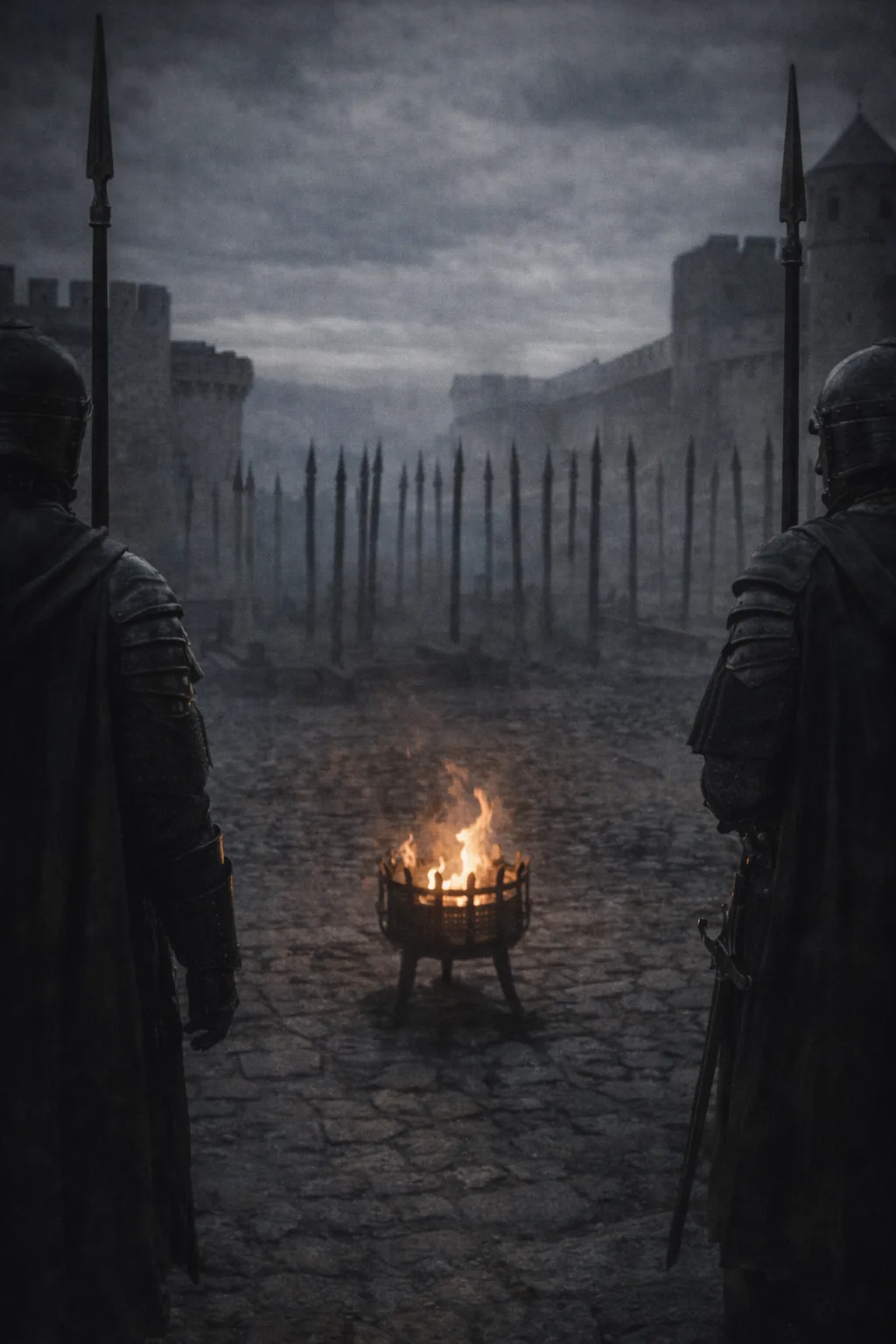
Stories about Vlad often portray him punishing every offense, from murder to minor theft, by impalement. Some describe a golden cup placed beside a public fountain that no one dared steal. Others claim he had the hats of foreign envoys nailed to their heads because they refused to remove them in his presence.
These stories appear in different traditions and cannot automatically be accepted as literal records. They functioned as parables about terror and justice. In German accounts, they demonstrated his sadism. In later Slavic texts, they showed that his cruelty produced absolute order (Cazacu, 2017).
Vlad used public execution against boyars, criminals, deserters, foreign merchants, and populations considered hostile. His purpose was not merely to eliminate individuals. He wanted survivors to witness the punishment.
Impalement prolonged suffering and kept the corpse visible. Bodies could be arranged according to rank or social position, turning an execution site into a representation of princely authority.
Vlad understood that fear was more effective when it could be seen from far away.
The War With the Saxons and the Birth of Propaganda
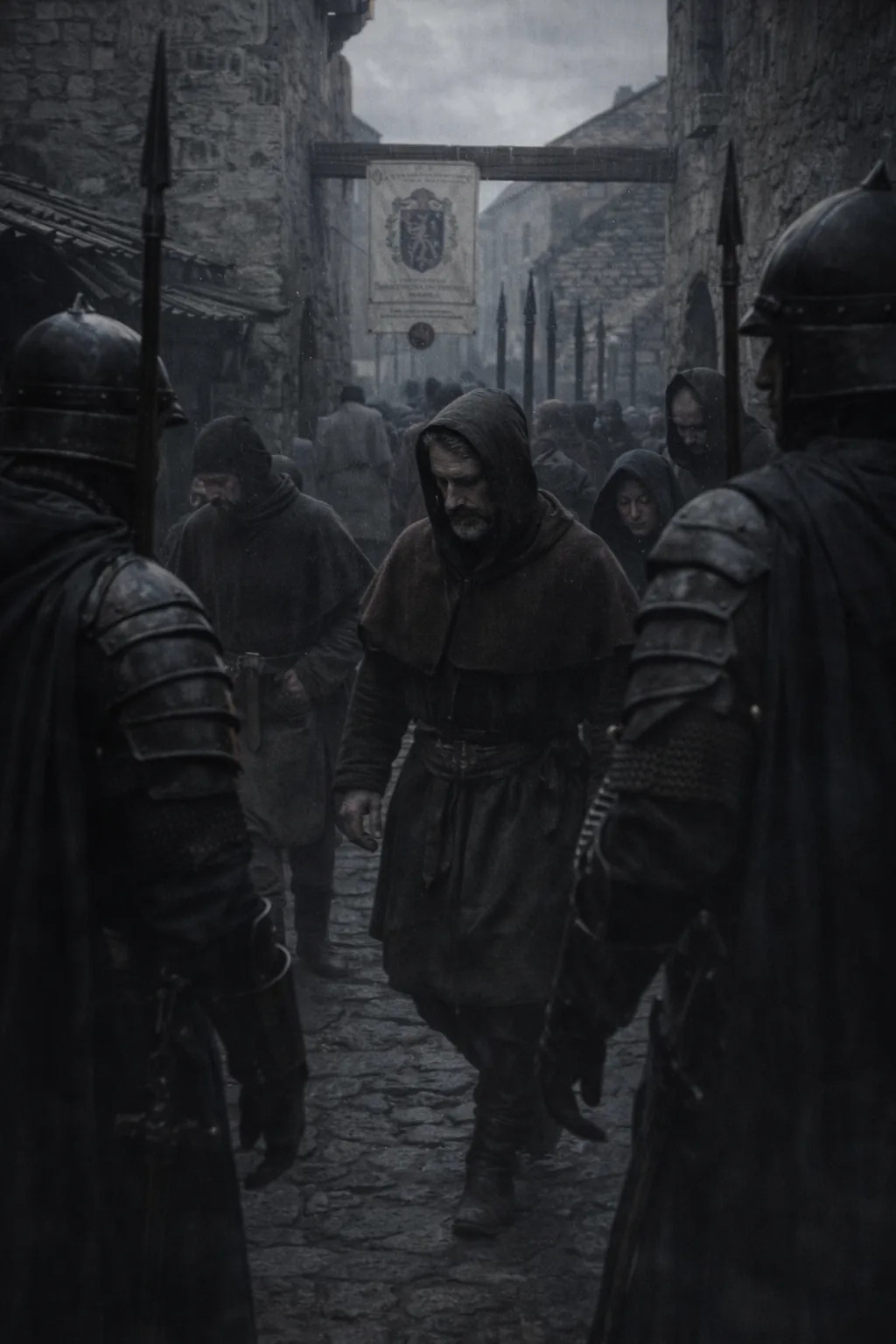
The Saxon cities of Transylvania maintained important commercial networks and sometimes supported rival claimants to the Wallachian throne. Vlad attempted to restrict some of their privileges and attacked settlements associated with his enemies.
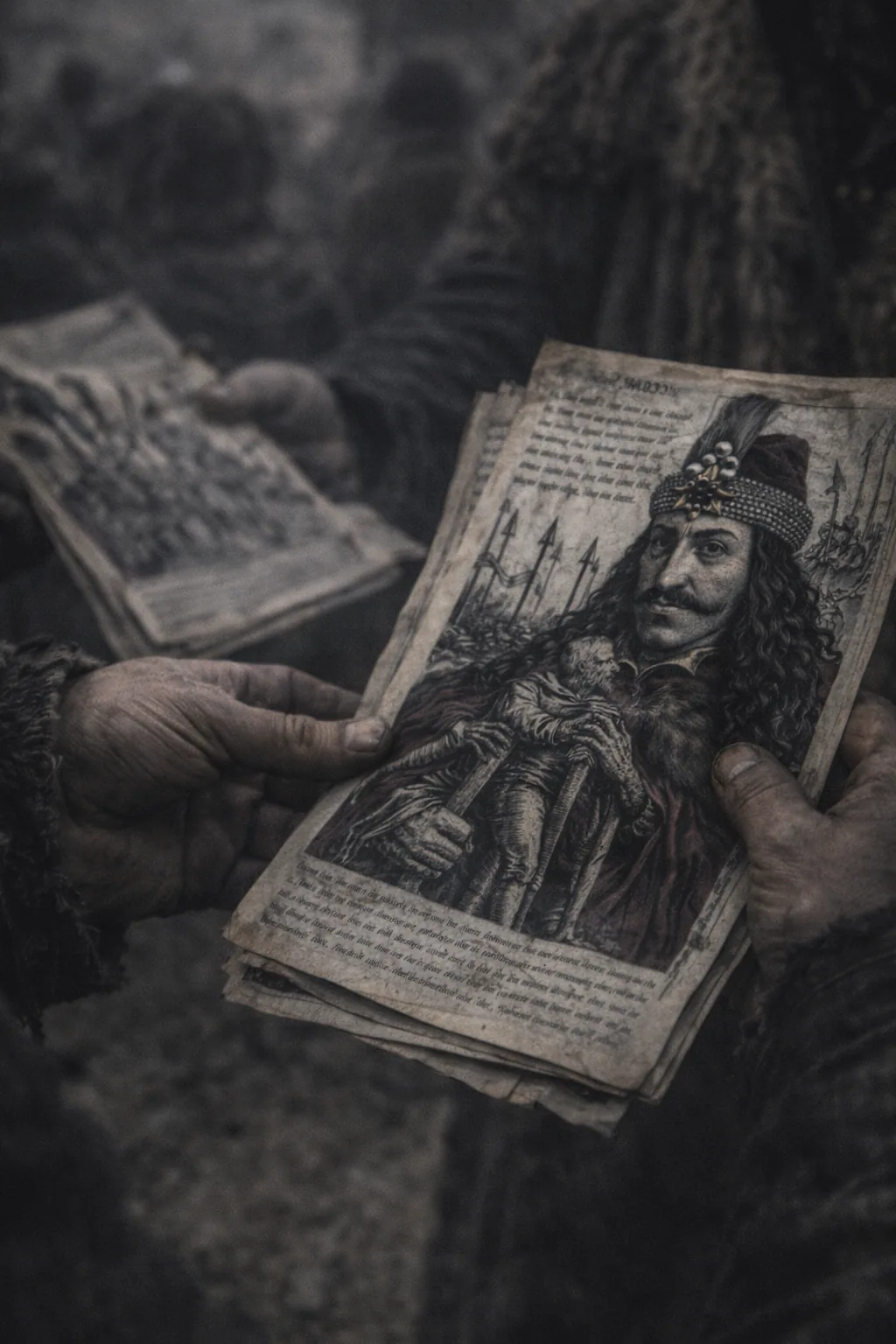
The conflicts generated letters, chronicles, and stories describing raids, fires, and impalements. After Vlad lost power in 1462, these accounts circulated in German territories through manuscripts and later through printed pamphlets accompanied by woodcuts.
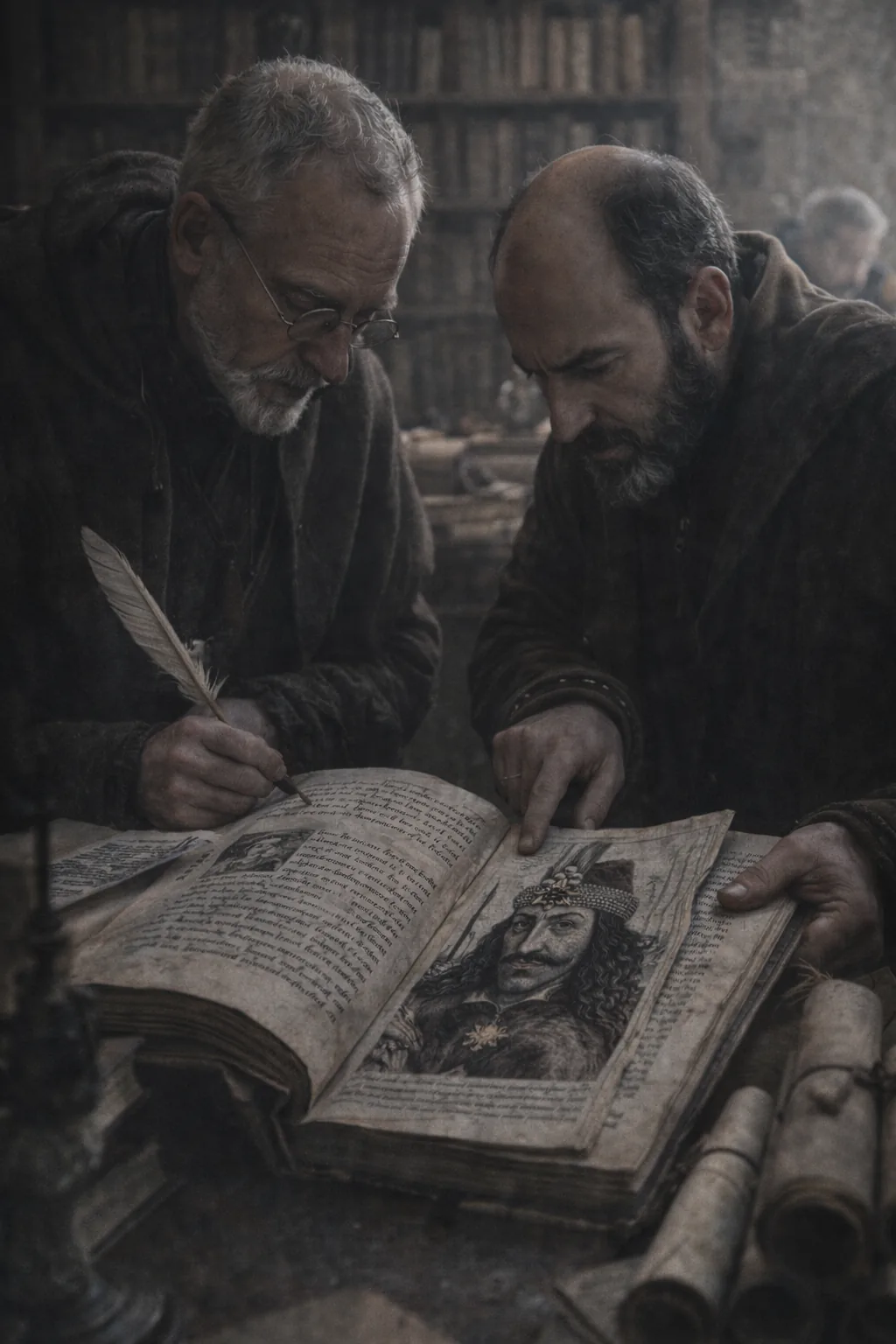
One of the best-known images depicts Vlad calmly eating before a gathering of impaled victims. It is neither a medieval photograph nor a neutral representation. It is a visual construction intended to depict the prince as a monster who derived pleasure from the suffering of others (Treptow, 2000).
Calling this material “propaganda” does not mean the atrocities were invented. Vlad did use impalement and conduct campaigns of extreme violence. The propaganda succeeded because it amplified a recognizable reality.
Europe’s early printing presses allowed his image to circulate far beyond the territory he had ruled. Vlad thus became one of the first European tyrants whose reputation was reproduced in large numbers.
The Break With the Ottoman Empire
During the early years of his second reign, Vlad maintained a tributary relationship with the Ottomans. Around 1459 or 1460, he stopped paying tribute and began preparing for open confrontation.
During the winter of 1461–1462, he crossed the Danube and attacked Ottoman positions. In a letter to Hungarian king Matthias Corvinus, he claimed more than 23,000 deaths, excluding those burned inside their homes. The surviving copies give different totals, and their internal sums disagree; the figures’ apparent precision does not guarantee their accuracy: the letter was intended to demonstrate his military value and obtain support for a Christian campaign (Cazacu, 2017).
Vlad did not conceal violence. He counted it and offered it as proof of political usefulness.
Sultan Mehmed II, conqueror of Constantinople, responded in 1462 with a major invasion of Wallachia. Vlad avoided a conventional battle against a superior army. He burned crops, poisoned or disabled wells, evacuated settlements, and used rapid attacks to wear down the enemy.
It was a war designed to deprive the invader of everything needed to survive.
The Night He Tried to Kill the Sultan
During a night in June 1462, Vlad led an assault on the Ottoman camp near Târgoviște. His principal objective was to reach Mehmed II’s tent and kill the sultan.
Wallachian forces penetrated the camp and caused confusion, but failed to locate Mehmed. Sources disagree about the casualties and the operation’s precise course. The sultan survived, and Vlad had to withdraw (Cazacu, 2017).
The night attack did not defeat the Ottoman army, but it demonstrated the prince’s strategy: if he could not destroy the enemy force, he would attempt to decapitate its command and turn the invasion into a political crisis.
As the Ottomans advanced toward the capital, they encountered a concentration of impaled bodies around Târgoviște. Chronicles increased the number to twenty thousand and described the place as a forest of corpses.
The scene served a military purpose. Vlad wanted to demonstrate that occupying Wallachia would require crossing a territory where surrender did not guarantee survival.
The horror was a defensive structure built from human beings.
How Many People Did He Actually Impale?
Sources attributed between forty thousand and one hundred thousand victims to Vlad. For centuries, these numbers were repeated because they reinforced both the image of the monster and that of the implacable warrior.
A reassessment published by historian Dénes Harai in 2025 compared Wallachian, Hungarian, Ottoman, Saxon, and Venetian documents. The study concluded that only seven to ten percent of the impalements claimed in some narratives are historically plausible (Harai, 2025).
According to this analysis, the supposed forest of twenty thousand impaled people at Târgoviște may have contained between 1,600 and 1,700 victims accumulated over several years. The total number of people impaled on Vlad’s orders may have been slightly above two thousand.
The correction does not transform the prince into a moderate ruler. Two thousand executions through a deliberately slow and public punishment constitute a policy of terror. The difference matters, however, because it separates historical inquiry from propagandistic arithmetic.
Vlad did not need to murder one hundred thousand people to construct a reputation capable of surviving five centuries.
Defeat and the Brother Chosen by the Ottomans
Mehmed II failed to capture Vlad during the 1462 campaign but found a political alternative. He supported Vlad’s brother Radu as the new prince of Wallachia.
Radu offered stability, connections to the Ottoman court, and a less destructive solution for the boyars. As his support grew, Vlad lost resources and allies. He eventually fled into Hungarian territory to request assistance from Matthias Corvinus.
Instead of providing it, the king arrested him. Letters supposedly demonstrating that Vlad was secretly negotiating with the Ottomans circulated to justify the decision. Whether those documents were authentic or manipulated remains disputed (Treptow, 2000).
Vlad remained in Hungarian custody for approximately twelve years, although his conditions improved over time. He gradually entered court society, married into the Hungarian nobility, and again became useful when regional politics changed.
The man who had used fear as an instrument spent more than a decade dependent upon another ruler’s decisions.
The Final Return and a Missing Body

Vlad briefly recovered the Wallachian throne in 1476 with Hungarian and Moldavian support. His third reign lasted only a few weeks. He died late that year in fighting against Ottoman forces or supporters of a rival ruler.
The exact circumstances remain uncertain. Some sources claim he was decapitated and that his head was sent to Constantinople to prove to the sultan that he was dead. His body has never been identified with certainty (Cazacu, 2017).
Tradition placed his grave at Snagov Monastery, but excavations failed to discover conclusive remains beneath the tomb attributed to him. Other researchers have proposed Comana Monastery, founded by Vlad, although no definitive identification exists there either (Rezachevici, 2002).
The final fate of the prince who transformed thousands of corpses into public warnings became, ironically, invisible.
There is no confirmed grave where his body can be separated from his legend.
A Little-Known Fact: The Vampire Existed Before Receiving the Name Dracula
Bram Stoker published Dracula in 1897, more than four centuries after Vlad’s death. For many years, it was claimed that he had directly constructed the vampire count from the Impaler’s biography.
Stoker’s working notes reveal a different story. The writer was already developing his vampire character before he encountered the name “Dracula.” During his research, he consulted William Wilkinson’s An Account of the Principalities of Wallachia and Moldavia and found a reference to a ruler named Dracula who had fought the Turks. An associated note linked the name to “devil” in the Wallachian language (Miller, 2005).
Stoker then replaced his vampire’s provisional name with “Dracula.” His notes do not indicate that he knew the details of Vlad III’s impalements, campaigns, or biography. The nickname Țepeș does not appear in the novel, nor does it recount his historical atrocities (Miller, 2000).
The count was constructed from vampire traditions, Gothic literature, travel writing, and Victorian anxieties. From Vlad, he primarily received a name, a vague princely status, and a connection to wars against the Ottomans.
It is therefore inaccurate to say that Vlad alone “inspired” the vampire. The monster was already taking shape when Stoker found the perfect name.
Bran: The Castle of a Tourist Connection
Bran Castle, promoted worldwide as “Dracula’s Castle,” was not Vlad’s residence either. There is no firm evidence that he lived there; at most, he may have passed through the region or remained briefly near the fortress.
The structures most closely connected with his government are the princely court at Târgoviște and Poenari Fortress above the Argeș River. The latter was strengthened during his reign and was connected with the strategic control of Wallachia.
Bran became famous because its architecture better matched visual expectations created by films and tourism. The industry needed an accessible castle that appeared to belong to a vampire.
Once again, myth found a more convenient image than history.
Tyrant, Hero, and Creature of the Night
Vlad’s memory changed according to who told the story. German pamphlets portrayed him as a sadist. Some Slavic accounts described him as a cruel but just ruler. During the nineteenth and twentieth centuries, Romanian nationalism transformed him into a defender of independence against the Ottoman Empire.
Under Nicolae Ceaușescu’s regime, his image was used to celebrate strong centralized power, internal order, and resistance to foreign influence. Atrocities could be reinterpreted as necessary actions by a patriot surrounded by traitors (Miller, 2005).
None of those versions is neutral.
Vlad fought Ottoman expansion but initially ruled with Ottoman support. He punished conspiring nobles but also used violence against merchants and entire communities. He imposed a degree of order but did so through executions designed to terrify.
Presenting him solely as a monster repeats the propaganda of his enemies. Turning him entirely into a hero repeats the propaganda of those who needed an exemplary authoritarian ruler.
History begins when neither image is sufficient.
The Power That Survived as Horror
Vlad the Impaler understood a brutal truth: power depends not only upon how many people a ruler can kill, but upon how many believe they will be next.
The bodies before Târgoviște were psychological weapons. The pamphlets that later circulated transformed those weapons into stories. Bram Stoker took the name and placed it inside a fiction capable of surviving empires, dynasties, and borders.
The result was an identity that can never be entirely separated. The historical prince became trapped inside the vampire, while the vampire gained an appearance of authenticity from the prince.
Vlad did not sleep in a coffin, drink blood, or probably ever enter the castle that now carries his legend. But he deliberately used horror to govern and wage war. That reality explains why the myth attached itself to him so powerfully.
He did not become Dracula because he was a vampire.
His name passed to Stoker’s vampire; the fearful reputation he had already built helped history and fiction become entangled.
References
Cazacu, M. (2017). Dracula. Brill.
Harai, D. (2025). Counting the stakes: A reassessment of Vlad III Dracula’s practice of collective impalements in fifteenth-century south-eastern Europe. Transactions of the Royal Historical Society, 1–16. https://doi.org/10.1017/S008044012510042X
Miller, E. (2000). Dracula: Sense and nonsense. Desert Island Books.
Miller, E. (2005). A Dracula handbook. Xlibris.
Rezachevici, C. (2002). The tomb of Vlad Țepeș: The most probable hypothesis. Journal of Dracula Studies, 4, 2–19.
Stoker, B. (1897). Dracula. Archibald Constable and Company.
Treptow, K. W. (2000). Vlad III Dracula: The life and times of the historical Dracula. Center for Romanian Studies.