In this storyOpen index
María Félix: The Woman Who Chose to Conquer Europe Rather Than Obey Hollywood
The actress who turned her image into a form of authority and chose freedom rather than obey Hollywood.
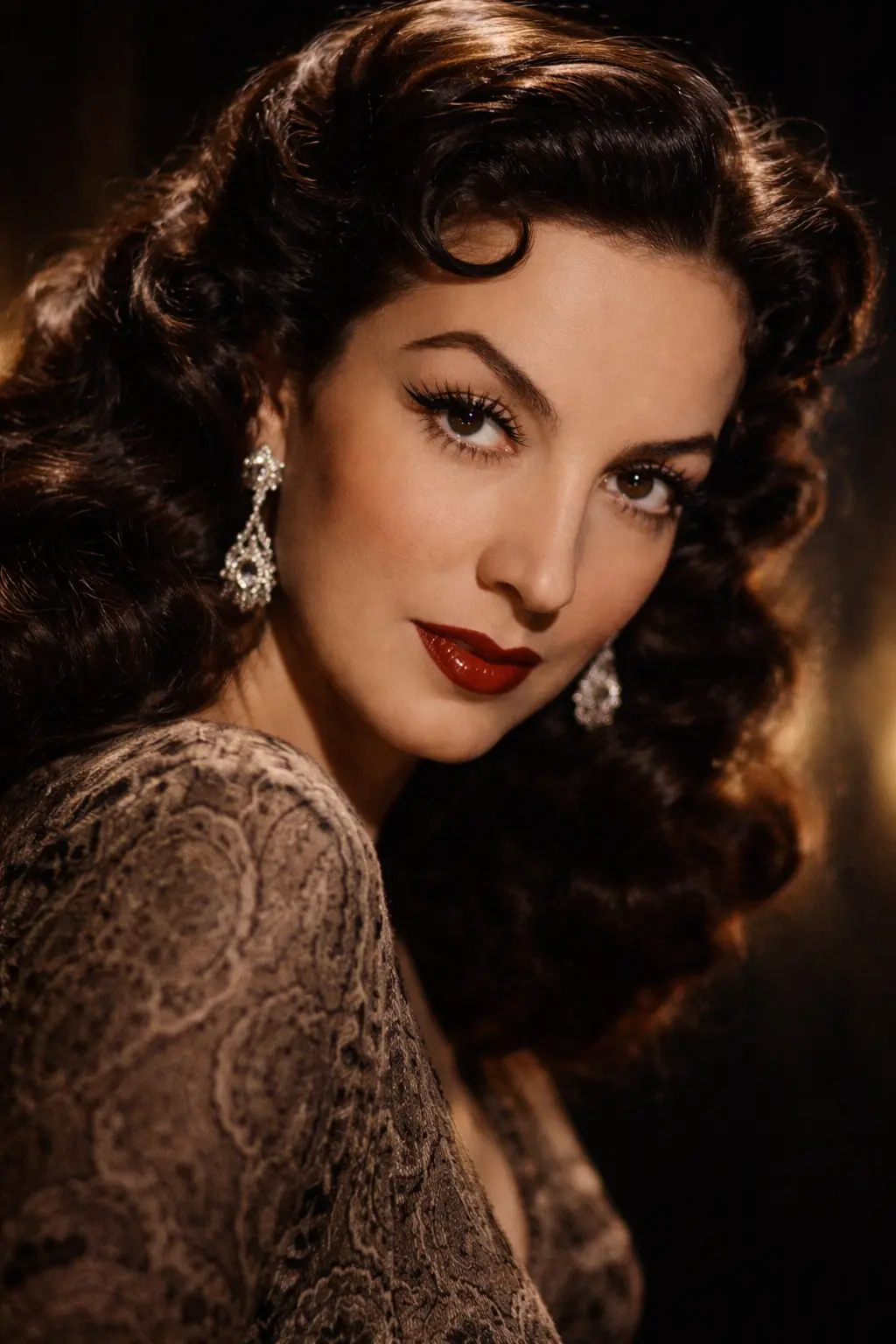
Hollywood could offer her a larger screen, but it also offered
characters shaped by prejudice: exotic, temperamental women defined by
someone else’s gaze. María Félix chose another path. She made films in
Mexico, Spain, France, Italy, and Argentina, protected the public
persona she had created, and refused to become the version of a Latin
American woman that the American film industry expected to sell.
She was not a forgotten actress in Mexico. There, she became a
cultural monument. Outside the Spanish-speaking world, however, her work
was frequently reduced to her beauty, jewelry, and defiant remarks.
Behind that image stood a woman who negotiated power within an industry
controlled by men and helped transform how cinema represented female
authority.
María Félix did not play women who asked permission. Nor was she
prepared to ask for it away from the screen.
The woman who chose to conquer Europe
María Félix built an authority the film industry could not tame.
A life told through places and decisive moments
Enter the archive
The Cineteca Nacional record preserves the film that transformed María Félix into La Doña.
- Collection
- Film archive
- Institution
- Cineteca Nacional México
Institutional record for Doña Bárbara.
A Childhood Far Removed From the Legend
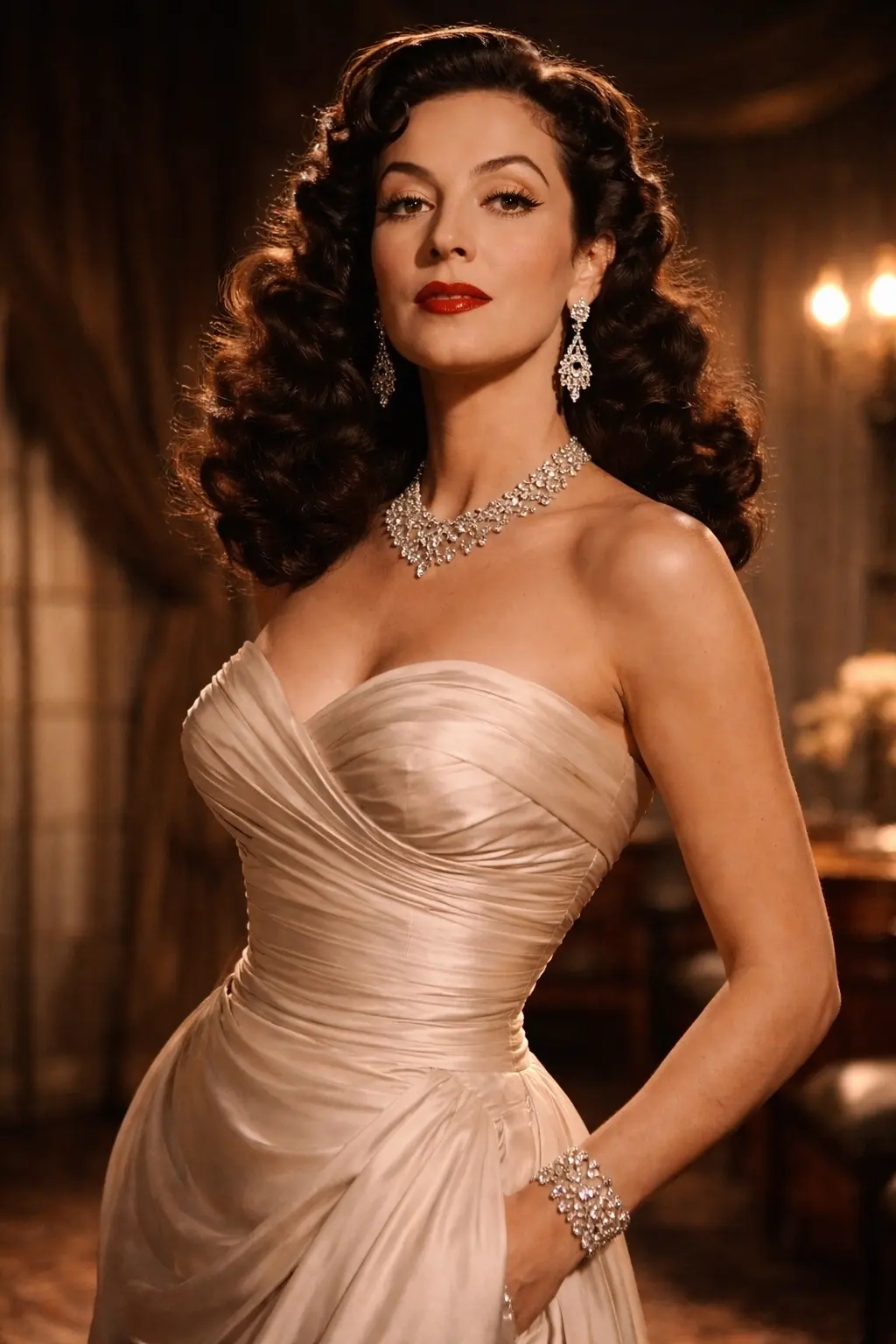
María de los Ángeles Félix Güereña was born on April 8, 1914, in
Álamos, Sonora. She was one of the many children of Bernardo Félix
Flores, a government official and military officer, and Josefina Güereña
Rosas. During her childhood, the family moved through several places in
northern and western Mexico, eventually settling for a time in
Guadalajara (Félix, 1993).
In her recollections, María described a childhood marked by family
discipline, her closeness to her brother Pablo, and an early resistance
to the limitations imposed upon women. The intensity of her affection
for Pablo troubled the family, and the siblings were separated. He
entered a military institution and died young, a loss she would remember
as one of the deepest wounds of her life (Félix, 1993).
While still very young, she married Enrique Álvarez Alatorre. Their
only child, Enrique Álvarez Félix, was born in 1934 and would develop
his own acting career decades later. The marriage ended, and María moved
to Mexico City, where she worked for a time and entered social circles
that brought her closer to the film industry.
Her later rise was so rapid that legend nearly erased everything that
preceded it: a young divorced woman with a child and no formal dramatic
training, trying to build an independent life in a society that judged
each of those circumstances severely.
The Discovery She Turned Into Destiny
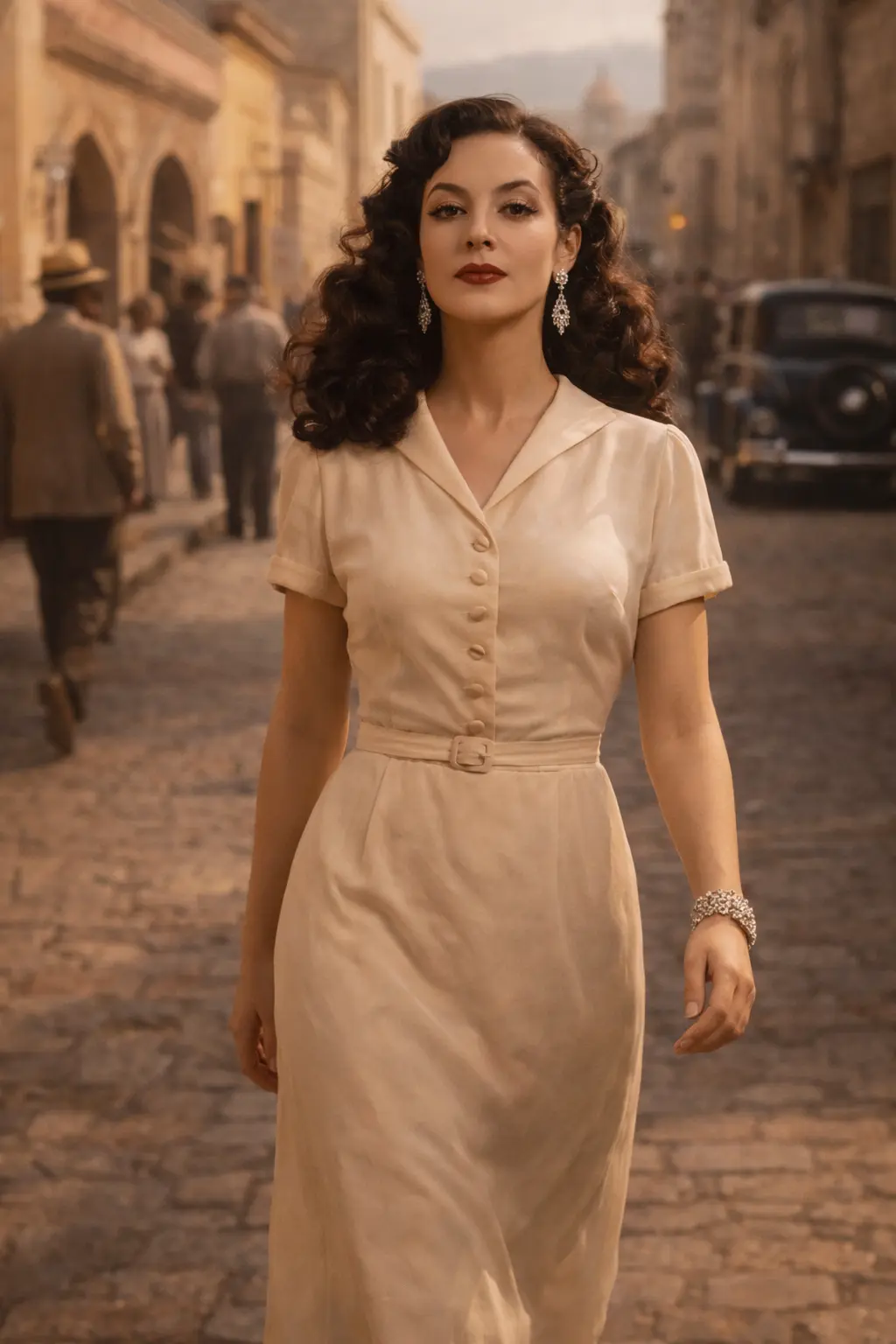
The traditional story holds that engineer and film promoter Fernando
Palacios saw her walking through Mexico City and asked whether she
wanted to appear in motion pictures. Details of the encounter changed
over time and were embellished by the star’s own mythology, but Palacios
did play an important role in introducing her to the film world and
helping prepare her for the camera (Taibo I, 2008).
María Félix made her debut in El peñón de las Ánimas in
1942, directed by Miguel Zacarías and co-starring Jorge Negrete. She did
not begin with minor parts: she appeared as a leading figure in her
first film. Her lack of experience was offset by a visual presence the
camera magnified.
Her initial relationship with Negrete was tense. He was already an
established star and, according to later accounts, did not welcome an
inexperienced actress being placed directly in a leading role. The irony
would be perfect: ten years later, they married and became one of
Mexico’s most celebrated couples.
Mexican cinema was then undergoing a period of expansion. The Second
World War had temporarily weakened European production and reduced the
circulation of American films in some Latin American markets. Mexico
developed studios, distribution networks, and a star system capable of
carrying its films throughout the Spanish-speaking world (Mora,
2005).
María arrived when that industry needed faces capable of representing
a modern nation without abandoning its myths.
The Film That Created “La Doña”
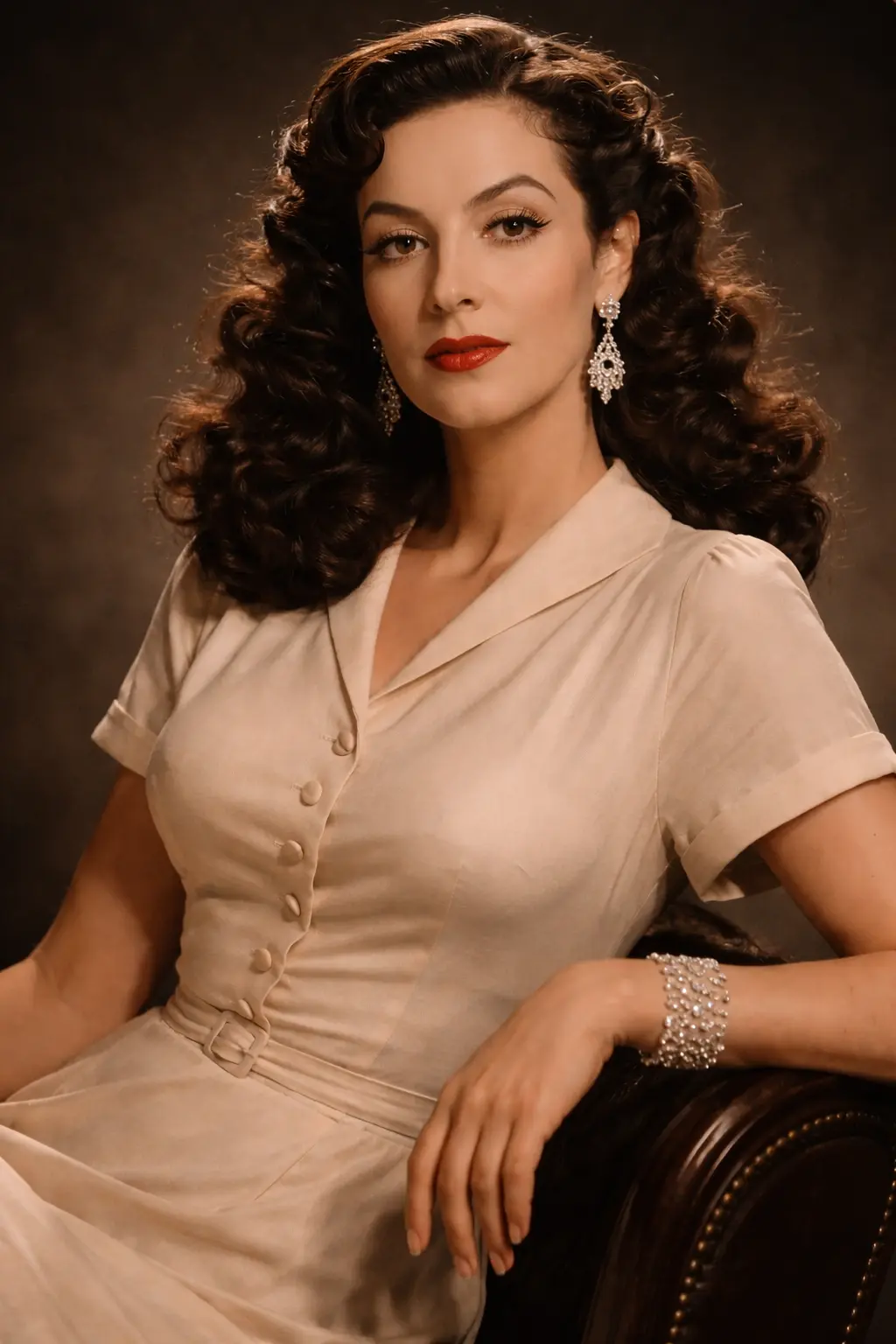
The decisive role came with Doña Bárbara in 1943, an
adaptation of the novel by Venezuelan writer Rómulo Gallegos. Its
protagonist was a landowner hardened by violence and capable of
dominating a region governed by men. Tradition holds that Gallegos
immediately recognized his character in María when he saw her. Although
details of her selection were magnified over the years, the
identification between actress and character became definitive (Taibo I,
2008).
After the film’s release, audiences began calling her “La Doña.”
The nickname did not refer solely to Doña Bárbara. It also defined
the authority María Félix projected away from the screen. Her later
characters were often dominant, ambitious, or morally unsettling women:
figures who desired, commanded, and punished rather than merely
waiting.
Films including La mujer sin alma (1944) and La
devoradora (1946) strengthened that image. Female independence
could be presented as dangerous in them, but Félix’s magnetism made it
difficult for audiences to accept a simple condemnation. Even when a
plot punished her character, the camera granted her a power that
survived the ending.
Mexican cinema had frequently represented women as self-sacrificing
mothers, innocent young women, redeemed prostitutes, or subordinate
companions. María Félix’s stardom introduced another possibility: a
woman occupying the narrative center without needing the audience’s
moral approval (Hershfield, 1996).
More Than an Arrogant Mask
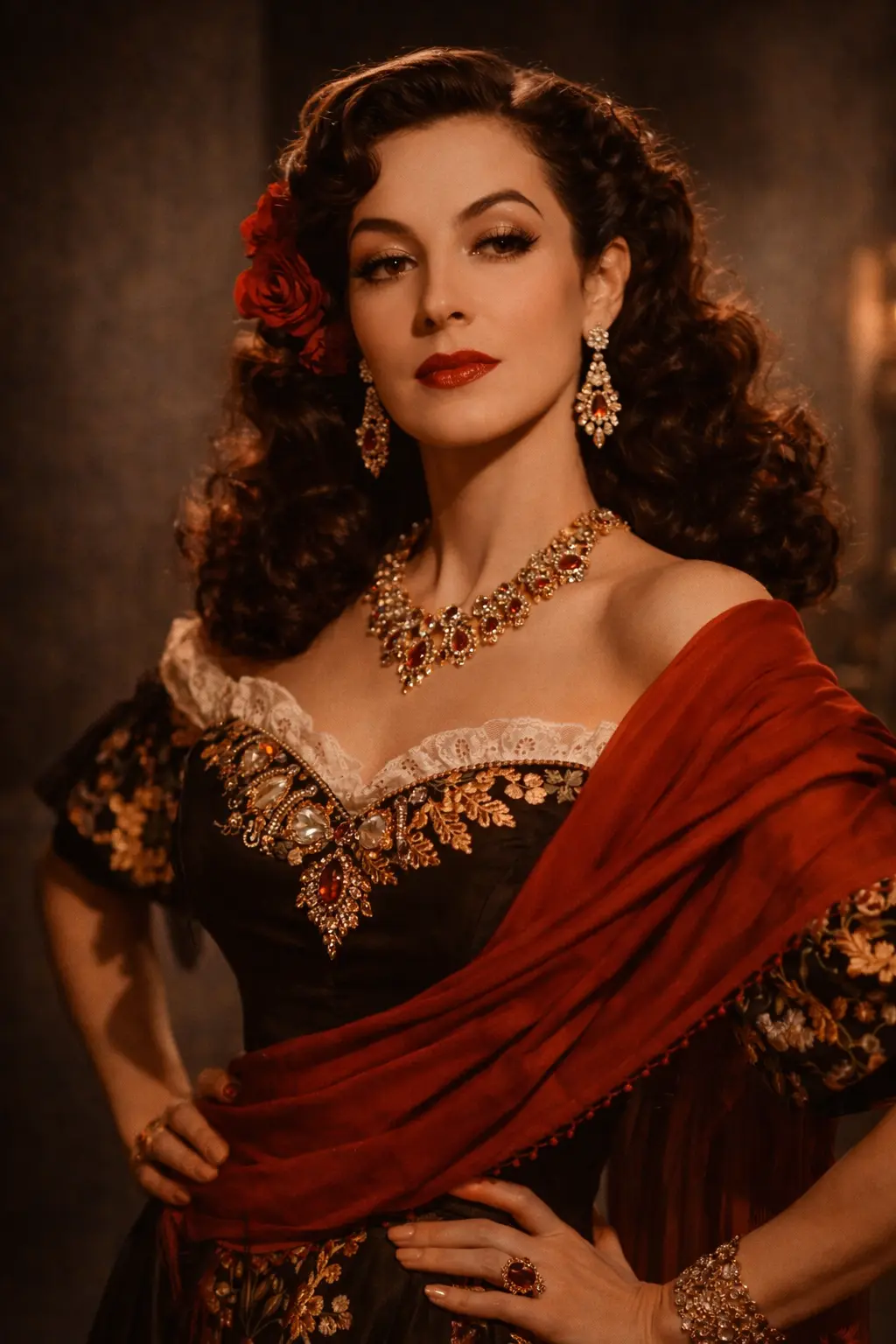
The force of her public personality led some critics to underestimate
her acting. María always seemed to be playing María: proud, beautiful,
distant, and invulnerable. Her collaborations with important directors,
however, reveal a more complex performer.
In Enamorada (1946), directed by Emilio Fernández, she
portrayed Beatriz Peñafiel, an aristocratic woman who confronts a
revolutionary general played by Pedro Armendáriz. The film uses her
haughtiness as a starting point but allows the character’s relationship
with power and desire to change. Félix received her first Ariel Award
for the performance (Mora, 2005).
She worked with Fernández again in Río Escondido (1948),
portraying a teacher sent by the government to a community controlled by
a local strongman. The film placed her figure within the nationalist
project of Golden Age cinema: education, sacrifice, and the
revolutionary state confronting rural backwardness and violence.
In Maclovia (1948), again opposite Armendáriz, Gabriel
Figueroa photographed her face as part of an idealized Mexican
landscape. These productions were not merely vehicles for a star; they
united direction, cinematography, music, and visual design during one of
the most influential periods in Latin American film.
Félix received additional Ariel Awards for Río Escondido and
Doña Diabla. Her prestige did not depend solely upon her public
image, although she understood that the image itself was another work
she needed to direct.
“María Bonita” and Love Transformed Into Myth
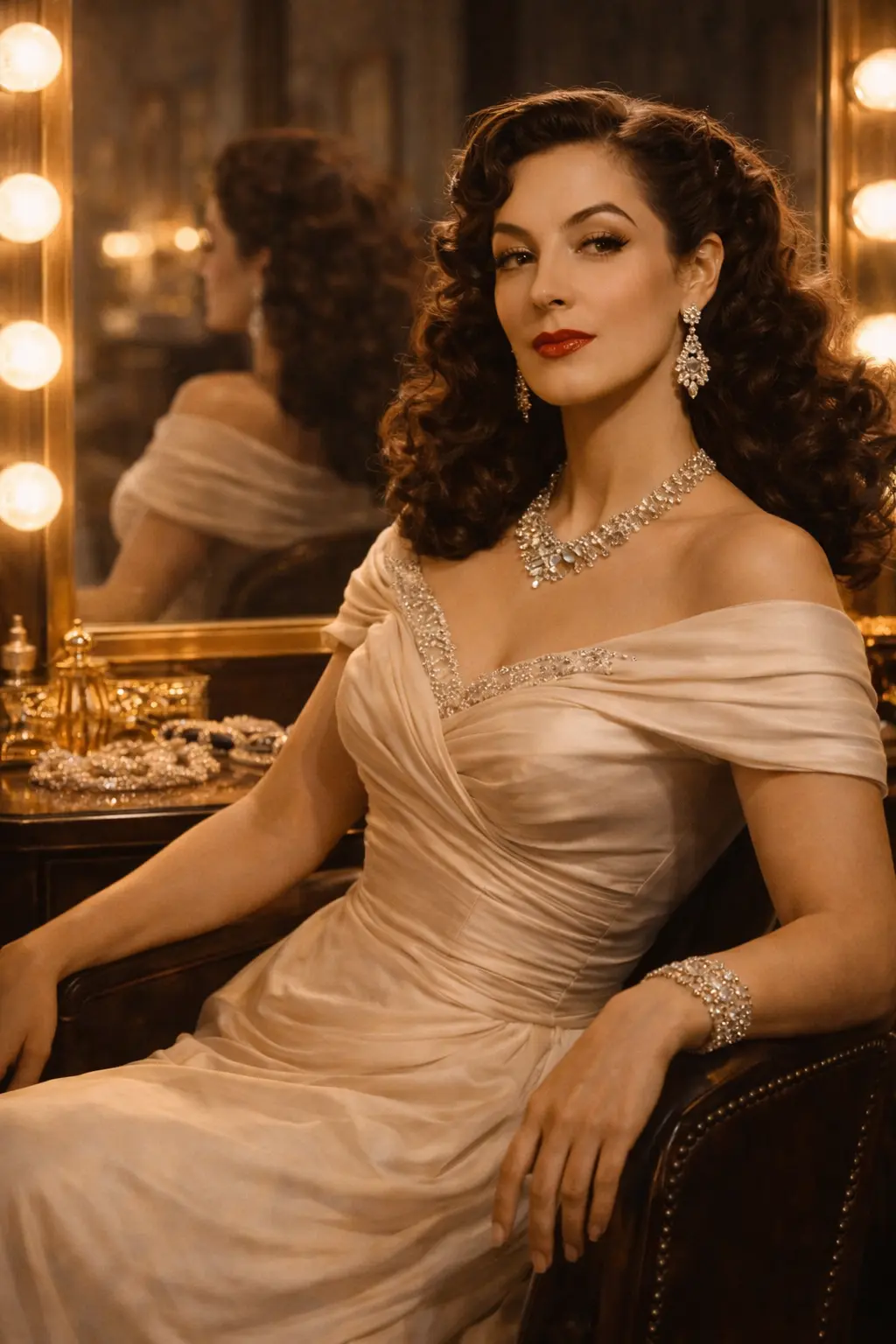
In 1945, she married composer Agustín Lara, one of the most important
figures in Mexican romantic song. Lara composed “María Bonita” for her,
turning the actress’s name into a declaration of love recognized
throughout Latin America.
The popular story locates the song’s origin during the couple’s visit
to Acapulco. As with many episodes in Félix’s life, reality, memory, and
publicity eventually blended. What is indisputable is that the song
outlived the marriage, which ended in 1947, and permanently entered the
actress’s public persona (Félix, 1993).
Lara presented her as a woman to be contemplated and adored. María,
however, refused to remain merely a muse. She managed her career,
selected projects, and constructed a public voice as powerful as the
songs, paintings, and photographs she inspired.
Diego Rivera, José Clemente Orozco, Leonor Fini, and other artists
created images of her. Félix collected art and maintained relationships
with writers, painters, and designers. She was not passive within that
world: she commissioned works, expressed opinions about them, and
decided how she wished to be represented.
A Little-Known Fact: Her International Career Bypassed Hollywood
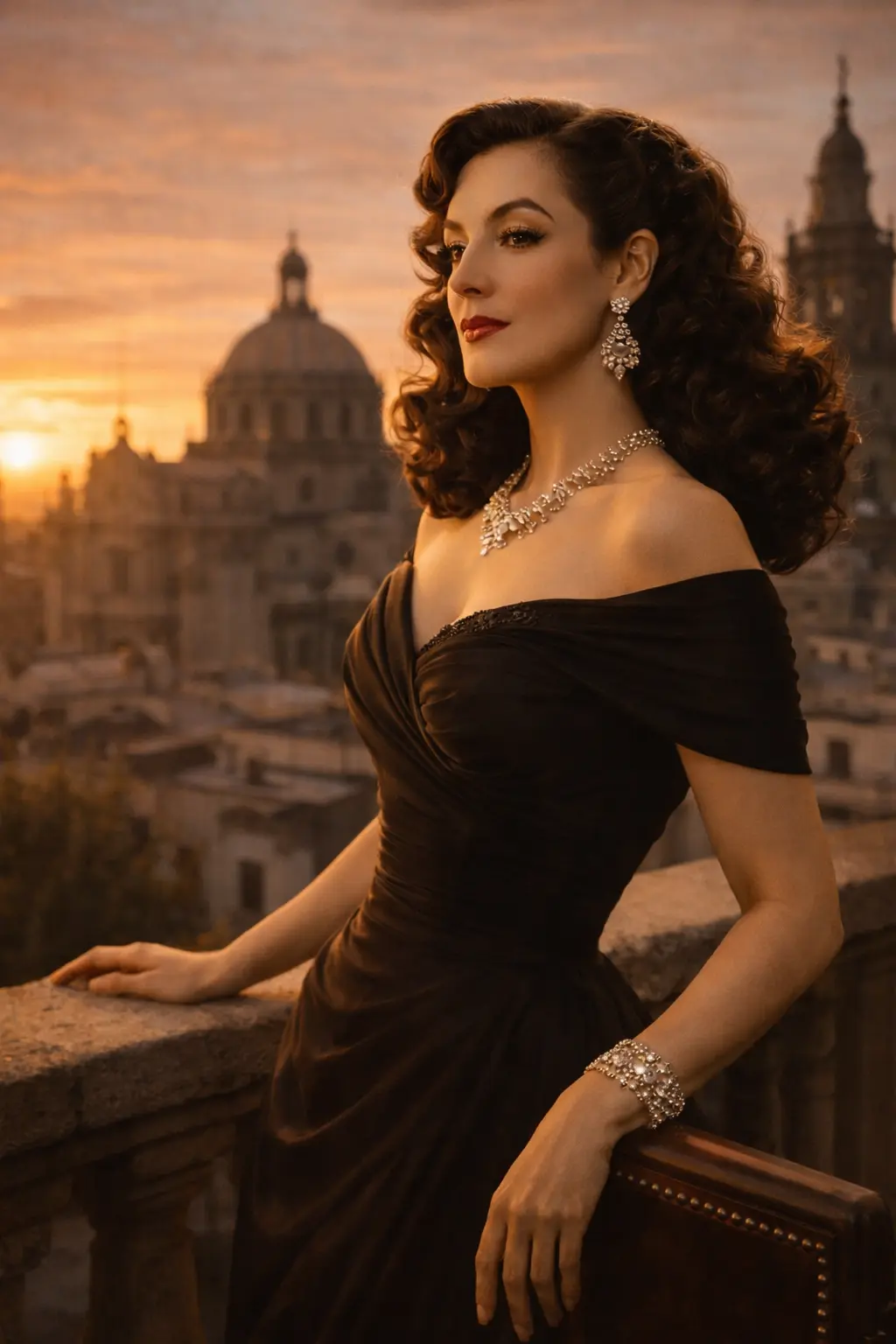
It is often claimed that María Félix “failed” in Hollywood because
she could not speak English. The reality is more complex. She maintained
contact with American studios and producers and, according to her own
accounts, received proposals, but she never made a Hollywood film. She
objected to the stereotyped characters offered to Latin American
actresses and was unwilling to begin there from a position inferior to
the one she already occupied in Mexico (Félix, 1993; Taibo I, 2008).
That decision did not mean abandoning an international career. She
traveled to Spain in 1948 and began a European period that included
Spanish, French, and Italian productions. She portrayed historical
figures and cosmopolitan women, worked with recognized filmmakers, and
appeared alongside actors of different nationalities.
In France, she appeared in French Cancan (1955), directed by
Jean Renoir, a visual celebration of the Parisian entertainment world.
She also acted in Yves Ciampi’s Les héros sont fatigués (1955),
alongside Yves Montand. She later worked with Luis Buñuel in La
fièvre monte à El Pao (1959), a French production set within a
fictional Latin American dictatorship (Taibo I, 2008).
Her career demonstrates that Hollywood was not the only gateway to
international cinema. Félix built a transatlantic career without
submitting to the American studio system.
That was one of her most modern gestures: understanding that the most
visible opportunity was not always the one offering the greatest
freedom.
The Marriage Mexico Turned Into a National Tragedy
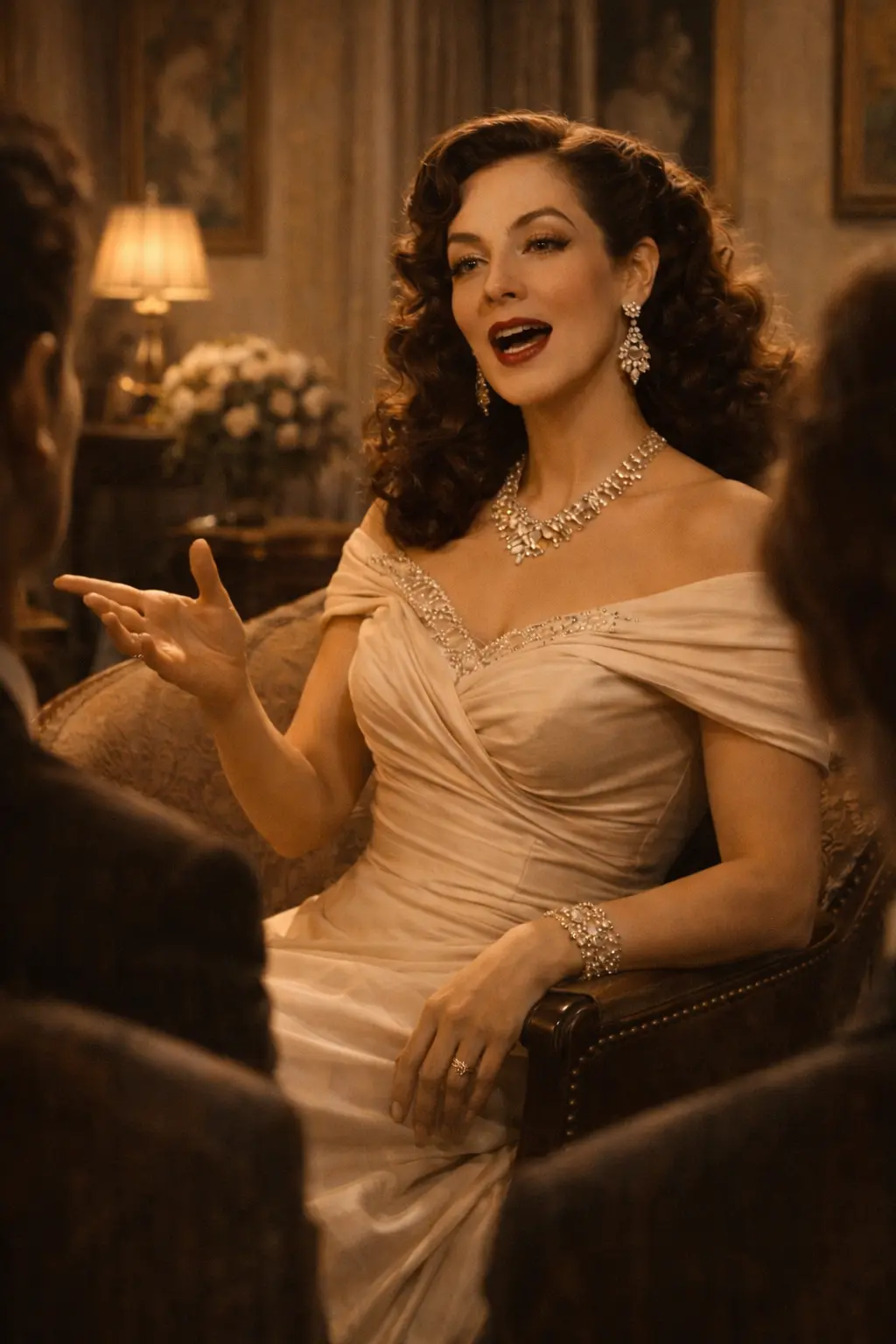
María Félix married Jorge Negrete in 1952. The hostility that arose
during their first film had changed over the years. Both were national
symbols, and their wedding gathered figures from Mexican cinema,
politics, and society.
The marriage was brief. Negrete suffered from liver disease and died
in Los Angeles in December 1953. His funeral drew an enormous crowd in
Mexico City and transformed Félix’s private loss into a public
event.
The image of the widow dressed in black immediately became part of
her legend. Yet her grief unfolded beneath the gaze of a country that
regarded her emotional life as collective property.
She later married French businessman Alex Berger, remaining with him
until his death in 1974. The relationship consolidated Félix’s life
between Mexico and France and also brought her closer to horse racing,
another of her great passions (Félix, 1993).
Behind the famous marriages lay a less photographed reality: the
difficulty of preserving intimacy after the public had turned every
personal decision into part of a national spectacle.
The Woman Who Directed Her Own Image
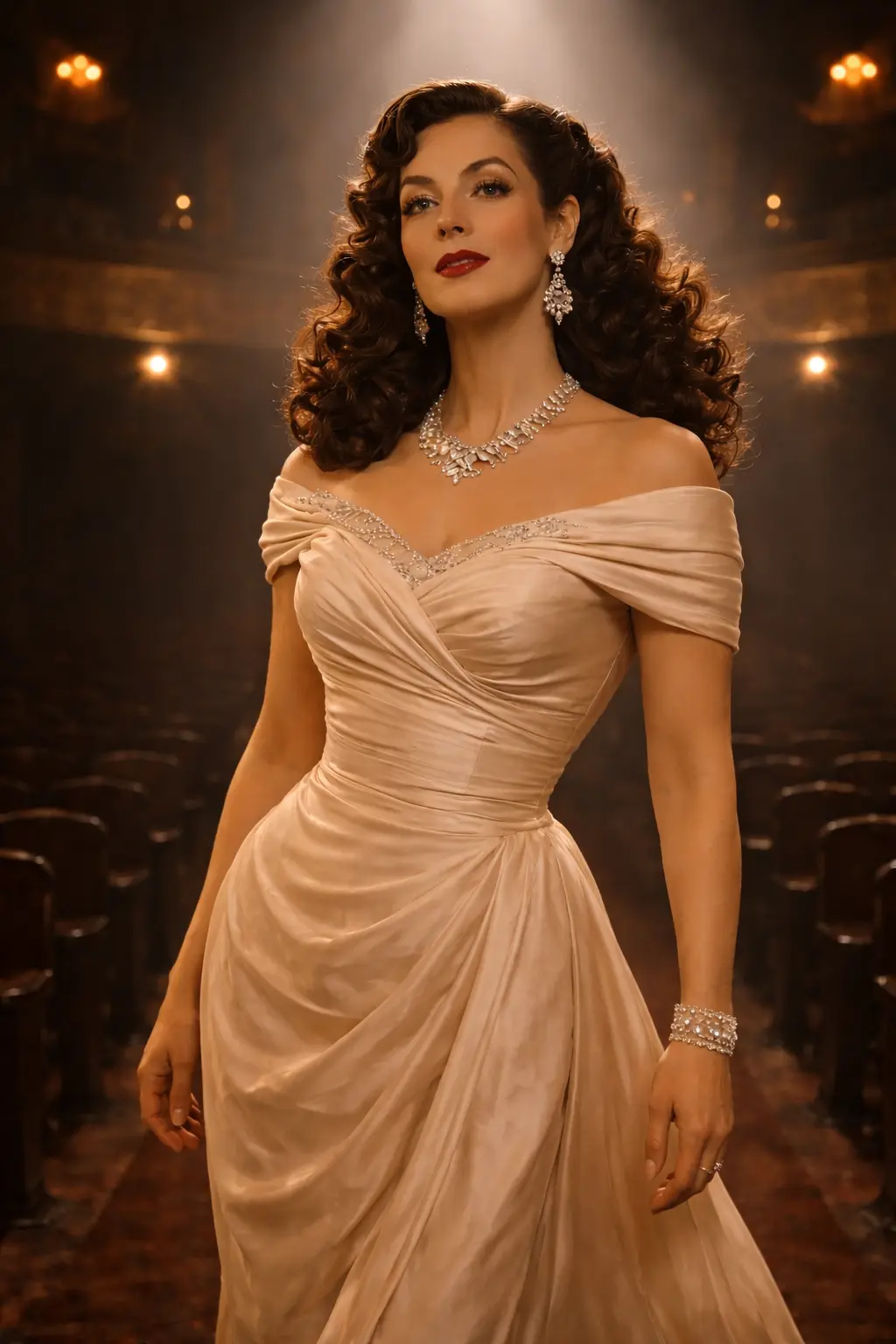
María Félix understood earlier than many celebrities that fame does
not consist solely of being observed. It also means controlling, as far
as possible, how that observation is produced.
She supervised her wardrobe, understood the effects of lighting, and
participated in the visual construction of her characters. Her
relationship with fashion was not an ornament added after her film
career. It formed part of the language through which she communicated
hierarchy, distance, and autonomy.
Designers such as Christian Dior and jewelry houses such as Cartier
became associated with her image. Her celebrated serpent- and
crocodile-shaped pieces reinforced a visual identity connected to
animals that were powerful, dangerous, and difficult to possess.
The jewelry also helped conceal the worker behind the icon. It was
easier to discuss diamonds than to examine how a Latin American actress
maintained contractual and symbolic authority for three decades.
María Félix used beauty as an instrument of negotiation. She
understood that if the industry insisted upon judging her by her
appearance, she could turn that appearance into her own territory.
Retiring Before Others Could Decide for Her
Her final film was La generala, released in 1971. Unlike
many stars compelled to accept increasingly minor roles, Félix retired
without allowing cinema to display the decline of the image she had
constructed.
She received proposals to return, but none persuaded her. Her absence
intensified the myth. She continued to appear in interviews, ceremonies,
and cultural events, answering with forceful statements and displaying
complete awareness of the character audiences expected.
The death of her only son, Enrique Álvarez Félix, in 1996 was one of
the most painful blows of her later years. He had developed a
significant career in theater, film, and television, although he lived
inevitably beneath comparisons with his mother.
María Félix died in her sleep in Mexico City on April 8, 2002—on the
exact day she turned eighty-eight. The coincidence appeared to belong to
one of the legends she might have told about herself, but it was
real.
A Woman Who Could Not Be Reduced
María Félix did not single-handedly destroy the female stereotypes of
Mexican cinema. Many of her characters were written and directed by men,
and some films ultimately restored the moral order her presence had
challenged. Her figure also cannot be separated from the privilege
provided by beauty, fame, and her relationships within the cultural
elite.
Yet she used those resources in an unusual manner. She negotiated
from a position of authority, rejected opportunities that diminished her
value, and embodied women who did not seem to apologize for occupying
space.
For generations of viewers, La Doña represented a contradictory but
powerful possibility: a woman could be desired without appearing
obedient, admired without pretending to be modest, and famous without
allowing others to narrate her life completely.
Perhaps that is why María Félix belongs among the women who sustained
history even though she was never truly forgotten. What remained partly
hidden was the labor behind her legend: the intelligence required to
construct it, protect it, and prevent a male-dominated industry from
taking possession of it.
She did not wait for cinema to grant her power. She entered it
behaving as though it already belonged to her.
References
Ayala Blanco, J. (1993). La aventura del cine mexicano.
Grijalbo.
Félix, M. (1993). Todas mis guerras. Clío.
Filmoteca UNAM. (2024). Filmoteca UNAM presenta parte de su
acervo en el Museo de Cine de la Academia. Universidad Nacional
Autónoma de México.
Hershfield, J. (1996). Mexican cinema/Mexican woman,
1940–1950. University of Arizona Press.
Mora, C. J. (2005). Mexican cinema: Reflections of a society,
1896–2004 (3rd ed.). McFarland.
Taibo I, P. I. (2008). María Félix: 47 pasos por el cine.
Planeta.
More from this collection
Sara Montiel: The Woman Who Returned from Hollywood to Transform Desire in Spanish Cinema
Read story →
Delmira Agustini: The Poet Who Turned Female Desire into an Insurrection
Read story →