
The Pilot Who Almost Died in the Desert Before Writing The Little Prince
Before writing The Little Prince, Antoine de Saint-Exupéry experienced a desert from which he almost never returned. His companion was not a storybook character, but his mechanic, André Prévot.
On December 29, 1935, they took off from Le Bourget in a Caudron Simoun C630, attempting to break the record for the Paris–Saigon route. A prize of 150,000 francs was on offer. Instead, the flight became a struggle to survive.
No radio, and an empty horizon
Saint-Exupéry had chosen to leave the radio behind to carry more fuel. He trusted his instruments and the stars. In the early hours of December 30, while descending beneath the clouds to find their bearings, the aircraft crashed in the Egyptian desert.
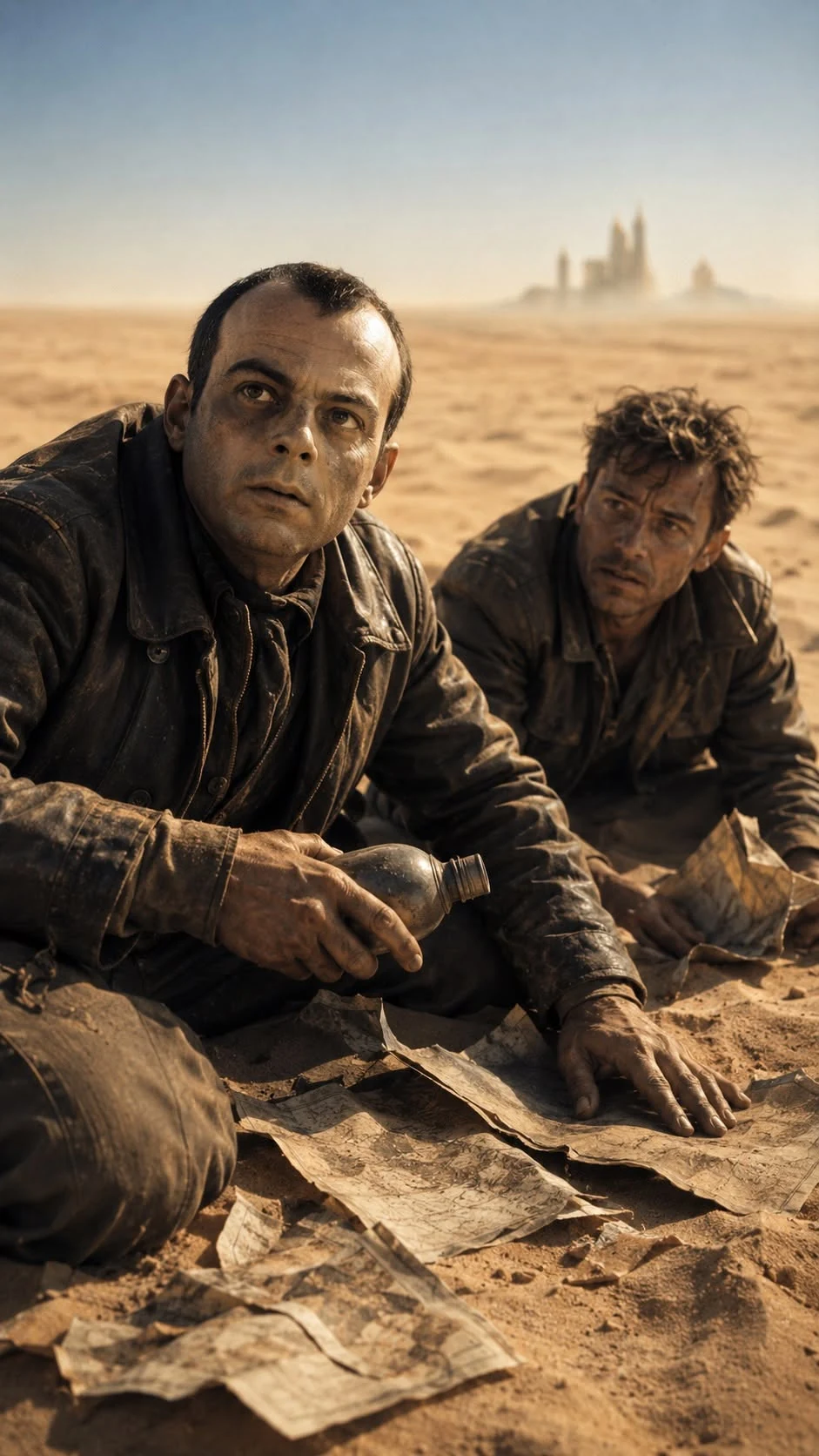
They survived the impact, but the aircraft could no longer take them out. Scarce supplies and thirst wore them down as they searched for help. After several days, Bedouins found and rescued them.
The pilot accustomed to carrying letters now depended on strangers. Survival did not take the form of an individual feat: it came from outside, through people who could offer water and lead them to safety.
Before the book, six newspaper installments
The accident did not travel straight from the sand into The Little Prince. Saint-Exupéry first told the story in L’Intransigeant: six articles published between January 30 and February 4, 1936, grouped under the title Le Vol brisé, Prison de sable.
The narrative moved from flight and impact to thirst, delirium, and rescue. He later reworked those pages for Wind, Sand and Stars, published in 1939.

The Little Prince appeared in 1943. Its aviator stranded in the Sahara echoes that experience, but the fable should not be read as a transcription of the accident or attributed to a single event.
The real and imagined deserts meet in a question: what remains when our machines stop protecting us? In 1935, Saint-Exupéry’s answer had depended on something very concrete: another person willing to stop and help.
Read the full story of Antoine de Saint-Exupéry
Sources
- Antoine de Saint-Exupéry — Paris-Saïgon (1935). View source
- Antoine de Saint-Exupéry — Wadi Natrum. View source
- AMAB — Le Vol brisé, Prison de sable (1936). View source
- The National WWII Museum — The Little Prince’s Last Flight. View source