
Mina “Margery” Crandon: the medium who challenged Houdini for a Scientific American prize
A bell rang inside a closed box while the people present believed they were controlling the medium’s hands and feet.
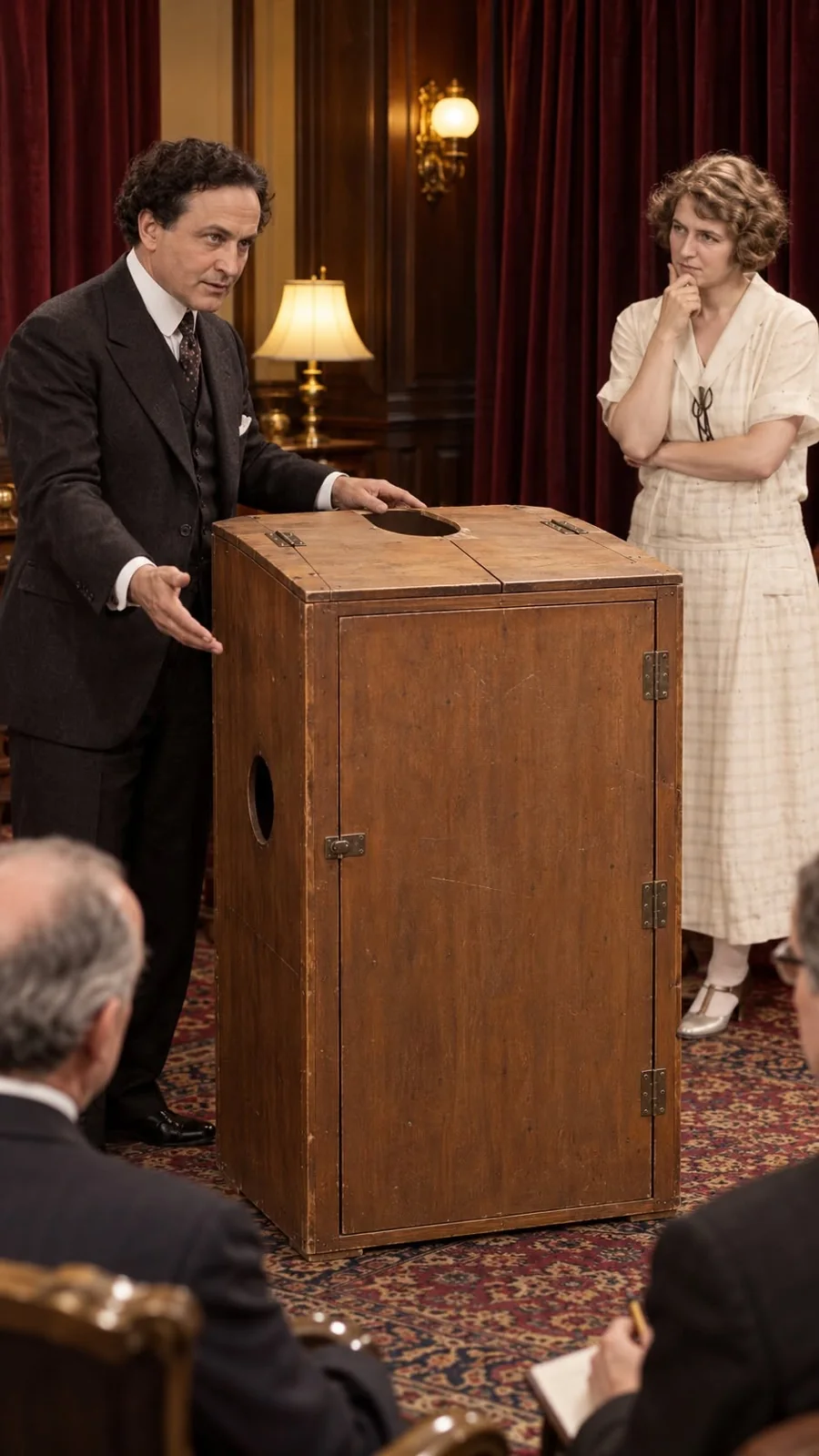
In 1924, Mina Crandon—known publicly as “Margery”—became the most controversial contender for a $2,500 prize offered by Scientific American magazine.
The money would go to anyone who could produce a conclusive psychic manifestation under test conditions.
Margery was not a traveling performer.
She was married to Le Roi Goddard Crandon, a respected Boston surgeon, and held séances at their Lime Street home. Doctors, professors, journalists, and psychical researchers attended.
During the séances, Margery entered a trance and supposedly allowed Walter, her deceased brother, to speak.
The voice attributed to Walter cracked jokes, answered questions, and directed experiments. There were also knocks, moving objects, and a bell ringing inside an electrical box.
Some committee members were deeply impressed.
But one of the judges brought a very different kind of experience.
Harry Houdini had spent decades creating escapes, concealed movements, and seemingly impossible effects. He knew how much someone could do with their feet, knees, or body while everyone watched their hands.
In July 1924, he attended Margery’s séances.
Houdini maintained that she shifted one foot, apparently without breaking contact with the person monitoring her, and reached the top of the bell box. Pressure there completed an electrical circuit and rang the bell. He later explained to the investigators the movements he claimed to have detected.
To strengthen the controls, Houdini had a device prepared that became known as the “Margie Box.”
It was a wooden cabinet that restricted the medium’s body and legs while leaving her head and hands outside. Its purpose was to prevent concealed movements.
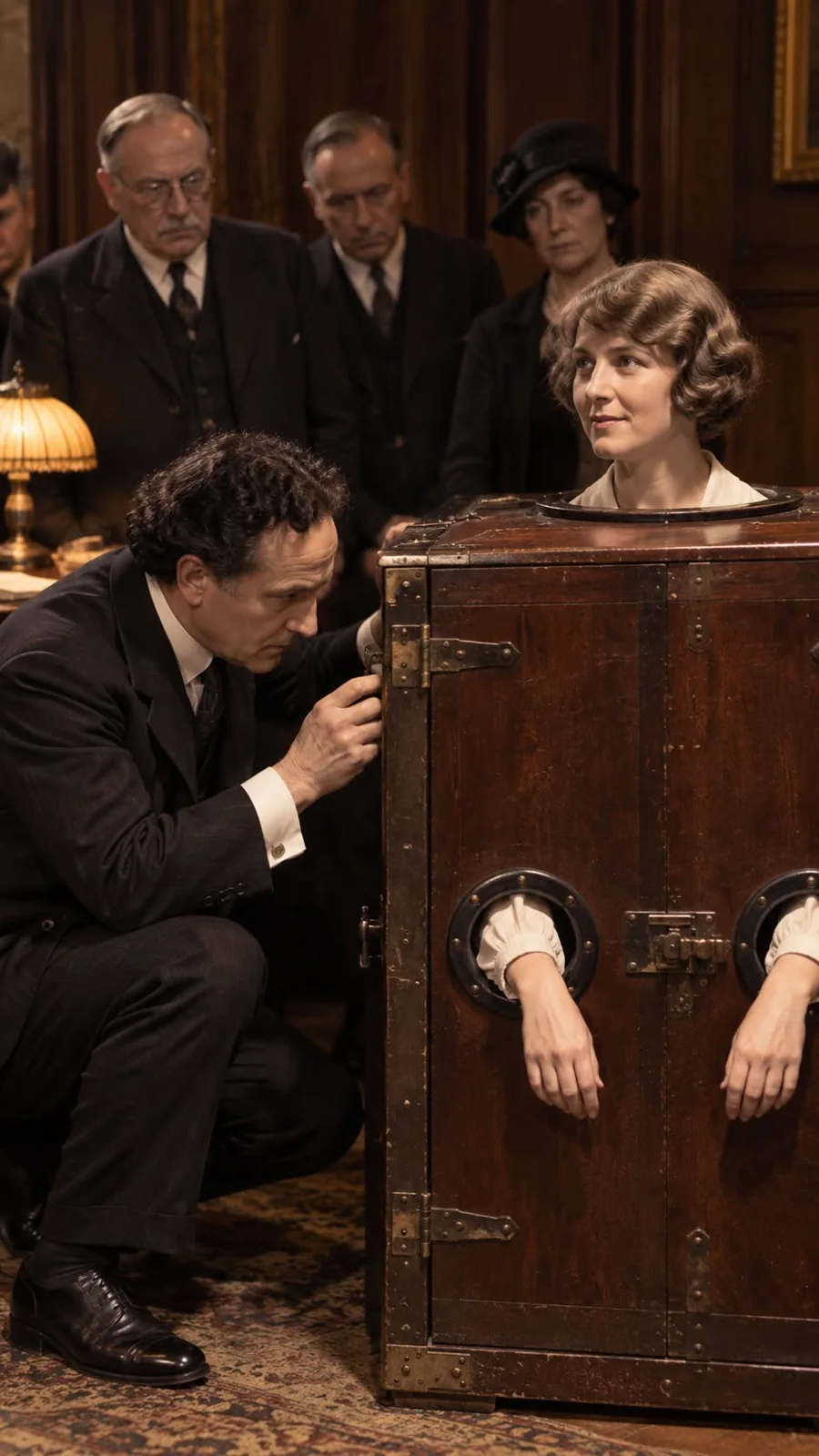
The tests involving this device also prompted disputes about their conditions and the possibility of manipulating it. Houdini considered the phenomena explainable through tricks; Margery and her supporters rejected his conclusions.
The confrontation became public.
Houdini published a pamphlet explaining the methods that, he argued, could reproduce the manifestations. He even performed some of the effects onstage to demonstrate that they required no supernatural powers.
Margery and her supporters replied that Houdini was obsessed with discrediting her and that some of his accusations did not establish how every phenomenon had occurred.
The committee remained divided, but its central conclusion was clear: it had observed no phenomena that it could say were impossible to produce by ordinary means.
In February 1925, the Scientific American committee voted to deny her the prize.
Mina Crandon did not disappear after that defeat. Her fame grew, and investigations continued for years.
But the bell on Lime Street never managed to answer the most important question:
Had a spirit touched it—or a foot that nobody was watching carefully enough?
Explore the full biography of Mina “Margery” Crandon
Sources
- PBS, American Experience — Margery Pamphlet. View source
- PBS, American Experience — Timeline of Houdini’s Life. View source
- Library of Congress — No prize for Margery. View source