
In this storyOpen index
Giuseppe Verdi: The Composer Who Buried His Family, Nearly Abandoned Opera, and Gave Italy a Voice
From family grief to the triumph of Nabucco: a life of theater, memory, and the voice of Italy.
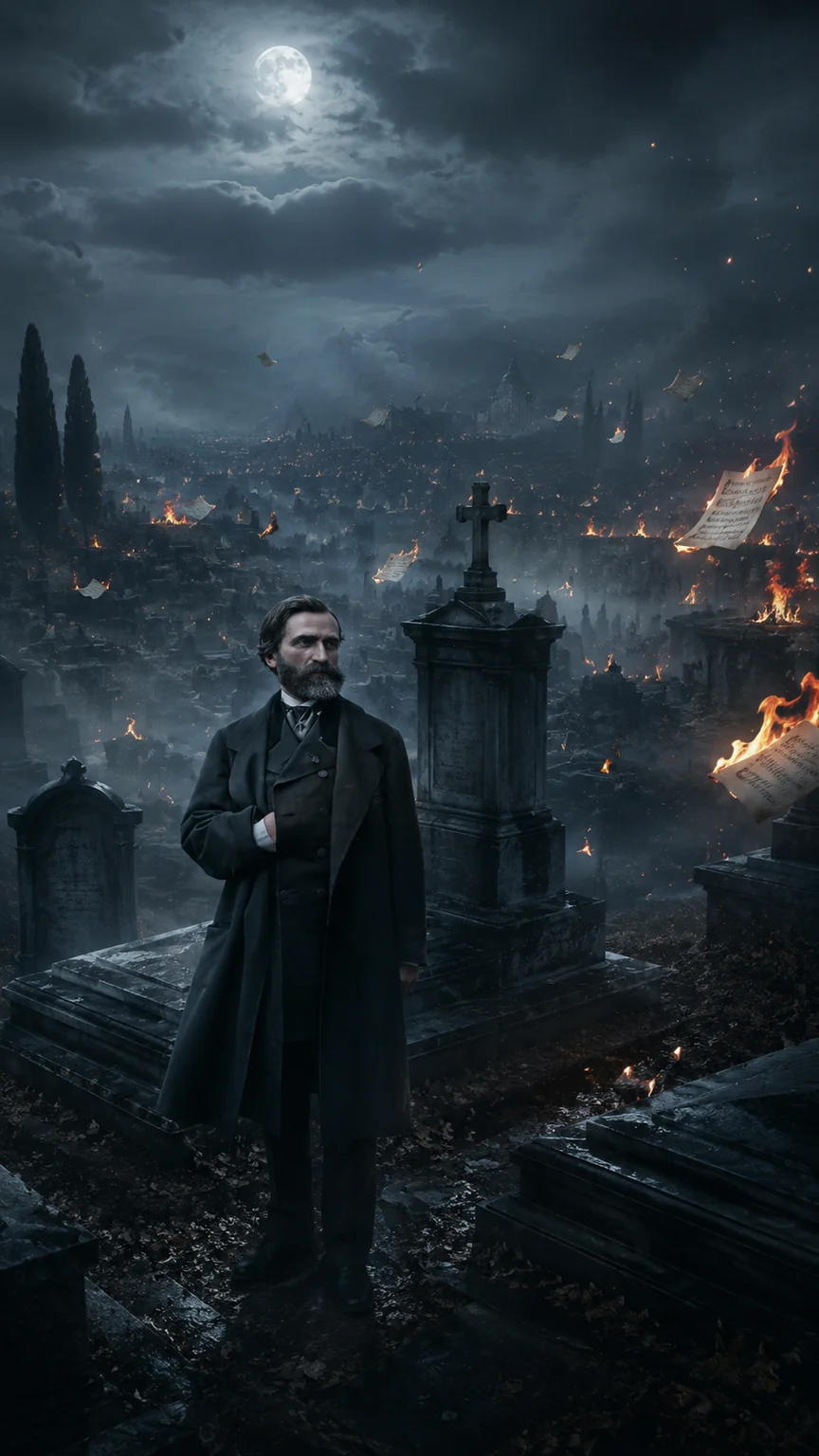
Before becoming a symbol of Italy, Giuseppe Verdi lost his children, his wife, and almost his desire to compose. His return did not erase those wounds: it began a career that transformed opera and culminated in a home for musicians in need.
Giuseppe Verdi
Music after loss
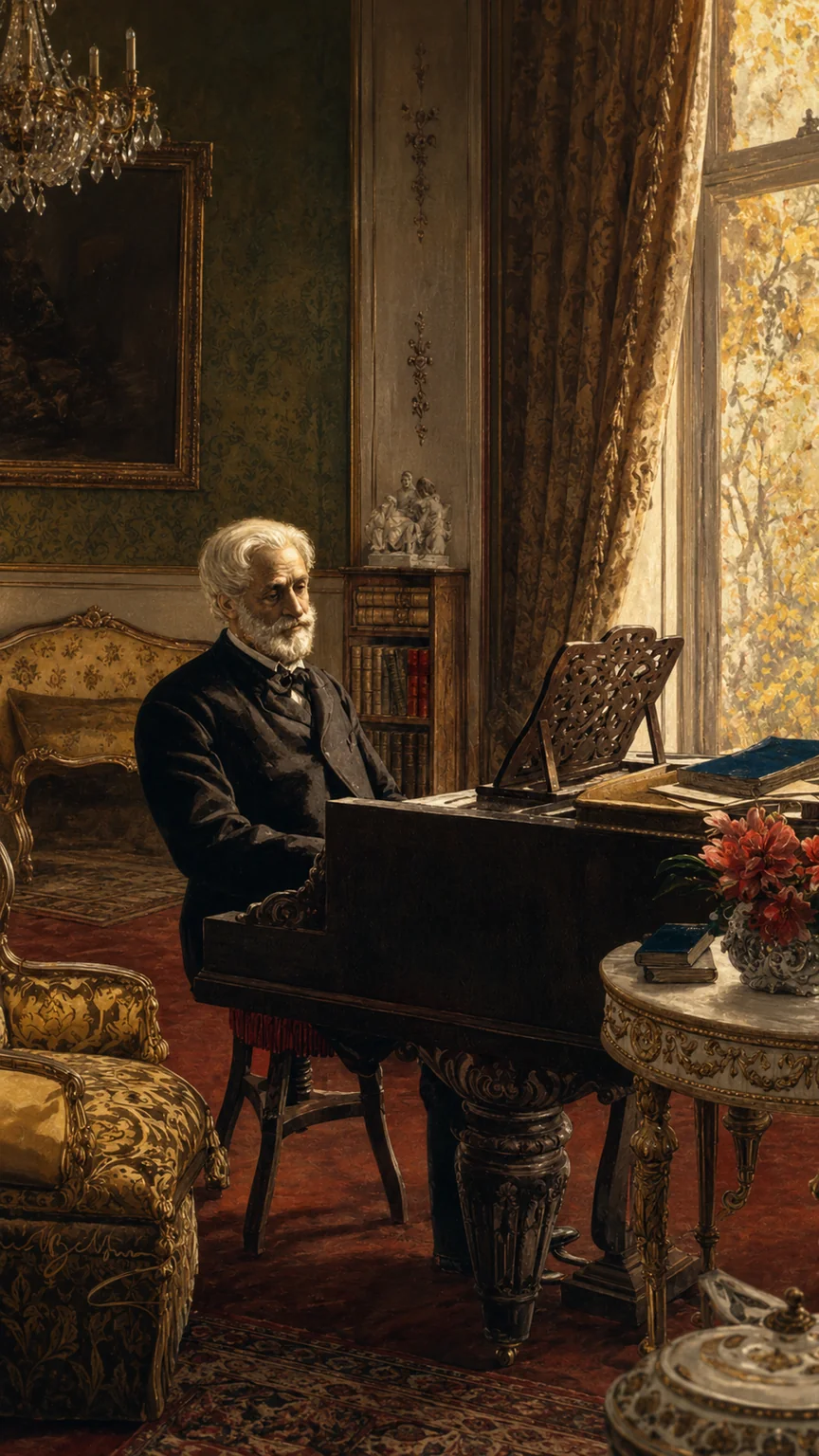
Young Verdi’s spinet
Casa Verdi lists the spinet among its collection items. Pierluigi Petrobelli’s biography recalls the inscription left by the craftsman who repaired it free of charge after recognizing the boy’s dedication to music. The image illustrates the composer at a piano: it is a reconstruction, not a photograph of the preserved instrument. (Fondazione Giuseppe Verdi, n.d.-a; Petrobelli, n.d.).
1. Three Deaths and a Laughing Theater
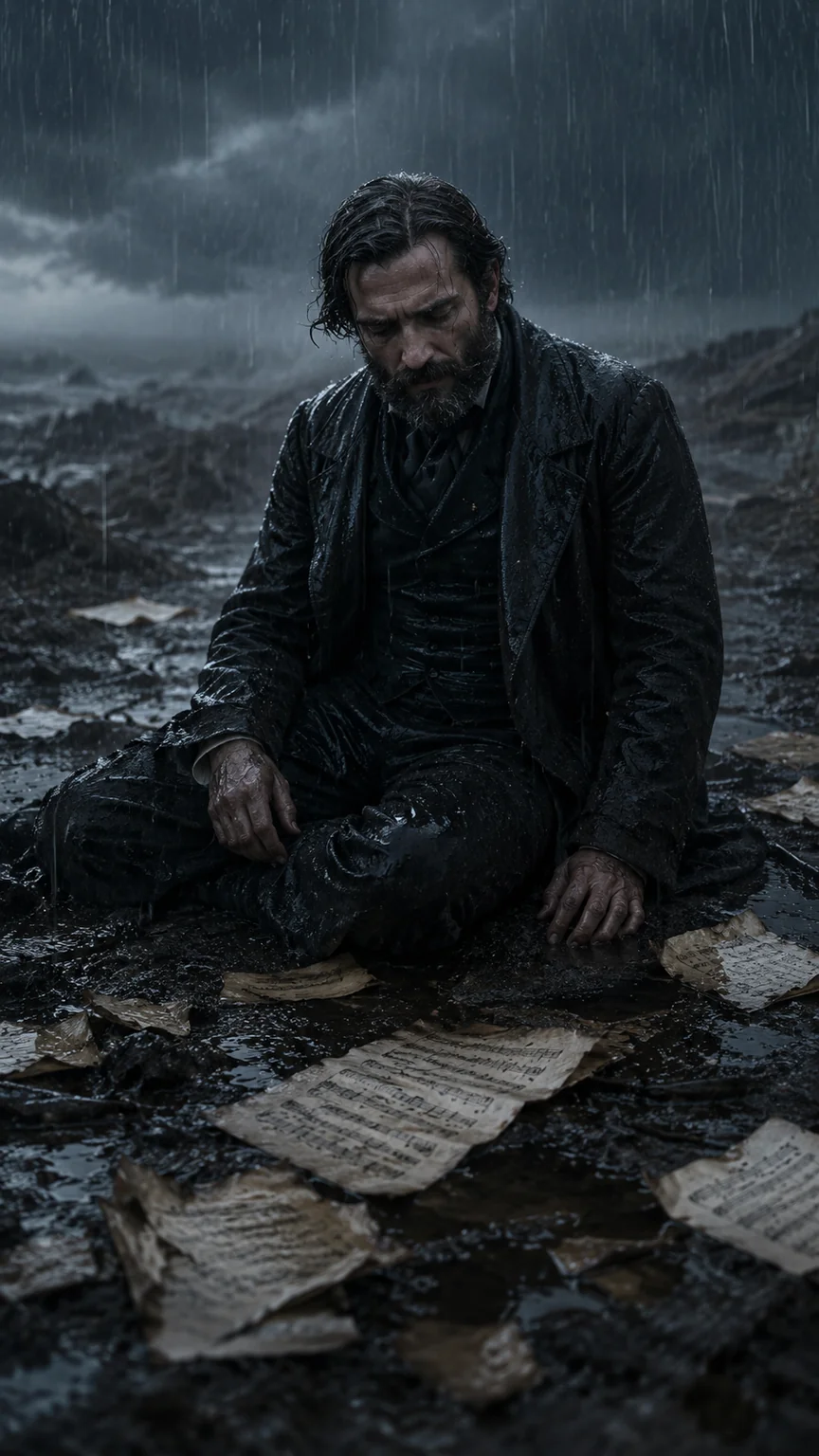
In September 1840, Giuseppe Verdi faced the failure at La Scala of his second opera, Un giorno di regno. It was a comedy, but the composer had no reason to laugh.
Both of his children and his wife had died in less than two years. Virginia Maria Luigia died in August 1838, at just over one year old. Icilio Romano died in October 1839, also in infancy. Verdi’s wife, Margherita Barezzi, died on June 18, 1840, at the age of twenty-six. The composer was alone before his twenty-seventh birthday (Balthazar, 2004; Royal Ballet and Opera, n.d.).
During that same summer, he was expected to complete a comic opera. Verdi worked amid illness, funerals, and financial pressure. When Un giorno di regno failed after its September 5 premiere, he believed his career was over. Decades later, he claimed that he had decided never to compose again.
The later legend transformed this moment into a perfect resurrection: an impresario supposedly handed him the libretto of Nabucco; the manuscript fell open at “Va, pensiero”; Verdi read the verses and instantly recovered his desire to write. This version rests mainly upon the composer’s late recollections and contains details that cannot be verified. What is certain is that he returned and created the opera that changed his life.
2. The Boy and the Old Spinet
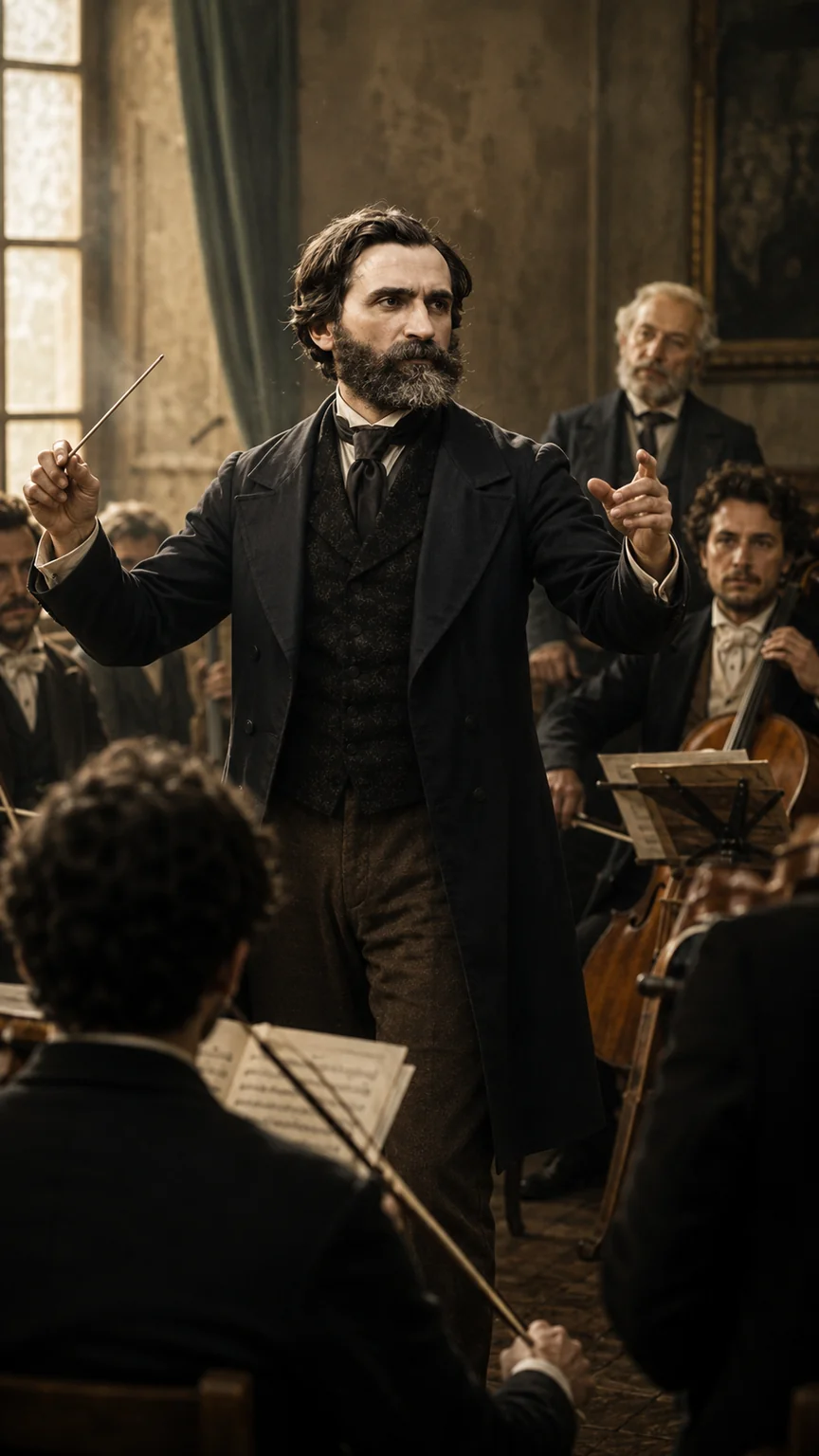
Verdi was born on October 9 or 10, 1813, in Le Roncole, near Busseto, in territory then administered by the French Empire. His father, Carlo, operated an inn and small business; his mother, Luigia Uttini, had worked as a spinner. Although Verdi later emphasized his extremely humble origins, the family possessed modest stability within its rural community (Petrobelli, n.d.).
His musical inclination appeared early. An inscription preserved inside his old spinet records that a craftsman repaired it without payment after observing the boy’s dedication. Verdi received lessons from the local organist and began playing at the village church.
After moving to Busseto, he studied with Ferdinando Provesi, the town music master and director of its philharmonic society. He also received decisive support from Antonio Barezzi, a merchant, amateur musician, and patron of young talent. Barezzi welcomed him into his home, helped finance his training, and later became his father-in-law.
In 1832, Verdi applied to the Milan Conservatory but was rejected. He was above the usual age limit, his piano technique did not satisfy the examiners’ expectations, and he was not considered a local student. The institution that now bears his name refused him admission.
Instead of abandoning music, he studied privately with Vincenzo Lavigna, a former musician at La Scala. He attended performances, analyzed contemporary opera, and acquired the theatrical education that academic exercises alone could not provide (Petrobelli, n.d.).
3. A Family Built and Destroyed
Verdi temporarily returned to Busseto and married Margherita Barezzi on May 4, 1836. Their daughter Virginia was born in March 1837 and their son Icilio in July 1838. During this same period, Verdi was attempting to establish himself as an opera composer.
His first stage work underwent several transformations before becoming Oberto, conte di San Bonifacio. It opened at La Scala on November 17, 1839, and received a sufficiently favorable response for impresario Bartolomeo Merelli to offer him a contract for additional operas (Petrobelli, n.d.).
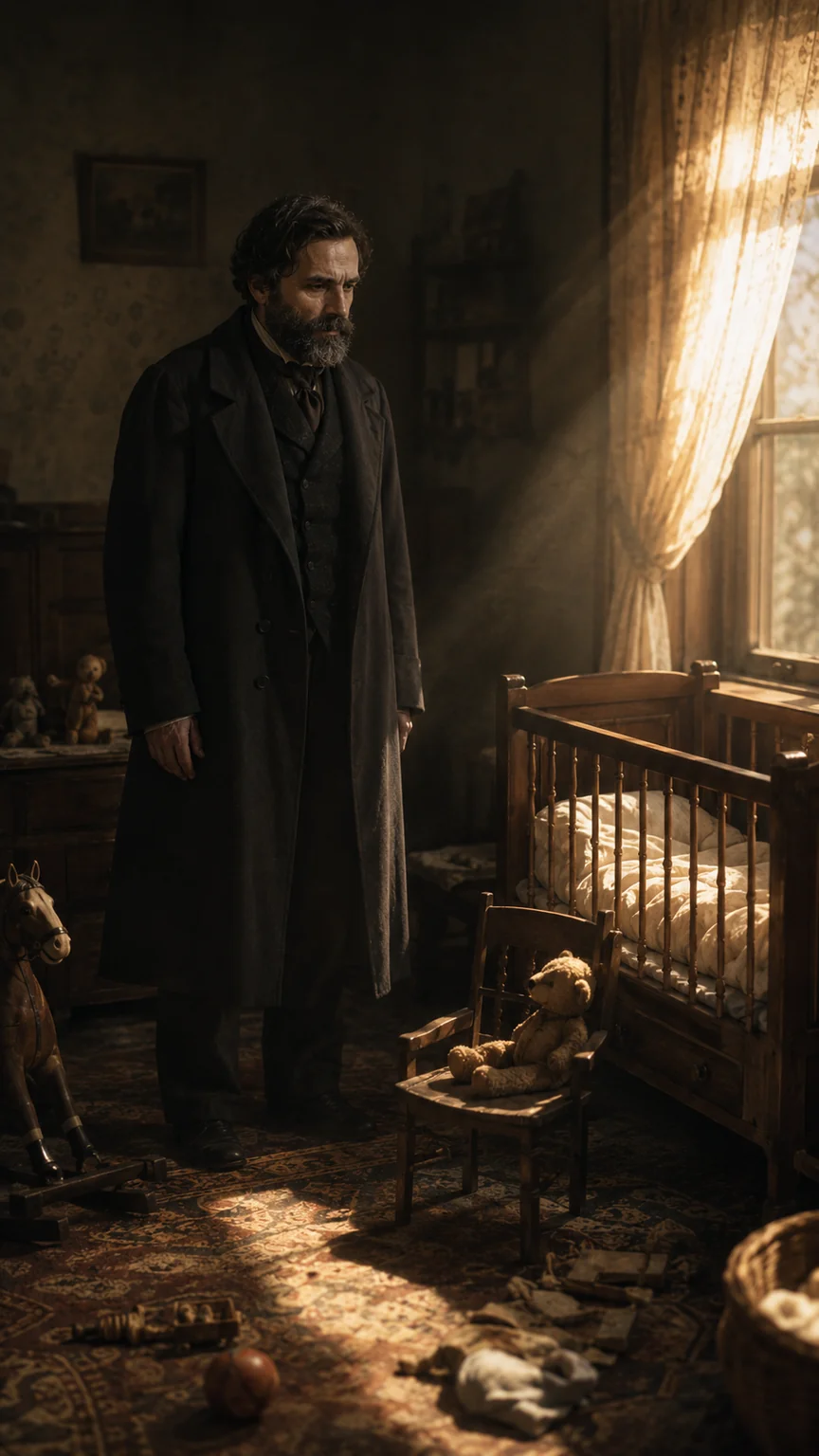
Professional promise coincided with the destruction of his family. Virginia had died before the premiere; Icilio died shortly before Oberto reached the stage; Margherita died while Verdi was working on the next score.
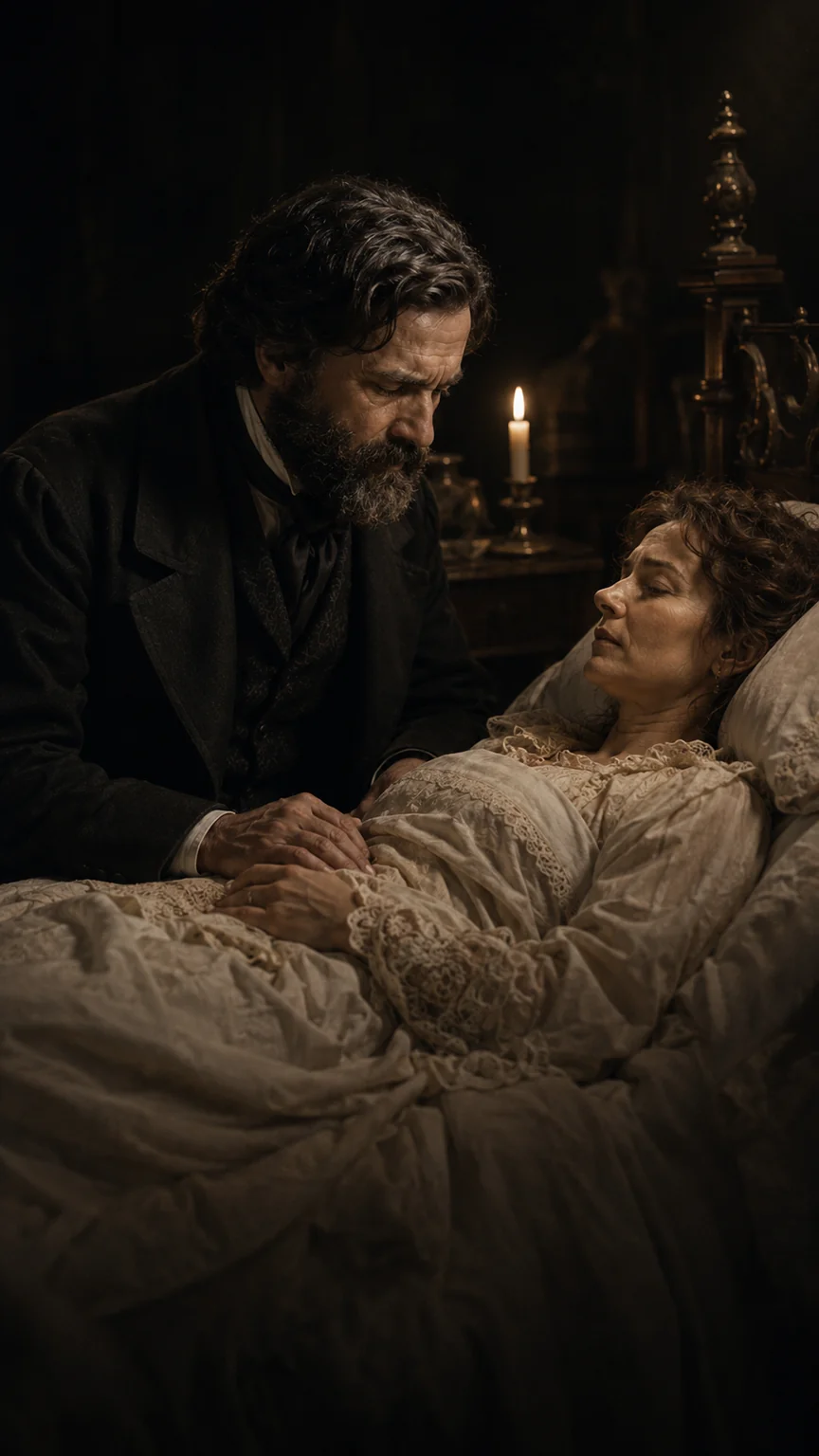
No intimate diary survives to reconstruct his precise psychological condition. His later accounts were brief and sometimes contradictory. The documented sequence alone, however, is enough to reveal the abyss: within twenty-two months, he lost his entire immediate family and saw the work meant to secure his future rejected.
4. Nabucco: The Return That Became a Legend
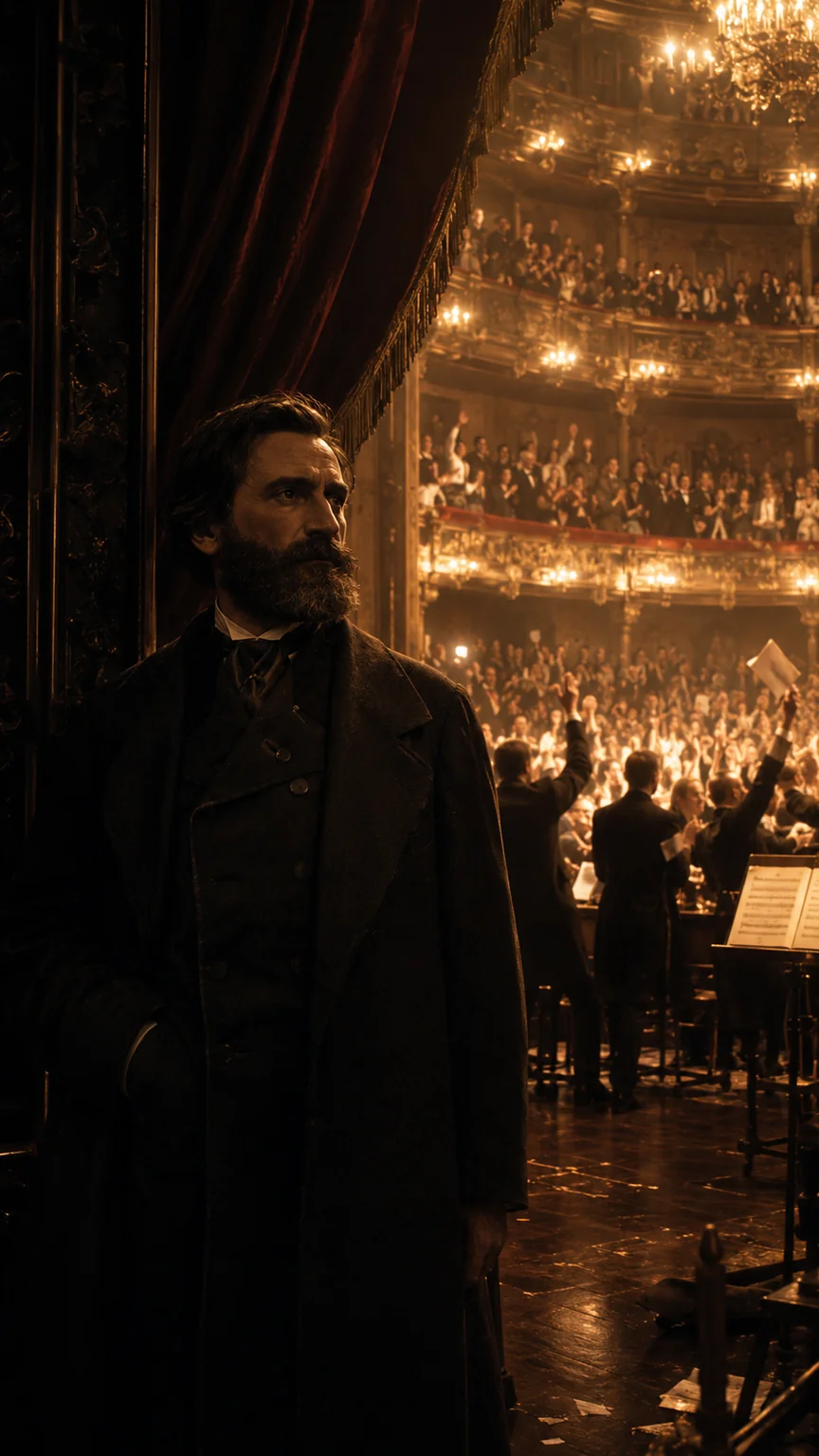
Merelli gave Verdi Temistocle Solera’s libretto about Nebuchadnezzar and the Hebrew captivity in Babylon. According to the traditional account, Verdi threw the manuscript onto a table, where it opened at “Va, pensiero,” and those lines awakened his imagination. The anecdote may preserve an element of memory, but it was recounted decades later and probably simplified a gradual return to composition.
Nabucco premiered at La Scala on March 9, 1842. Its choral power, dramatic energy, and vast contrasts produced an extraordinary success. It received dozens of performances in its first year and spread quickly through Italian and European theaters (Metropolitan Opera, 2016; Smart, 2018).
“Va, pensiero” expresses the exiled Hebrews’ longing for their lost homeland. It was eventually interpreted as an image of Italians living under foreign governments. However, the familiar story that the premiere audience spontaneously demanded its repetition in defiance of Austrian censorship is unsupported by contemporary reviews. The encore requested that night appears to have been for a different chorus, “Immenso Jehova” (Smart, 2018).
The political connection of Nabucco was not entirely invented, but it was greatly enlarged after Italian unification. The opera became, retrospectively, the musical birth of a nation.
5. The “Galley Years”
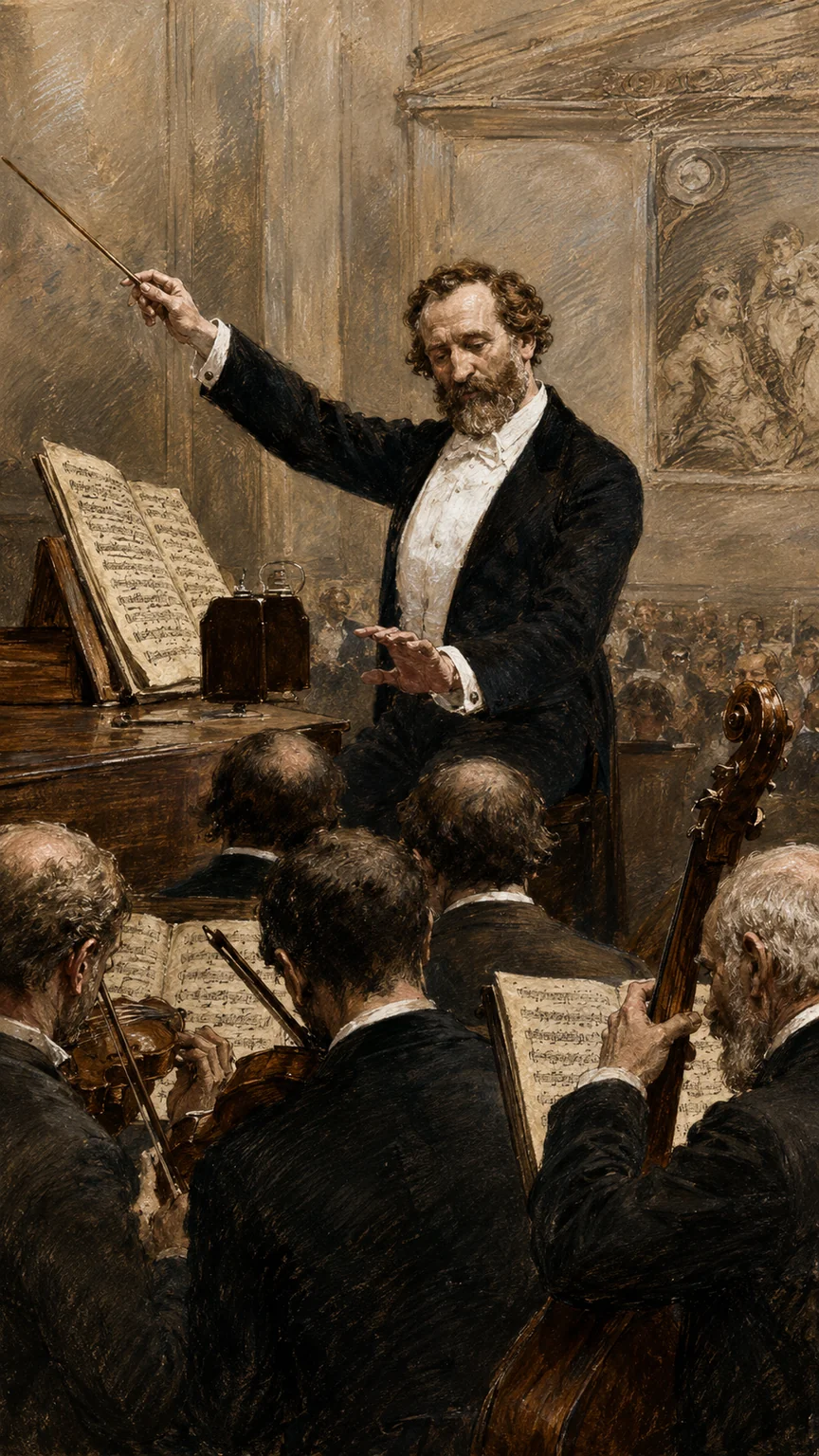
Following Nabucco, Verdi entered an exhausting period of work that he called his “galley years.” Between 1842 and 1853, he produced operas at a remarkable pace while negotiating with impresarios, accommodating singers, confronting censors, and traveling constantly.
These works included I Lombardi alla prima crociata, Ernani, I due Foscari, Macbeth, I masnadieri, La battaglia di Legnano, and Luisa Miller. Some achieved immediate triumphs; others required revision or temporarily disappeared from the repertory.
Verdi was not merely a supplier of melodies. He supervised librettos, eliminated scenes, demanded compression, and thought in theatrical terms. He wanted characters forced to act under pressure and conflicts in which public power destroyed private affection.
His maturity emerged in the so-called popular trilogy: Rigoletto in 1851, followed by Il trovatore and La traviata in 1853. Their central figures—a marginalized jester, a woman condemned by society, and a family consumed by secrets—were not conventional heroes. Verdi found dramatic grandeur in people living outside respectability.
6. Giuseppina Strepponi: Singer, Companion, and Refuge
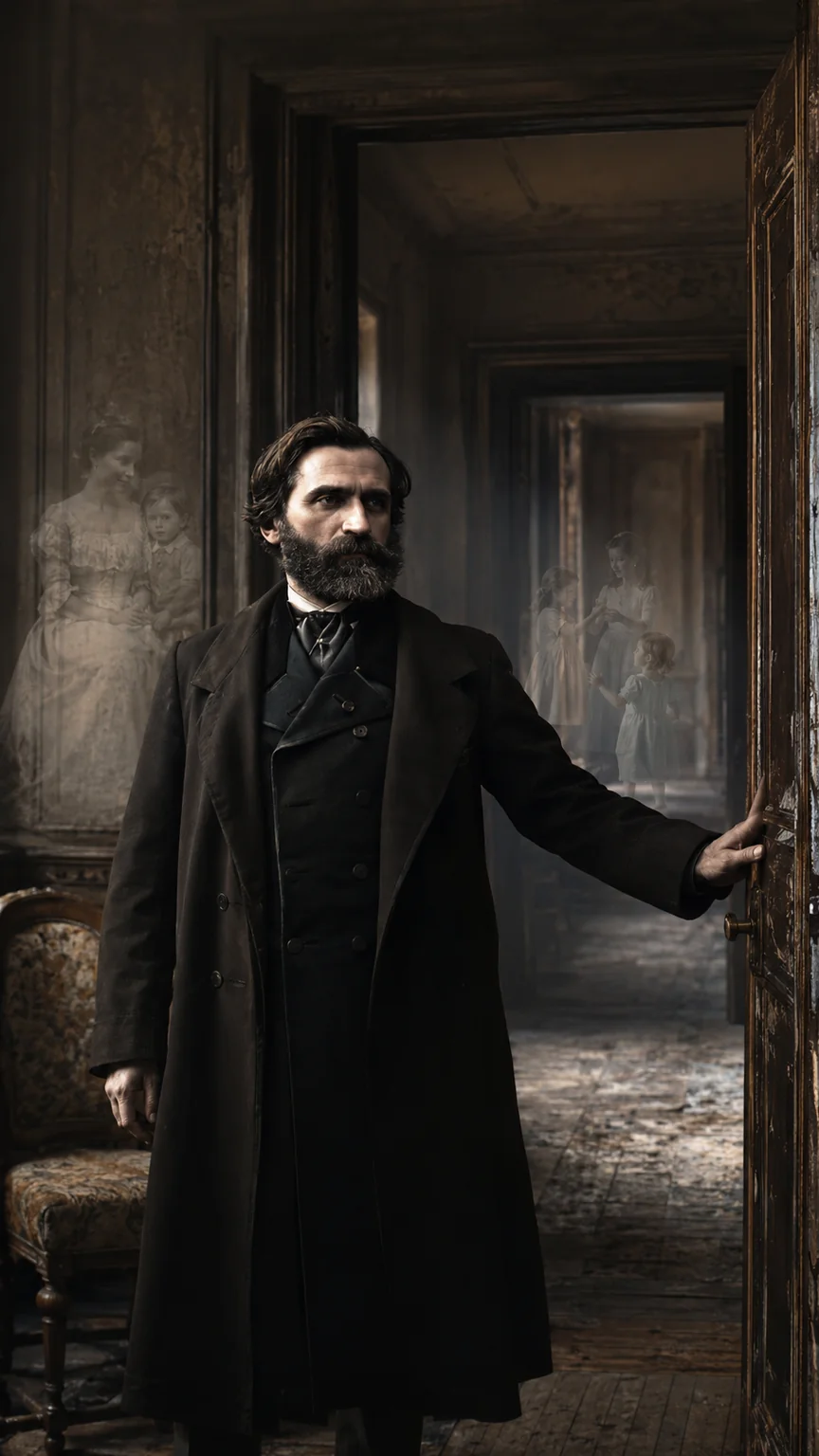
Soprano Giuseppina Strepponi had created the role of Abigaille at the premiere of Nabucco. Her vocal career was intense and physically punishing. By the time she reunited with Verdi in Paris, she had largely retired from the stage.
They began a relationship and established themselves at Sant’Agata, near Busseto. Their unmarried cohabitation provoked criticism in a community that, paradoxically, more readily tolerated Verdi’s theatrical liberties than his private life. They eventually married in 1859.
Strepponi understood the operatic world and served as a reader, adviser, and manager of correspondence. She should not be mythologized as the hidden author of Verdi’s operas, but neither should she be reduced to a silent companion. She understood singers, theaters, and dramatic requirements through an internationally recognized career of her own (Abriani, 2013).
Her death in 1897 left Verdi alone once more. He remained at Sant’Agata during her illness and afterward devoted increasing attention to a project intended to protect other musicians from poverty and abandonment.
7. The Voice of Italian Unification?
Verdi supported the Italian national movement and maintained relationships with figures such as Camillo Benso, Count of Cavour. In 1861, he was elected to the first Parliament of the Kingdom of Italy, although he showed little enthusiasm for its daily political activity.
During the 1850s, the slogan “Viva V.E.R.D.I.” appeared. Besides praising the composer, the letters could signify “Vittorio Emanuele Re d’Italia,” supporting the future king of Italy while partly evading censorship.
The image of all Verdi’s early operas as deliberately coded nationalist messages was nevertheless constructed largely after the events. Modern scholarship reveals a more complex relationship: Verdi held genuine patriotic convictions, certain works acquired concrete political meanings, and audiences repurposed them, but not every chorus was a musical conspiracy against Austria (Parker, 2012).
His importance to the Risorgimento also rests upon providing shared music to audiences who did not yet belong to a unified Italian state.
8. From Apparent Retirement to Otello and Falstaff
After Aida, first performed in Cairo in 1871, Verdi appeared to approach retirement. He composed the Requiem in memory of Alessandro Manzoni and revised earlier works, but produced no new opera for years.
Writer and composer Arrigo Boito helped revive his theatrical interest. Together they transformed Shakespeare’s Othello into Otello, premiered in 1887. Verdi was seventy-three. Its score integrated drama and music with a continuity that astonished those who considered him a figure from the past.
His final opera was Falstaff, premiered in 1893 as he approached eighty. After a career filled with tragedy, stage killings, devastated fathers, and condemned lovers, he ended with a comedy. Its final fugue suggests that everything in the world is a jest and that the last laugh is the best.
The man who nearly abandoned music after the failure of his first comedy concluded his career triumphantly with another.
9. The Little-Known Fact: A Home for Those Who No Longer Heard Applause
During his final years, Verdi financed Milan’s Casa di Riposo per Musicisti, intended for elderly singers and musicians who had served the art of music but found themselves in poverty.
The institution was formally established on December 16, 1899. Verdi supervised its design, provided resources for its operation, and ordered that it should not open until after his death. He did not want to receive expressions of gratitude from people dependent upon his generosity (Fondazione Giuseppe Verdi, n.d.-b).
In a letter, he described the home as his most beautiful work. The statement is revealing: after filling theaters and achieving global recognition, he considered it essential to care for those who had devoted their lives to music without acquiring wealth.
The home opened in 1902. Verdi and Strepponi were buried in its crypt. It continues to accommodate musicians and students, bringing together those completing their careers and those just beginning them.
10. The Final Procession
Verdi suffered a stroke at Milan’s Grand Hotel and died on January 27, 1901. He had requested a simple funeral without music or grand ceremony.
One month later, when the remains of Verdi and Strepponi were transferred to the Casa di Riposo, a choir of approximately eight hundred voices conducted by Arturo Toscanini performed “Va, pensiero” (Museo Casa Natale Arturo Toscanini, 2021). It was not a spontaneous eruption by the people, as it is sometimes described, but a carefully organized ceremony. Its symbolic power was nonetheless genuine.
The man who had lost his children, both wives, and for a time even the desire to compose was finally accompanied by the music of a people singing about a lost homeland.
Verdi lived on the edge of the abyss, but he did not transform suffering into confession. He transformed it into theater: fathers losing children, lovers separated by power, nations driven from their land, and human beings struggling to retain dignity when everything appears condemned.
Timeline
| Year | Event |
|---|---|
| 1813 | Born in Le Roncole. |
| 1832 | Rejected by the Milan Conservatory; studies with Lavigna. |
| 1836 | Marries Margherita Barezzi. |
| 1838–1840 | His two children and Margherita die. |
| 1839–1840 | Premieres of Oberto and Un giorno di regno. |
| 1842 | Nabucco triumphs at La Scala. |
| 1851–1853 | Rigoletto, Il trovatore, and La traviata. |
| 1859 | Marries Giuseppina Strepponi. |
| 1861 | Elected to Parliament. |
| 1887–1893 | Premieres of Otello and Falstaff. |
| 1899 | Establishes the Casa di Riposo per Musicisti. |
| 1901 | Dies in Milan. |
| 1902 | Casa Verdi welcomes its first residents. |
Sources
- Abriani, M. (2013). Giuseppina Strepponi. La Voce di Casa Verdi, 6, 1.
- Balthazar, S. L. (Ed.). (2004). The Cambridge companion to Verdi. Cambridge University Press.
- Fondazione Giuseppe Verdi. (n.d.-a). Giuseppe Verdi art collection.
- Fondazione Giuseppe Verdi. (n.d.-b). Institution: Casa di Riposo per Musicisti.
- Metropolitan Opera. (2016). Nabucco: Educator guide, 2016–17.
- Museo Casa Natale Arturo Toscanini. (2021). 26 febbraio 1901.
- Parker, R. (2012). Verdi politico: A wounded cliché regroups. Journal of Modern Italian Studies, 17(4), 427–436.
- Petrobelli, P. (n.d.). Giuseppe Verdi’s biography. Casa Verdi.
- Royal Ballet and Opera. (n.d.). Giuseppe Verdi.
- Smart, M. A. (2018). Waiting for Verdi: Opera and political opinion in nineteenth-century Italy, 1815–1848. University of California Press.
More from this collection
Niccolò Paganini: The Violinist Europe Mistook for the Devil
Read story →
Georges Bizet: The Man Who Died Before Hearing Carmen Triumph
Read story →