In this storyOpen index
Oscar Wilde: The Man Who Turned Wit into Armor and Wrote from the Depths of His Fall
From the brilliance of Victorian theaters to Reading: beauty, persecution, and a voice that outlived its sentence.

Oscar Wilde made a society laugh before it turned against him. Through beauty, desire, imprisonment, and exile, his story reveals how a voice can change when the applause disappears.
Oscar Wilde
A life told through wit, beauty, and wounds

De Profundis: writing from Reading
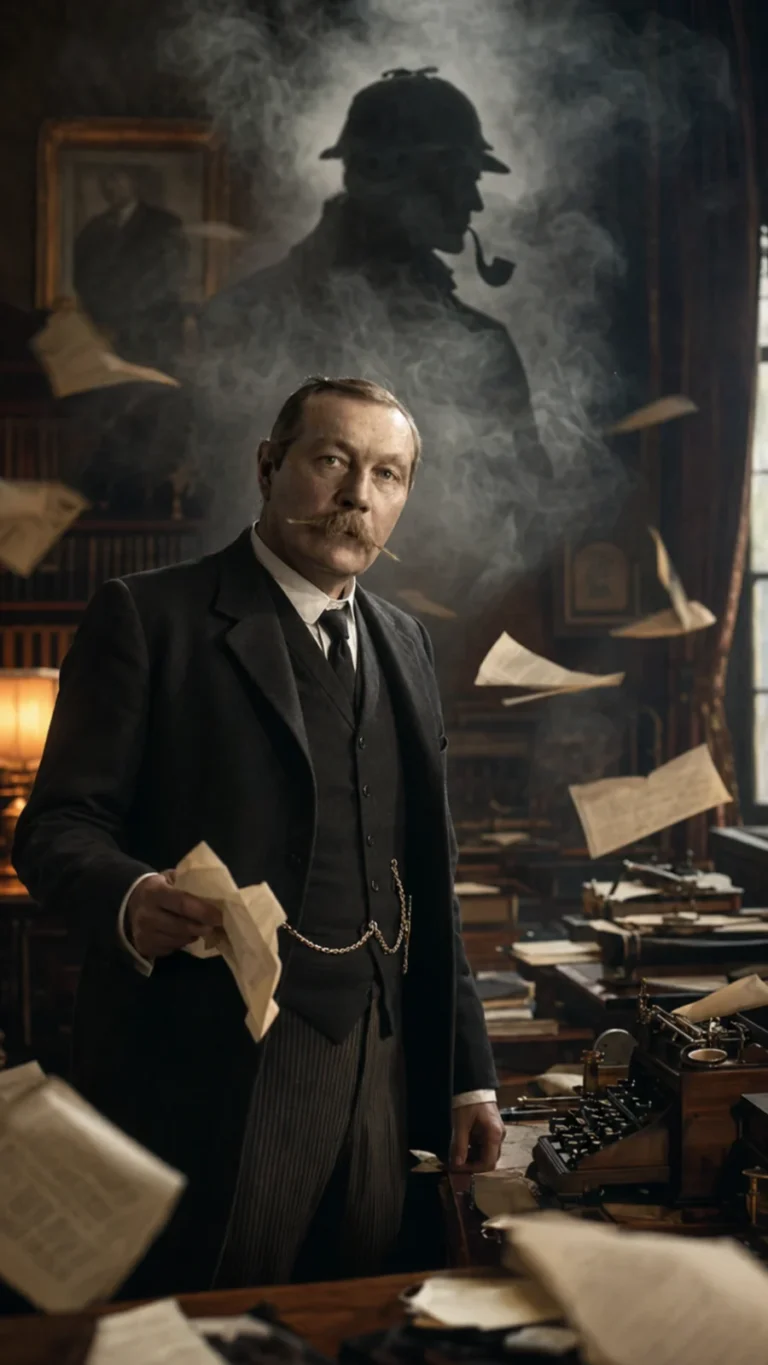
The British Library preserves the manuscript of the letter written to Lord Alfred Douglas between January and March 1897. The image is a reconstruction of Wilde writing; the link leads to the authentic document’s catalogue record. (British Library, n.d.-a).
1. The Night Applause Concealed Catastrophe
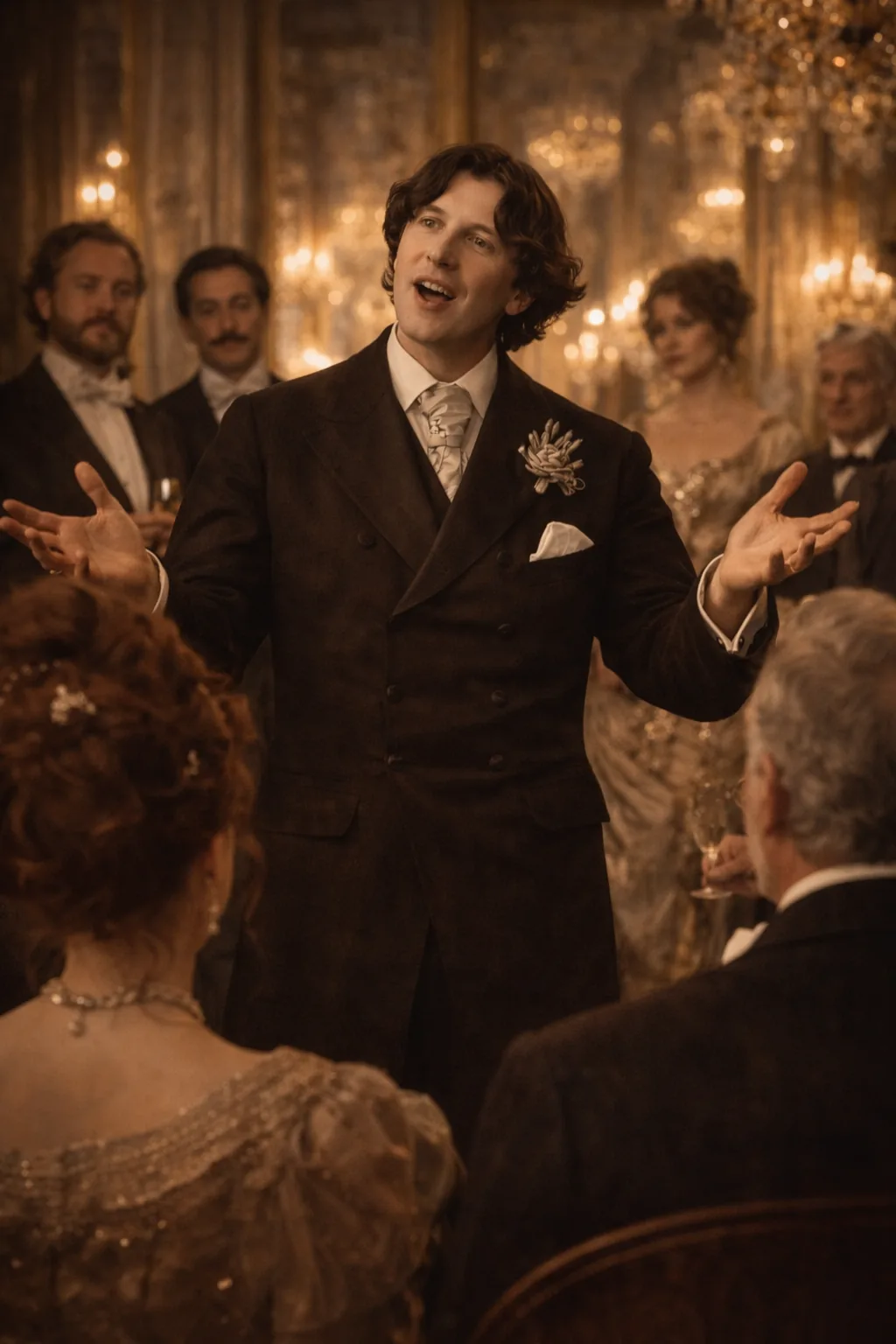
On February 14, 1895, The Importance of Being Earnest opened at London’s St James’s Theatre. The comedy produced laughter, applause, and another demonstration of Oscar Wilde’s command of the British stage. At the same time, An Ideal Husband was still running at another theater. At forty, Wilde stood at the summit of his career.
The Marquess of Queensberry—the father of Wilde’s lover, Lord Alfred Douglas—had planned to attend the premiere carrying rotten vegetables. The theater manager prevented him from entering, but the confrontation did not end there. Four days later, Queensberry left a calling card at the Albemarle Club accusing Wilde of “posing as a sodomite,” misspelling the final word (The National Archives, n.d.).
Wilde decided to prosecute him for criminal libel. Less than three months later, London’s most celebrated playwright had been sentenced to two years of hard labor. The society that had laughed at his attacks on Victorian hypocrisy had found an opportunity to destroy him.
2. A Child Educated Among Medicine, Poetry, and Nationalism

Oscar Fingal O’Flahertie Wills Wilde was born in Dublin on October 16, 1854. His father, William Wilde, was a prominent eye and ear surgeon, as well as an antiquarian and student of Irish folklore. His mother, Jane Francesca Elgee, wrote nationalist poetry under the name “Speranza” and hosted gatherings attended by artists, intellectuals, and politicians.
The family home taught Oscar that identity could be constructed through language. His mother transformed conversation into performance; his father combined science, archaeology, and eccentricity. That mixture of intellectual discipline and theatricality later reappeared in Wilde’s work.
Wilde had a younger sister, Isola, who died in 1867 at the age of nine. The loss affected him deeply and is often connected with his poem Requiescat. Behind the public personality that would turn wit into a form of defense was a sensitivity marked by grief from an early age.
He studied classics at Trinity College Dublin from 1871 to 1874. He then received a scholarship to Magdalen College, Oxford, where he distinguished himself in Greek literature and won the prestigious Newdigate Prize for his poem Ravenna (Harry Ransom Center, n.d.).
3. Becoming Oscar Wilde
At Oxford, Wilde absorbed the ideas of Aestheticism, a movement defending beauty and art without requiring moral or practical justification. Walter Pater and John Ruskin influenced him, although Wilde eventually transformed their ideas into a more provocative personal philosophy.
He also began designing his appearance: long hair, conspicuous clothing, refined interiors, and carefully prepared remarks. His contemporaries might ridicule him, but ridicule also provided publicity. Wilde understood before many modern writers that an author could become a character.
In 1882, he undertook an extensive lecture tour through the United States and Canada. He spoke about art, decoration, and the “beautiful house” to audiences who sometimes came for intellectual instruction and sometimes merely to inspect the eccentric British aesthete. During the tour, he delivered more than a hundred lectures and posed for photographer Napoleon Sarony, whose images helped spread his public persona (Library of Congress, n.d.; Trinity College Dublin, n.d.).
The tour demonstrated that Wilde could transform hostility into entertainment. If audiences arrived expecting to laugh at him, he would make certain that he controlled the laughter.
4. Marriage, Fatherhood, and a Double Life Still Hidden
In 1884, Wilde married Constance Lloyd, an educated woman interested in dress reform and social causes. They had two sons: Cyril, born in 1885, and Vyvyan, born in 1886.
Wilde told stories to his children and published such collections as The Happy Prince and Other Tales and A House of Pomegranates. Beneath the appearance of children’s fables, these stories explored sacrifice, inequality, cruelty, and the inability of beauty to protect those who suffer.
Between 1887 and 1889, he edited The Woman’s World. Rather than restricting the magazine to fashion and domestic life, he expanded its treatment of women’s education, literature, and employment. This period reveals a less familiar Wilde: professional editor, father, and apparently respectable family man.
By the late 1880s, he had begun exploring relationships with men. The Labouchere Amendment of 1885 made any act of “gross indecency” between males a criminal offense, without requiring the evidence previously necessary for a sodomy prosecution. The law enabled the policing of private intimacy and created a powerful instrument for blackmail and repression (The National Archives, n.d.).
5. The Portrait That Revealed What Society Wanted Hidden
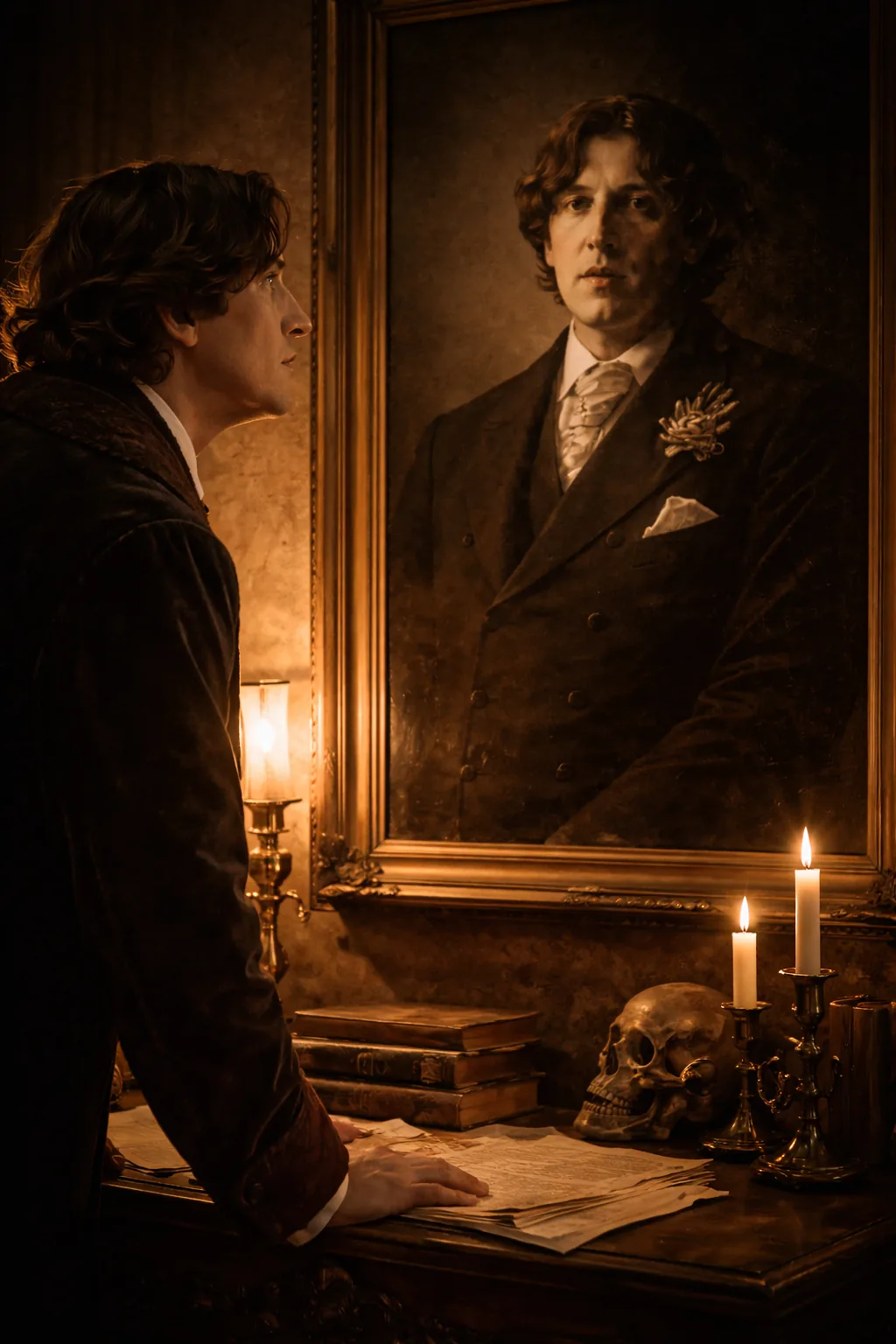
The Picture of Dorian Gray appeared in Lippincott’s Monthly Magazine in 1890. It tells the story of a young man whose face retains its beauty while a portrait records the corruption produced by his actions.
Although the magazine had already removed certain passages, the British press condemned the novel as immoral. Wilde revised and expanded it for book publication in 1891, reducing some implications and adding a preface composed of aphorisms about artistic independence (Frankel, 2011).
The novel was not a literal confession, but it contained tensions central to Wilde’s life: forbidden desire, the division between appearance and secrecy, and the fear that a carefully constructed image might eventually reveal what it was intended to conceal.
Critics demanded that art teach a moral lesson. Wilde answered with a novel in which moral obsession contributes to destruction. Years later, prosecutors would use extracts from his writing as though literature were judicial evidence of his conduct.
6. The Playwright Who Turned Society into a Joke
Wilde conquered the London stage with Lady Windermere’s Fan in 1892. It was followed by A Woman of No Importance, An Ideal Husband, and The Importance of Being Earnest. His plays used drawing rooms, marriages, secrets, and misunderstandings to expose the contradictions of the ruling class.
The mechanism was precise: respectable characters concealed transgressions, while those who appeared scandalous spoke the most uncomfortable truths. Wilde transformed Victorian values into paradoxes until virtue and appearance ceased to mean the same thing.
The Importance of Being Earnest brought this strategy to its purest form. Invented identities, absurd engagements, and an obsession with the name “Ernest” dismantled social solemnity. Wilde originally wrote the play in four acts, but it was reduced to three for performance and publication (British Library, n.d.-b).
The comedy opened when his relationship with Lord Alfred Douglas was already threatening to destroy the world that had allowed him to write it.
7. Bosie, Queensberry, and the Fatal Decision
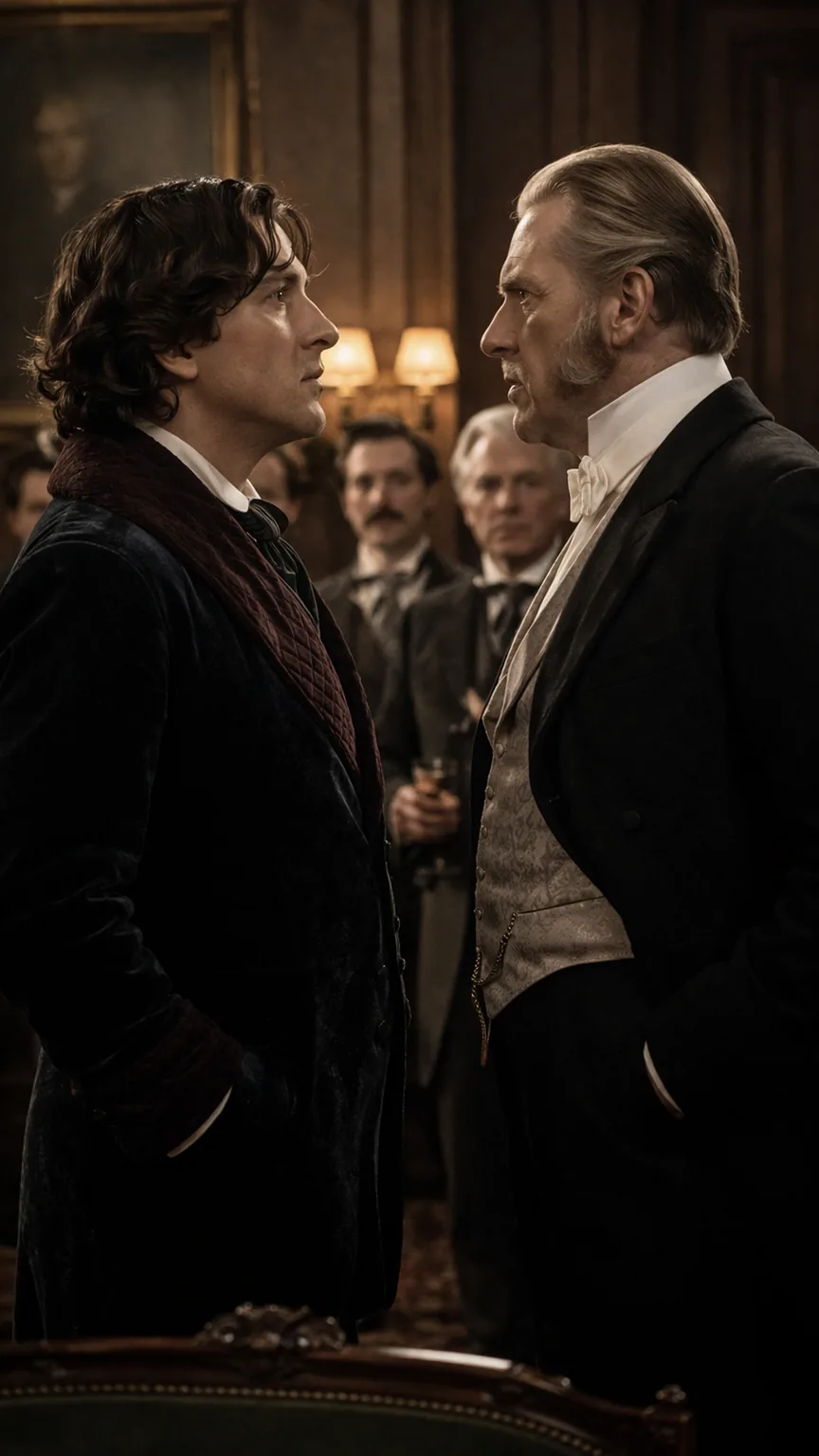
Wilde met Lord Alfred Douglas, known as Bosie, in 1891. Douglas was young, aristocratic, impulsive, and engaged in a bitter conflict with his father. Their relationship became intense, expensive, and increasingly public.
Queensberry began a campaign of harassment. After receiving the Albemarle Club card, Wilde—encouraged by Douglas—brought a libel prosecution. To defend himself, Queensberry needed to prove that his accusation had a factual basis. His lawyers hired investigators, located young men connected with Wilde, and collected letters and testimony.
During the trial, cross-examination transformed Wilde’s aphorisms and writings into weapons against him. When it became clear that the defense would call compromising witnesses, Wilde withdrew the case. The evidence collected by Queensberry’s lawyers passed immediately to the authorities (The National Archives, n.d.).
Wilde could have fled before his arrest, but he remained. His first criminal trial ended with a divided jury. At the second, he was convicted of “gross indecency” and, on May 25, 1895, received the maximum punishment: two years of hard labor.
8. Prison and the Destruction of the Persona
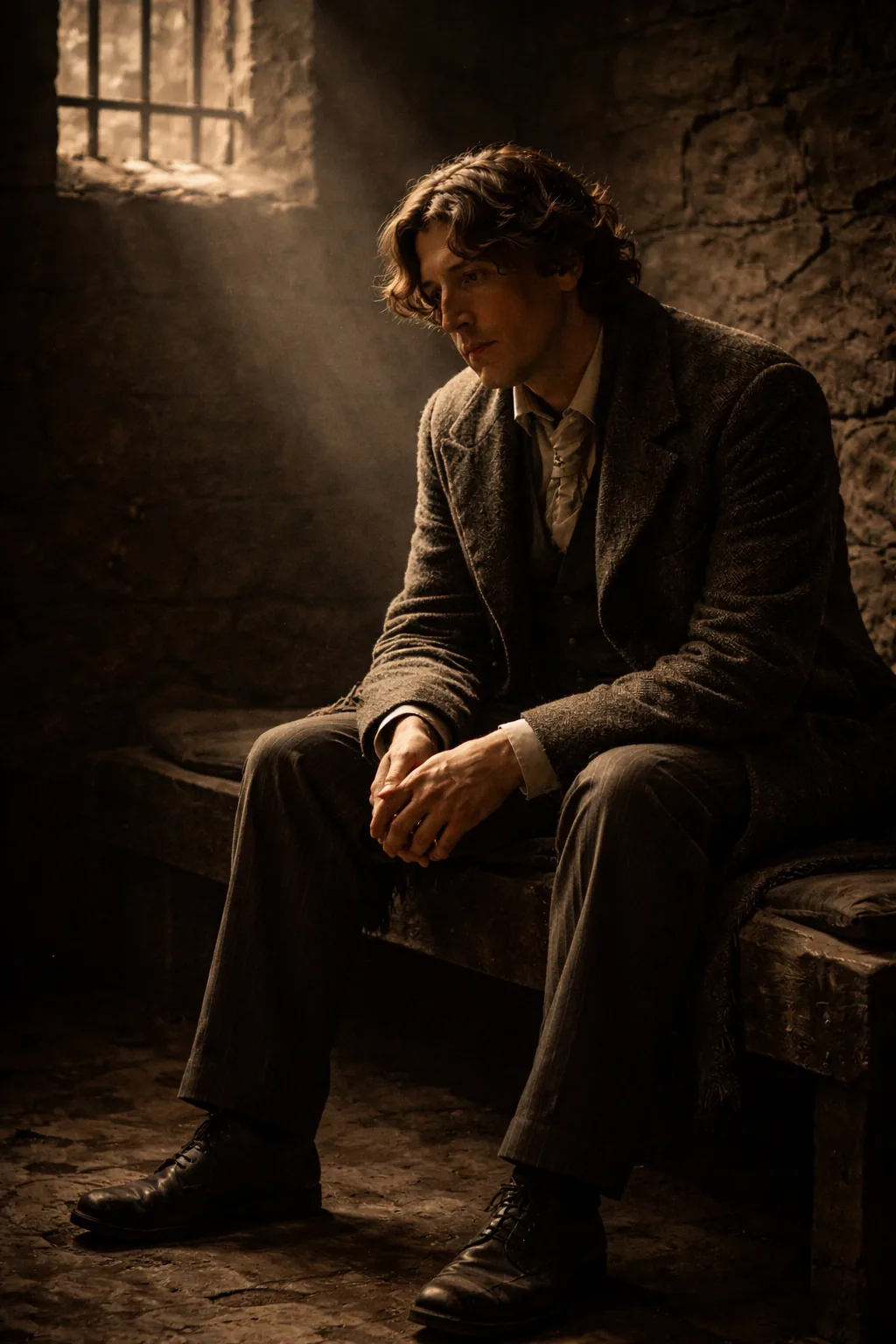
Wilde passed through Newgate, Pentonville, and Wandsworth prisons before being transferred to Reading. The regime included isolation, inadequate food, enforced silence, repetitive labor, and severe sanitary conditions. His physical and mental health deteriorated (The National Archives, n.d.).
He was also declared bankrupt. His belongings were auctioned, his plays disappeared from the stage, and Constance moved abroad with their sons, who adopted the surname Holland. Wilde never saw his children again.
His access to books, paper, and writing was initially restricted. After Major James Nelson became governor and medical recommendations were made, Wilde gradually obtained reading and writing materials. In 1897, he composed a long letter to Douglas that became known as De Profundis.
The manuscript combines accusation, confession, romantic memory, spiritual reflection, and an attempt at personal reconstruction. Prison had destroyed Wilde’s public character, but within that destruction he searched for a voice no longer dependent upon applause (British Library, n.d.-a).
9. The Little-Known Fact: Wilde Campaigned Against the Imprisonment of Children

Wilde was released on May 19, 1897, and left for France that same night. He never returned to England. His prison experience, however, did not remain only a private tragedy.
Days after his release, he wrote to the Daily Chronicle denouncing the dismissal of a Reading warder who had given biscuits to a hungry child prisoner. Wilde described the fear, hunger, and psychological suffering experienced by incarcerated children. The letter, reprinted as a pamphlet in 1898, exposed a regime that subordinated children’s care to discipline. Wilde argued against sending children to prison and demanded food, warmth, and care for those in custody (Wilde, 1898).
He was not speaking in abstractions. He had watched a system punish even acts of compassion. His letters coincided with debate over reforms that became the Prison Act 1898, although it would be inaccurate to credit Wilde alone with producing the legislation.
The Ballad of Reading Gaol, published in 1898 under his prison identification C.3.3., expanded the protest. The writer celebrated for drawing-room comedies now wrote about prisoners, warders, executions, and the dehumanizing effects of confinement.
10. Exile, Death, and Belated Redress

Wilde spent his final years mainly in France, with little money and dependent upon friends. He briefly reunited with Douglas, but the relationship failed again. Constance died in 1898 without having divorced him.
Wilde died in Paris on November 30, 1900, at the age of forty-six. The recorded cause was cerebral meningitis. He was first buried at Bagneux and later transferred to Père-Lachaise Cemetery.
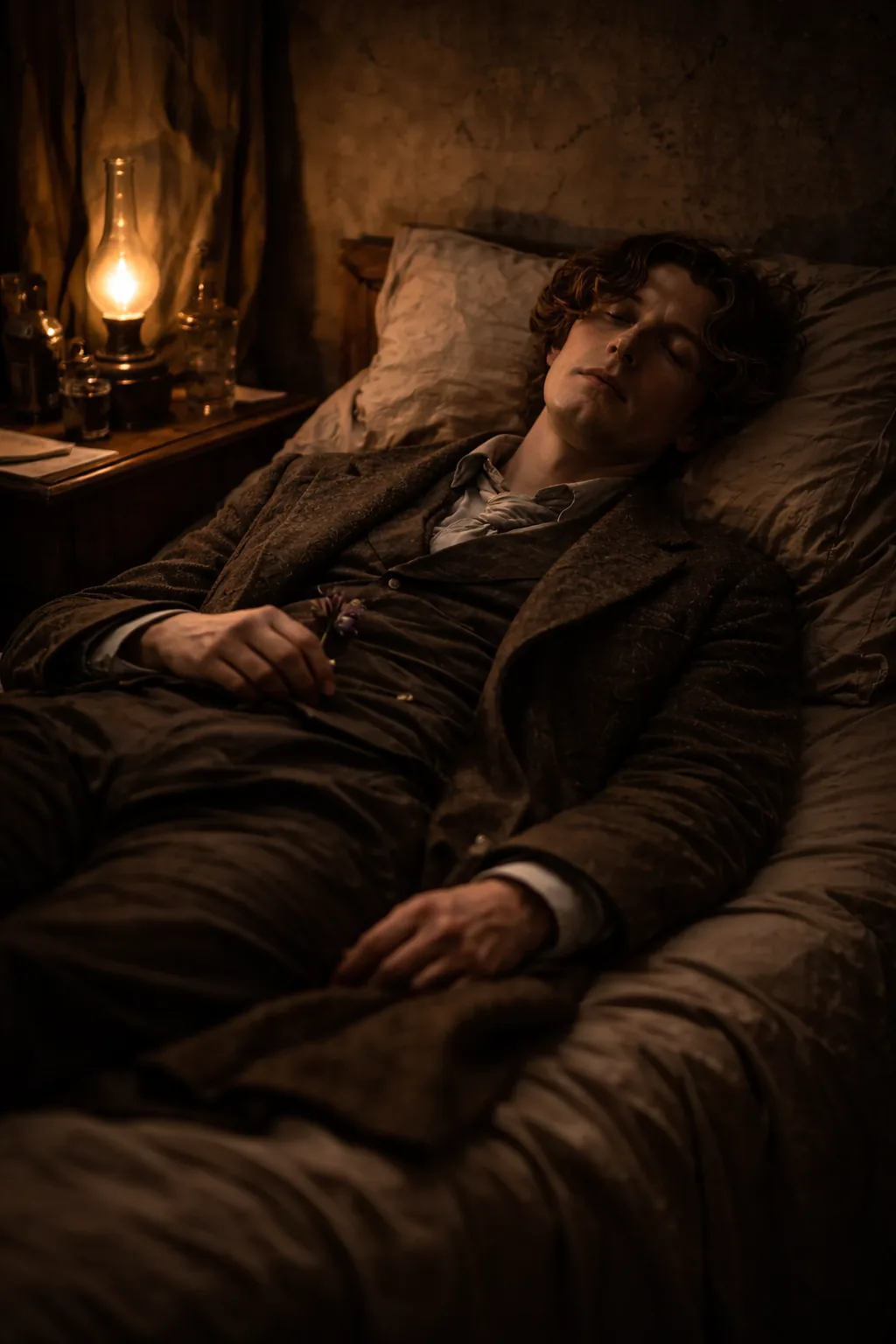
His conviction continued to overshadow his name long after his death. In 2017, he received a posthumous pardon under the legislation commonly known as Turing’s Law, which covered men convicted of homosexual acts that were no longer criminal offenses (The National Archives, n.d.). In 2025, the British Library announced the symbolic reinstatement of the reader’s pass that the British Museum had revoked during his imprisonment (British Library, 2025).
Wilde wrote from the wound because he understood that society could worship beauty while punishing anyone who challenged its boundaries. His wit was first a sword, then armor, and finally memory.
They attempted to reduce him to his prosecution. His words outlived the court.
Timeline
| Year | Event |
|---|---|
| 1854 | Born in Dublin. |
| 1871–1878 | Studies at Trinity College and Oxford; wins the Newdigate Prize. |
| 1882 | Lecture tour of the United States and Canada. |
| 1884 | Marries Constance Lloyd. |
| 1890–1891 | The Picture of Dorian Gray appears in magazine and book form. |
| 1895 | The Importance of Being Earnest premieres; trials and conviction. |
| 1897 | Writes De Profundis, leaves prison, and goes into exile. |
| 1898 | Publishes The Ballad of Reading Gaol. |
| 1900 | Dies in Paris. |
| 2017 | Posthumous pardon. |
| 2025 | The British Library announces the symbolic reinstatement of his pass. |
Sources
- British Library. (n.d.-a). De Profundis (Add MS 50141 A–B).
- British Library. (n.d.-b). The Importance of Being Earnest: original four-act typescript (Add MS 81624).
- British Library. (2025). British Library symbolically reinstates Oscar Wilde’s Reader Pass.
- Frankel, N. (2011). Introduction to The Picture of Dorian Gray: An annotated, uncensored edition. Harvard University Press.
- Harry Ransom Center. (n.d.). Oscar Wilde: An inventory of his collection. The University of Texas at Austin.
- Library of Congress. (n.d.). The good gray poet: Whitman and Oscar Wilde.
- The National Archives. (n.d.). The life and court trials of Oscar Wilde.
- Trinity College Dublin. (n.d.). The Oscar Wilde Collection.
- Wilde, O. (1898). Children in prison and other cruelties of prison life. Murdoch & Co..
More from this collection

Dante Alighieri: The Man Who Turned Exile into a Journey Through the Afterlife
Read story →
Agatha Christie: The Woman Who Turned Uncertainty into the Perfect Crime
Read story →