
In this storyOpen index
Eileen Gray: The Architect Erased from the House She Designed
She designed one of the twentieth century’s most innovative houses, yet for decades many visitors associated it with another architect.
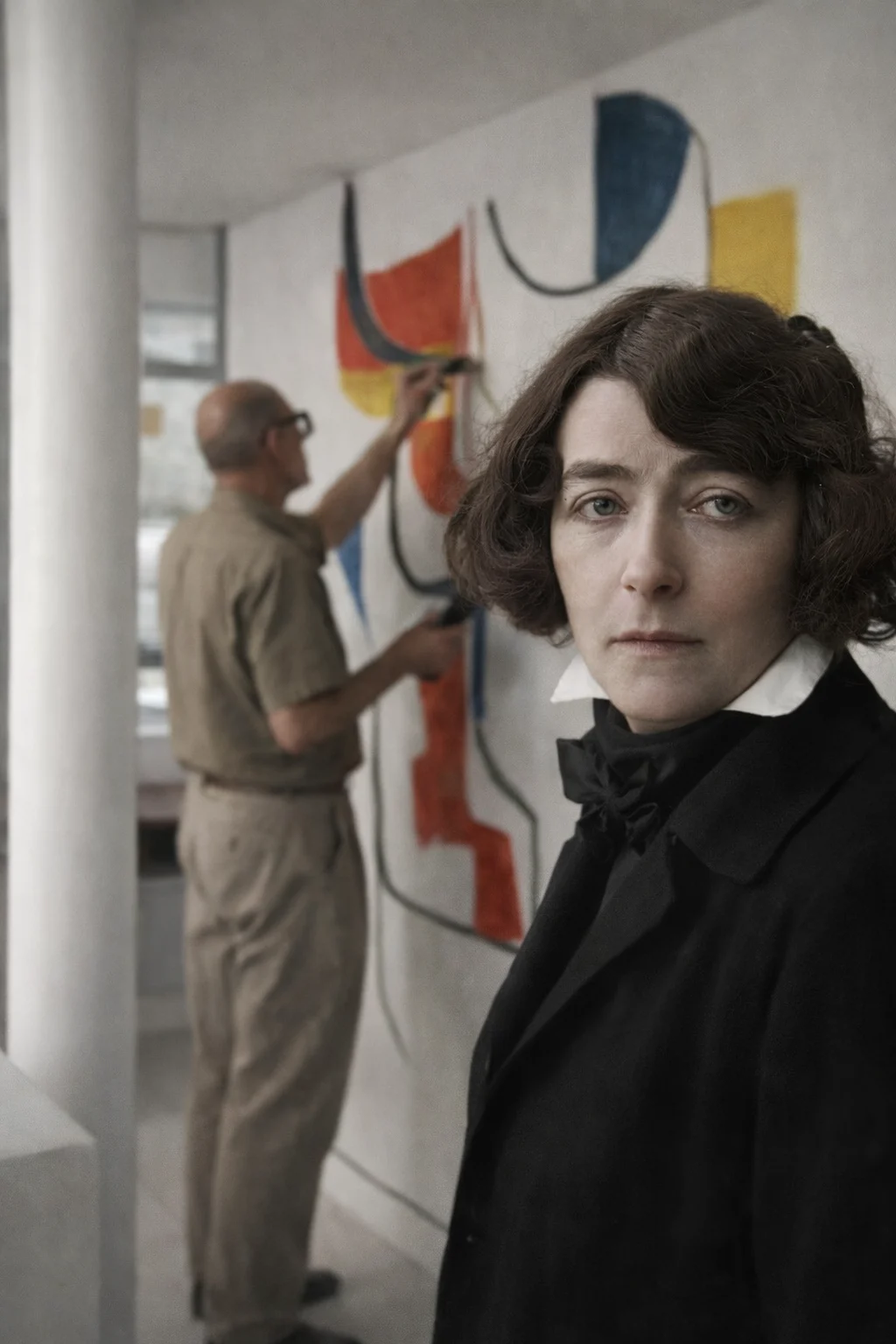
She designed one of the twentieth century’s most innovative houses, organized every room around the needs of its inhabitants, and created furniture that could transform with a simple movement. For decades, however, many visitors associated the building with another architect.
Eileen Gray conceived E-1027 as an intimate machine for living beside the Mediterranean. Years later, Le Corbusier painted several murals directly onto its walls without obtaining her permission. Gray regarded the intervention as a violation of the house’s spirit.
The episode continues to raise an uncomfortable question: was it a tribute, an appropriation, or an attempt to mark a woman’s creation with a man’s name?
An Irishwoman who found her place in Paris
Kathleen Eileen Moray Smith was born on August 9, 1878, near Enniscorthy in County Wexford, Ireland. Her father was an amateur painter, while her mother belonged to an aristocratic family. After her mother inherited the title of Baroness Gray, Eileen adopted the surname by which she became known.
In 1900, she entered the Slade School of Fine Art in London. Although the institution admitted women, the professional worlds of art, design, and architecture remained dominated by men.
During a visit to a restoration workshop in London, Gray discovered the technique of lacquering. Unlike surface painting, traditional lacquer required numerous layers, each left to dry and carefully polished until it produced a deep, luminous finish.
She traveled to Paris in 1902 and eventually settled there. She studied drawing and continued experimenting with lacquer. Her decisive training came through Japanese craftsman Seizo Sugawara, with whom she developed a long collaboration.
Working with these materials could be dangerous. Vapors and contact with lacquer components caused irritation and illness. Gray persisted until she mastered a technique few European designers understood in genuine depth.
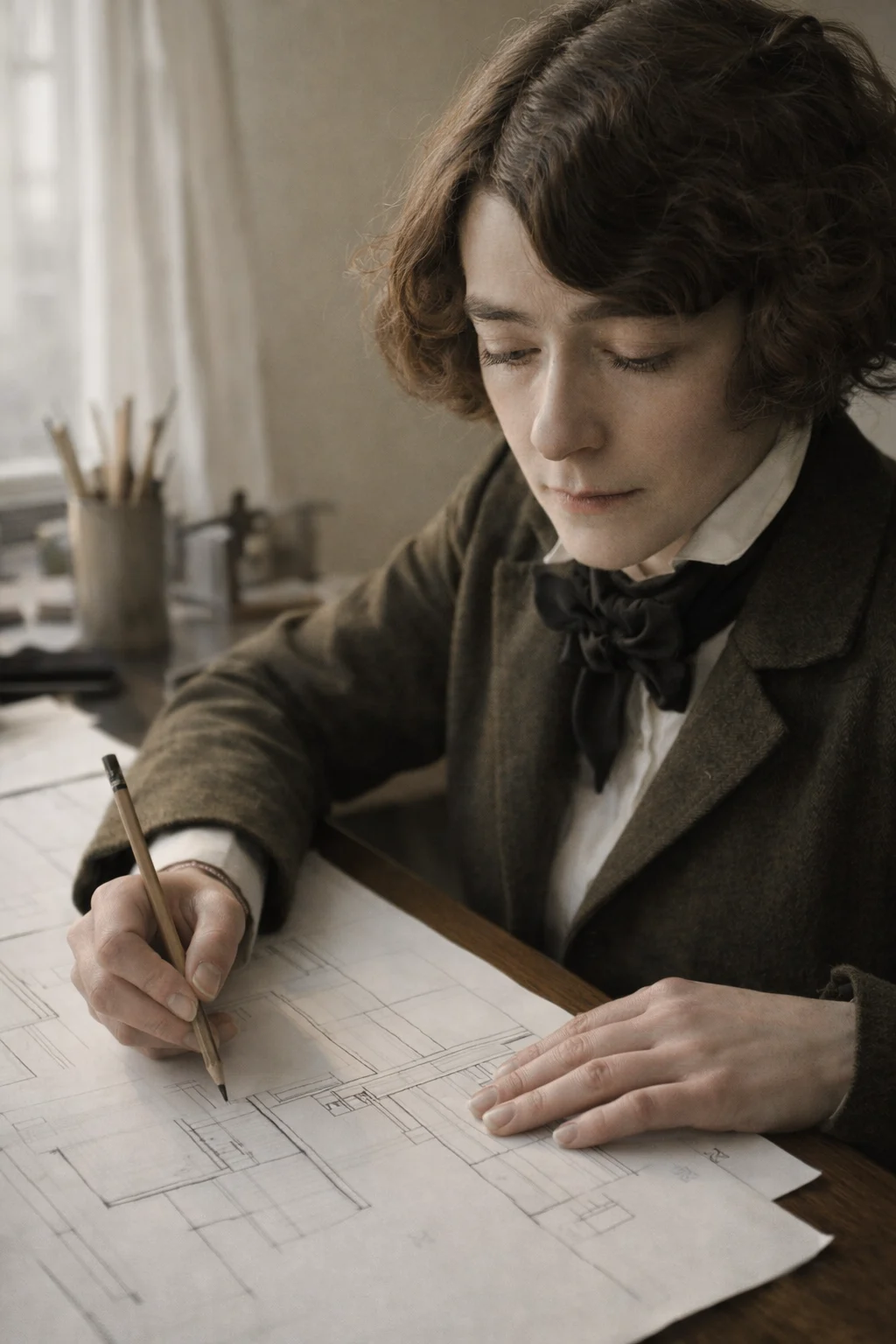
A creator hidden behind an imaginary man
Her first major commission came from fashion designer Juliette Mathieu-Lévy, known as Madame Lévy. Gray transformed her Paris apartment using lacquered panels, rugs, lamps, and furniture designed specifically for each space.
Among these pieces was the Bibendum chair, formed from large upholstered tubes resembling Michelin’s advertising character. The chair was comfortable, ironic, and entirely different from the traditional interiors of the period.
In 1922, Gray opened a Paris gallery to sell furniture, rugs, and decorative objects. She called it Jean Désert.
“Jean” was an invented masculine name, while “Désert” referred to her fascination with North Africa. The choice presented the business through an identity that could appear more acceptable in a male-dominated market. It also protected the privacy of a reserved woman who preferred working to constructing a public persona.
The gallery did not achieve the commercial success she expected, but it became a place of experimentation. Gray began moving away from luxurious materials and working with tubular steel, glass, cork, and simpler surfaces.
She did not abandon beauty. She attempted to make it mobile, adaptable, and useful.
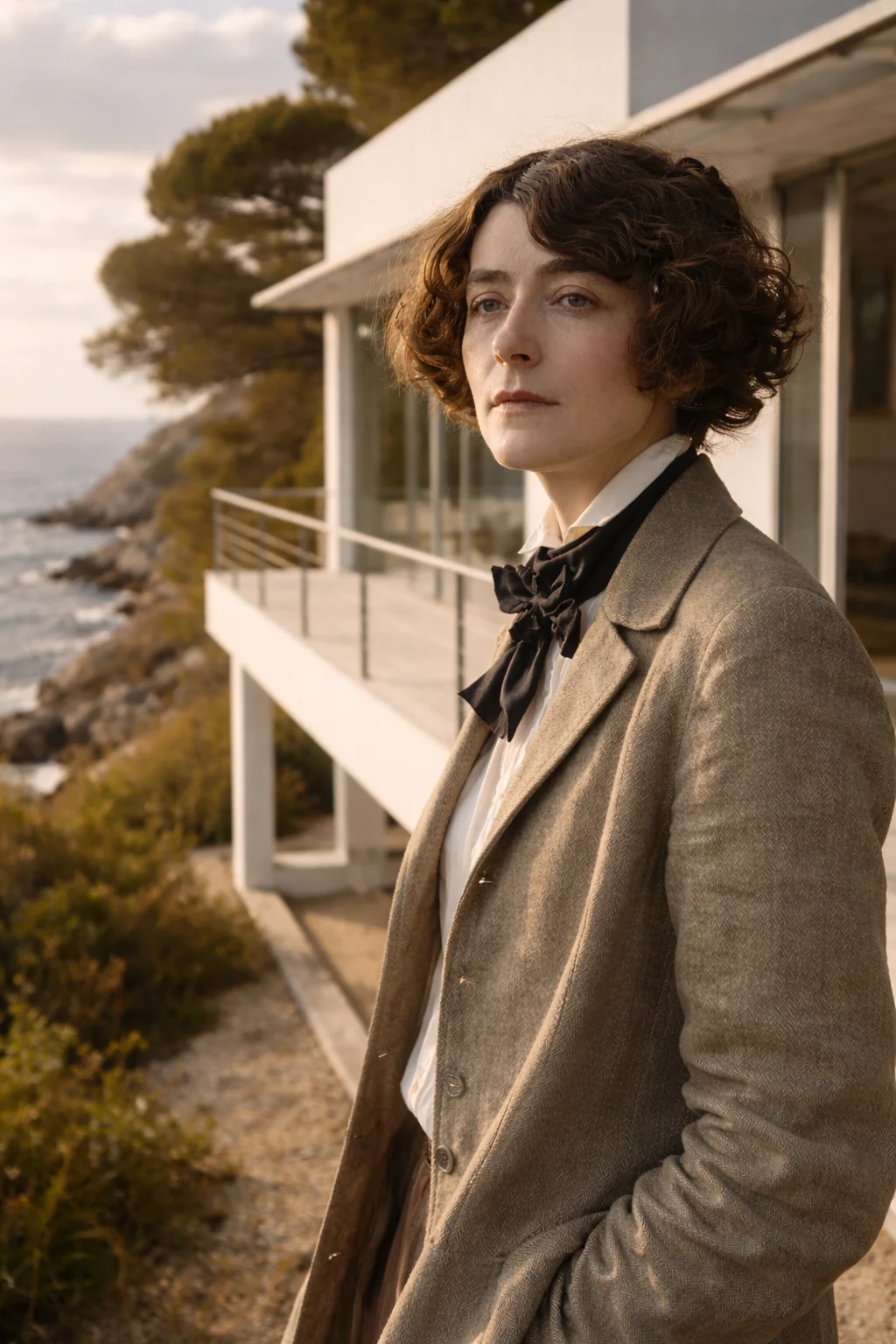
An architect without a degree
Gray never received formal architectural training. She educated herself through books, technical drawing lessons, building visits, and discussions with architects. One of them was Jean Badovici, a Romanian architect and editor of L’Architecture Vivante, with whom she had both a personal and professional relationship.
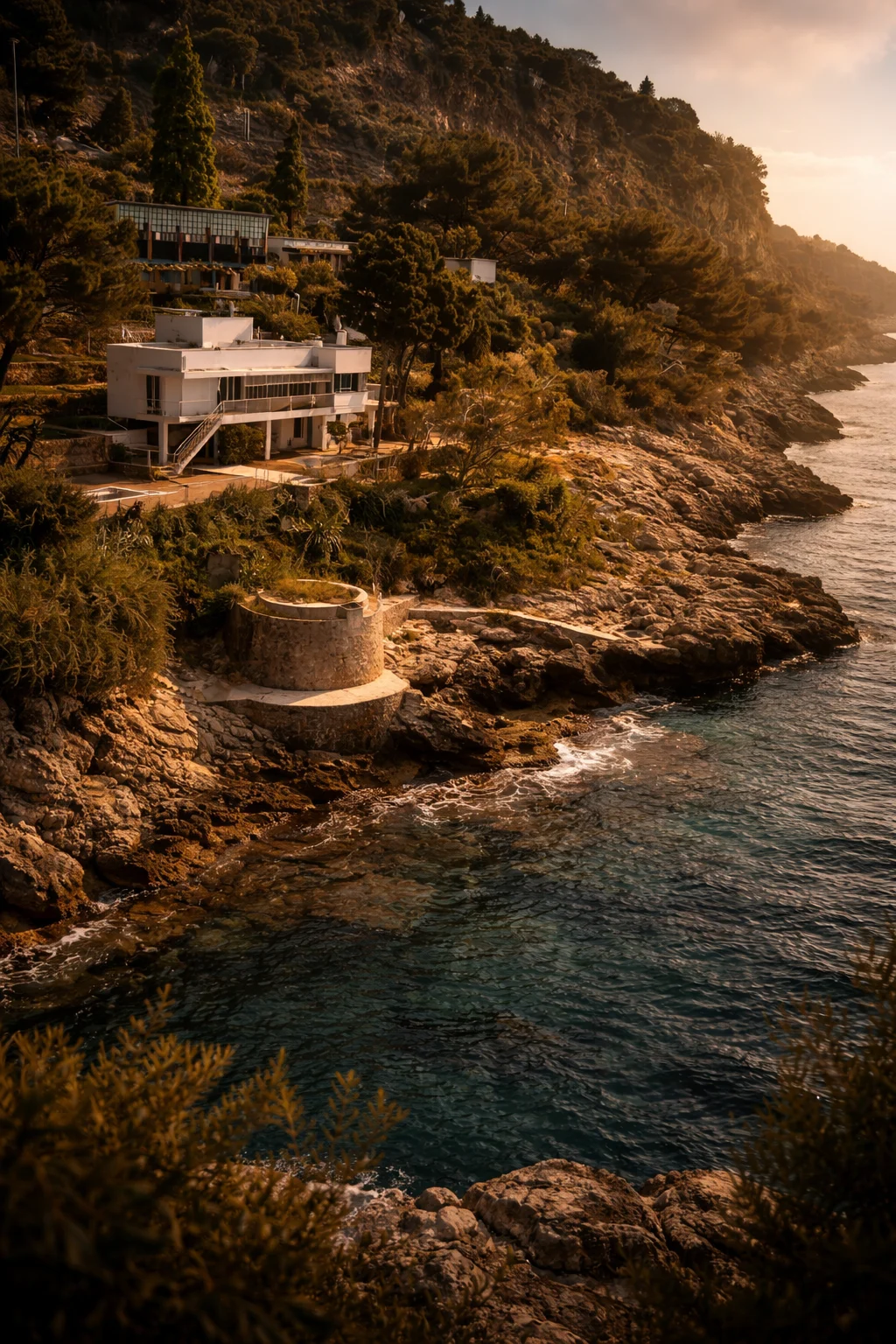
In the mid-1920s, they began developing a house overlooking the Mediterranean near Roquebrune-Cap-Martin in southern France.
The house was named E-1027. It was not an administrative number but a code formed from their names: E for Eileen; 10 for the tenth letter of the alphabet, J for Jean; 2 for B, Badovici; and 7 for G, Gray.
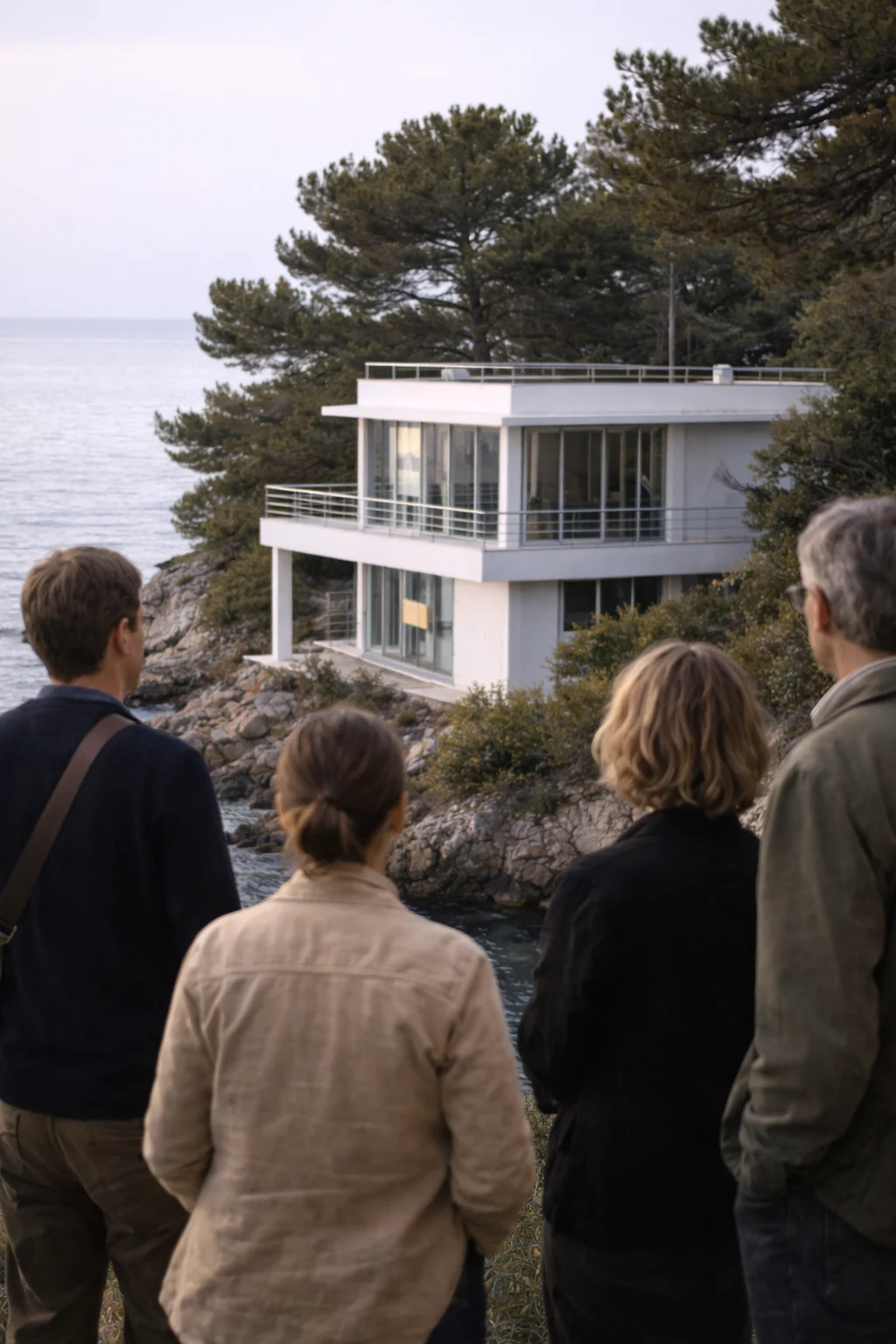
Constructed between 1926 and 1929, the house appeared as a white volume partially raised on columns, with horizontal windows, a roof terrace, and open spaces. It could be related to the principles of the Modern Movement, but Gray rejected the idea that a home should be merely a geometric composition.
For her, the interior could not be the incidental result of the façade. Architecture had to begin with human life.
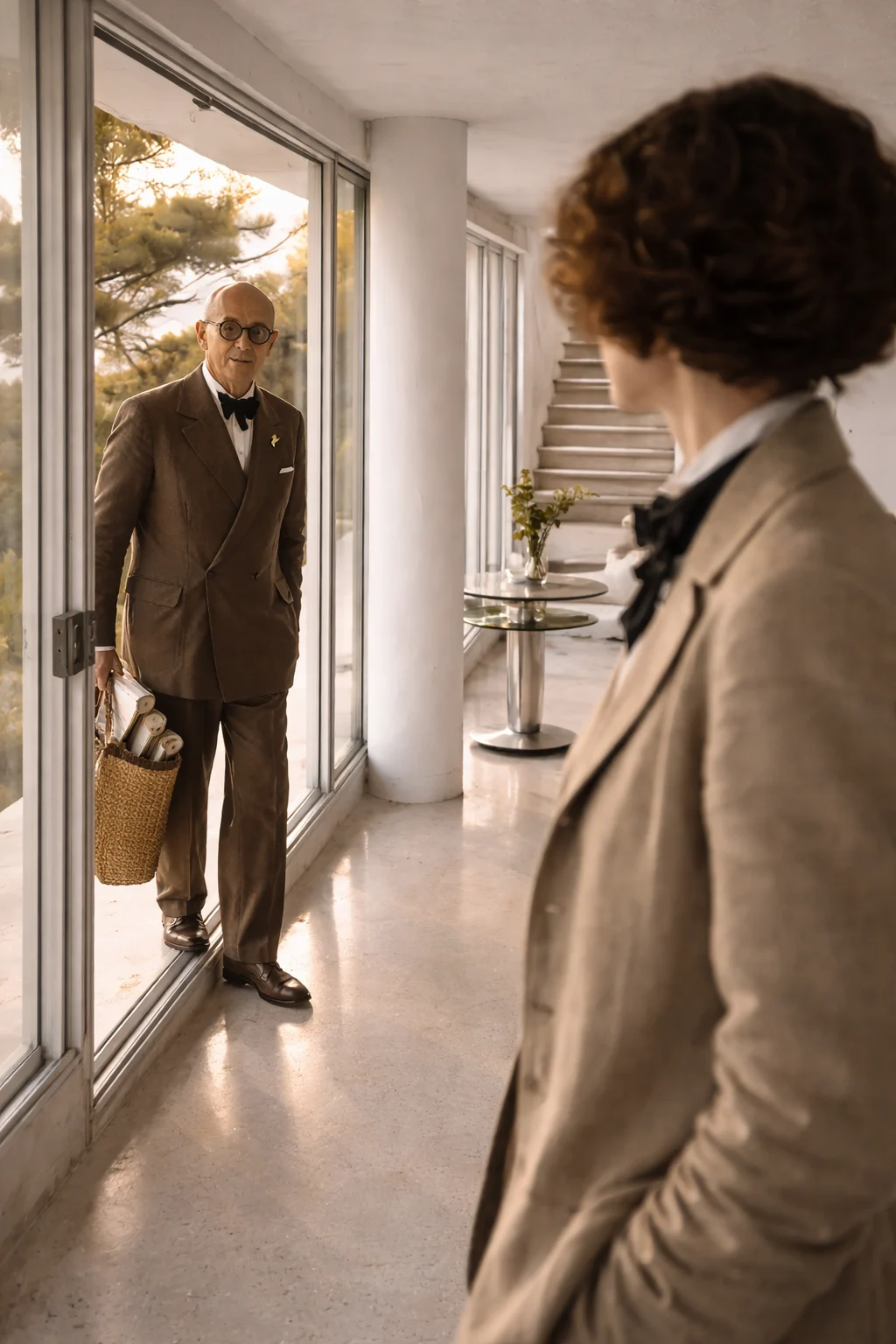
Eileen Gray, E-1027, and the dispute over authorship
The video explores the house’s intimate logic and why later interventions continue to provoke debate.
A life told through places and turning points
A house that responded to the body
Gray studied the path of the sun, air circulation, views of the sea, and the occupants’ daily movements. She designed built-in cabinets, screens, lamps, tables, and storage areas so that everything served a particular purpose.
Her E-1027 side table could be adjusted in height and pulled toward a bed or chair. The Transat chair reinterpreted deckchairs used aboard ocean liners. A small table included a cork surface to reduce the noise made by cups.
Windows and shutters controlled light and ventilation. Furniture could fold, rotate, or move. Messages painted on certain surfaces guided visitors and turned the house into a silent conversation.
Gray criticized a modern architecture that spoke of “machines for living” while forgetting intimacy. E-1027 was rational without being cold. It did not impose a single way of living but offered choices.
Badovici participated as a consultant, interlocutor, and collaborator, but surviving documentation has established Gray as the house’s principal designer. For many years, however, her authorship was shared, diluted, or displaced toward better-known male figures.
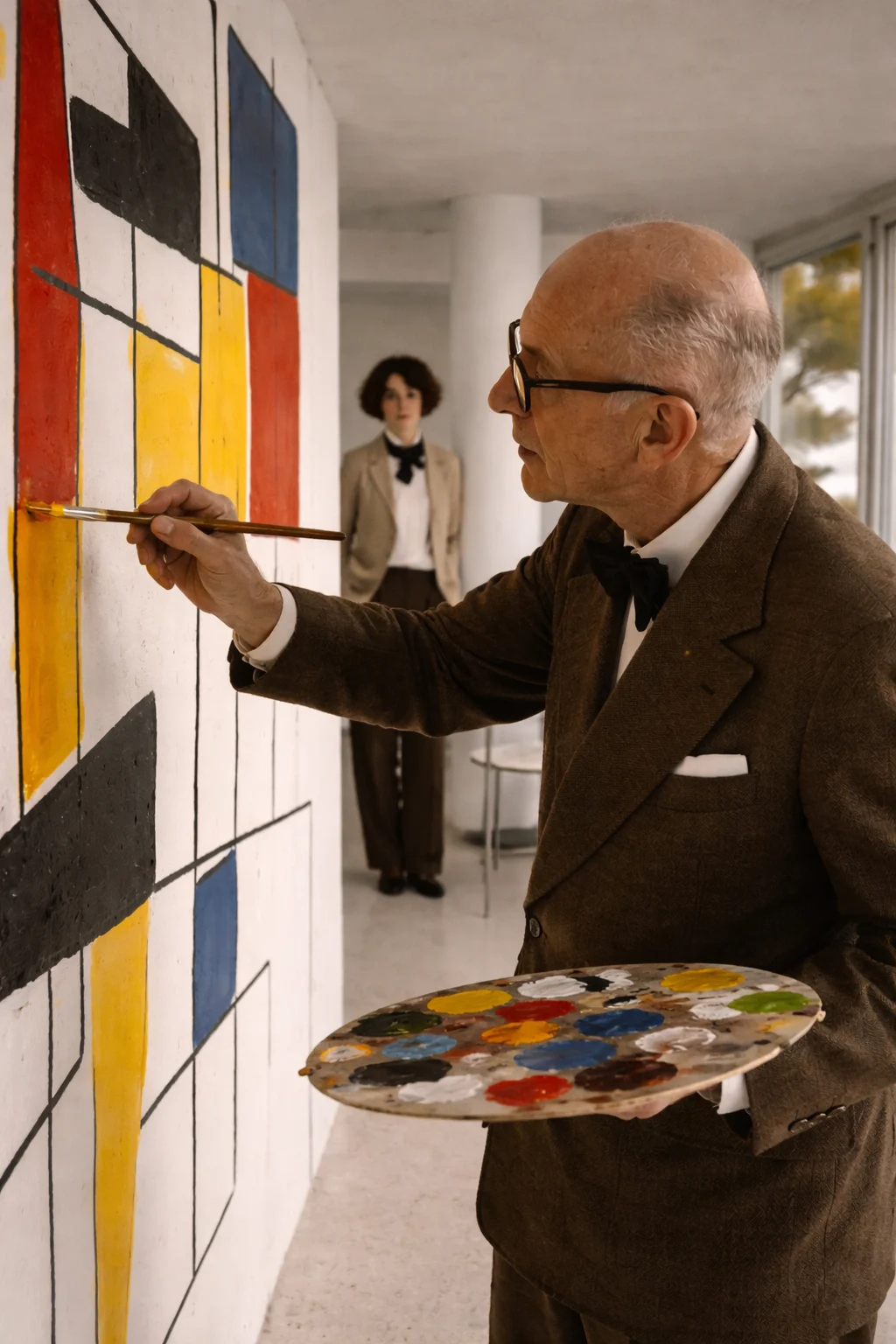
The architect who painted on her walls
Gray and Badovici ended their relationship in the early 1930s. He continued using E-1027 and welcomed Le Corbusier, one of the Modern Movement’s most influential architects, as a guest.
Le Corbusier admired the house, although he also appeared challenged by it. Between 1938 and 1939, he painted several murals across its interior and exterior walls. Some depicted intertwined nude female figures.
He acted with the consent of Badovici, who occupied the property, but without the permission of Eileen Gray, who no longer lived there and was not consulted. The white surfaces and absence of monumental decoration were part of her original design.
Describing the murals simply as a “gift” therefore erases the conflict. Gray disapproved of them, and various sources attribute to her the description of the intervention as an act of vandalism. They were not removable paintings but permanent alterations to the architecture.
Le Corbusier was photographed painting some of them while completely naked. Decades later, historian Beatriz Colomina interpreted the episode as a symbolic occupation of Gray’s space. Other researchers have proposed less personal readings and note that Le Corbusier often painted inside his friends’ houses.
His exact motivation remains disputed. The essential fact does not: he altered another architect’s work without obtaining its principal creator’s consent.
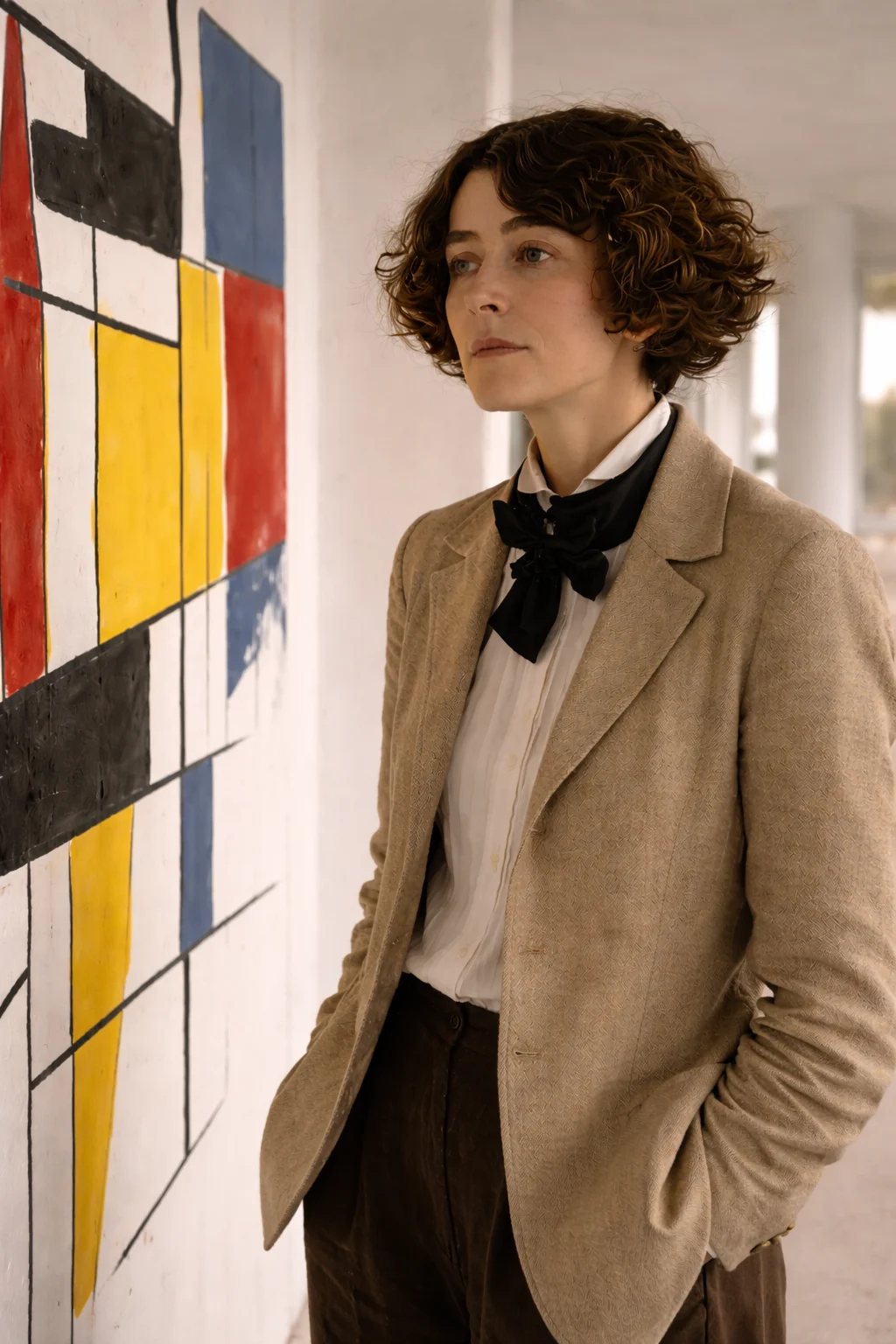
When the house began belonging to someone else
The consequences went deeper than changing the color of several walls.
Le Corbusier published photographs of the murals and repeatedly returned to the site. In 1952, he constructed his tiny Cabanon near E-1027. He also died in 1965 while swimming in the sea below the property.
His presence became so dominant that some publications and visitors attributed the house to him or presented it primarily as the setting for his paintings. Eileen Gray’s name faded behind that of a far more famous architect.
During the Second World War, E-1027 was occupied and damaged. Soldiers used some of its surfaces for target practice. It later passed through several owners and suffered neglect, lost furniture, and additional alterations.
Gray, meanwhile, continued designing.
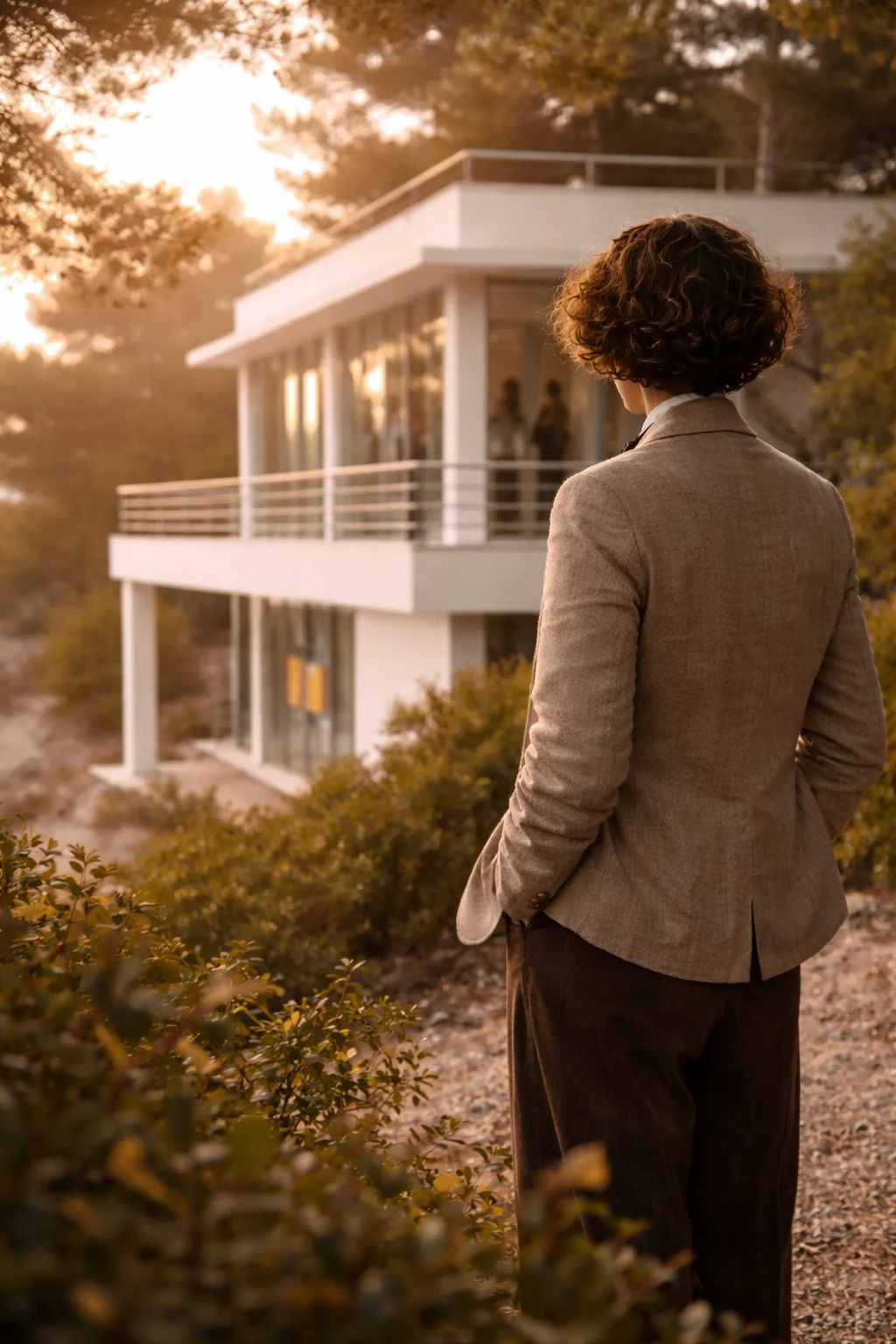
The house she designed for herself
After separating from Badovici, Gray created a second house at Castellar near Menton. She called it Tempe à Pailla, a name connected to a Provençal proverb stating that figs require time and straw to ripen.
This house was smaller and designed for her own life. Gray again developed transformable furniture, integrated storage, ventilation, natural lighting, and elements that maximized limited space.
She later worked on Lou Pérou, another house in southern France. She also prepared projects for minimum dwellings, cultural centers, and social spaces that were not always built.
Her relative disappearance from histories of modernism did not mean she had stopped creating. She published little, avoided self-promotion, and operated outside the professional networks that consolidated the reputations of architects such as Le Corbusier, Walter Gropius, and Ludwig Mies van der Rohe.
She was also a woman, a foreign resident in France, an architect without formal credentials, and a person whose private relationships did not fit the public conventions of her time.
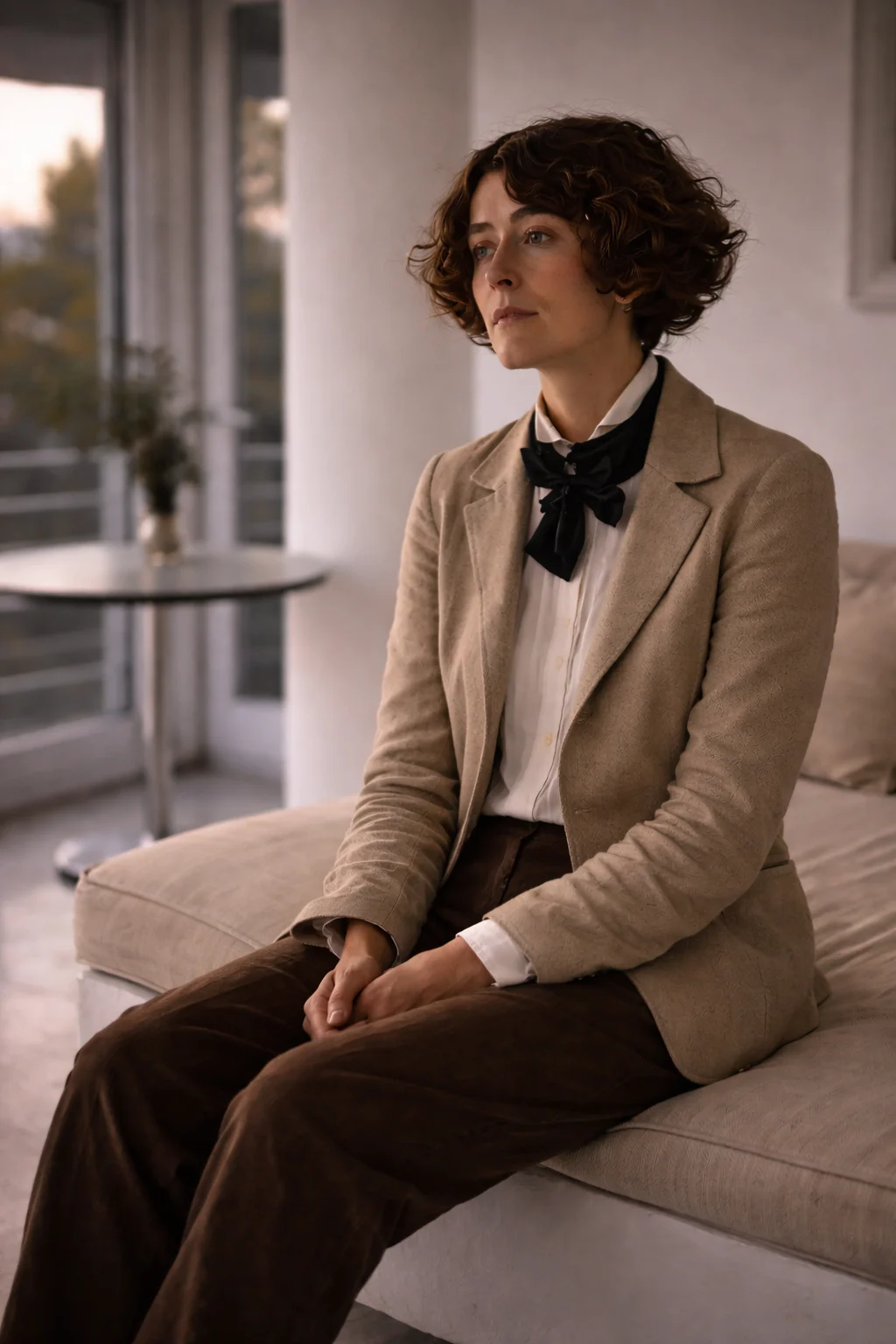
Recognition in her nineties
Interest in Gray’s work began to recover in the late 1960s, particularly after historian Joseph Rykwert published an article about her.
A retrospective exhibition opened in London in 1972. The following year, the Royal Institute of the Architects of Ireland made her an honorary fellow. Gray was ninety-five.
Several of her designs returned to commercial production. Museums, collectors, and historians began locating furniture, drawings, and photographs that had remained dispersed.
Eileen Gray died in Paris on October 31, 1976, at the age of ninety-eight.
Decades later, E-1027 was acquired by public institutions and underwent a complex restoration. The project had to resolve a contradiction: restoring Gray’s design without removing Le Corbusier’s murals, which had also acquired historical importance.
The house now preserves both stories, but it should no longer confuse their authorship.
Designing without imposing
Eileen Gray did not understand furniture as a collection of immovable objects or architecture as a monument intended to display its creator’s ego.
She designed for a body that rises, rests, receives visitors, seeks privacy, changes position, and needs to regulate light. Her interiors were flexible because life is flexible.
E-1027 was revolutionary not because it resembled a machine but because it refused to treat its inhabitants as components inside one.
For years, Gray’s name remained beneath those of other men: Badovici appeared as co-author, while Le Corbusier marked the walls and eventually dominated the house’s story. Yet the plans, furniture, details, and logic of every room always led back to her.
Eileen Gray did not construct many buildings. She did not need to. One house beside the sea was enough to prove that modernity could be rigorous without ceasing to be human.
References
- Colomina, B. (1993). War on architecture: E.1027. Assemblage, 20, 28–29. https://doi.org/10.2307/3172766
- Constant, C. (2000). Eileen Gray. Phaidon Press.
- Goff, J. (2015). Eileen Gray: Her work and her world. Irish Academic Press.
- National Museum of Ireland. (n.d.). Eileen Gray. https://www.museum.ie/
- Adam, P. (2009). Eileen Gray: Her life and work. Schirmer/Mosel.
- Rykwert, J. (1968). Un omaggio a Eileen Gray, pioniera del design. Domus, 469.
- Victoria and Albert Museum. (2024, April 17). Deckchair design: From ocean liner to Modernist villa. https://www.vam.ac.uk/articles/deckchair-design
- Wilk, C. (Ed.). (2013). Eileen Gray. Centre Pompidou.
More from this collection

Adolf Loos: The Architect Who Erased Ornament and Hid Luxury Behind the Walls
Read story →
Frank Lloyd Wright: The Architect Who Wanted Buildings to Grow from the Earth
Read story →