In this storyOpen index
Louis Kahn: The Architect of Light Who Was Not Immediately Identified After His Death
From a poor childhood to twentieth-century landmarks: light, geometry, and a divided life.
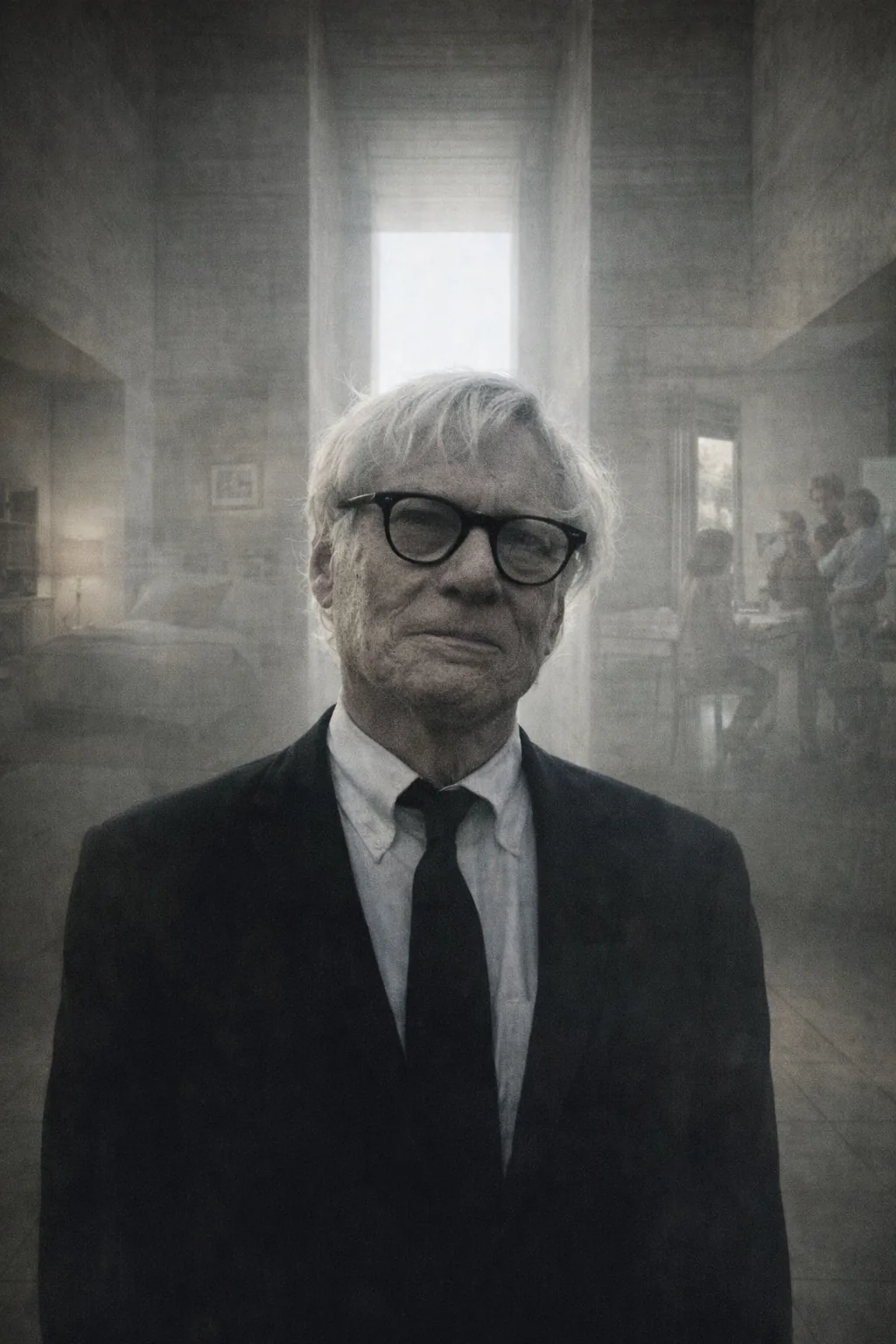
His buildings seemed designed to endure for centuries. His life was more fragile: late recognition, debt, and incomplete family relationships. Understanding Louis Kahn means looking both at the spaces he left behind and at the people who continued building after his death.
Louis Kahn
A life told through drawings, light, and silence
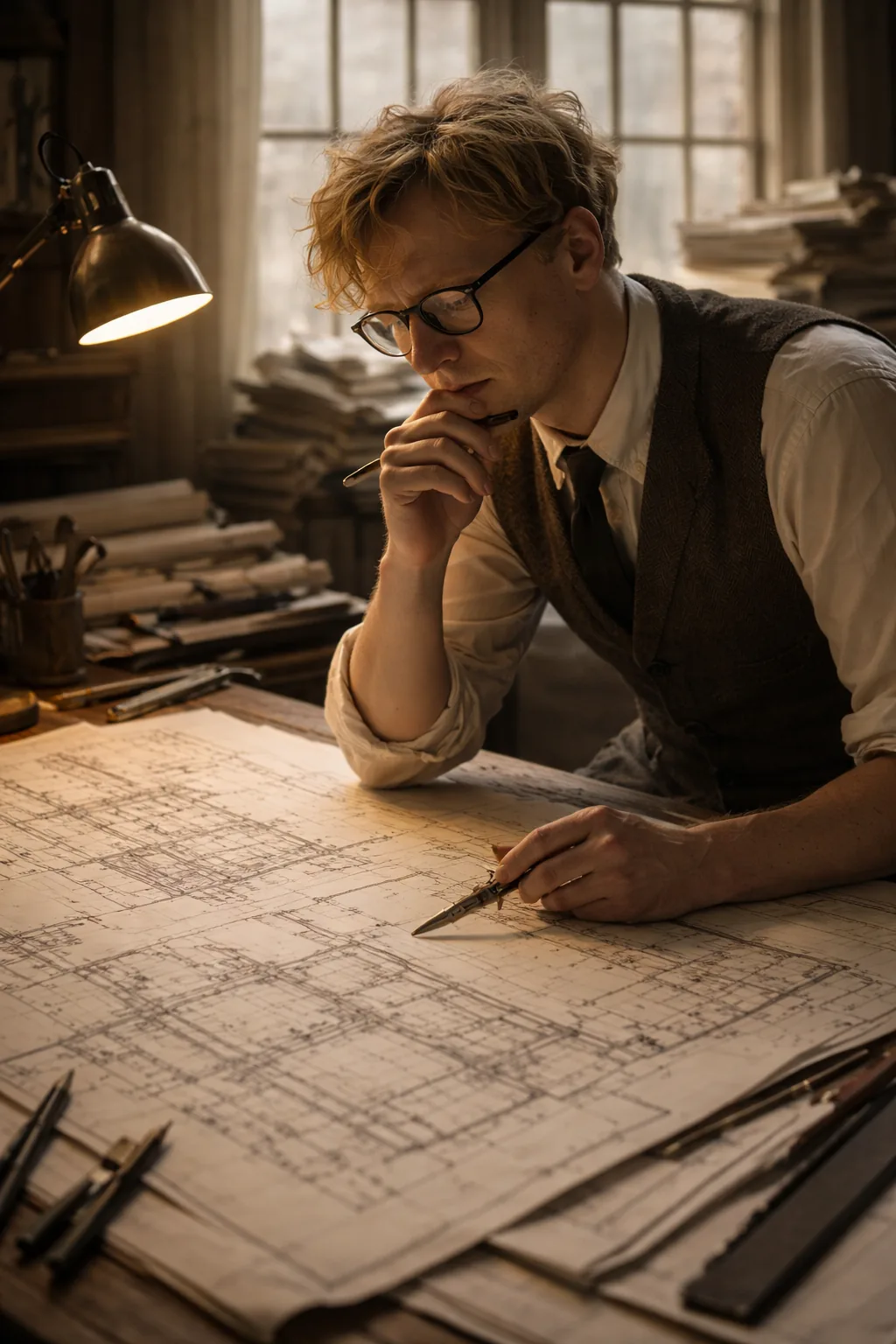
The drawings and documents that stayed together
The Louis I. Kahn Collection preserves his professional archive. This image recreates work over architectural drawings; the link leads to the record and description of the original collection.
1. The Unknown Man at the Station
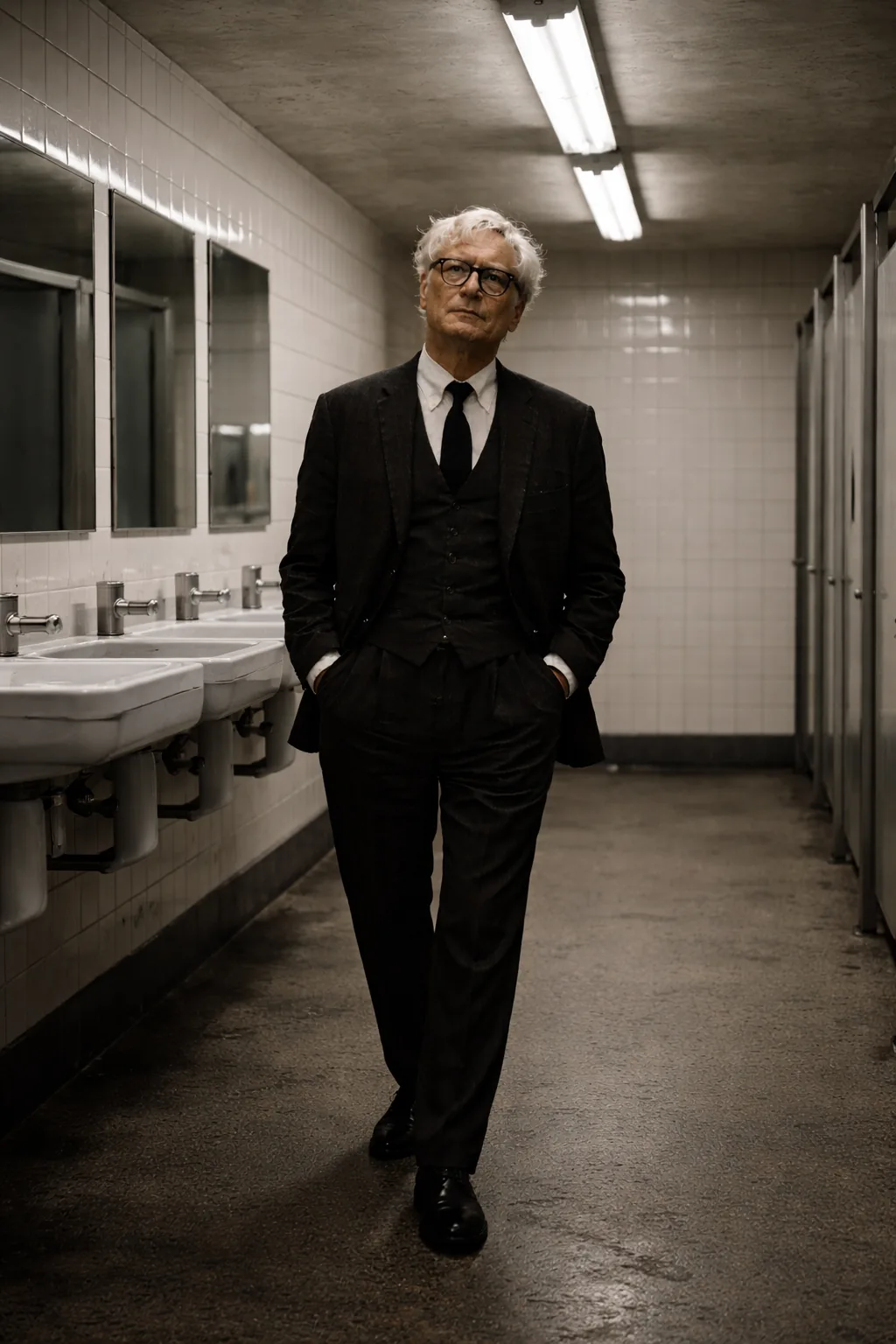
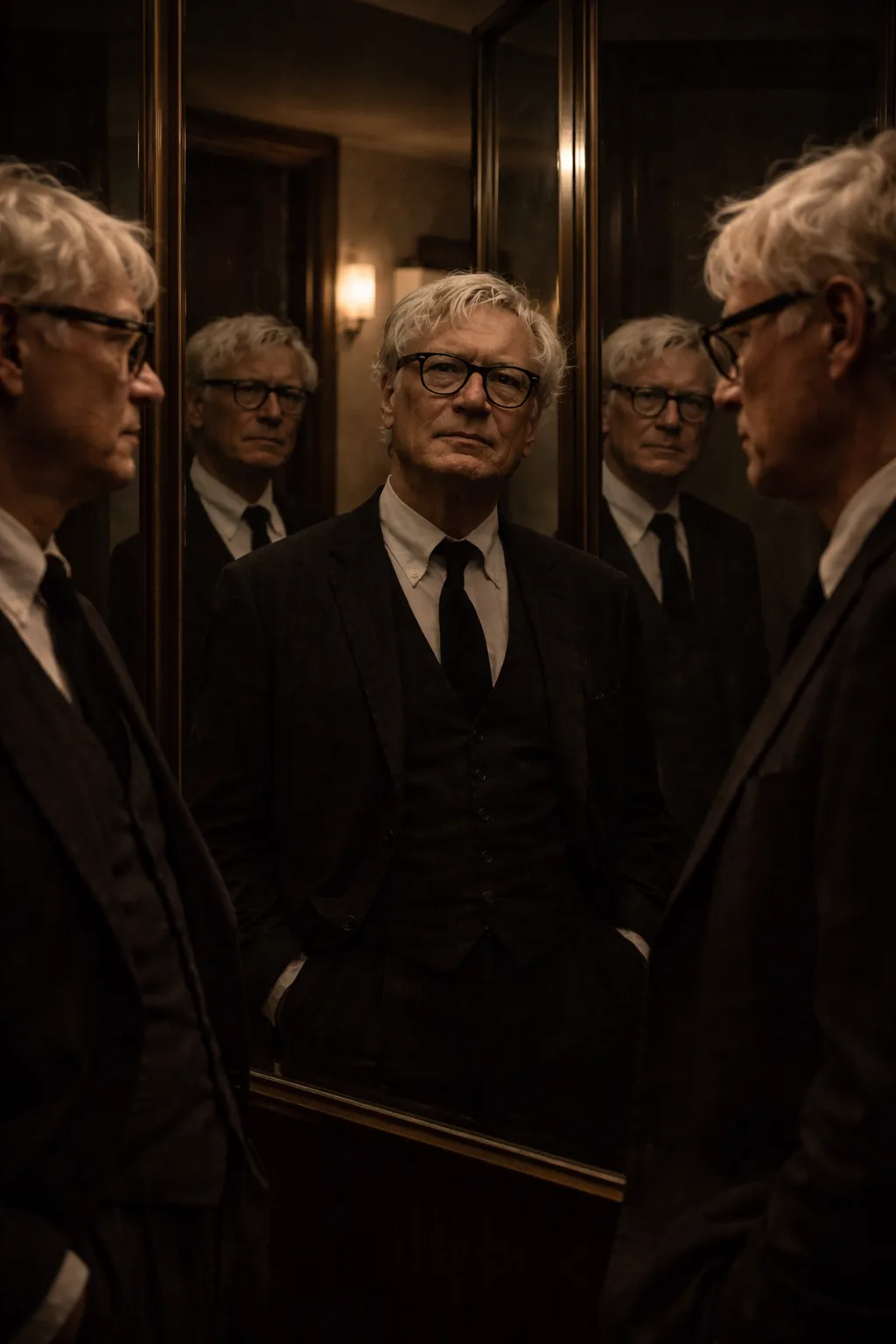
Louis Kahn died of a heart attack on March 17, 1974, in a restroom at Pennsylvania Station, New York. He had returned from India and was preparing to take a train to Philadelphia. His name was internationally known, yet identifying him immediately proved unexpectedly difficult.
According to the Design Museum, he carried a passport with its address crossed out, and authorities took several days to identify him. This does not mean architecture had forgotten him. It exposes the distance between his professional reputation and the solitary circumstances of his death.
His practice carried substantial debts. The Yale Center for British Art and the government complex in Dhaka remained under construction. Former associates would have to complete projects he would never see finished (Design Museum, 2014).
2. A Child Marked by Fire
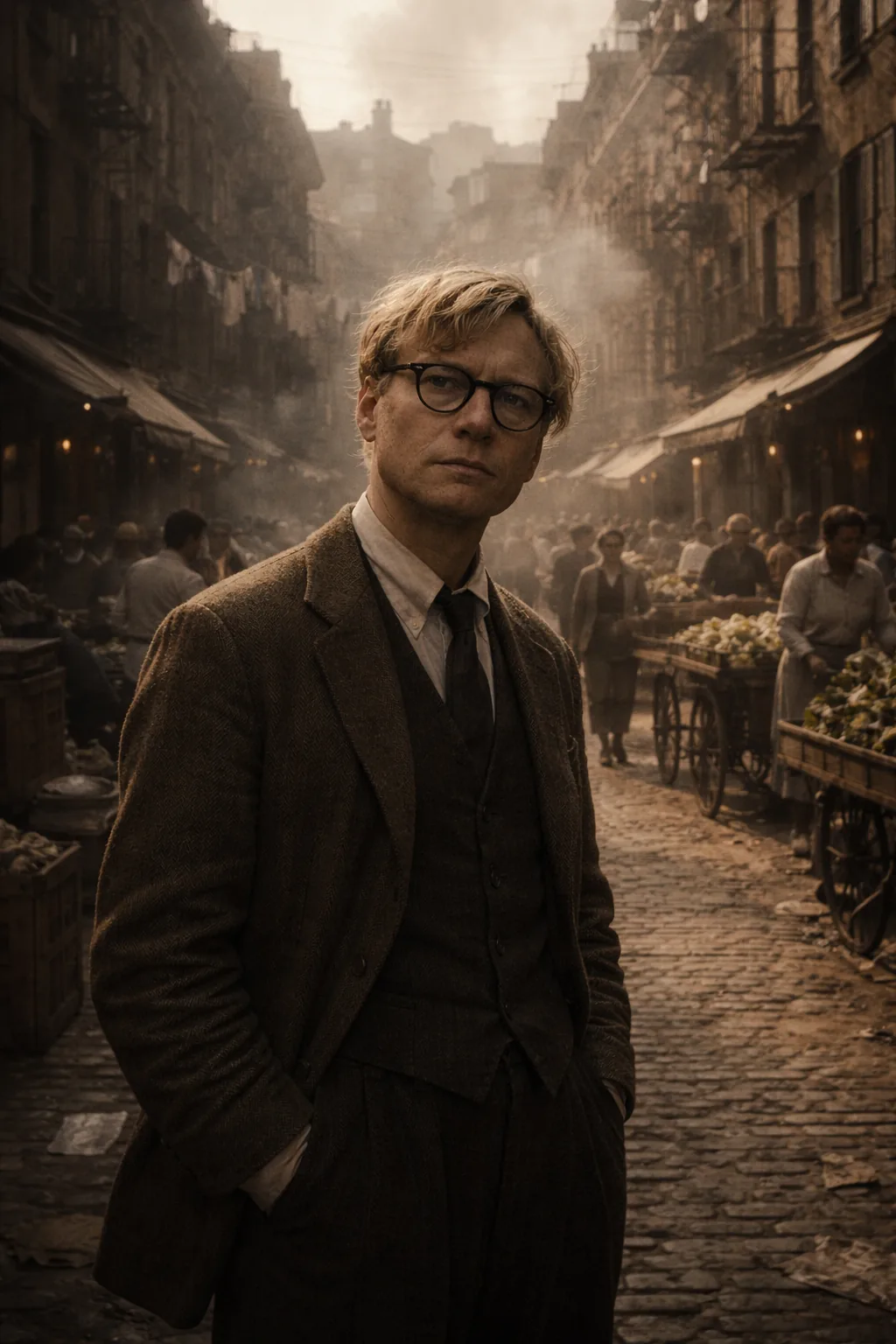
Louis Kahn was born on February 20, 1901, on the island of Ösel—now Saaremaa, Estonia—then part of the Russian Empire. His original name was Itze-Leib Schmuilowsky. He belonged to a Jewish family that immigrated to the United States while he was young and settled in Philadelphia. When the family became naturalized in 1915, they adopted the surname Kahn and Americanized their given names.
A childhood accident involving fire permanently scarred his face. Poverty and those scars formed part of his early life, but neither alone explains the architecture he later created.
The family experienced severe financial hardship. Kahn displayed a remarkable gift for drawing, but his parents could not always afford art supplies. He improvised charcoal using burnt twigs and matches. He liked the resulting line so much that he occasionally continued drawing with burnt matches after becoming a celebrated architect (Design Museum, 2014; Kimbell Art Museum, n.d.-a).
3. The Long Wait Before Recognition
In 1920, Kahn entered the University of Pennsylvania, where he received an education grounded in the École des Beaux-Arts tradition. His most importantteacher was Paul Philippe Cret, who taught him the value of proportion, order, and monumental clarity.
The Great Depression delayed his ambitions. For years, he worked principally on public housing and modest urban projects. He opened an independent practice in 1935, but his career progressed slowly. When many architects of his generation had already completed their most recognizable work, Kahn was still searching for his own language.
A fellowship at the American Academy in Rome in 1950–1951 transformed his architecture. Traveling through Italy, Greece, and Egypt, he studied the way light struck ancient walls, columns, vaults, and empty spaces. He realized that a modern building did not need to reject the weight or memory of history (Kimbell Art Museum, n.d.-a).
4. When Silence Became Architecture
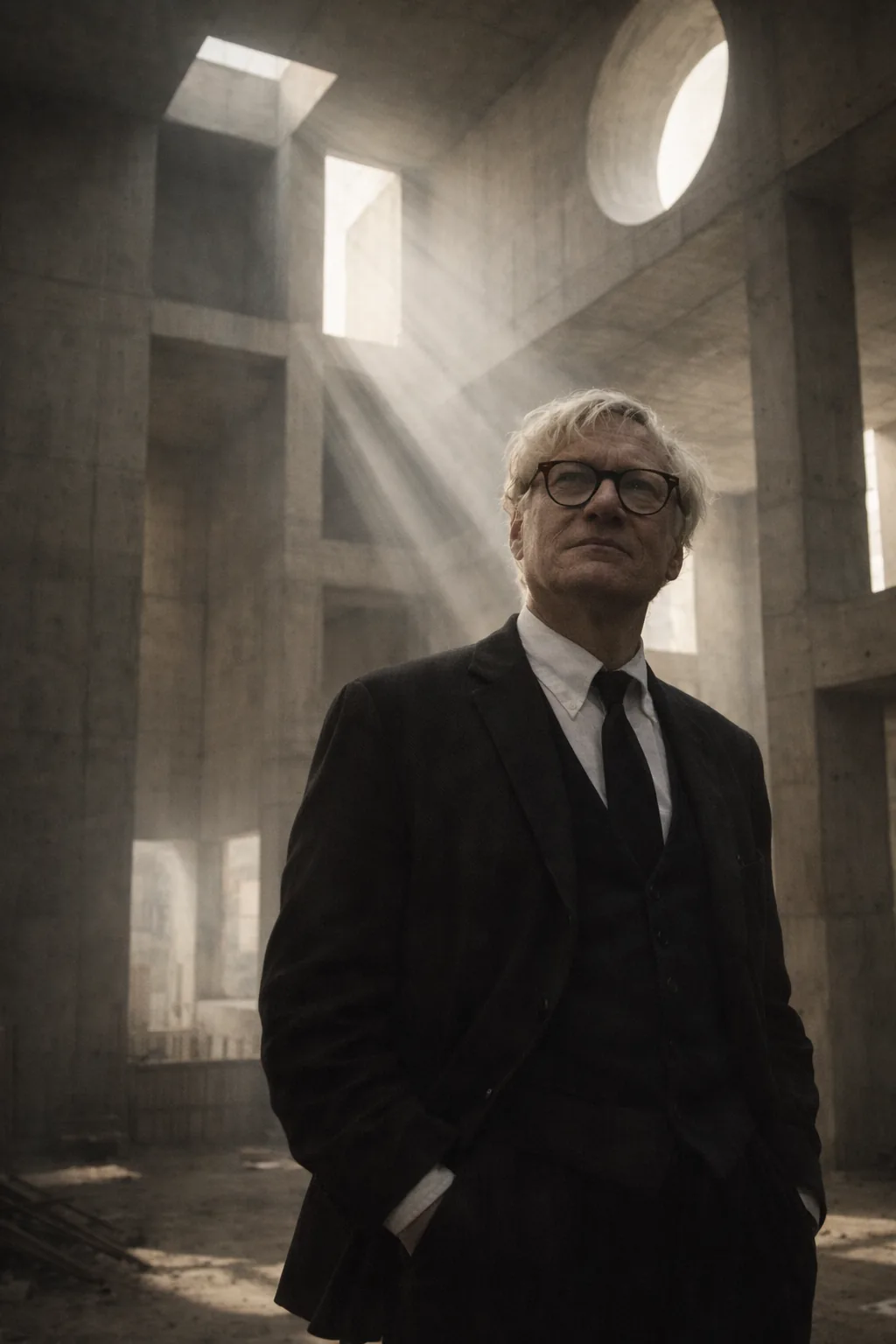
The extension to the Yale University Art Gallery, completed in 1953, brought him national recognition. Its tetrahedral concrete ceiling incorporated lighting and mechanical systems into the structure. The building was modern, but it did not resemble an interchangeable industrial box. It possessed weight, texture, and a deliberate relationship with its historic neighbors.
At the University of Pennsylvania’s Richards Medical Research Laboratories, he distinguished between “served” and “servant” spaces. Research areas were differentiated from the towers and cores containing circulation, ducts, and building services. This organization made the complex legible, although accommodating everyday laboratory work created practical difficulties (Design Museum, 2014; Museum of Modern Art, n.d.).
5. The Salk Institute: A Laboratory Facing Infinity
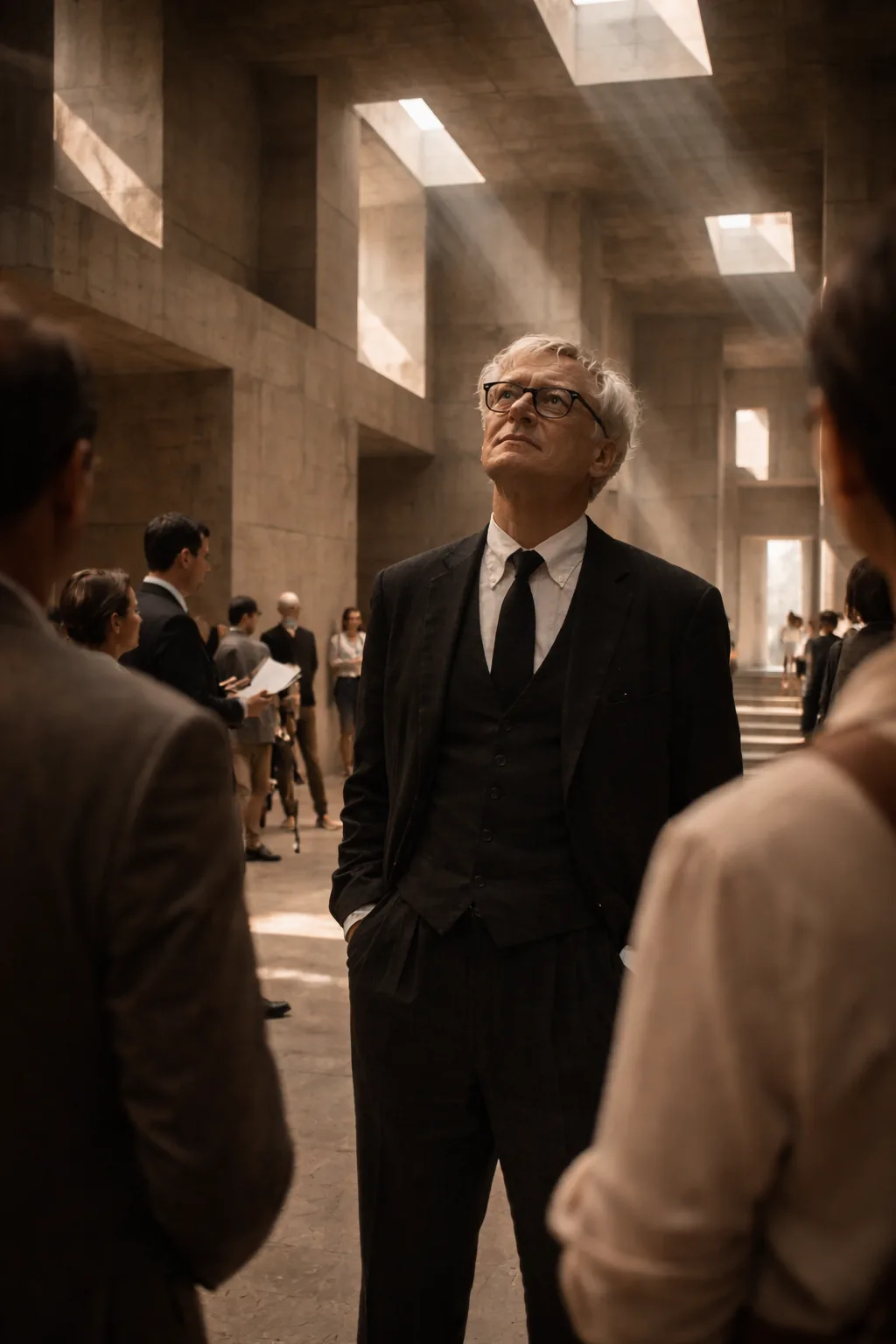
In 1959, Jonas Salk—developer of one of the first successful polio vaccines—commissioned Kahn to design a research center in La Jolla, California. Salk wanted a place so beautiful that it would attract the most brilliant scientific minds.
Kahn designed two laboratory blocks facing one another across a plaza open to the Pacific Ocean. Technical spaces could be altered without destroying the laboratories, while private studies provided scientists with places for concentration.
The central plaza was originally intended to contain trees and vegetation. Mexican architect Luis Barragán, invited by Kahn to examine the site, recommended that he add no gardens and preserve it as a plaza open to the sky. The result was a stone surface divided by a narrow channel of water directing the eye toward the horizon (Salk Institute for Biological Studies, n.d.; Society of Architectural Historians, n.d.).
6. The Museum That Transformed Daylight
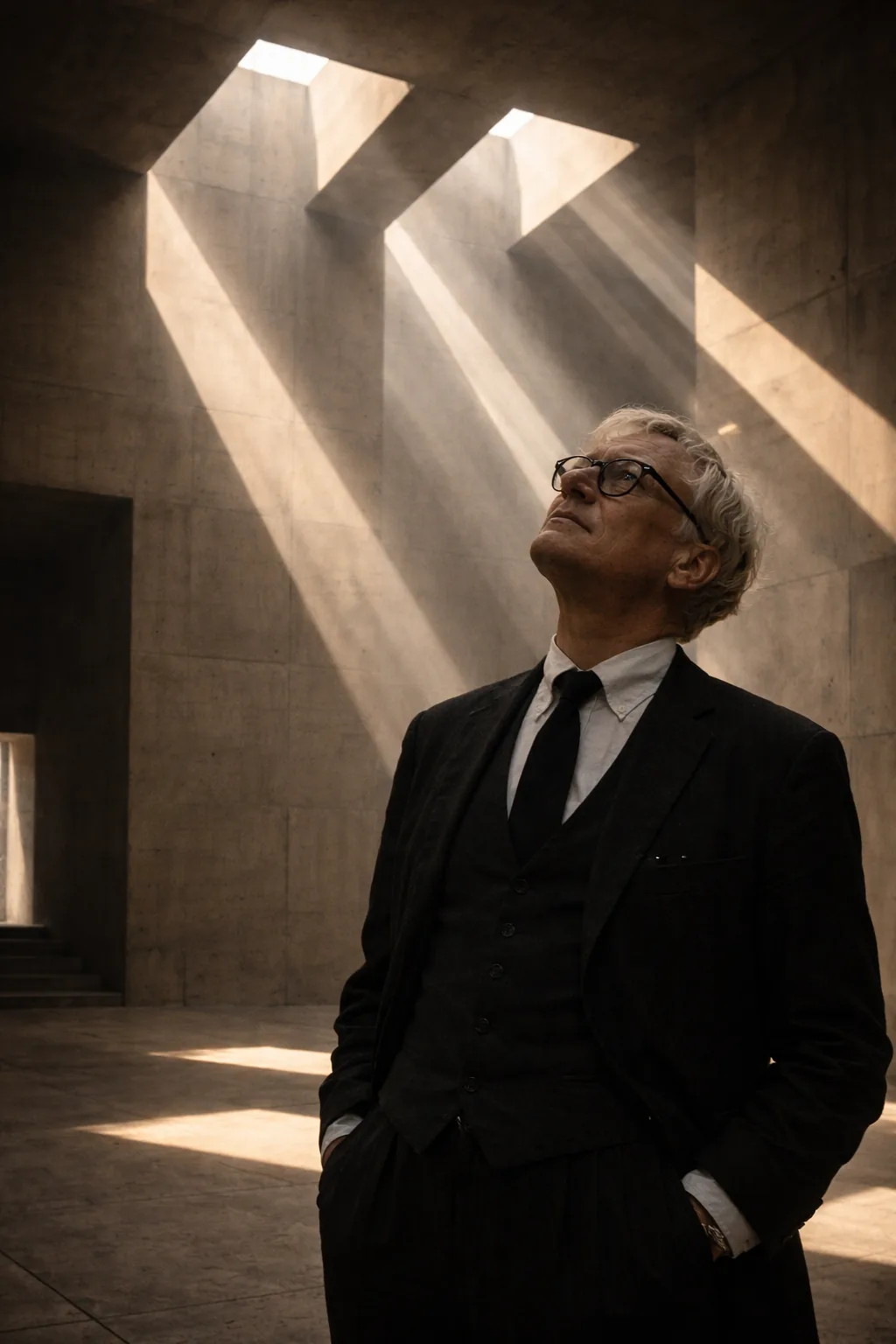
The Kimbell Art Museum in Fort Worth, opened in 1972, condensed many of Kahn’s architectural ideas. The building consists of a sequence of concrete vaults with curved profiles. Natural light enters from above, reflects against metal surfaces, and spreads gently through the galleries.
Perforated aluminum reflectors spread daylight across the vault surfaces and galleries. The diffused illumination changes with the sky: looking at a painting also involves sensing the passage of time outside the museum (Kimbell Art Museum, n.d.-b).
7. A Parliament Between Two Countries
Kahn’s most ambitious project was the National Assembly complex in Dhaka. When he received the commission in 1962, Bangladesh was still East Pakistan. The struggle for independence interrupted construction and completely altered the building’s political significance.
Kahn organized the parliament around a vast central chamber protected by enormous concrete walls. Circles, squares, and triangles cut into the façades admit light and give the complex an almost timeless appearance. Channels and reflecting pools surround several of its structures.
After Bangladesh became independent in 1971, the building acquired new meaning as a national symbol. Kahn died before its completion. Official Bangladeshi sources date its inauguration to January 28, 1982; some architectural chronologies extend the dates of the wider complex to 1983 (Bangladesh Parliament, n.d.; Bangladesh Tourism Board, n.d.).
8. Three Families Separated by Silence
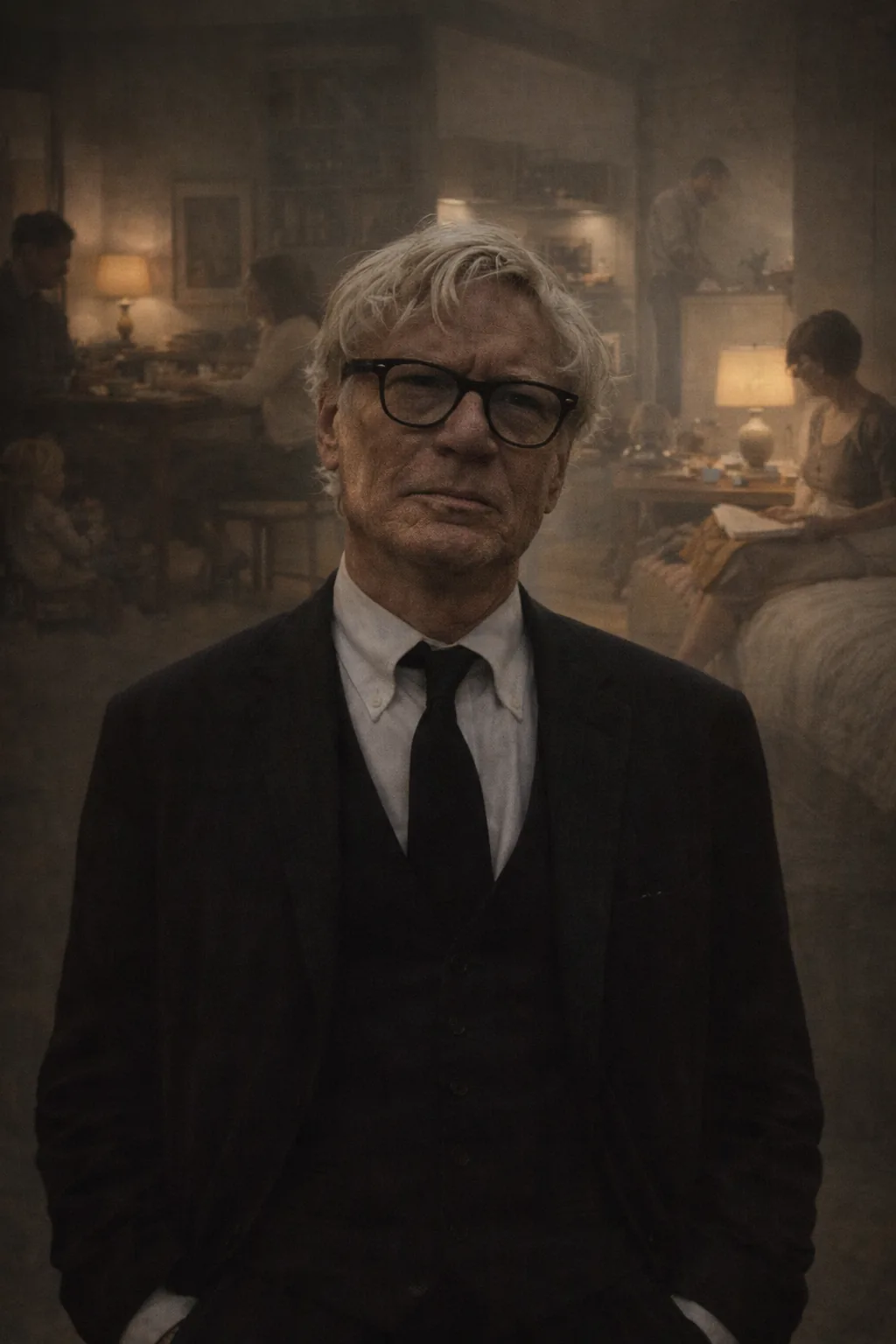
Kahn remained married to Esther Israeli, the mother of his daughter Sue Ann, while maintaining relationships with two collaborators.
With architect Anne Tyng, he had a daughter, Alexandra, born in 1954. Tyng was also an important intellectual collaborator, particularly in the study of complex geometries. With landscape architect Harriet Pattison, he had a son, Nathaniel, born in 1962. Pattison collaborated with Kahn on several projects, including the Franklin D. Roosevelt memorial in New York.
Kahn attempted to keep these lives separate. The three women and three children received only portions of his time. Decades later, Nathaniel Kahn explored that absence in the documentary My Architect, attempting to understand the father who visited occasionally but never remained.
Recognizing the greatness of Kahn’s buildings does not require idealizing his private conduct. He inspired intense loyalty among students and collaborators while causing pain to those who waited for a presence he rarely provided (Design Museum, 2014; The Cultural Landscape Foundation, n.d.).
9. The Little-Known Fact: A Public Purchase Saved His Archive
After Kahn’s death, the debts of his practice forced the liquidation of its assets. Thousands of drawings, plans, models, photographs, and professional documents were in danger of being dispersed.
In 1976, the Commonwealth of Pennsylvania purchased the professional archive. The following year, it placed the collection on permanent loan at the University of Pennsylvania. That decision kept drawings, plans, photographs, and project documentation together instead of dispersing them among private buyers (University of Pennsylvania Architectural Archives, n.d.).
Even one of his most poetic designs had to wait for decades. His memorial to Franklin D. Roosevelt on Roosevelt Island was conceived in the early 1970s but opened as Four Freedoms Park in 2012, thirty-eight years after his death (Four Freedoms Park Conservancy, n.d.).
10. The Light That Outlived the Architect
Louis Kahn completed relatively few major buildings and reached professional maturity as he approached fifty. Nevertheless, his influence transformed modern architecture.
He taught that structure did not have to be concealed, that materials should preserve their character, and that light could function as a building element. His museums, libraries, laboratories, and parliaments appear modern and ancient at the same time.
The man disappeared inside a station. His buildings continue waiting for the light.
Sources
- Design Museum. (2014). Louis Kahn.
- Kimbell Art Museum. (n.d.-a). Louis I. Kahn biography.
- University of Pennsylvania Architectural Archives. (n.d.). Kahn, Louis I.
- Salk Institute for Biological Studies. (n.d.). About Salk architecture.
- Society of Architectural Historians. (n.d.). Jonas Salk Institute for Biological Studies.
- Kimbell Art Museum. (n.d.-b). Louis I. Kahn Building.
- Bangladesh Parliament. (n.d.). Bangladesh Parliament Building.
- Bangladesh Tourism Board. (n.d.). National Parliament House.
- The Cultural Landscape Foundation. (n.d.). Harriet Pattison.
- Four Freedoms Park Conservancy. (n.d.). The Park.
- Museum of Modern Art. (n.d.). Louis I. Kahn. Alfred Newton Richards Medical Research Building, University of Pennsylvania, Philadelphia, PA. 1957–1965.
- Yale University Library. (n.d.). Guide to the Louis I. Kahn Yale Center for British Art sketches.
More from this collection
Filippo Brunelleschi: The Man Who Built Over Empty Space
Read story →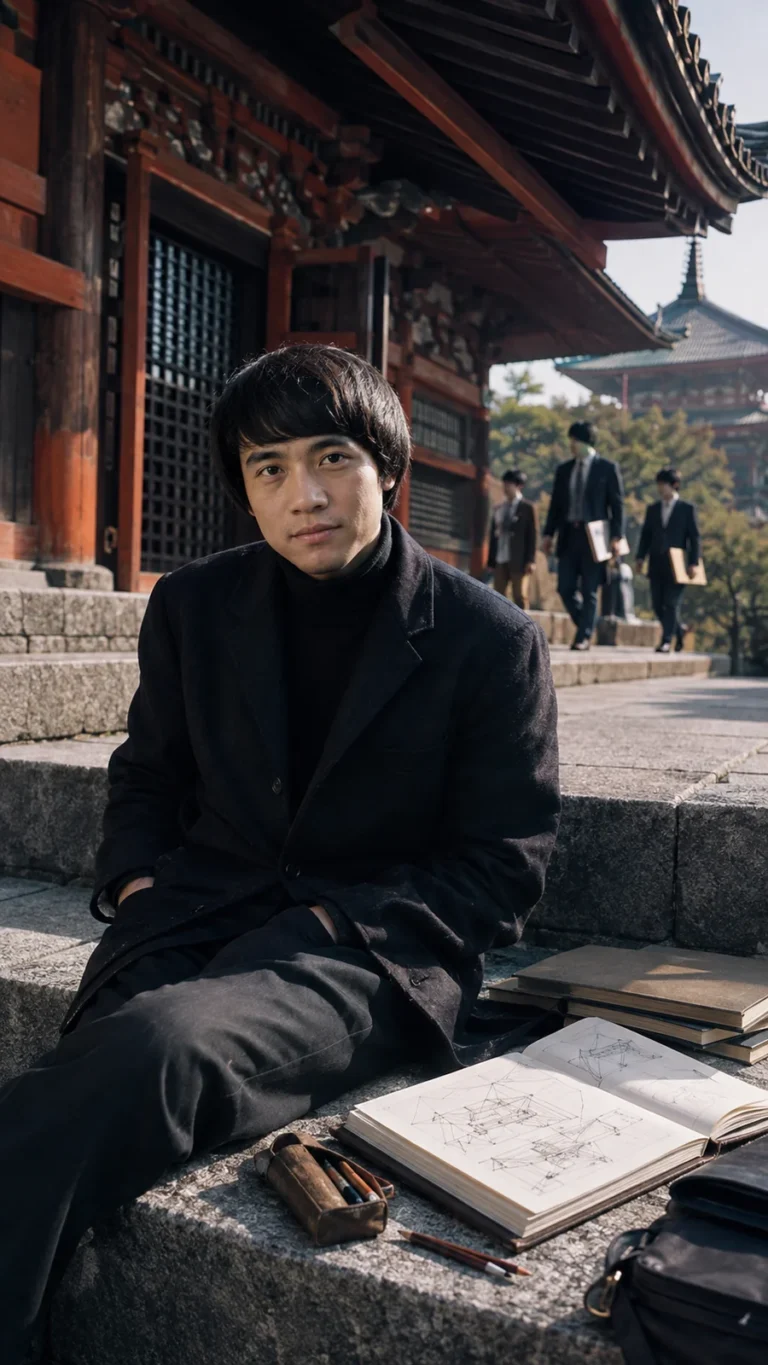
Tadao Ando: The Boxer Who Learned Architecture by Traveling the World
Read story →