
In this storyOpen index
Clara Immerwahr: The Chemist Whose Voice Was Buried Beneath Her Husband’s Name
Her doctorate, her research, and the records that reveal a life more complex than its legend.

Her life requires no invented explanation to be tragic. Before becoming known primarily as “Fritz Haber’s wife,” Clara Immerwahr had accomplished something exceptional: she forced her way into German science when universities still treated women as intruders.
Clara Immerwahr
A life told through laboratories, letters, and silences
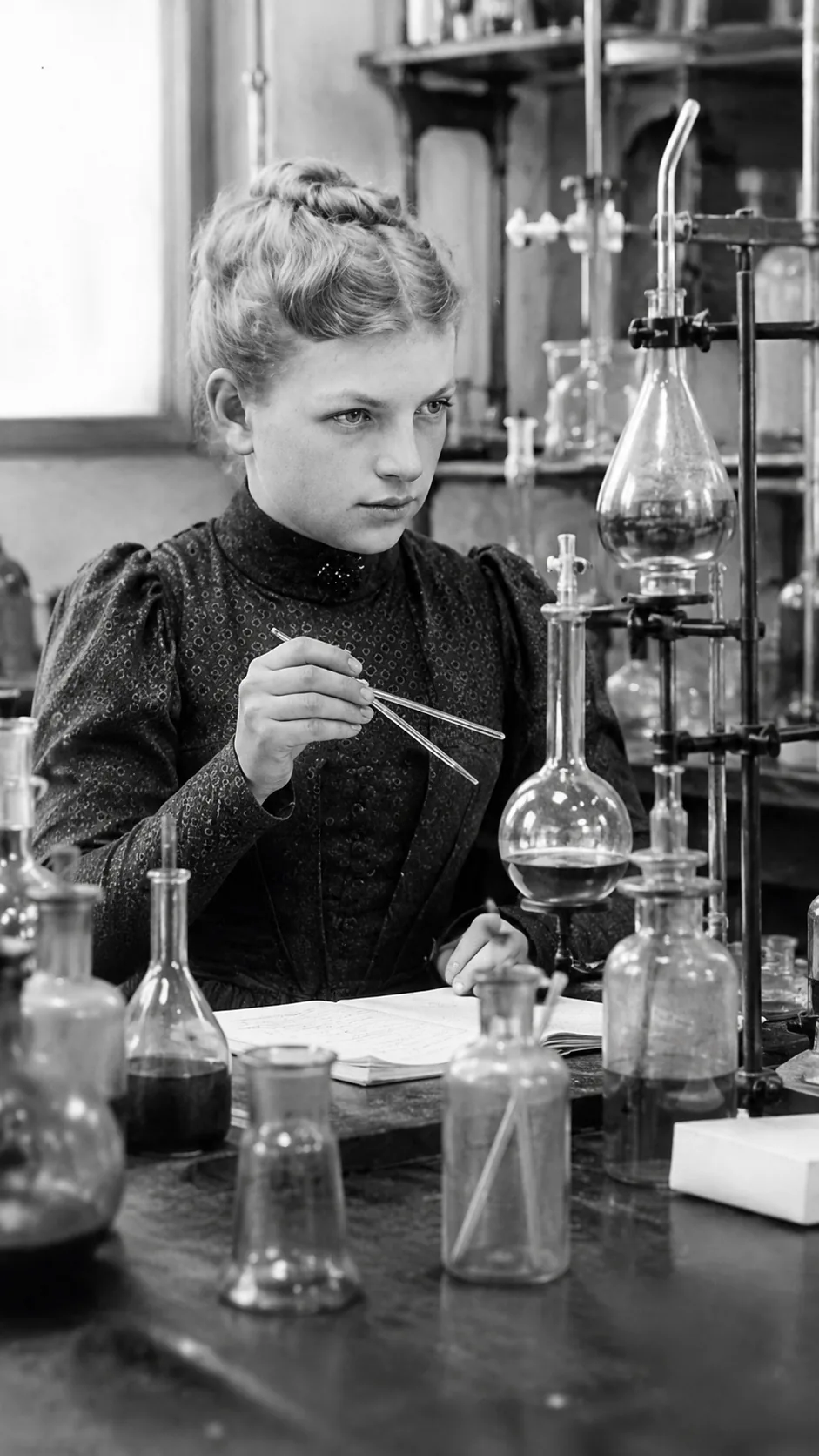
A paper signed by Clara, 1901
Her study of the solubility of heavy-metal precipitates appeared in Zeitschrift für Elektrochemie as an extract from her dissertation. The publisher’s record preserves her authorship, date, and page range. The image is a recreation; the link leads to the scientific paper.
1. The Night That Turned a Life into a Symbol
Clara Immerwahr died by suicide in Dahlem, Berlin, on May 2, 1915. She was forty-four. Her death eventually occupied more space in public memory than the scientific research she had published under her own name.
Her death occurred days after the large-scale chlorine attack directed by Fritz Haber near Ypres. That proximity encouraged a later interpretation of her death as a protest against chemical warfare. Timing alone does not establish a motive.
The story possesses tremendous dramatic force, but the available documentation does not establish that this was the sole reason for her death. No farewell letter survives, and accounts of an argument between husband and wife that night appeared much later. Historians have found evidence of an unhappy marriage, professional isolation, personal losses, and profound dissatisfaction, but very little contemporary proof that Clara was a public campaigner against chemical warfare.
2. A Girl Who Wanted to Study the Invisible
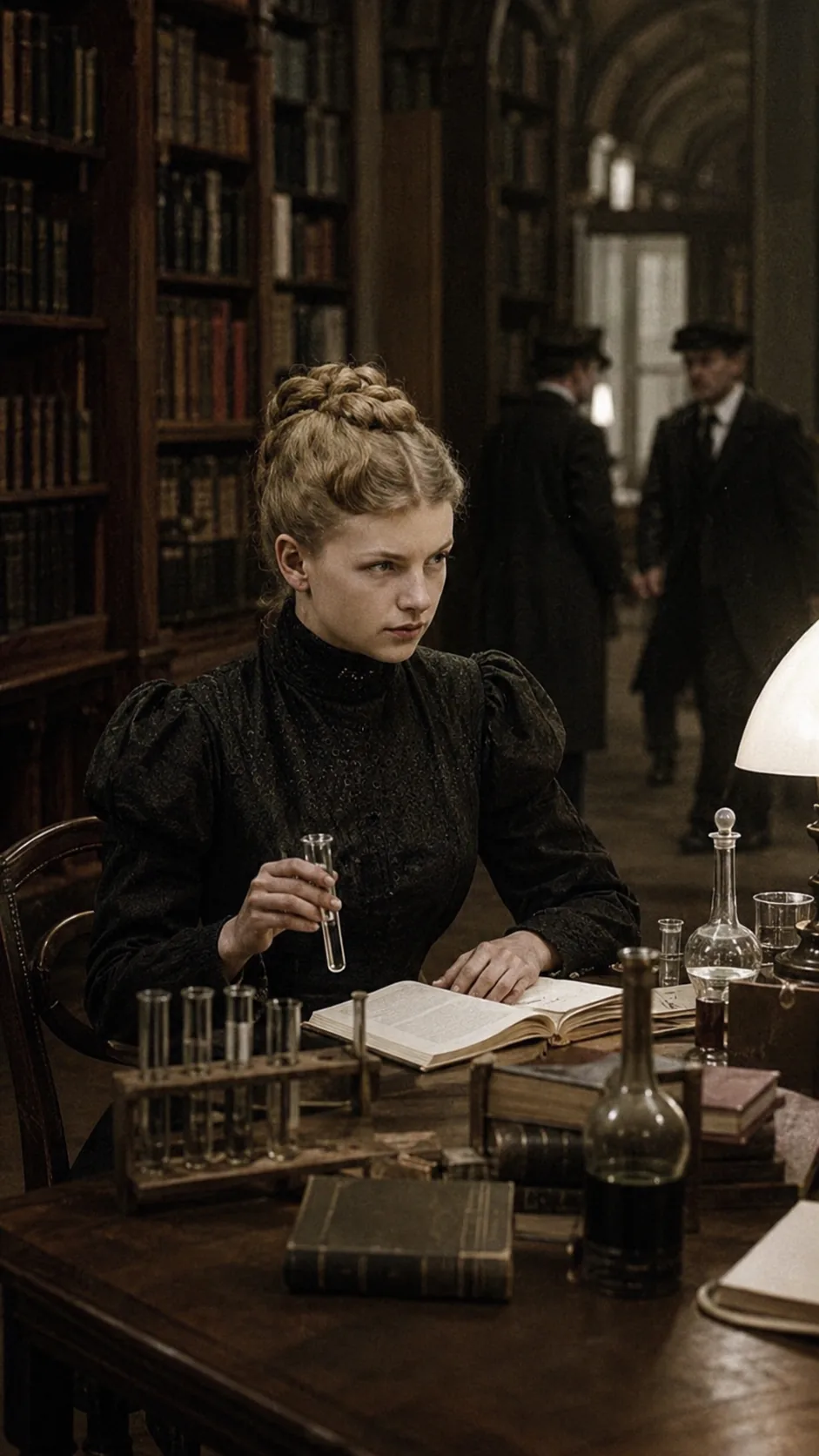
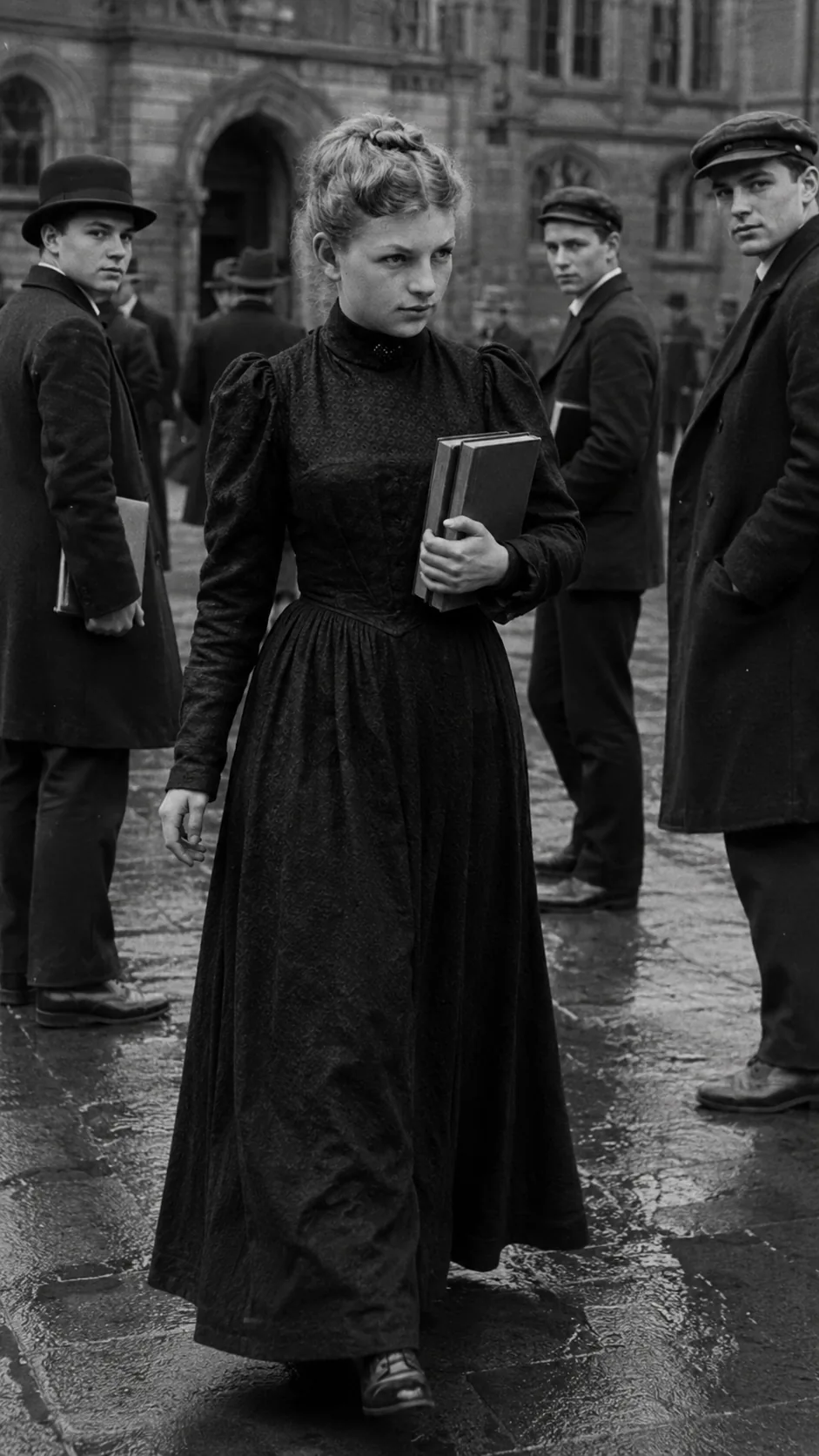
Clara was born on June 21, 1870, in Polkendorf, in the Prussian province of Silesia, now part of Poland. She was the youngest of four children born to Philipp Immerwahr, a trained chemist and agricultural manager, and Anna Krohn.
The family spent part of each year in the countryside and another part in Breslau—now Wrocław—where the daughters attended a higher school for girls. Such institutions were not intended to produce scientists. Their purpose was to prepare educated wives, mothers, and household managers.
Clara wanted to study chemistry, but graduating from a girls’ school did not qualify her to enter a university. She first trained as a teacher, one of the few advanced professions considered acceptable for women. She then prepared independently for the examinations required to obtain the Abitur, the qualification granting access to university studies.
In 1896, she passed as an external candidate at a boys’ secondary school. Even then, she could not enter academic life normally. She had to request individual permission from professors to attend certain courses. Some tolerated her presence; others believed that women did not belong in universities.
Her persistence led her to physical chemistry, a relatively new discipline devoted to phenomena that could not be observed directly: the conductivity of solutions, the dissociation of substances, and the behavior of ions. Her mentor was Richard Abegg, one of the emerging figures in German chemistry.
3. The University of Breslau’s First Female Doctor

Clara did more than attend lectures. She worked in laboratories, conducted experiments, and published research. Her known scientific output comprises three research papers, as well as a supplement and a correction. She investigated relationships among solubility, electrical conductivity, dissociation, electrochemical potential, and electro-affinity.
On December 22, 1900, she defended her dissertation on the solubility of difficult-to-dissolve metal salts and its relationship to electro-affinity. She completed examinations in chemistry, physics, mineralogy, and philosophy, receiving her doctorate magna cum laude. She thereby became the first woman to earn a doctorate from the University of Breslau.
That achievement should be distinguished from being the first woman to earn a chemistry doctorate at a German university: Julia Lermontova had already graduated at Göttingen in 1874.
After completing her doctorate, Clara worked for a time as Abegg’s unpaid assistant. She possessed training, publications, and ability, but German universities offered virtually no scientific appointments to women. The degree she had fought to earn did not remove the institutional barriers surrounding her.
4. A Marriage Between Two Chemists Who Did Not Work as Equals
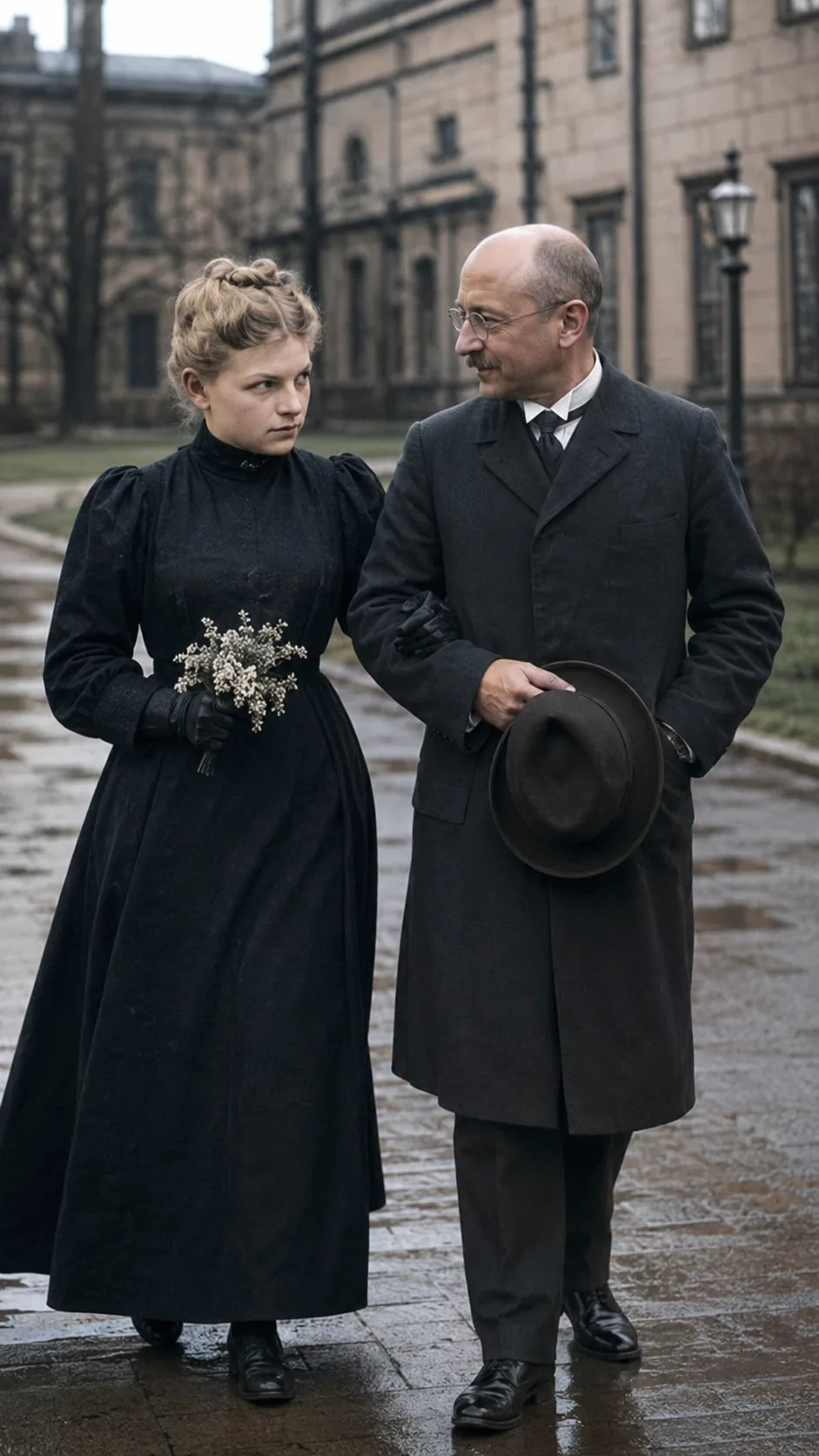
Clara and Fritz Haber had known each other since their youth. They met again after her doctorate and married in August 1901. A marriage between two chemists did not translate into equal professional careers.
The couple settled in Karlsruhe, where Haber pursued an increasingly important academic career. Clara gave birth to their only child, Hermann, in 1902. Difficulties surrounding the pregnancy and the care of a frequently ill child increased her domestic responsibilities. As her husband’s reputation expanded, her research career disappeared.
Clara delivered lectures on chemistry and physics for organizations dedicated to women’s education. She taught women—mainly housewives—about the chemistry of food and household work. She may also have contributed informally to some of Haber’s work, although surviving evidence is insufficient to credit her with a specific role in his principal discoveries.
In a 1909 letter to Richard Abegg, Clara painfully summarized her marriage: what Fritz had gained during those eight years, she had lost, and what remained of her filled her with profound dissatisfaction. It is one of the clearest surviving documents concerning her emotional condition.
5. Fritz Haber and the Transformation of Science into a Weapon

Haber achieved international recognition for a method of synthesizing ammonia from nitrogen and hydrogen. Developed industrially with Carl Bosch, the process made the large-scale production of fertilizers possible, but it also provided compounds needed to manufacture explosives. Haber would receive the 1918 Nobel Prize in Chemistry for ammonia synthesis.
When the First World War began, Haber committed himself to the German war effort. He organized research into toxic gases and personally supervised the release of chlorine near Ypres on April 22, 1915.
The gas formed a cloud that moved toward the opposing lines. Thousands of soldiers were affected, and many died from suffocation. The attack opened a new stage in modern chemical warfare.
The most familiar version of Clara’s story claims that she denounced the program as a “perversion of science” and confronted Haber publicly. That phrase has appeared repeatedly in biographies and theatrical works, but Friedrich and Hoffmann found no reliable contemporary source confirming that she said it. Indirect recollections even suggest that Clara displayed pride in her husband’s wartime contribution, although these later testimonies must also be treated cautiously.
Historical responsibility requires neither automatically making her Haber’s supporter nor presenting her as a flawless pacifist martyr. It requires acknowledging that her precise opinions were not adequately documented.
6. A Death Without a Single Explanation


A gathering took place at the Haber home on May 1, 1915. Fritz had returned from the front and had been promoted to captain. Clara died in the early hours of the following morning. No farewell letter survives that could establish her motives.
There is no definitive explanation. Documents reveal professional and marital dissatisfaction alongside significant losses: Richard Abegg died in 1910 and Otto Sackur in 1914. They do not allow historians to weigh each circumstance precisely or establish a single cause.
7. The Little-Known Fact: Clara Published Science of Her Own

One of the least familiar aspects of Clara’s life is that she was not merely a brilliant student whose career never began. Before marrying, she published scientific research, including papers bearing her name alone.
Her work examined significant problems in the physical chemistry of solutions. It did not revolutionize the discipline, but it demonstrated that she possessed a genuine and promising scientific record. Her disappearance from laboratory life did not result from a lack of ability. It resulted from a system that could occasionally permit a woman to earn a doctorate while offering her almost no profession after she received it.
This may be Clara Immerwahr’s most firmly established legacy. She represents more than the conflict between science and warfare. She also represents researchers whose abilities were recognized in examinations, diverted into secondary work, and ultimately excluded from institutions.
Since 2012, the Clara Immerwahr Award has recognized early-career women in catalysis. In 2026 its organization passed to the Fritz Haber Institute. Lulu Li’s selection was announced in October; the ceremony is scheduled for December 10, 2026.
Clara saw the invisible behavior of substances in chemical solutions, yet she lived in a society unable to see fully the scientist standing before it. Her history does not require that she be transformed into a perfect heroine. It is enough to restore what was denied to her for too long: her name, her research, and the complexity of her own life.
Sources
- Friedrich, B., & Hoffmann, D. (2016). Clara Haber, nee Immerwahr (1870–1915): Life, work and legacy. Zeitschrift für Anorganische und Allgemeine Chemie, 642(6), 437–448.
- Friedrich, B., & Hoffmann, D. (2017). Clara Immerwahr: A life in the shadow of Fritz Haber. In B. Friedrich, D. Hoffmann, J. Renn, F. Schmaltz, & M. Wolf (Eds.), One Hundred Years of Chemical Warfare: Research, Deployment, Consequences (pp. 45–67). Springer.
- Immerwahr, C. (1901). Beiträge zur Kenntnis der Löslichkeit von Schwermetall-Niederschlägen auf elektrochemischem Wege. Zeitschrift für Elektrochemie, 7(35), 477–483.
- Fritz Haber Institute of the Max Planck Society. (2026, October 20). Celebrating the next generation: Dr. Lulu Li receives the 2026 Clara Immerwahr Award.
- Nobel Prize Outreach. (n.d.). Fritz Haber – Biographical.
More from this collection
Alois Alzheimer: The Doctor Who Found a Disease Inside Memory
Read story →
Alexander Fleming: The Man Who Saw Medicine Where Others Would Have Seen Dirt
Read story →