In this storyOpen index
Henri de Toulouse-Lautrec: The Aristocrat Who Found His Kingdom Among Society’s Outcasts
In Montmartre, a dancer’s silhouette could fill a poster. Toulouse-Lautrec also drew the quieter hours when the audience had gone.
He was born into a family that expected him to ride, hunt, and perpetuate an aristocratic name. Two fractures during adolescence changed that destiny: his legs stopped growing normally, and the elegant world to which he belonged began to regard him as an anomaly.
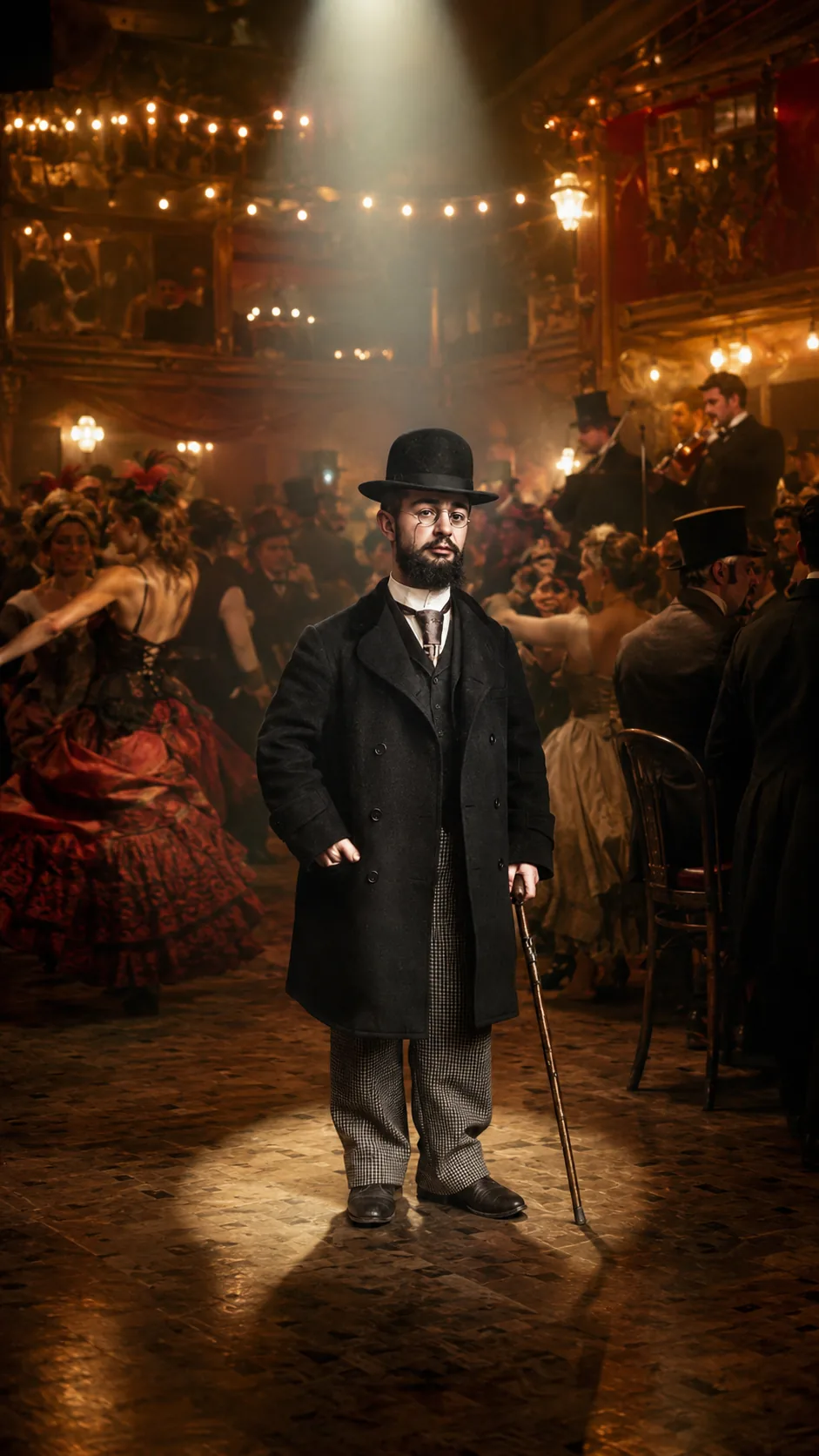
Henri de Toulouse-Lautrec found another territory. He descended into the cabarets, theaters, circuses, and brothels of Montmartre, places where identities could be reinvented every night. There he painted exhausted dancers, unmistakable singers, clowns away from the stage, and women waiting for clients beneath a light that beautified nothing.
Henri de Toulouse-Lautrec
A life told through posters, sketchbooks and stages
Moulin Rouge: La Goulue
The museum’s lithograph shows how Lautrec made a dancer stand out against a crowd. La Goulue’s pale skirt interrupts the dark band of spectators; Valentin’s cropped silhouette places the viewer at the edge of the floor. Follow the link to compare the original composition with the imagined cabaret scene alongside.
A Name Too Large to Carry
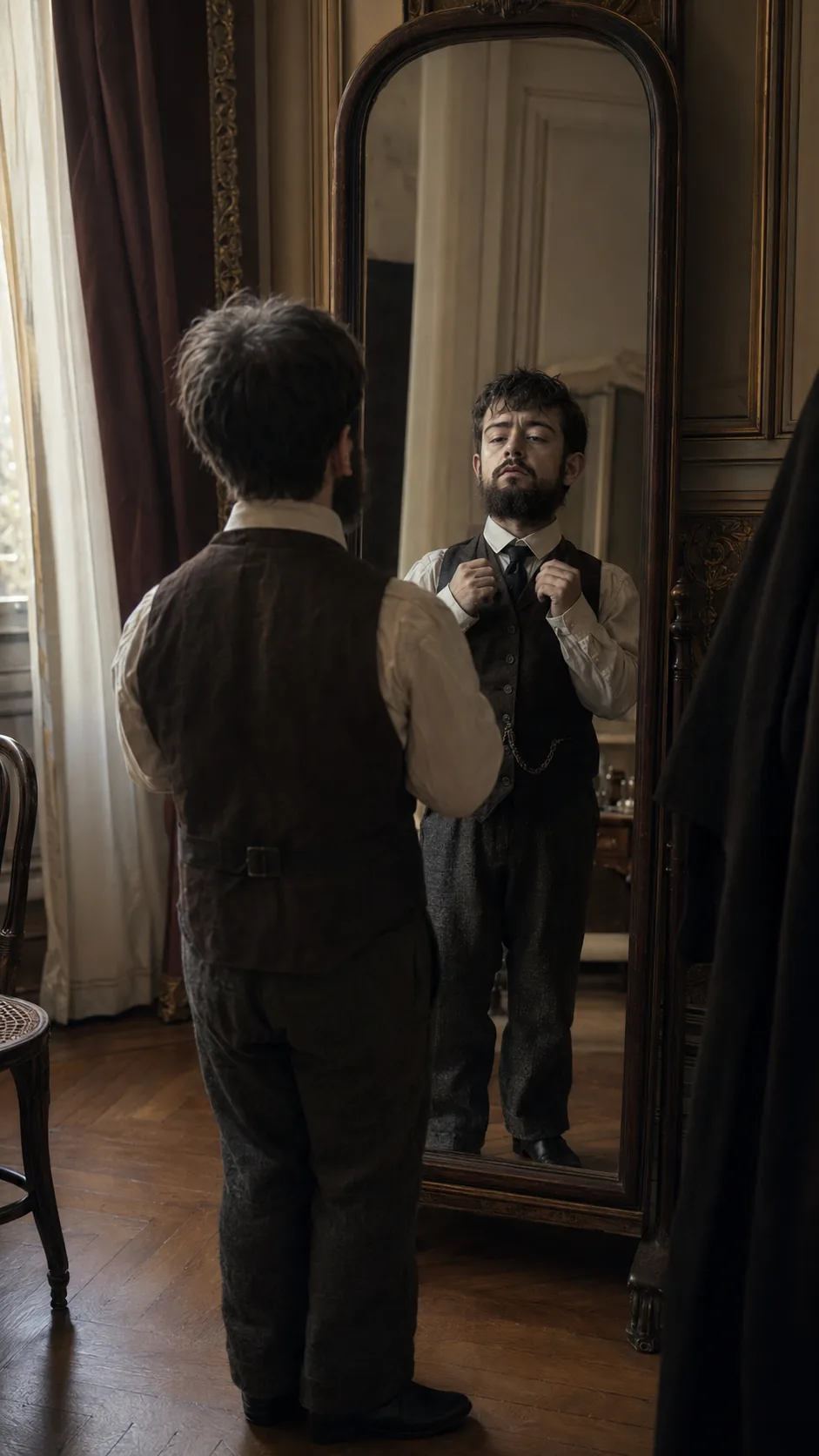
Henri-Marie-Raymond de Toulouse-Lautrec-Monfa was born on November 24, 1864, in Albi in southern France. His parents, Count Alphonse de Toulouse-Lautrec-Monfa and Adèle Tapié de Céleyran, belonged to an old aristocratic family and were first cousins.
His father was an eccentric man devoted to horses, hunting, and displays of physical skill. Henri grew up among family estates where riding and hunting were symbols of social rank. From childhood, he drew horses, dogs, and scenes connected with that world.
In 1878, when he was thirteen, he fractured his left femur after a fall. The following year, he fractured the other leg. The bones healed, but his lower limbs stopped developing at the same rate as his torso. As an adult, he stood approximately five feet tall and needed a cane to walk.
Pycnodysostosis, a rare inherited condition associated with brittle bones, has been proposed as an explanation. It is a retrospective hypothesis rather than a confirmed diagnosis. The surviving accounts do not allow researchers to establish the cause with certainty (Hodder et al., 2015).
Drawing as Possible Territory
Henri’s lengthy periods of convalescence restricted his physical activities. While other family members rode or hunted, he drew. The activity ceased to be a diversion and became a means of constructing a life independent of the body that confined him.
His first important teacher was René Princeteau, a deaf painter specializing in horses and military scenes. Princeteau recognized the young man’s ability to capture rapid movement and convinced the family that Henri should receive serious artistic training.
In 1882, Toulouse-Lautrec moved to Paris. He studied first under Léon Bonnat and later in Fernand Cormon’s studio, where his fellow students included Émile Bernard and Vincent van Gogh. Academic instruction demanded precise drawing, anatomical studies, and subjects considered acceptable by the official salons.
Montmartre: A City Within Paris
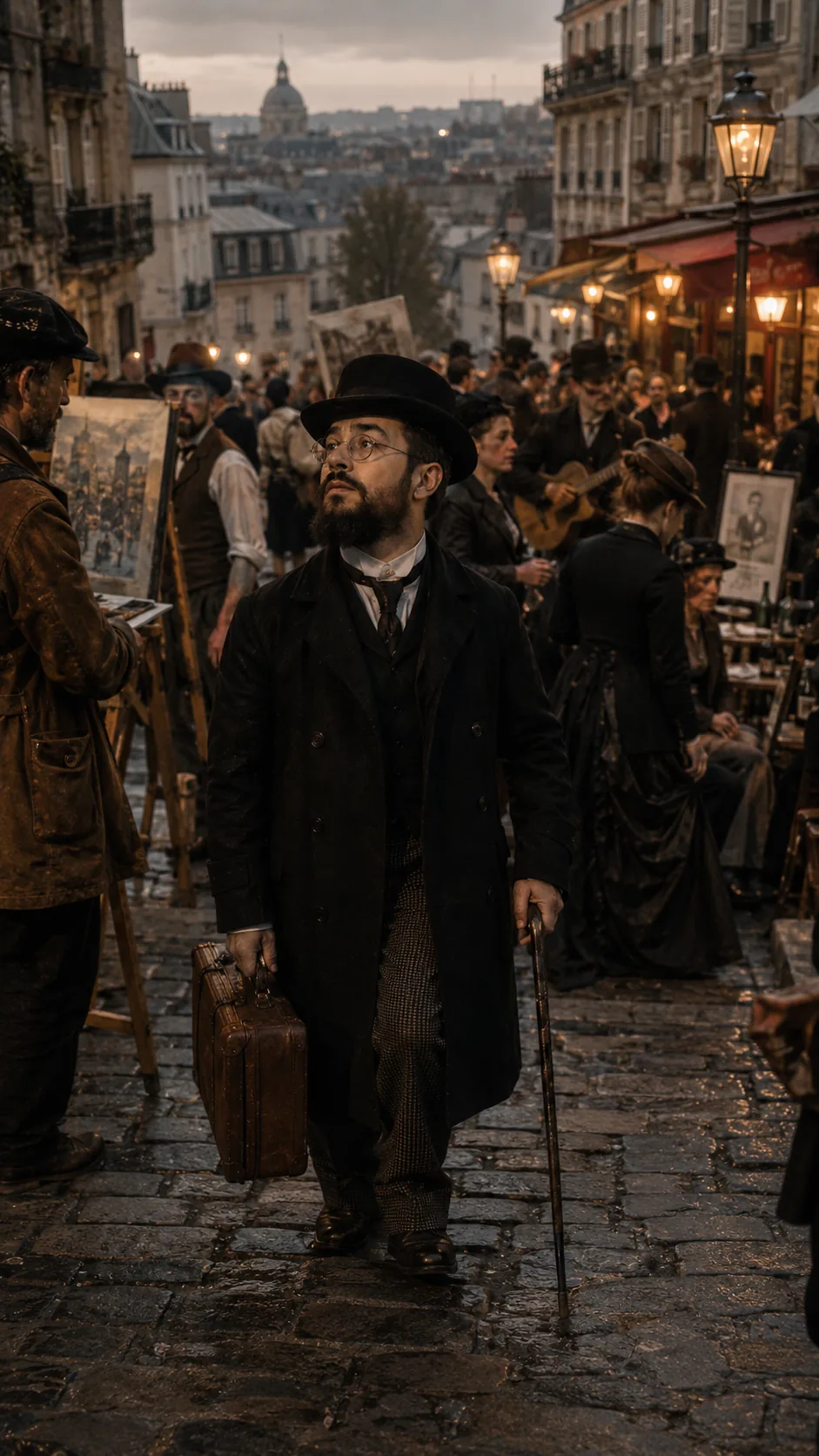
In the late nineteenth century, Montmartre brought together café-concerts, dance halls, circuses, artists’ studios, and establishments where members of the bourgeoisie mingled with workers, prostitutes, writers, and criminals. The recent growth of electric and gas lighting and public transportation had created a nighttime industry that seemed to represent a new kind of freedom.
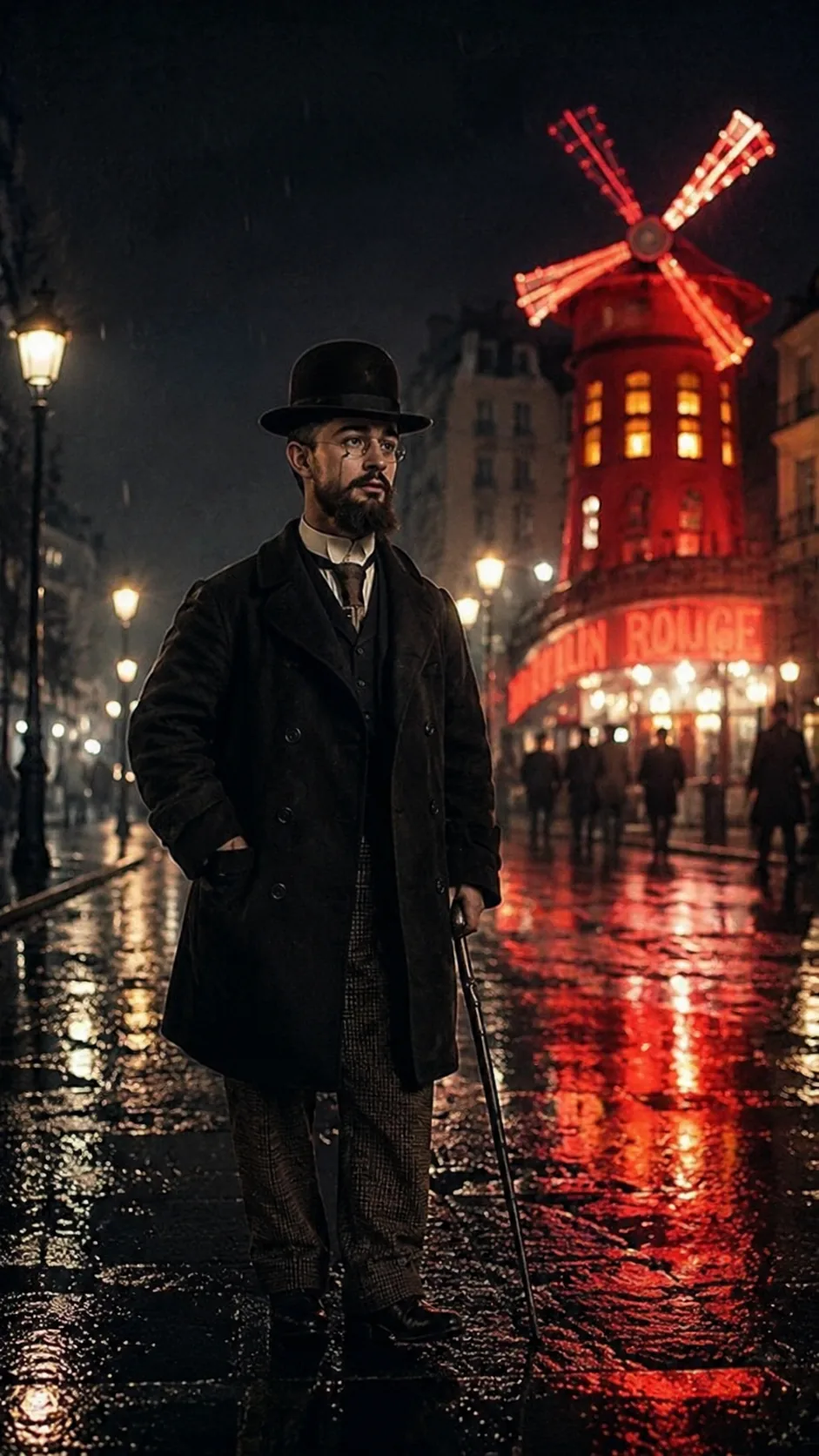
Toulouse-Lautrec settled in the neighborhood and began frequenting places such as the Moulin de la Galette, Le Chat Noir, Le Mirliton, and the Moulin Rouge. He did not attend merely as a spectator. He knew the owners, entertainers, and employees, drank beside them, sketched on tables, and returned night after night.
His position was unusual. He belonged to the aristocracy, yet his physical appearance excluded him from many of its social expectations. He possessed money and connections but identified with people observed from society’s margins. In Montmartre, he could simultaneously be a count, customer, friend, caricaturist, and witness.
The Poster That Changed the Streets
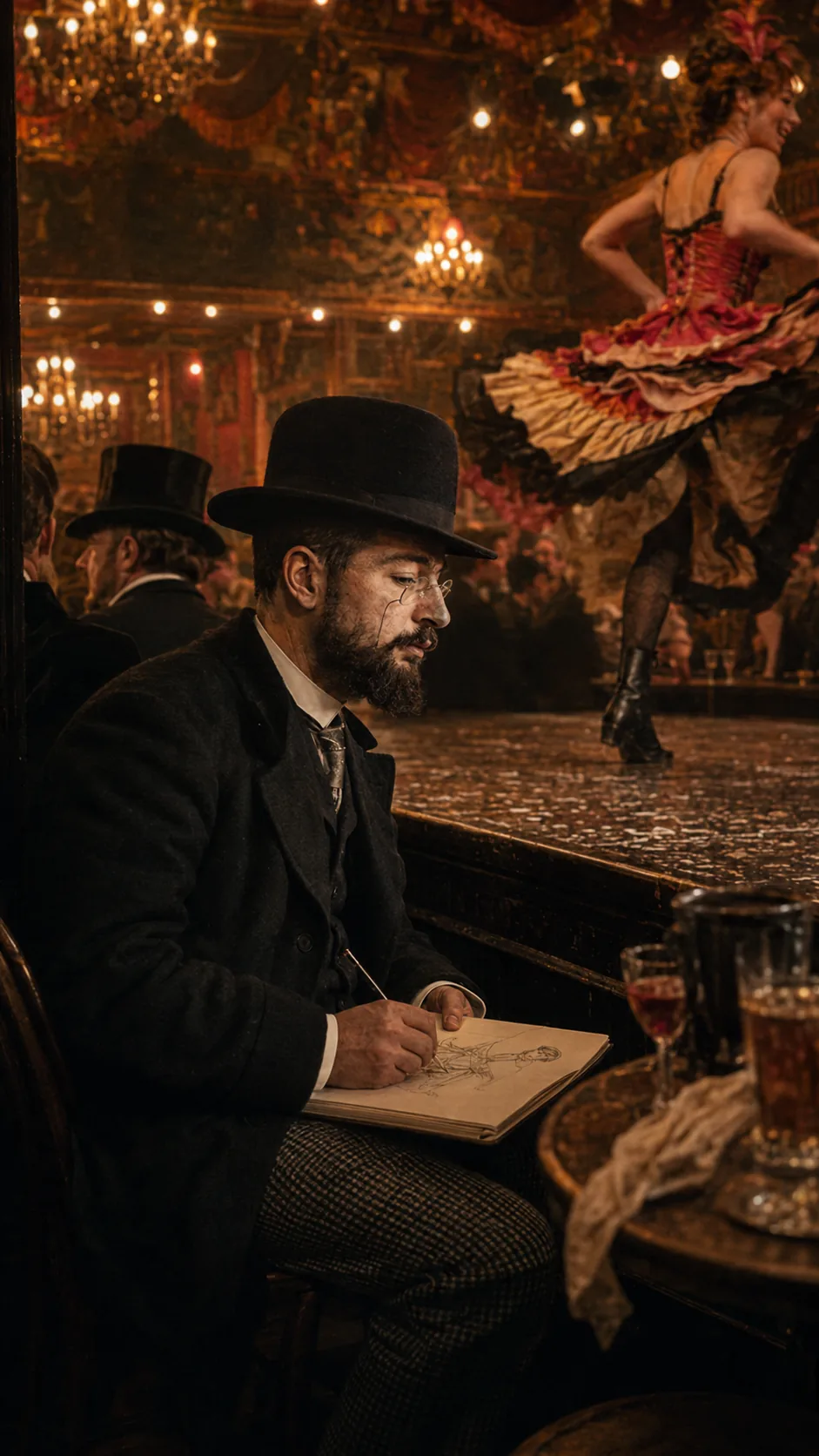
The Moulin Rouge opened in 1889. Two years later, its owners commissioned Lautrec to create an advertising poster. The result, Moulin Rouge: La Goulue, depicted dancer Louise Weber, known as La Goulue, performing the cancan while Valentin le Désossé appeared in the foreground as a dark silhouette.
The nearly six-foot-tall poster used strong outlines, areas of flat color, and abruptly cropped figures. Its composition was influenced by Japanese ukiyo-e prints, which fascinated many European artists. Rather than imitate a traditional painting, Lautrec understood that an image displayed in the street had to be recognizable within seconds.
The work made him famous almost overnight.
Between 1891 and 1900, he designed thirty-one posters. He portrayed performers such as Jane Avril, Aristide Bruant, Yvette Guilbert, and May Milton through visual characteristics that operated like personal trademarks. Black gloves were enough to identify Guilbert; a red scarf and broad-brimmed hat made Bruant impossible to overlook.
The Women Behind the Performance
His best-known images show stages filled with movement. Yet Lautrec was equally interested in what happened when performances ended.
He portrayed Jane Avril sitting away from the dance floor, the clown Cha-U-Kao resting, and Yvette Guilbert through gestures that disclosed something beyond her public persona. He did not necessarily seek to beautify his models. He exaggerated postures, profiles, and expressions to capture what he considered essential.
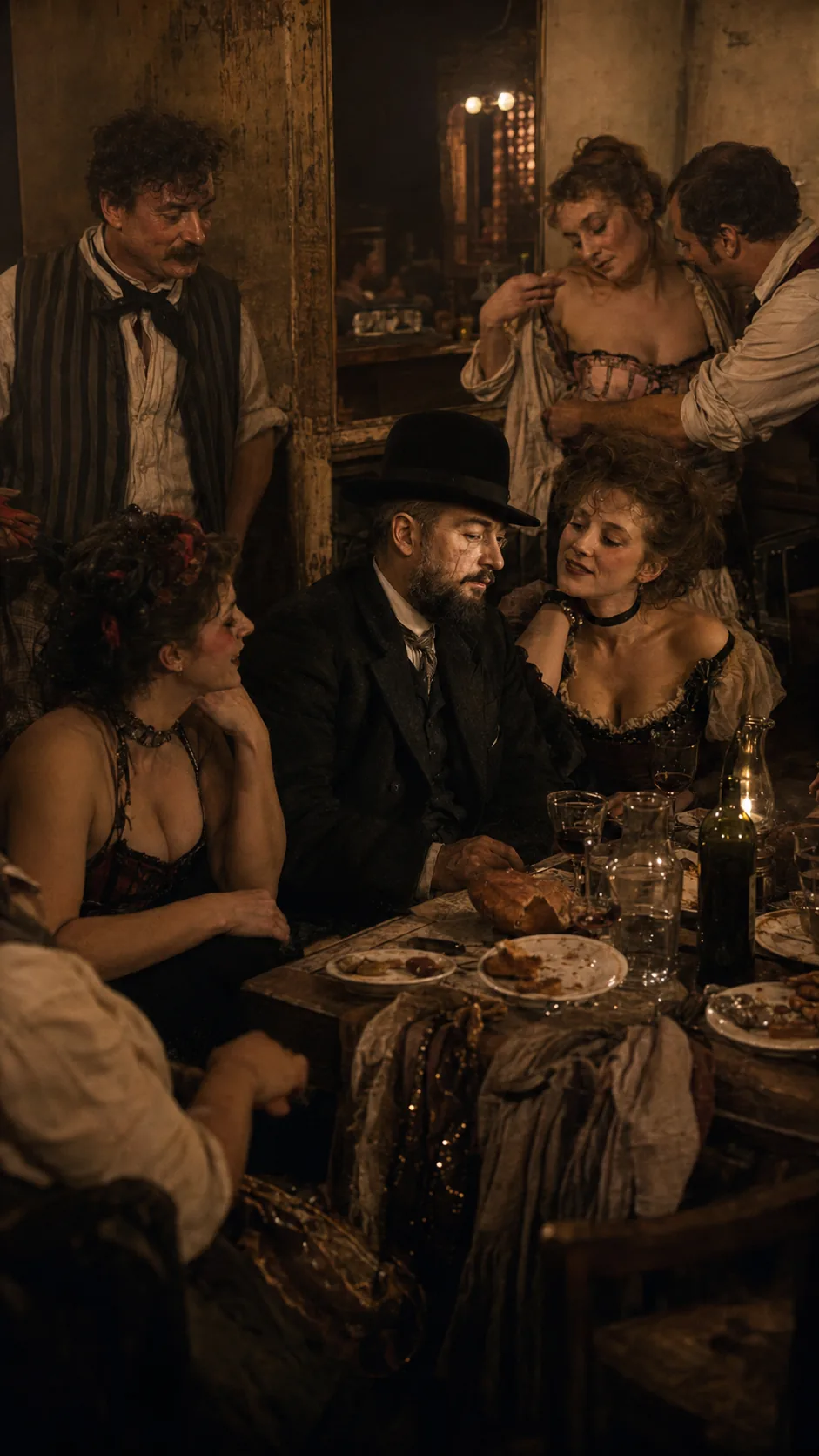
That gaze reached its most complex form inside Parisian brothels. Lautrec visited them frequently and temporarily lived in one in 1894. He knew the workers, shared their everyday spaces, and sketched them eating, talking, sleeping, dressing, or waiting for medical inspections.
The lithographic portfolio Elles, published in 1896, avoided the erotic imagery expected by male audiences. It depicted fatigue, intimacy, boredom, and affection among women. It became a commercial failure precisely because it did not deliver the sexual fantasy anticipated by its publisher, who specialized in erotic material (Museum of Modern Art, 1896).
Lautrec’s empathy should not be romanticized. He remained a privileged man able to enter and leave those environments, and some compositions retain a voyeuristic gaze. Yet his subjects are not reduced merely to available bodies. They possess routines, relationships, and private moments.
The Man Who Drank to Hold Himself Together
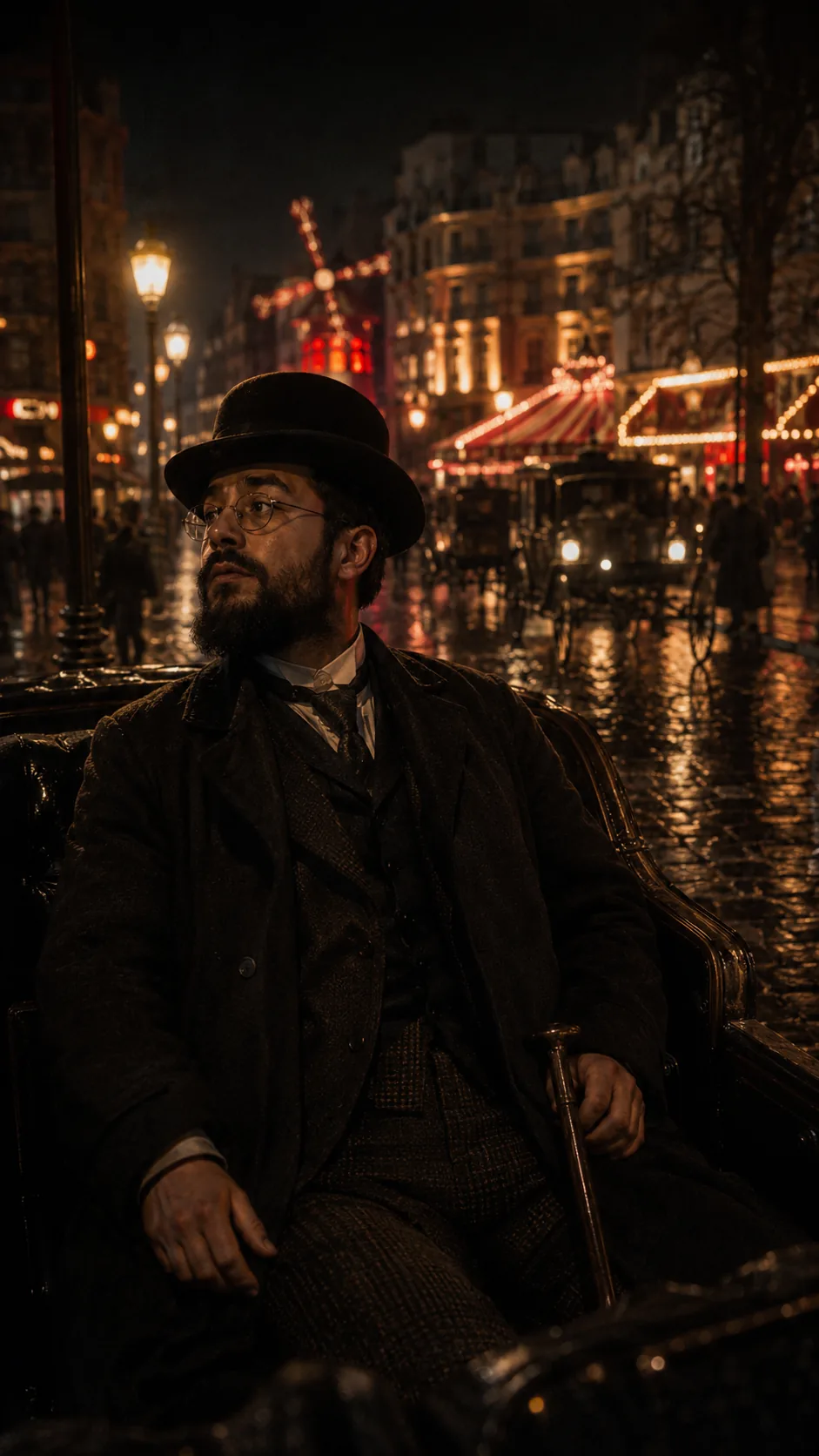
Alcohol formed part of Montmartre’s social life, but for Lautrec it progressed from accompaniment to dependency. He drank wine, cognac, absinthe, and mixtures that he reportedly concealed even inside his cane.
His wit and extraordinary capacity for work concealed the deterioration for years. He painted, drew, produced lithographs, and attended performances with relentless intensity. The Toulouse-Lautrec Museum preserves the legacy of an artist who, in barely two decades, created hundreds of paintings, thousands of drawings, and more than three hundred prints (Musée Toulouse-Lautrec, n.d.).
Productivity did not mean stability. By the late 1890s, he experienced confusion, hallucinations, and paranoia related to alcohol and possibly aggravated by syphilis. In 1899, his family committed him to a private clinic in Neuilly.
The Thirty-Nine Drawings That Purchased His Freedom
During his confinement, Toulouse-Lautrec produced a series of thirty-nine circus drawings. He depicted horses, riders, acrobats, trainers, and clowns with remarkable dynamic precision.
The traditional account says that he executed them entirely from memory to prove that he retained his mental faculties and could return to work. The Toulouse-Lautrec Museum presents the series as part of that effort. There is, however, a historical qualification: some scholars believe he may have been permitted to visit a nearby circus accompanied by an attendant (Walters Art Museum, n.d.).
It therefore cannot be established that every scene came exclusively from memory. What is certain is that the drawings served as evidence of discipline, coordination, and artistic ability. Lautrec left the clinic at the end of May 1899.
The Return That Could Not Save Him
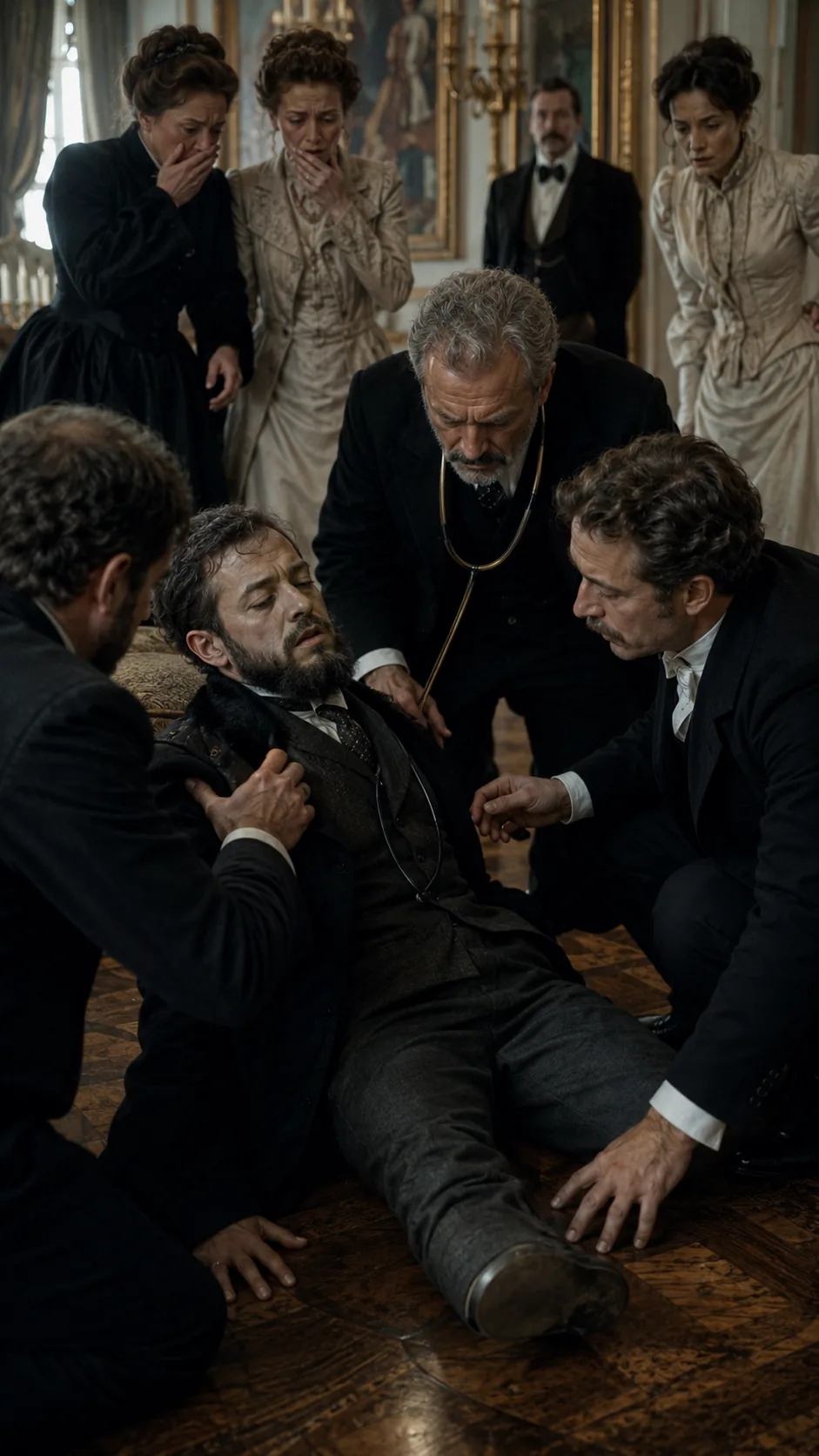
After his release, his mother hired Paul Viaud to accompany him and attempt to prevent him from drinking. Lautrec traveled, worked, and produced new portraits, but eventually returned to alcohol. His health declined rapidly.
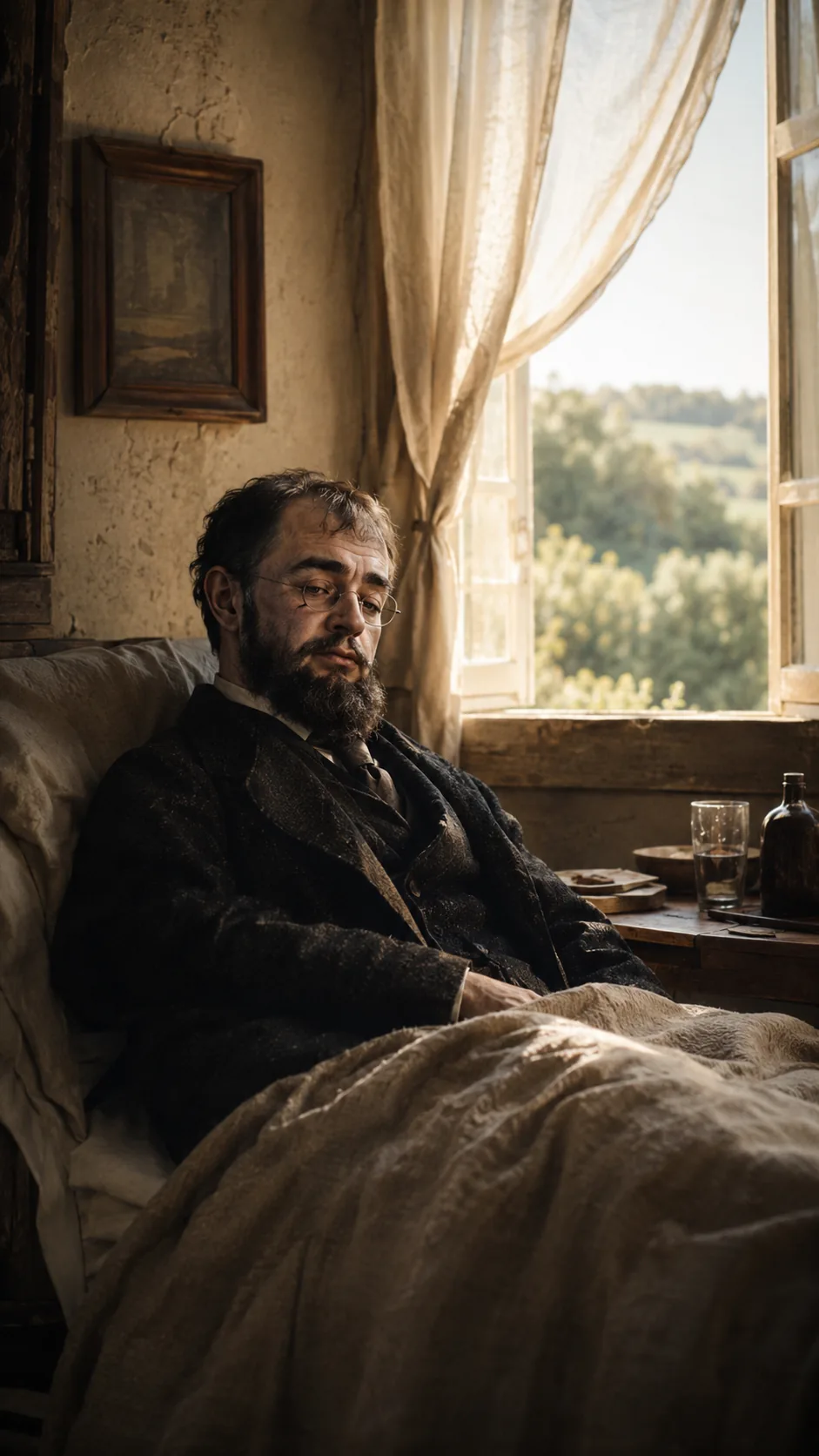
In 1901, he suffered a collapse, probably a stroke, and became partially paralyzed. He was taken to Château Malromé, his mother’s property near Saint-André-du-Bois. He died there on September 9, 1901, at the age of thirty-six.
Sources commonly attribute his death to complications of alcoholism and syphilis, although the surviving medical details do not permit the reconstruction of a single cause with absolute certainty.
After his death, his mother and his friend Maurice Joyant helped preserve his work. Today the museum bearing his name in Albi houses the collection in the Palais de la Berbie.
The Painter Who Did Not Look Away
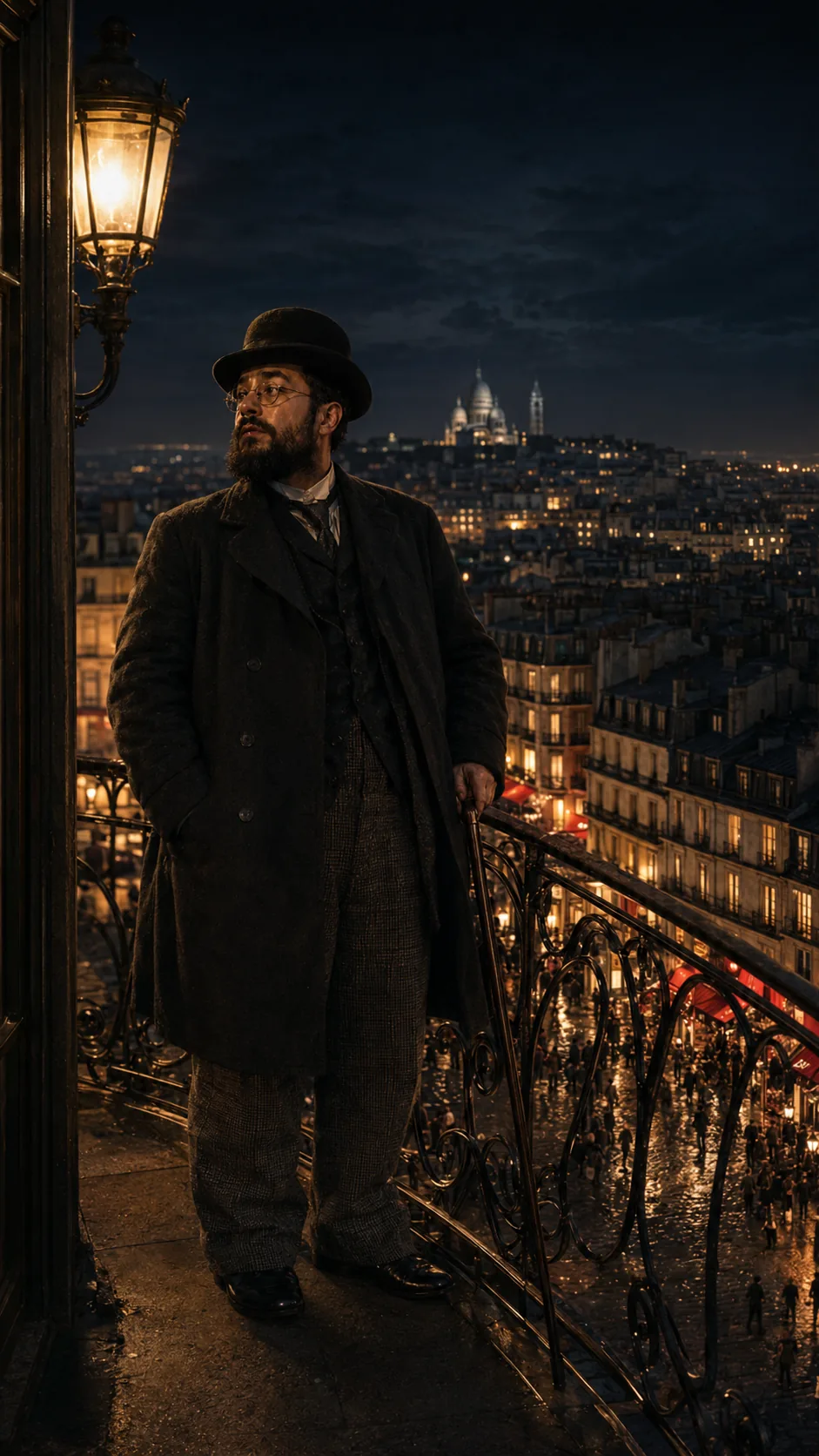
Toulouse-Lautrec was not merely the artist of Parisian parties. He painted the moment afterward: when the dancer sits down, the makeup cracks, the audience disappears, and the performer must resume living inside her own body.
His work does not present Montmartre as paradise. It contains pleasure and exploitation, freedom and exhaustion, celebrity and loneliness. He understood that modernity existed not only on broad avenues but also in advertising, entertainment, and lives converted into commodities.
Sources
- Metropolitan Museum of Art (n.d.). Moulin Rouge: La Goulue (1891).
- Hodder, A., Huntley, C., Aronson, J. K., & Ramachandran, M. (2015). Pycnodysostosis and the making of an artist. Gene, 555(1), 59–62.
- Musée Toulouse-Lautrec (2025). Dossier de presse : L’art de l’affiche. Chronologie.
- Museum of Modern Art (n.d.). Cover from Elles (1896).
- Walters Art Museum (n.d.). At the Circus: Free Horses (1899).
More from this collection
Amedeo Modigliani: Empty Eyes, Illness and the Legend of the Cursed Artist
Read story →
Frida Kahlo: The Body That Refused to Disappear
Read story →