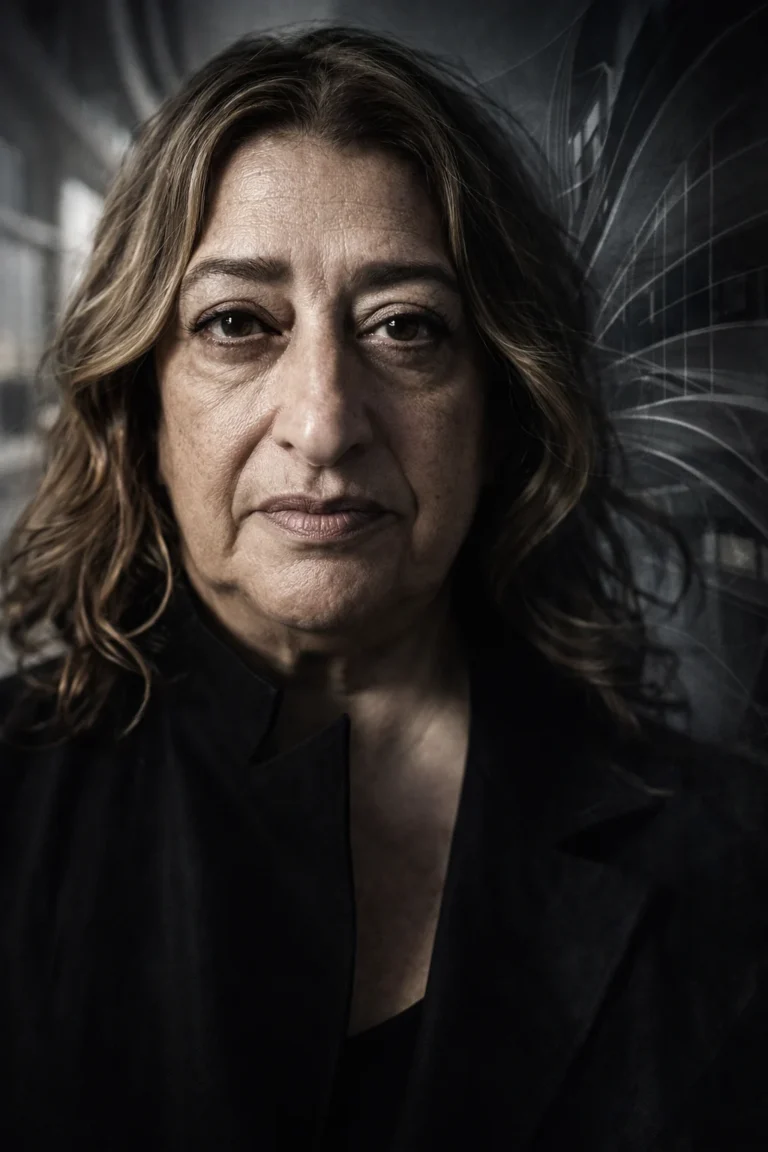
In this storyOpen index
Antoni Gaudí: The Architect Who Made Stone Grow and Was Arrested for Speaking Catalan
His buildings seem to have been constructed by nature, yet behind the universal architect stood a man arrested for refusing to abandon his own language.
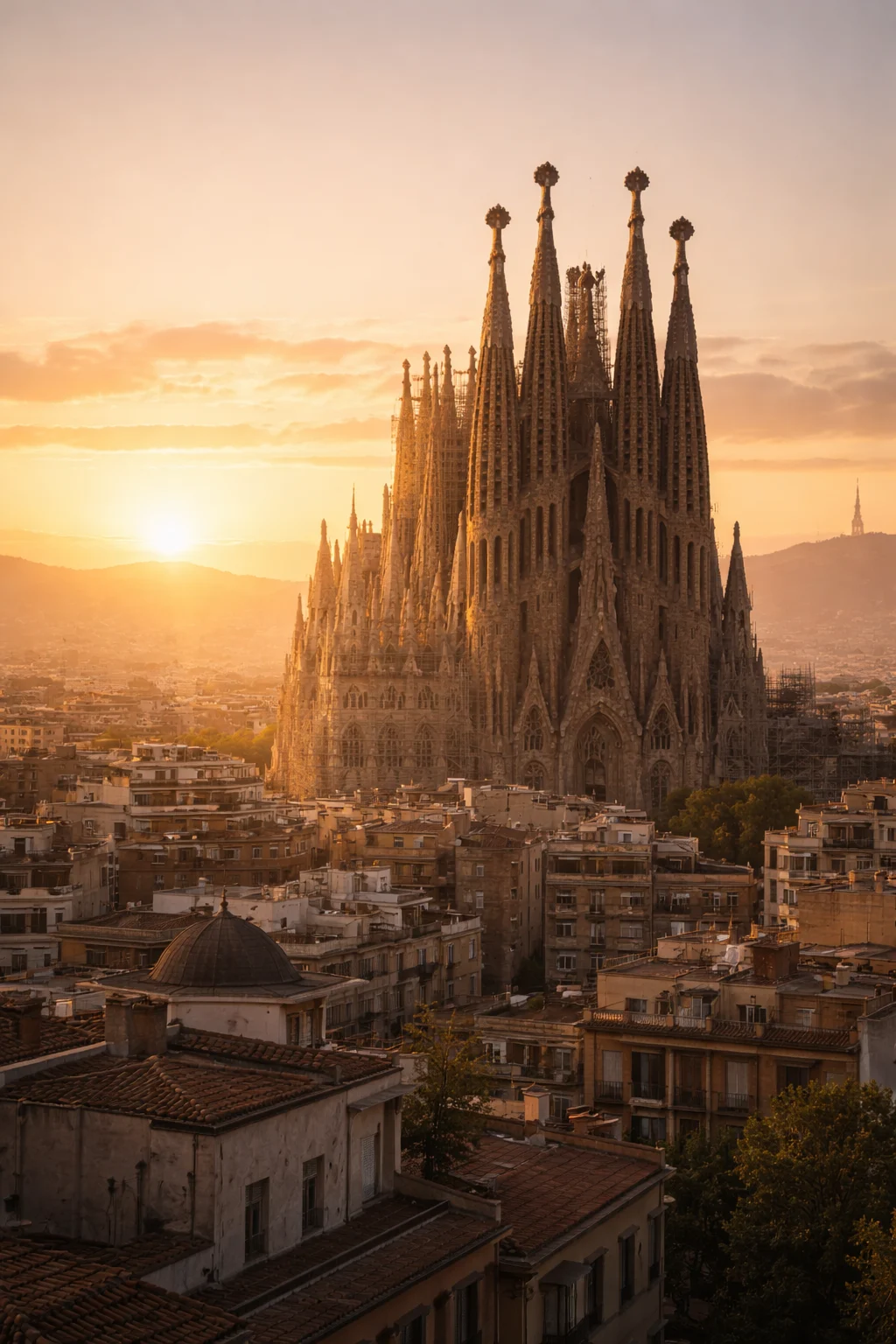
His buildings appear to have been constructed by nature rather than human beings: columns opening like trees, balconies resembling bones, roofs transformed into animals, and façades undulating like wet sand.
Antoni Gaudí did not merely decorate architecture with natural forms. He wanted to discover the geometric laws that allowed a tree, mountain, or skeleton to remain standing and transfer them into stone.
Behind the universal architect, however, was a man deeply attached to Catalan language and culture. In 1924, when he was already a respected figure and seventy-two years old, he was arrested after refusing to answer a police officer in Spanish.
The creator of some of Europe’s most extraordinary buildings was briefly imprisoned for speaking his own language.
Antoni Gaudí on video
Discover this story on our YouTube channel.
A life told through places and turning points

Enter the archive
An authentic object preserved by a cultural institution brings us closer to the world behind this life.
- Collection
- Wikimedia Commons
- Rights
- Public domain
Immediate image source: [1] at the Gaudi and Barcelona Club.
The son of a family of coppersmiths
Antoni Gaudí i Cornet was born on June 25, 1852. Reus and the nearby town of Riudoms have traditionally disputed his exact birthplace, although he was baptized the following day at the church of Sant Pere in Reus.
His father and several of his ancestors were coppersmiths. They constructed copper vessels by transforming flat sheets into three-dimensional objects. Gaudí later maintained that observing the family trade had taught him to imagine bodies in space.
As a child, he experienced rheumatic problems that sometimes made it difficult to walk and play with other children. He spent long periods observing plants, animals, stones, and the forms of the Mediterranean landscape.
This observation did not produce a superficial imitation of leaves and flowers. It taught him that nature rarely uses perfectly straight lines. Tree trunks lean, bones curve, and shells distribute forces through spirals. Much later, Gaudí would convert these solutions into architecture.
He moved to Barcelona in 1868 and eventually entered the Provincial School of Architecture. He was not a conventional student. His academic record combined brilliant results with mediocre ones; he worked as a draftsman for several architects and challenged some of the principles he was taught.
When he qualified in 1878, the school’s director, Elies Rogent, reportedly remarked that he did not know whether they were awarding a degree to a genius or a madman. The sentence is probably a later reconstruction, but it summarizes the reaction Gaudí would provoke throughout his career.

The encounter that transformed his career
Among his first public projects were the lampposts in Barcelona’s Plaça Reial. That same year, he designed a display case for glove manufacturer Esteve Comella, exhibited at the Paris Universal Exposition.
Industrialist Eusebi Güell was impressed by the design and asked to meet its creator. The encounter began a decisive relationship. Güell became Gaudí’s friend, client, and patron, commissioning the Güell Pavilions, Palau Güell, the crypt at Colònia Güell, and the residential development now known as Park Güell.
Güell’s confidence gave the architect opportunities to experiment with materials, ventilation, lighting, geometry, and decorative arts. Gaudí did not conceive a building as a structure to be ornamented afterwards. He designed doors, furniture, railings, handles, chimneys, and circulation systems as parts of a single organism.
Park Güell was intended to become a residential development inspired by British garden cities. The commercial project failed: only two of the planned sixty houses were built. Yet that real-estate failure eventually became one of Barcelona’s most recognizable public spaces.
Its viaducts appear to emerge from the hillside; columns lean to receive structural loads, while fragments of broken ceramic create colored surfaces through the technique known as trencadís. Much of this decorative work involved collaborators such as Josep Maria Jujol, whose contribution should not disappear behind Gaudí’s name.
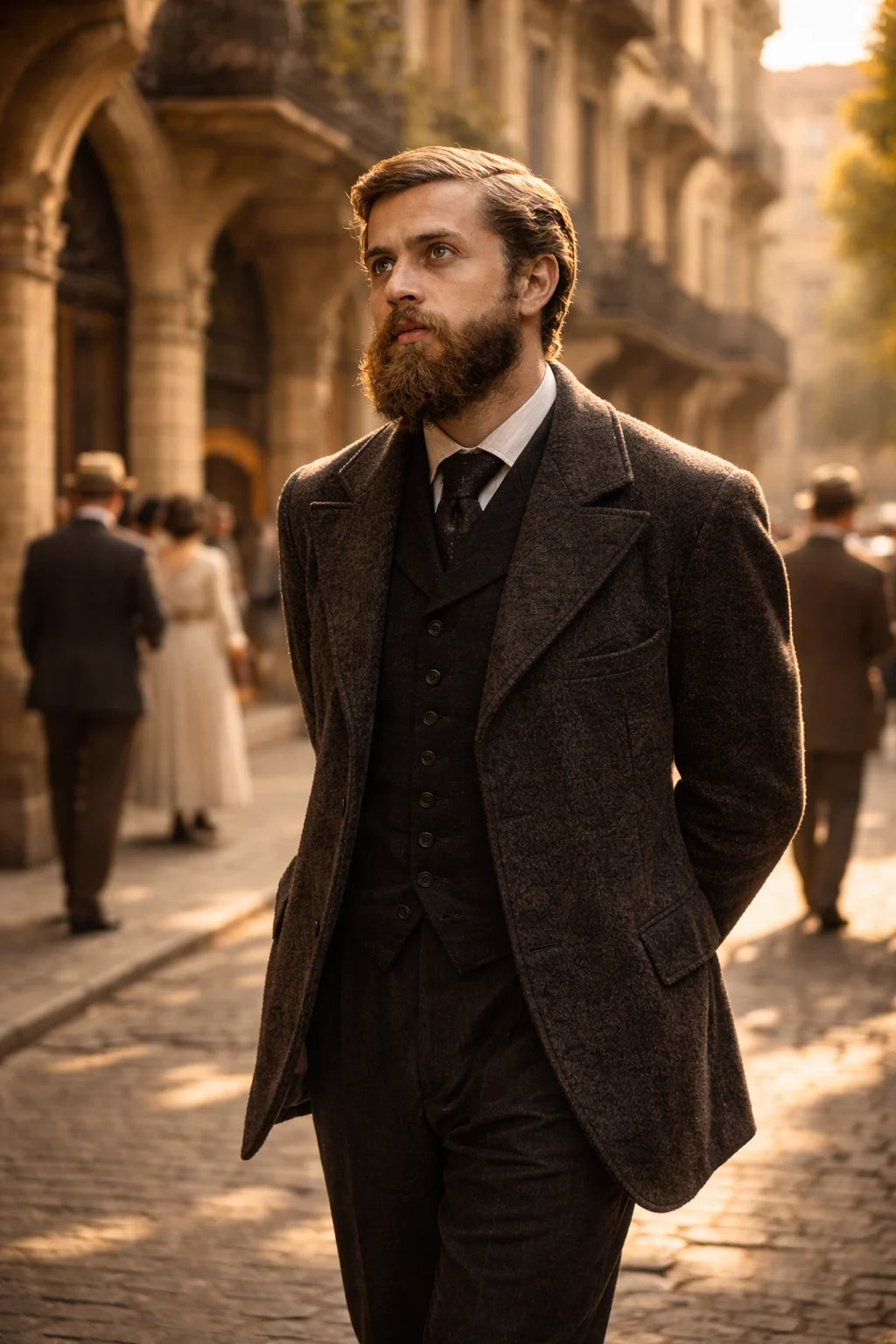
Nature as a structural laboratory
Gaudí has often been portrayed as a visionary who improvised impossible buildings. That description ignores the technical discipline supporting his imagination.
He experimented with catenary arches—the natural curve formed by a chain suspended from both ends. When inverted, the curve produced an arch that transmitted its loads mainly through compression.
To study complex structures, he created models using strings, chains, and small weights. By photographing the model and viewing the image upside down, he could visualize balanced columns, arches, and vaults. It functioned as a form of three-dimensional structural calculation long before computers existed.
He also used hyperboloids, helicoids, hyperbolic paraboloids, and other ruled surfaces. Many could be generated by moving a straight line through space, allowing complex shapes to be constructed through relatively rational methods.
At Casa Batlló, remodeled between 1904 and 1906, light and ventilation were distributed through interior courtyards, graduated openings, and solutions adapted to each floor. The façade may suggest a lake, a marine creature, or the legend of Saint George, but beneath its colors lies rigorous functional planning.
At Casa Milà, known as La Pedrera, he eliminated many interior load-bearing walls through a system of columns and beams. This made it possible to modify the apartments’ layouts. Its celebrated rooftop was not merely a sculptural composition: it concealed chimneys, ventilation shafts, and stairway exits.
The extraordinary was never separate from the useful.

A church he did not begin
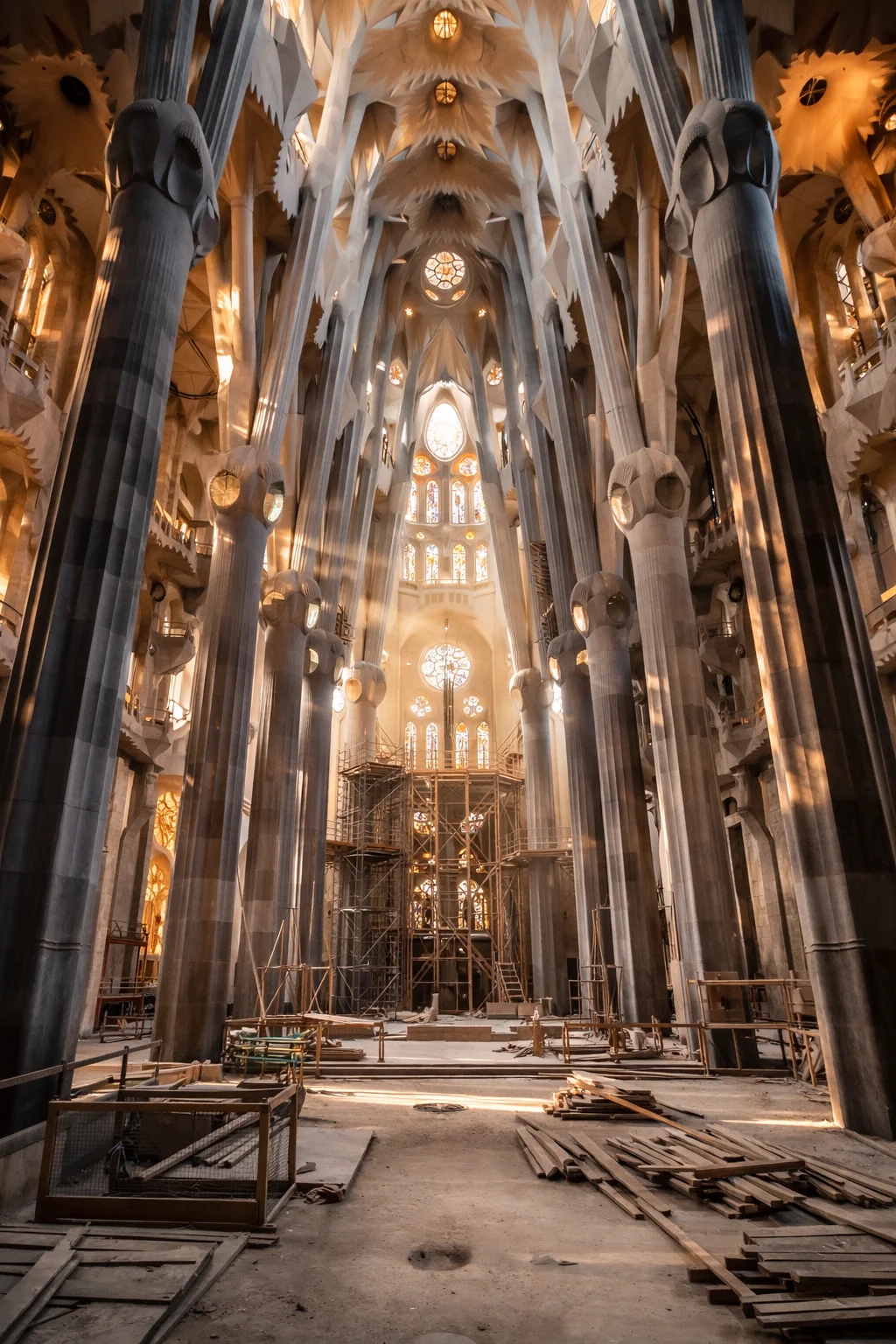
Construction of the Expiatory Temple of the Sagrada Família began in 1882 under architect Francisco de Paula del Villar. Gaudí assumed control of the project the following year.
He was therefore neither the founder of the building nor the designer of its first stone. He inherited a neo-Gothic church already under construction and gradually transformed it into something entirely different.
He envisioned a church with five naves, multiple towers, and three monumental façades devoted to the Nativity, Passion, and Glory. The central tower of Jesus Christ was to rise above the others but remain slightly lower than Barcelona’s Montjuïc hill: in his conception, a human creation should not surpass the work of God.
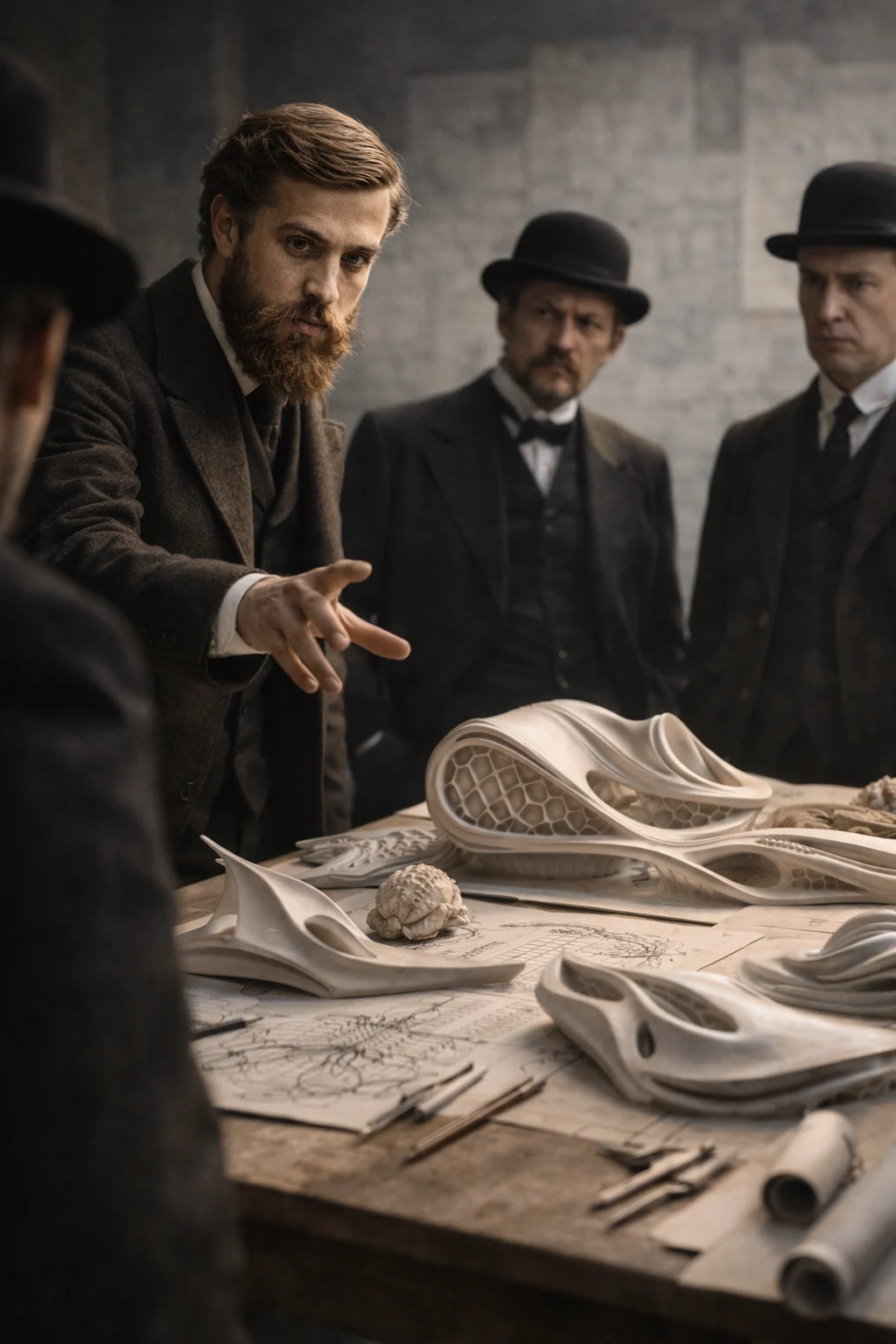
Gaudí knew that he would not live to see the church completed. Instead of relying exclusively on conventional drawings, he developed plaster models at different scales to communicate forms and proportions to those who would continue the work.
As he grew older, his religious commitment became more intense and his lifestyle more austere. He rejected major new commissions and devoted his final years exclusively to the Sagrada Família. In 1925, he moved into the workshop beside the church.
This final image—the impoverished, isolated architect living inside his unfinished building—should not be projected onto his entire life. In his youth, Gaudí dressed carefully, participated in Barcelona’s cultural life, and designed homes for some of its wealthiest families. His austerity was an evolution, not a permanent condition.
The day he refused to change languages
On September 11, 1924, Catalonia was under the dictatorship of Miguel Primo de Rivera. The regime had restricted the public use of Catalan and prohibited various expressions of national identity.
Gaudí went to the church of Saints Justus and Pastor to attend a Mass commemorating the Catalans killed during the fall of Barcelona in 1714. The authorities had prevented the service and were controlling access to the building.
When an officer questioned him, Gaudí answered in Catalan. The policeman ordered him to speak Spanish, but the architect continued using his own language. He was arrested and taken to a police station.
According to surviving accounts, Gaudí explained that his profession required him to pay taxes but did not require him to stop speaking his language. After several hours in custody, he was released upon paying a fine or bail of fifty pesetas (Bellesguard Gaudí, 2025; Van Hensbergen, 2001).
The incident did not make Gaudí a professional politician. He had rejected proposals to seek public office, and his principal commitments were expressed through religion, architecture, and culture. Nevertheless, the arrest demonstrates that his Catalan identity was more than decorative symbolism.
At seventy-two, facing a police officer under a dictatorship, he knew that he could avoid trouble by speaking a few words in Spanish. He chose not to do so.
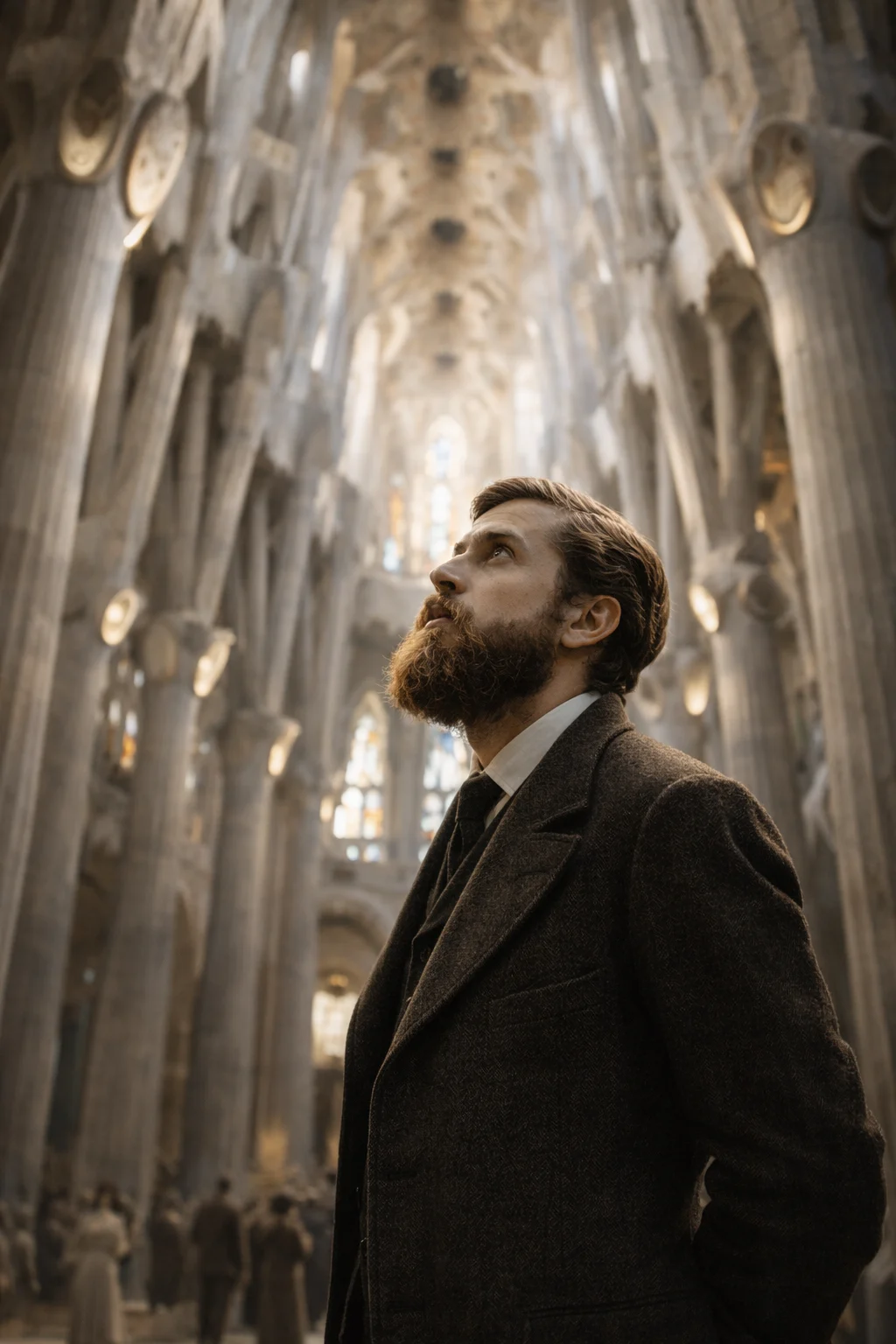
The accident and the legend of the beggar
On June 7, 1926, Gaudí was struck by a tram while walking through Barcelona. He was heading toward the church of Sant Felip Neri, which he visited regularly.
His clothes were plain, and he carried no identification. He was not immediately recognized and was eventually taken to the Hospital de la Santa Creu, an institution that primarily served the poor. Later accounts added dramatic details—several taxi drivers supposedly refusing to carry him or crowds deliberately abandoning him—that cannot all be verified with certainty.
What is documented is that his identity was not immediately established. When his collaborators found him, they considered moving him to a private clinic. Gaudí preferred to remain at the hospital.
He died on June 10, 1926, three days after the accident. Thousands of people accompanied the funeral procession. He was buried in the crypt of the Sagrada Família, the building to which he had devoted more than four decades.
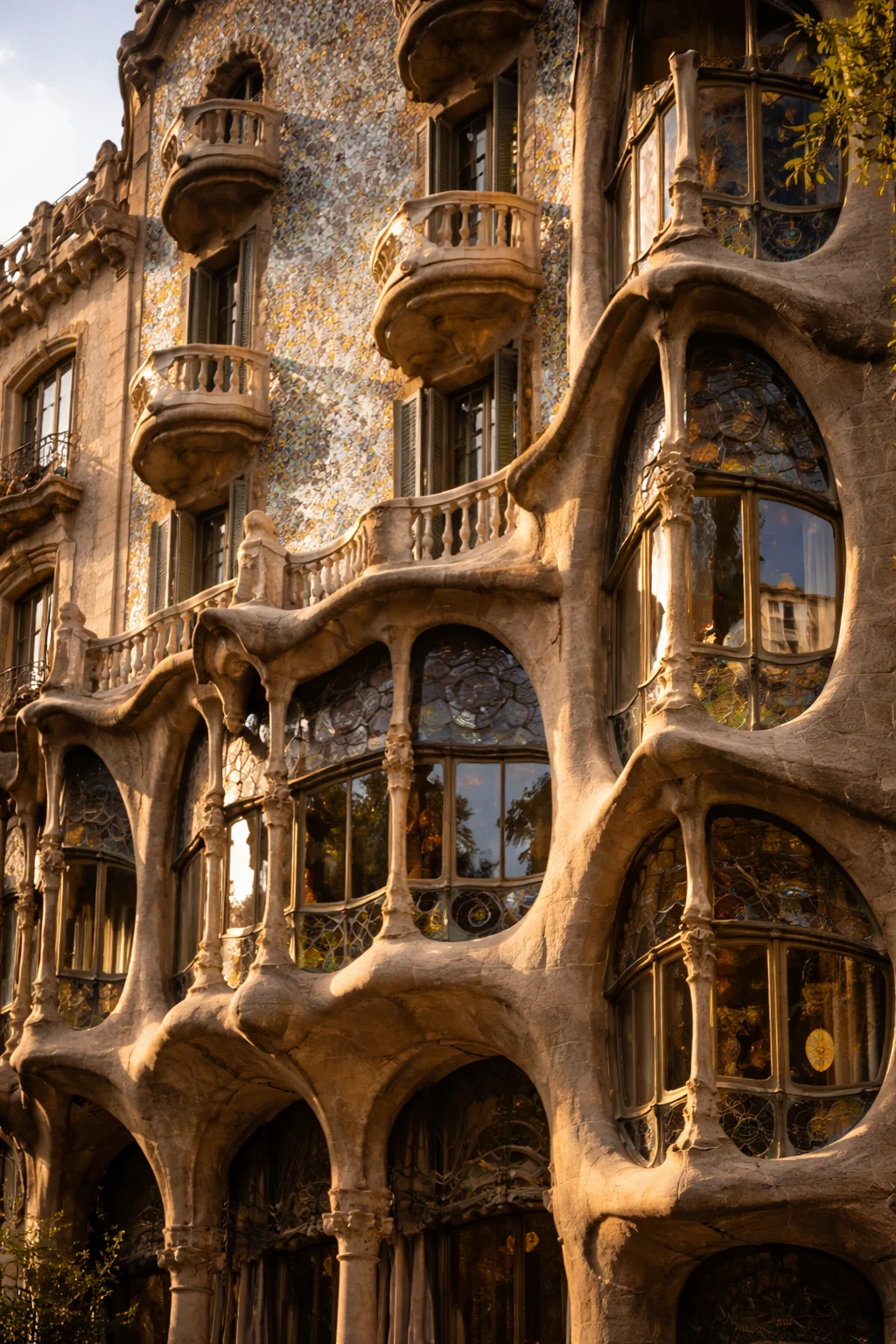
During the Spanish Civil War, in 1936, the church workshop was attacked and many of his plans and plaster models were destroyed. His collaborators and later generations had to reconstruct fragments and study photographs to interpret the project.
The present Sagrada Família is therefore not a mechanical reproduction of a completely finished design. It is the continuation of an idea through surviving documents, restored models, and decisions made after its creator’s death.
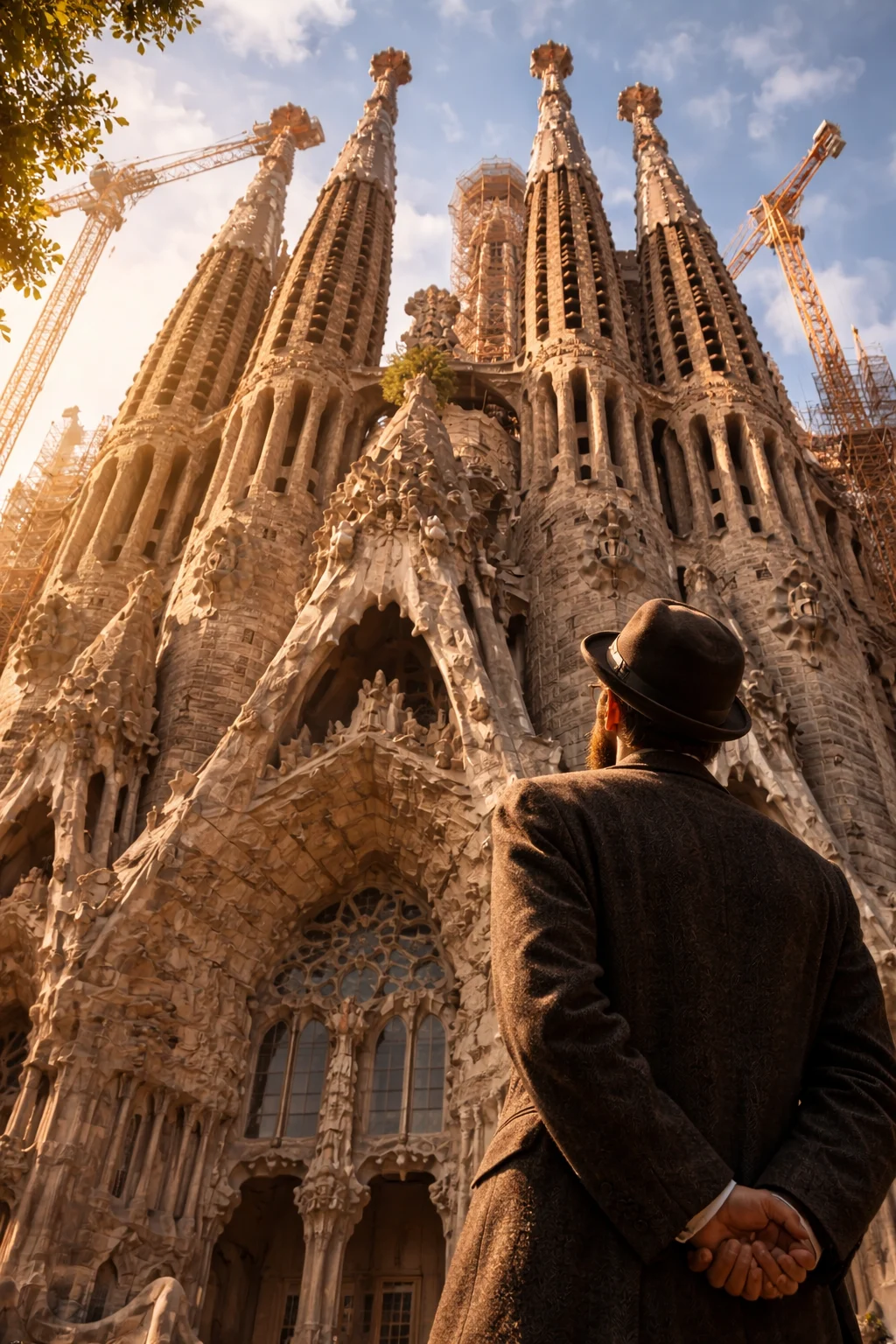
The architect who did not copy trees
Gaudí was not a naïve artist who created strange buildings through fantasy alone. He was an obsessive observer, a structural experimenter, and the director of teams that included craftspeople, engineers, sculptors, and architects.
His buildings appear alive because he understood that nature does not separate structure from appearance. In a bone, the beautiful form is also the form that resists pressure. In a tree, every branch follows the path of a force. Gaudí attempted to make stone obey those same laws.
Seven of his works form part of UNESCO’s World Heritage List, recognized for their exceptional contribution to the development of architecture and construction technology during the late nineteenth and early twentieth centuries.
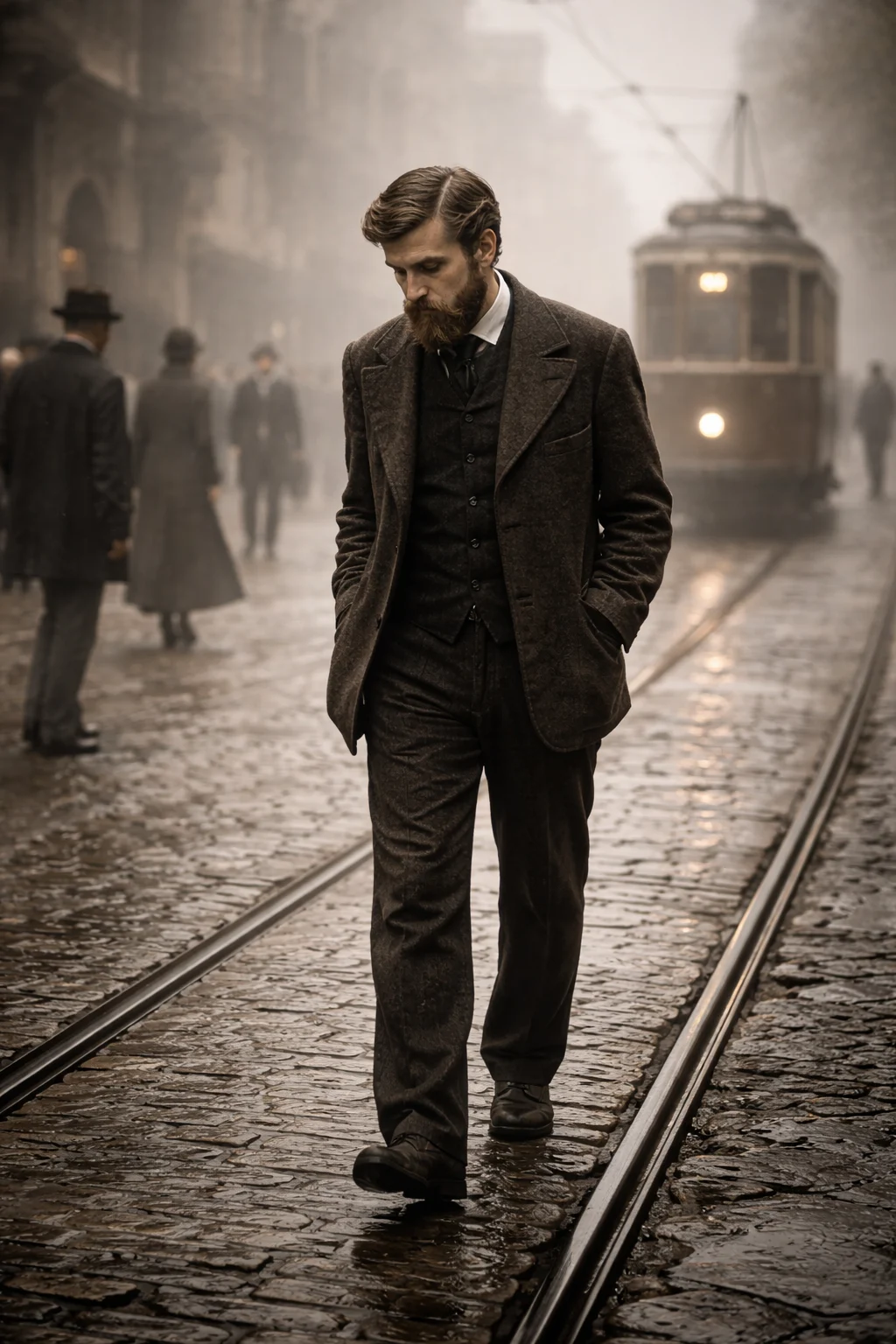
The story of his arrest, however, reminds us that his buildings did not arise from geometry alone. They also grew from an identity, a language, a territory, and a will that was difficult to bend.
Antoni Gaudí made stone appear to grow. And when others attempted to dictate the words he should use, he demonstrated that he was equally unwilling to adopt a form imposed upon him.
References
- Bassegoda Nonell, J. (1989). El gran Gaudí. Ausa.
- Bellesguard Gaudí. (2025, September 11). Gaudí’s Catalan identity.
- Bergós, J. (1999). Gaudí, l’home i l’obra. Lunwerg Editores.
- Crippa, M. A. (2003). Antoni Gaudí, 1852–1926: From nature to architecture. Taschen.
- Fundació Junta Constructora del Temple Expiatori de la Sagrada Família. (n.d.). Antoni Gaudí: Humanism and spirituality.
- UNESCO World Heritage Centre. (n.d.). Works of Antoni Gaudí.
- Van Hensbergen, G. (2001). Gaudí: A biography. HarperCollins.
More from this collection
Adolf Loos: The Architect Who Erased Ornament and Hid Luxury Behind the Walls
Read story →
Frank Lloyd Wright: The Architect Who Wanted Buildings to Grow from the Earth
Read story →