In this storyOpen index
Marilyn Monroe: The Star Who Challenged Hollywood—and Won
In 1955, she left Hollywood, formed her own production company, and forced one of its most powerful studios to renegotiate her terms.
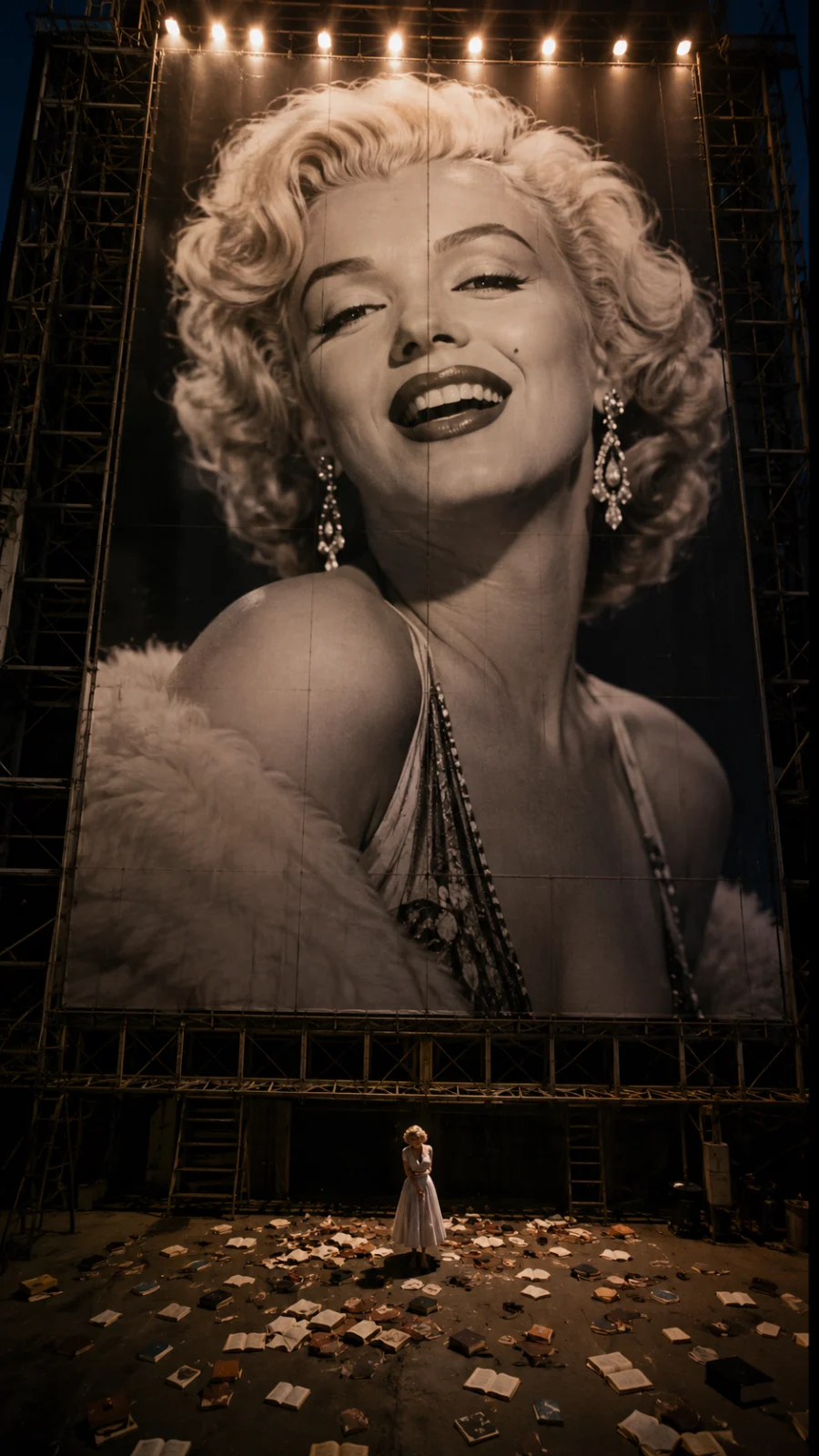
In January 1955, Marilyn Monroe did something the major studios never expected from the woman they had transformed into a sex symbol: she walked away from Hollywood.
20th Century-Fox intended to keep assigning her “dumb blonde” roles while paying her considerably less than other stars capable of generating similar profits. Monroe refused another film she considered mediocre, was suspended by the studio, and disappeared from California.
While executives assumed she would return defeated, she settled in New York, studied acting, and established Marilyn Monroe Productions. Less than a year later, Fox had to negotiate with the actress it had treated as a replaceable product.
The woman movies presented as incapable of understanding what was happening around her had just defeated one of Hollywood’s most powerful studios.
Marilyn Monroe on video
Discover this story on our YouTube channel.
A life told through places and turning points
The child who learned to transform herself
Marilyn Monroe was born Norma Jeane Mortenson in Los Angeles on June 1, 1926. During her youth, she also used the surname Baker, taken from an earlier marriage of her mother.
Gladys Baker experienced severe mental illness and could not provide her daughter with a stable home. Norma Jeane spent part of her childhood with foster families and lived for a time at the Los Angeles Orphans Home. The later image of Marilyn as a woman desperately searching for security was not created entirely by publicity: her childhood was marked by separation, displacement, and uncertainty.
In 1942, at the age of sixteen, she married James Dougherty. The marriage allowed her to avoid returning to the foster-care system when the family with whom she was living had to move. It was not simply the perfect romantic union suggested in some later accounts but also a practical solution to the possibility of once again losing her home (Banner, 2012).
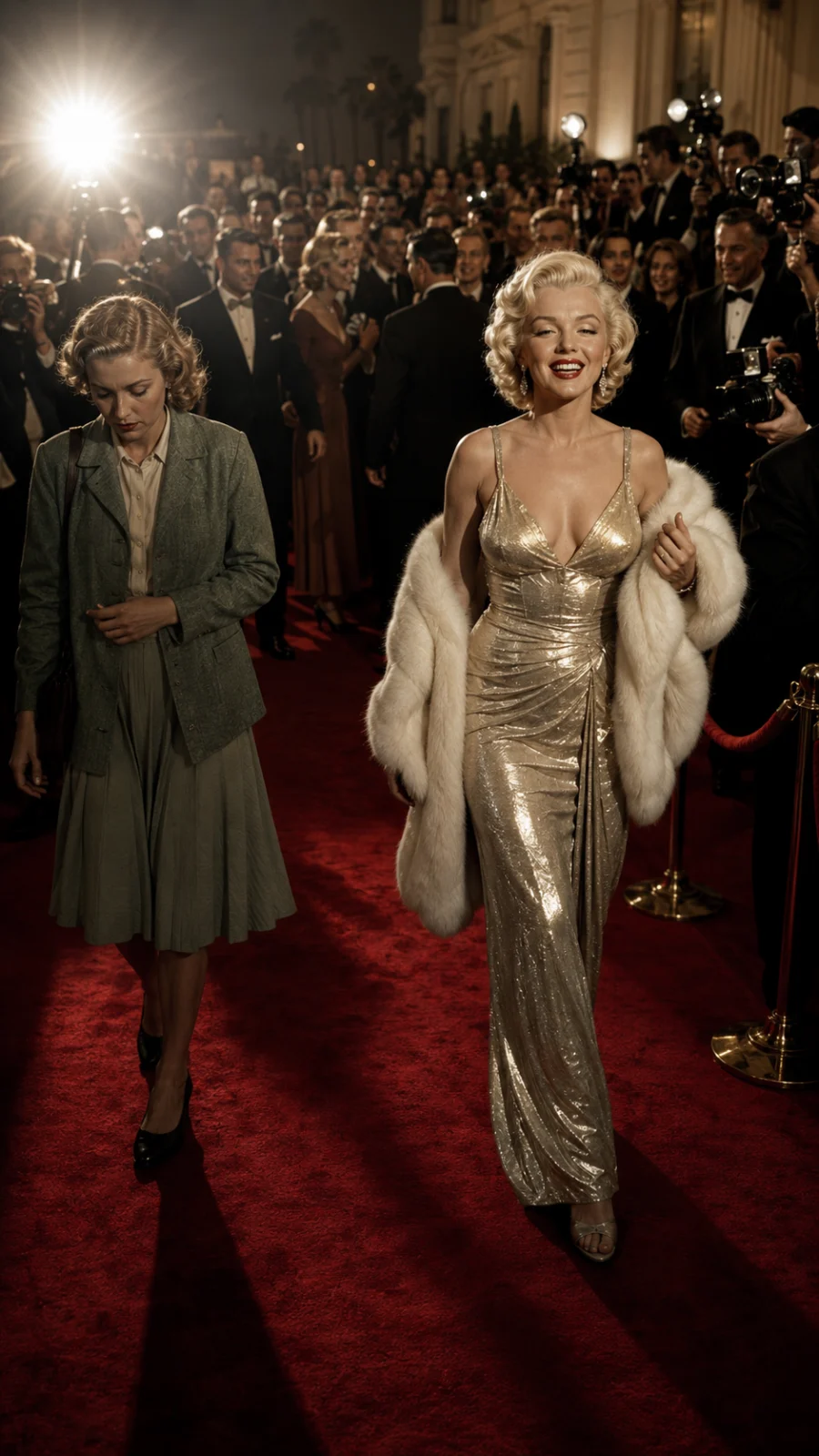
During the Second World War, Dougherty entered the Merchant Marine, and Norma Jeane began working in a factory connected to military production. Photographer David Conover encountered her there while producing a feature on women workers. The resulting photographs helped launch her modeling career.
The brown-haired young woman learned to pose, progressively lightened her hair, and studied the camera’s response to every movement of her face. When she signed her first film contract with 20th Century-Fox in 1946, she adopted the name Marilyn Monroe (Smithsonian American Women’s History Museum, n.d.).
Marilyn was not discovered as a fully formed creation. She actively participated in inventing herself.
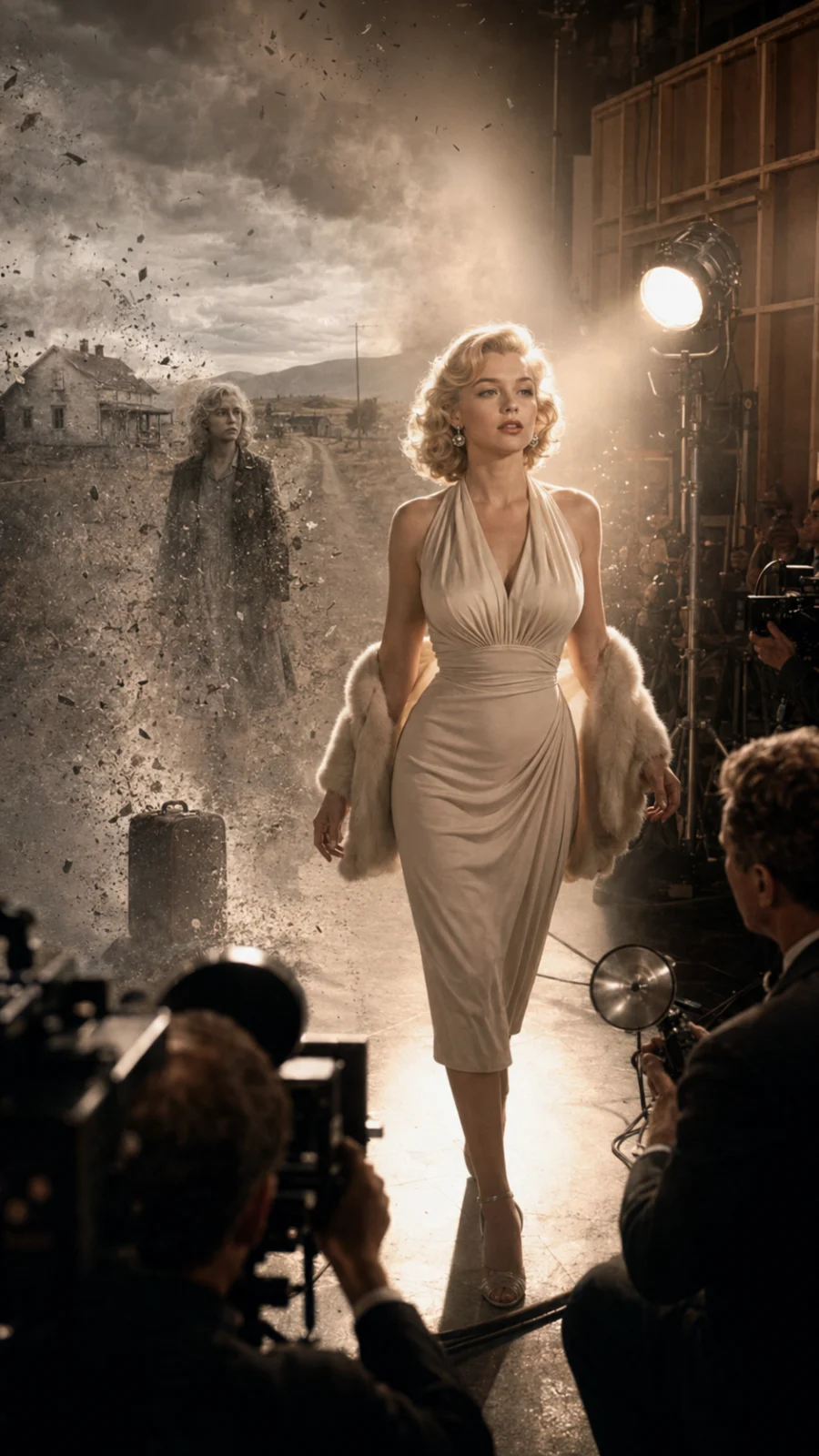
Creating a character in order to work
Her first contracts were short and did not guarantee an immediate career. After several minor appearances, she attracted attention in The Asphalt Jungle and All About Eve, both released in 1950.
In 1953, Niagara, Gentlemen Prefer Blondes, and How to Marry a Millionaire transformed her into one of the most recognizable figures in American cinema. Her walk, breathy voice, carefully placed pauses, and apparent innocence became elements of an extraordinarily profitable public character.
The problem was that Hollywood began confusing that character with the woman performing it.
Monroe experienced emotional difficulties, suffered from anxiety, and could arrive late on film sets. But she also studied scripts, repeated scenes until she found the tone she wanted, and understood exactly how to produce a comic effect. The “dumb blonde” was not evidence of her intellectual limitations. It was an acting creation.
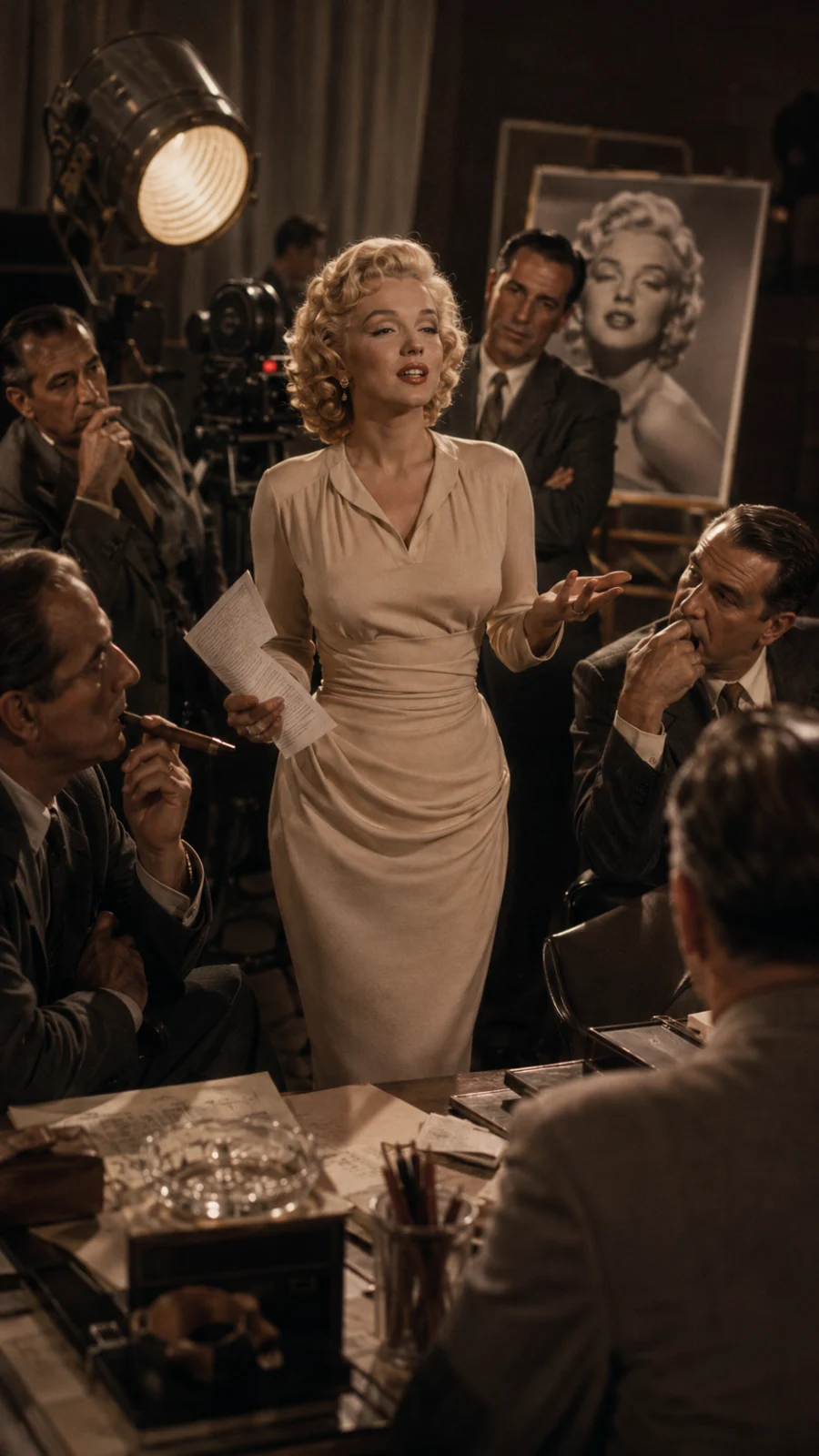
In Gentlemen Prefer Blondes, her character appears interested only in diamonds, but Monroe introduces a combination of calculation, vulnerability, and awareness of economic power. In How to Marry a Millionaire, she uses her beauty as part of the joke while allowing the audience to see the insecurity concealed behind it.
The studios profited from that image but did not want to give her much control over its development.
The rebellion Hollywood did not expect
By late 1953, Monroe was one of Fox’s biggest attractions, yet she remained bound by a contract signed before she became famous. The studio could select her projects, suspend her when she rejected a role, and extend the contract for the duration of that suspension.
When she refused to appear in another musical comedy she considered repetitive, Fox suspended her. The studio assumed she would return because her contract prevented her from legally working for another producer.
Monroe responded unexpectedly. In 1954, she moved to New York and established Marilyn Monroe Productions with photographer Milton H. Greene. The company was publicly announced in January 1955.
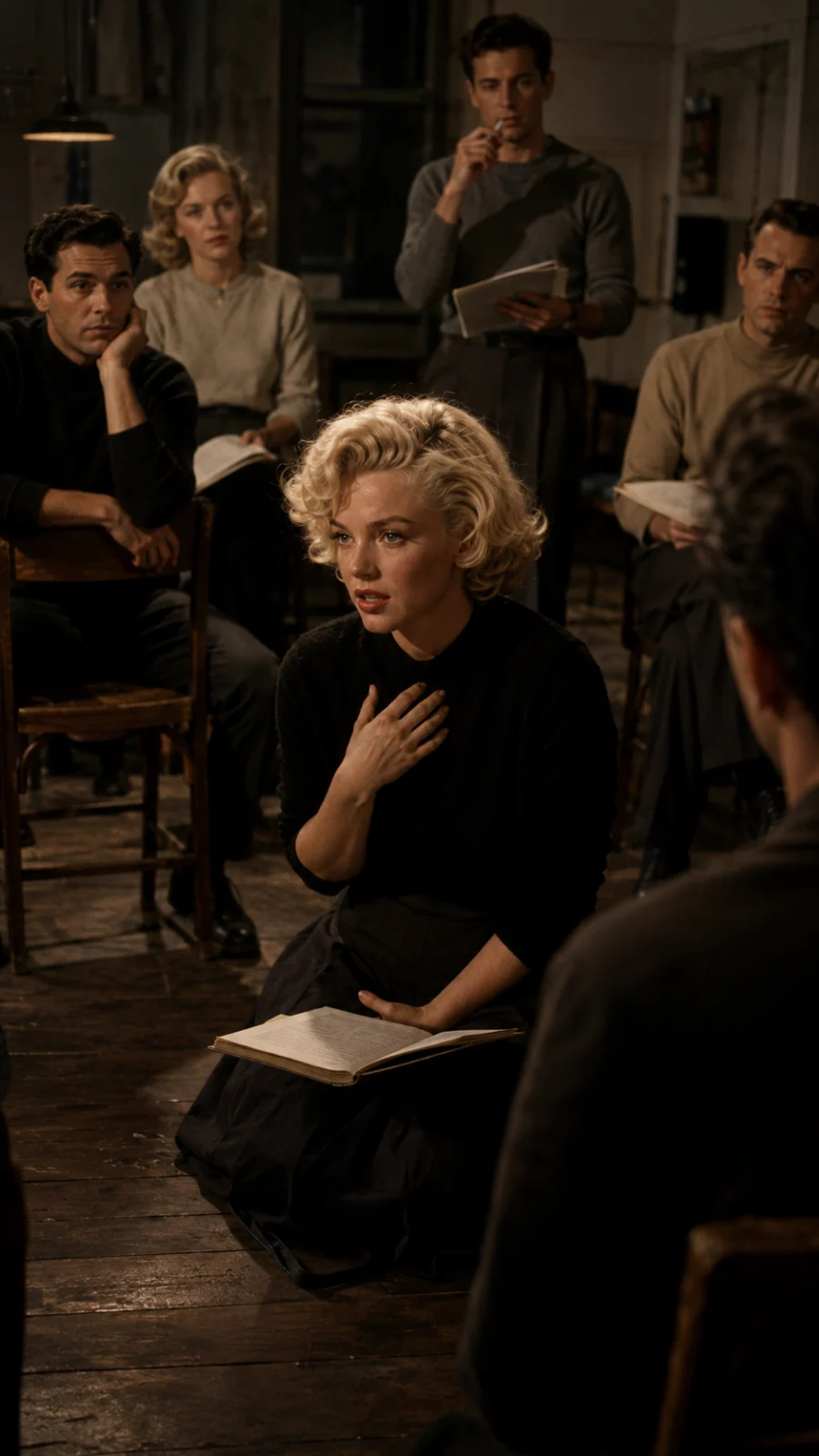
Creating a company did not automatically free her from her contract, but it changed the negotiation. Monroe was no longer presenting herself solely as an employee. She was demanding authority over scripts, directors, and the use of her image. Surviving correspondence concerning the dispute shows that the company became an important tool in her pursuit of better terms (Christie’s, 2019).
The decision also had an artistic purpose. In New York, she studied with Constance Collier and became associated with Lee Strasberg’s Actors Studio. She wanted to prove that she could portray characters more complicated than those Fox offered her.
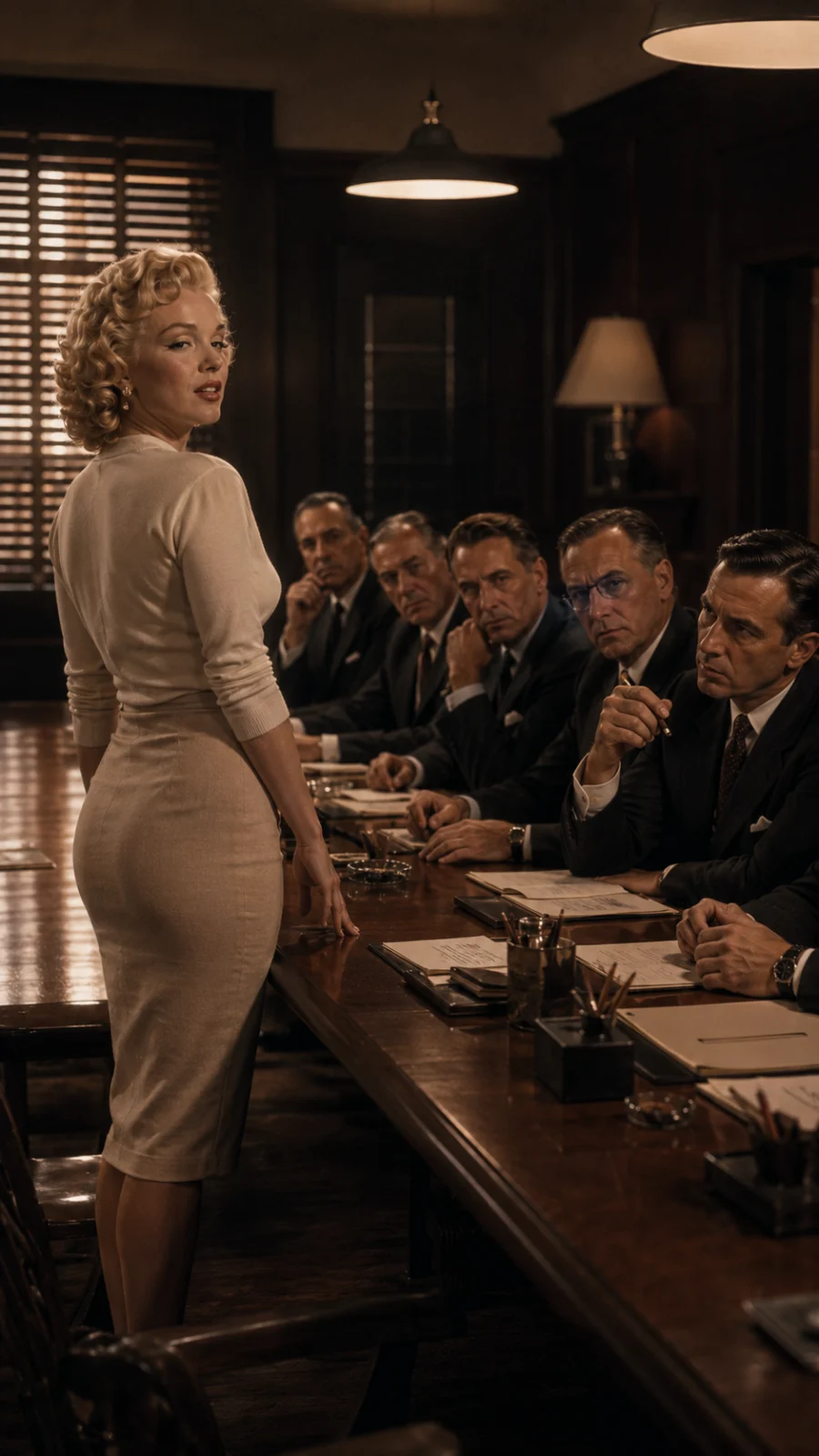
By the end of 1955, the studio gave way. Her new agreement substantially increased her compensation and granted her greater participation in choosing projects and collaborators. She did not gain complete freedom, and some terms continued to cause disagreements, but she had accomplished something unusual under the rigid studio system: forcing a major company to recognize her creative power.
The films that followed her victory
The first important result of this new period was Bus Stop in 1956. Monroe played Cherie, a singer of limited talent who dreams of reaching Hollywood. She reduced the glamour of her appearance, used a regional accent, and allowed the character to appear exhausted, frightened, and resilient.
Her performance earned praise and a Golden Globe nomination. It did not completely abandon her earlier image, but it demonstrated that she could work with that persona without remaining imprisoned inside it.
Marilyn Monroe Productions subsequently produced The Prince and the Showgirl, released in 1957 and co-starring and directed by Laurence Olivier. The production was marked by tension, but the film’s existence proved that the company had not been merely a publicity stunt.
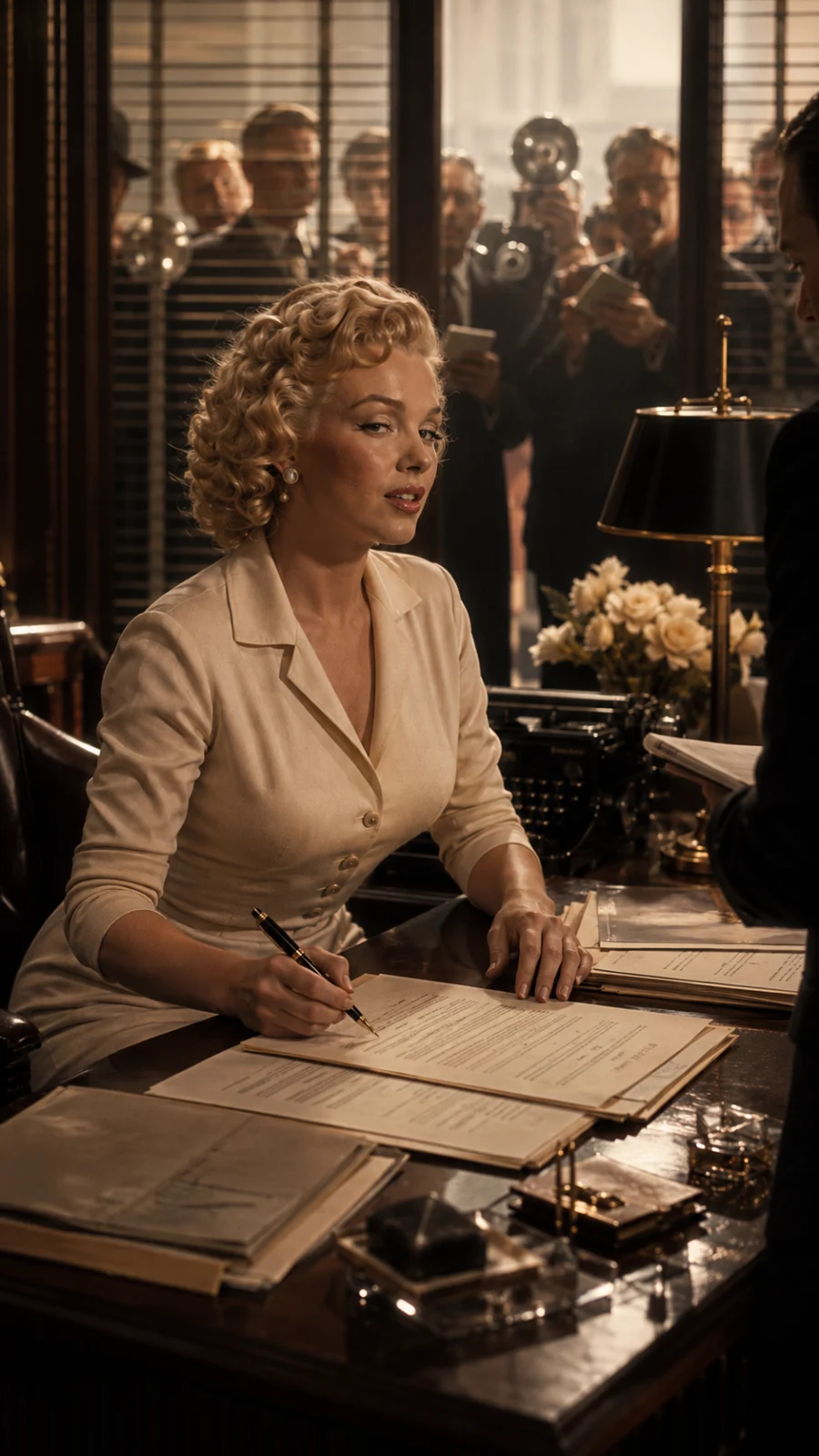
Her greatest acting triumph came with Some Like It Hot in 1959. The production was difficult: Monroe struggled to remember lines, arrived late, and required numerous takes. Yet the performance preserved onscreen displays extraordinary comic precision. She won the Golden Globe for best actress in a comedy or musical, the principal American award she received for an acting performance (Golden Globes, n.d.).
Historical accounts often preserve the difficulties of the production as proof that Monroe was irresponsible while forgetting that the final result became one of cinema’s most influential comic performances.
The person behind the image
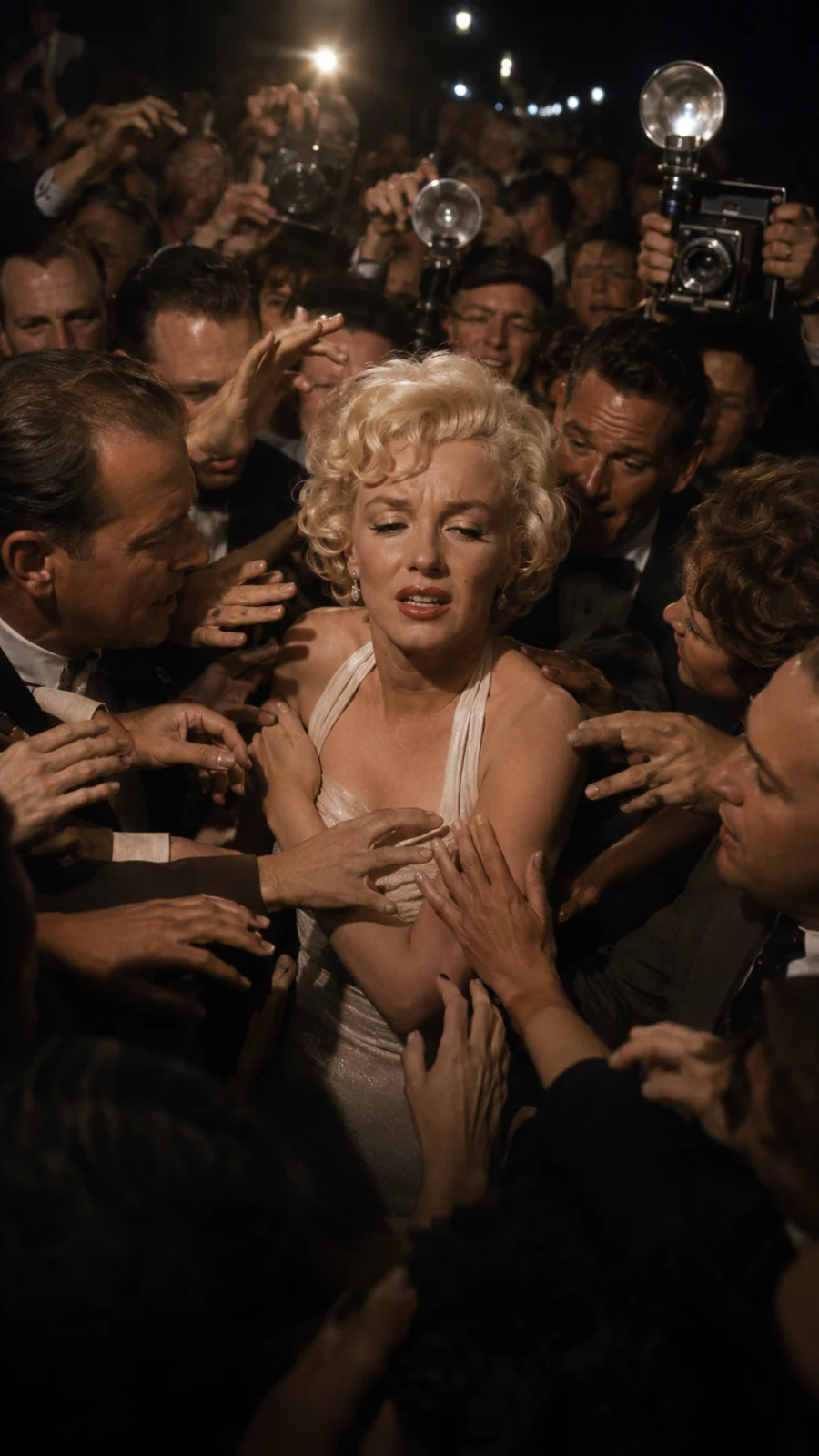
Her private life was exploited as intensely as her career. Her marriages to baseball player Joe DiMaggio and playwright Arthur Miller became public spectacles. Her health problems, lost pregnancies, and reliance on medication were treated as entertainment.
Monroe wanted to be taken seriously, yet she also understood that her power came partly from the image that frustrated her. She could not completely abandon Marilyn without losing the space Marilyn had won for Norma Jeane.
In The Misfits, released in 1961 and written by Miller, she portrayed Roslyn, a vulnerable woman who refuses to accept cruelty simply because others regard it as customary. It became her final completed feature film. The performance contains little of the caricature audiences expected and suggests a dramatic phase she was never able to develop fully.
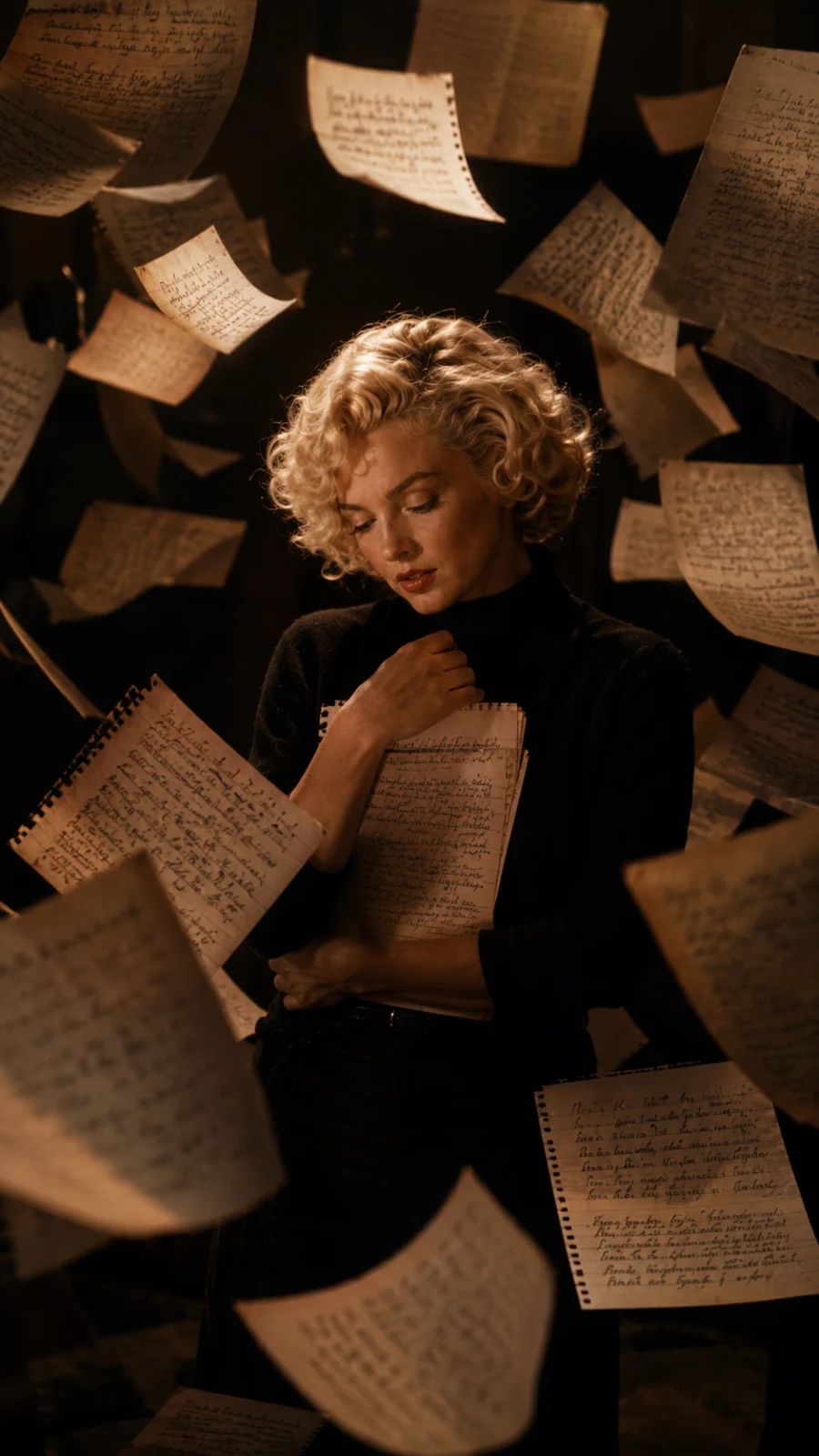
In 1962, Monroe began filming Something’s Got to Give. Absences related to her health delayed production, and Fox dismissed her. The studio publicly promoted the image of an actress who was impossible to control, although it later began negotiations to rehire her.
A death surrounded by theories
Marilyn Monroe died at her Brentwood home during the night of August 4–5, 1962. She was thirty-six. The autopsy identified acute barbiturate poisoning as the cause, and the official investigation classified her death as a “probable suicide” (National Library of Medicine, n.d.).
No note was found. That absence, changes in some witness accounts, and Monroe’s associations with powerful people encouraged theories that she had been murdered. Later official reviews, however, found insufficient evidence to support the involvement of the Kennedy family, organized crime, or intelligence agencies.
The designation “probable suicide” states the official conclusion; it does not provide absolute knowledge of her intentions. Some researchers have defended the possibility of an accidental overdose or self-destructive behavior without a fully defined decision to die. The historically responsible approach is to acknowledge that uncertainty without turning it into an unsupported conspiracy.
More than a photograph
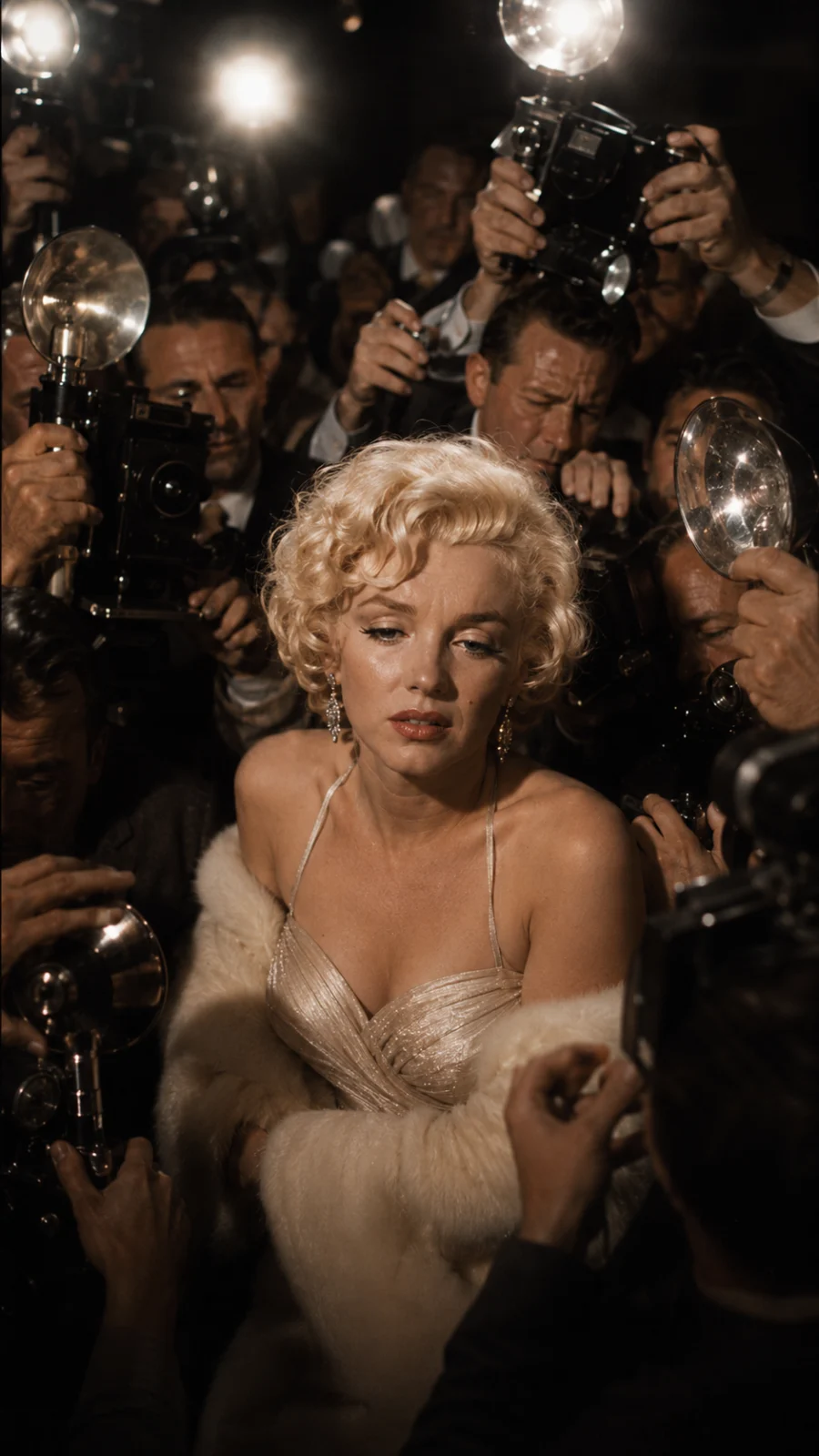
Marilyn Monroe made twenty-nine films during a career lasting approximately fifteen years and never received an Academy Award nomination (National Portrait Gallery, 2022). Her face became more celebrated than her work, and her death became more discussed than her professional decisions.
Her confrontation with Fox requires us to look at her story again.
Monroe understood that being famous did not mean possessing power. To obtain it, she had to refuse to work, leave Hollywood, establish a company, and risk the career she had spent years building.
The film industry manufactured Marilyn Monroe, but it never controlled her completely. Behind the childish voice and the dress lifted by the wind was an actress who studied, negotiated, and understood the economic value of her image.
Hollywood wanted to preserve her as the woman who understood nothing. One of the least remembered events of her life demonstrates precisely the opposite: she understood the system so well that she forced it to change her terms.
References
- Banner, L. W. (2012). Marilyn: The passion and the paradox. Bloomsbury.
- Christie’s. (2019). Correspondence between Marilyn Monroe and Twentieth Century-Fox.
- Golden Globes. (n.d.). Marilyn Monroe.
- National Library of Medicine. (n.d.). Death of Marilyn Monroe.
- National Portrait Gallery. (2022, February 11). And the winner is… Marilyn Monroe!.
- Smithsonian American Women’s History Museum. (n.d.). Marilyn Monroe: Hollywood icon.
More from this collection
Alain Delon: Cinema’s Most Beautiful Man Turned His Face Into a Threat
Read story →
Romy Schneider: The Actress Who Escaped a Princess and Lent Her Name to a Rebellion
Read story →