In this storyOpen index
Sara Montiel: The Woman Who Returned from Hollywood to Transform Desire in Spanish Cinema
Sara Montiel was not the first Spanish actress to work in Hollywood. Performers including Conchita Montenegro, Catalina Bárcena, and Rosita Díaz had appeared in American productions before her. Montiel’s achievement was different: she built a career across Spain, Mexico, and the United States and returned as a star capable of negotiating her image, singing in a voice that defied convention, and transforming a modest film into an international phenomenon.
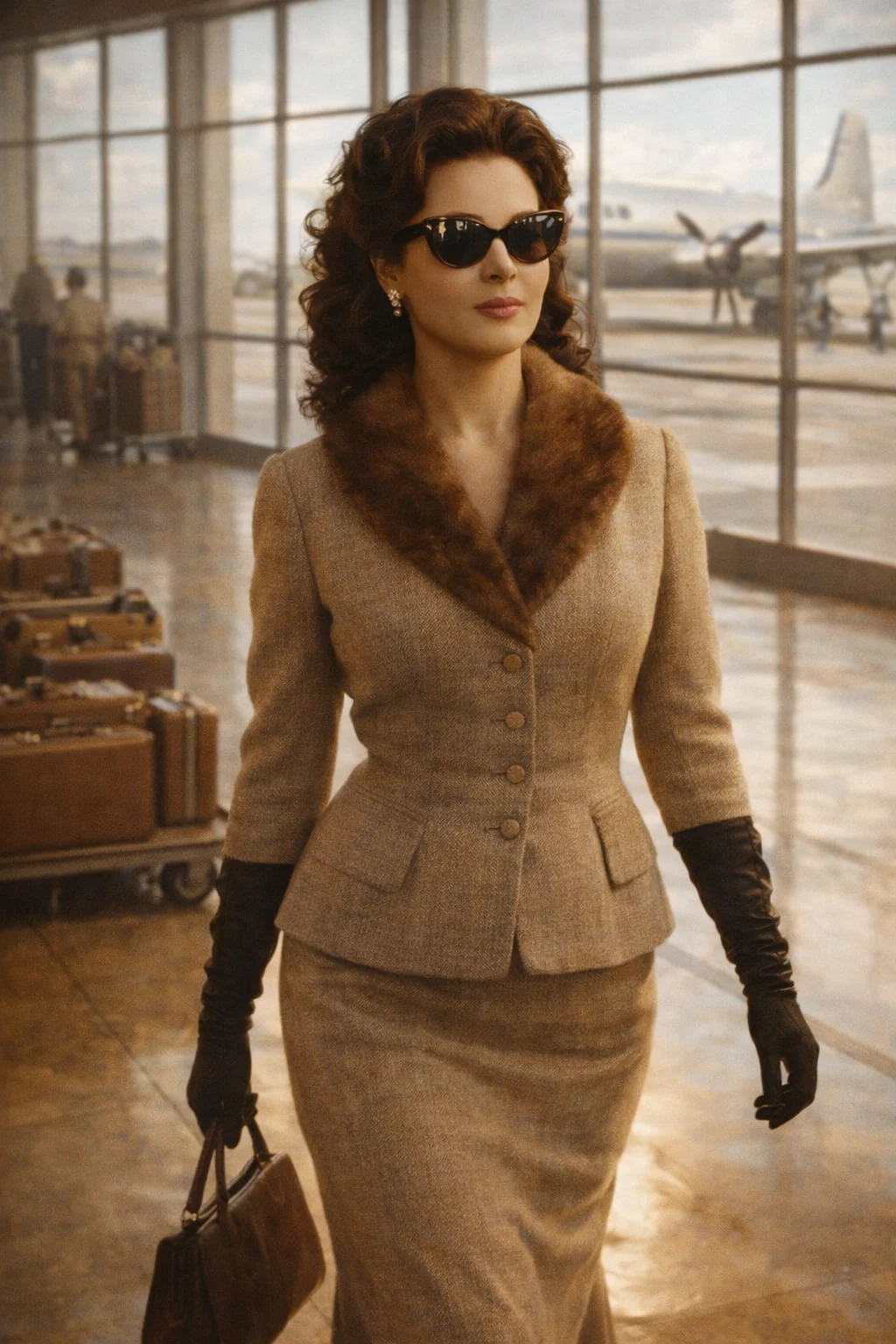
Sara Montiel was not the first Spanish actress to work in Hollywood. Performers including Conchita Montenegro, Catalina Bárcena, and Rosita Díaz had appeared in American productions before her. Montiel’s achievement was different: she built a career across Spain, Mexico, and the United States and returned as a star capable of negotiating her image, singing in a voice that defied convention, and transforming a modest film into an international phenomenon.
During the Franco dictatorship, when the official model of femininity emphasized obedience, domesticity, and modesty, Montiel appeared in close-up smoking, desiring, and making decisions. Her characters might be punished by melodramatic plots, but she controlled the screen.
Over time, television reduced much of her history to cigars, jewelry, extravagant remarks, and romances. Behind “Saritísima” disappeared a woman who understood something essential very early: an actress could use stardom not merely to be observed but to control how she wanted to be seen.
Sara Montiel: From Hollywood to the Cuplé
A Life Told Across Three Film Industries
The Songs of El último cuplé
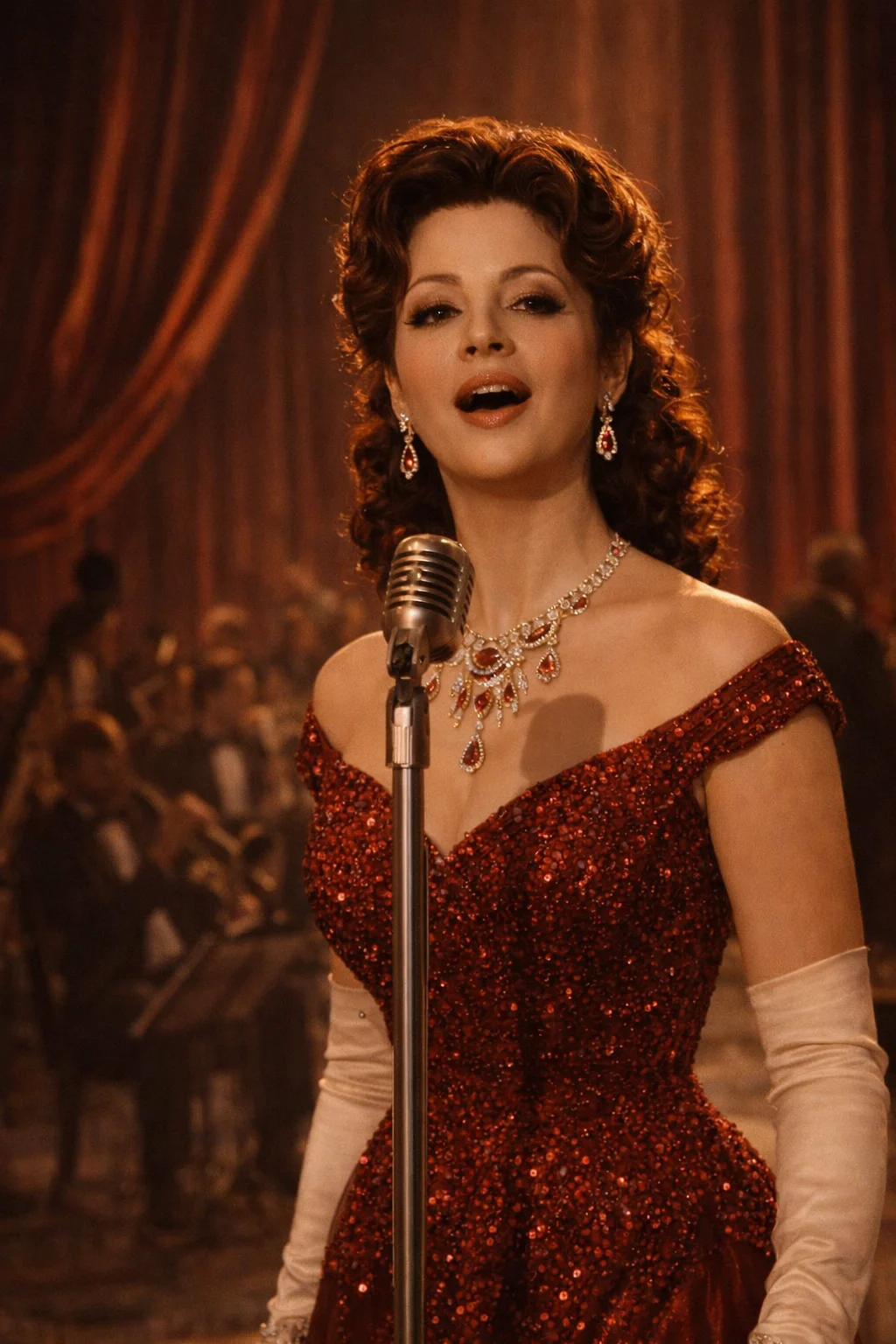
Spain’s National Library catalogues the record of songs from the film. This image is a reconstruction, not the sleeve of that item.
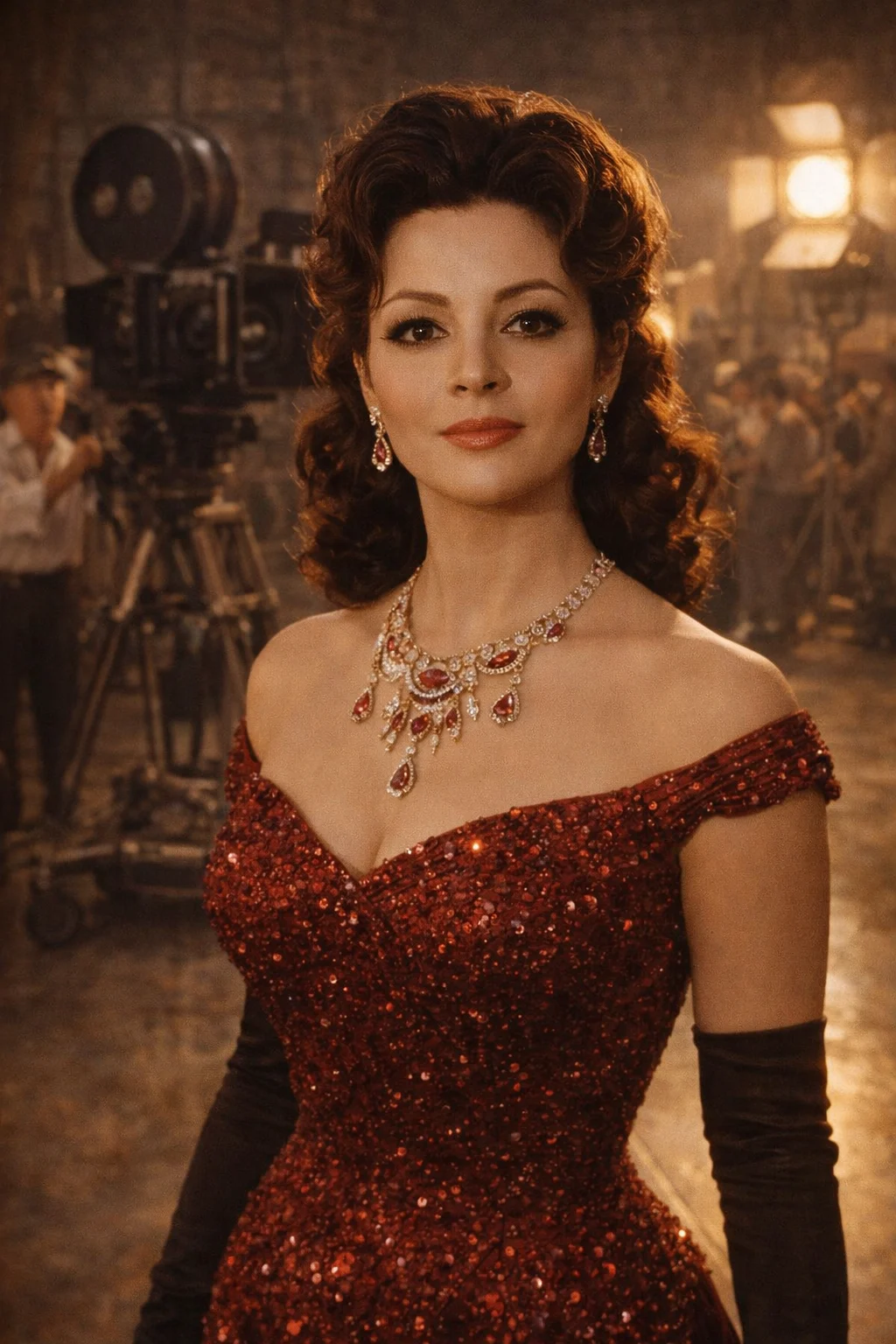
AI-generated visual reconstruction; not a historical document.
From Antonia to Sara
María Antonia Abad Fernández was born on March 10, 1928, in Campo de Criptana, Ciudad Real, to a family of limited means. She spent part of her childhood in Orihuela, where her family moved because of her father’s health problems.
Her early biography was later embellished with anecdotes she enjoyed telling, some of which are difficult to verify. The most frequently repeated version claims that a representative of the Cifesa studio heard her sing a saeta during a Holy Week procession. What can be documented is that she entered a talent competition as a teenager and received artistic training in Valencia.
Her first screen appearance came in Te quiero para mí, released in 1944, when she still used the name María Alejandra. Soon afterward, she adopted the professional name Sara Montiel. “Sara” had a brief, international sound; “Montiel” evoked the landscape of La Mancha associated with Don Quixote.
The change involved more than a name. Antonia, the daughter of a poor family, began deliberately constructing a personality capable of surviving within an industry that required actresses to be recognizable and replaceable at the same time.
Learning Inside Cifesa’s Dream Factory
During the 1940s, Cifesa was one of the most powerful companies in Spanish cinema. Its historical films, melodramas, and literary adaptations helped create a domestic star system within the cultural restrictions of the dictatorship.
Montiel appeared in films including Bambú, Don Quijote de la Mancha, Locura de amor, and Pequeñeces. She generally played supporting roles: seductive young women, exotic figures, or characters who introduced tension into stories led by already established actresses.
In Juan de Orduña’s Locura de amor, released in 1948, she portrayed a fictional Muslim princess whose presence provided a sensual counterpoint within the historical melodrama. The film circulated widely and helped make her face recognizable beyond Spain.
Those years taught her how to work before a camera, find the light, and understand the importance of the close-up. Spanish cinema, however, still offered insufficient space for her to become the absolute center of a film.
To achieve that, she had to leave.
Mexico: Where She Stopped Being a Promise
In 1950, Sara Montiel moved to Mexico, whose film industry was still experiencing a period of considerable vitality. She worked with established performers and directors and appeared in films including Cárcel de mujeres, Necesito dinero, Piel canela, and El enamorado.
Mexico gave her something Spain had not: more substantial roles and a freer cinematic identity. She could play ambiguous, sensual, or morally conflicted women instead of remaining confined to the role of a decorative young beauty.
She also encountered the artistic and intellectual circles of Mexico City. In her memoir, she described meeting figures including Diego Rivera, Frida Kahlo, and the poet León Felipe. Some of her personal stories acquired legendary dimensions over the years and should be read as the memories of a star who delighted in mixing experience with spectacle (Montiel & Víllora, 2000).
What cannot be disputed is that her Mexican period was decisive. There she stopped waiting for a Spanish studio to determine the limits of her career.
Hollywood Without the Need to Invent a Record
Her work in Mexico helped her enter American productions. In 1954, she appeared in Vera Cruz, a western directed by Robert Aldrich and starring Gary Cooper and Burt Lancaster. Montiel played Nina, a character connected with the adventurer portrayed by Lancaster.
She was not the first Spanish actress to reach Hollywood, despite what later publicity frequently claimed. Conchita Montenegro had built a career there from the early 1930s, while other Spanish performers had previously appeared in multilingual versions and American productions.
Montiel nevertheless belonged to the small group of Spanish actresses who participated in major international productions during the 1950s. Her appearance in Vera Cruz placed her in a widely distributed film opposite two of the period’s most important male stars.
She next made Serenade in 1956 alongside Mario Lanza, Joan Fontaine, and Vincent Price, under the direction of Anthony Mann. During the production, Montiel began a relationship with Mann, whom she married in 1957.
Her third major American film was Samuel Fuller’s Run of the Arrow, starring Rod Steiger. Montiel played Yellow Moccasin, a Native American woman. The role also revealed Hollywood’s limitations: although she had proven her ability and spoke Spanish and English, the industry tended to assign her “exotic” characters defined by appearance and accent.
Hollywood offered visibility, but not necessarily the control she wanted.
The Film That Seemed Too Small
While developing her American career, Montiel briefly returned to Spain to make El último cuplé, directed by Juan de Orduña. The project had limited resources and did not appear capable of competing with the period’s larger productions.
Montiel agreed to participate more because of her professional friendship with Orduña than because of the financial terms. The film followed the rise and decline of María Luján, a cuplé singer whose artistic success was intertwined with a tragic romantic life.
Songs were central to the project. Montiel was not initially hired as an established professional singer. Nevertheless, performances recorded in her own voice were ultimately retained in the film. Her singing was technically unconventional: low, close to a whisper, slow, and built around breath and the microphone.
This apparent limitation became a distinctive sound. Instead of competing with the powerful voices associated with Spanish song, Montiel sang as though she were revealing a secret directly to each viewer.
The Spanish Film Academy has identified the decision to retain her voice on songs including “Fumando espero” and “El relicario” as a crucial element in the film’s success (Academia de las Artes y las Ciencias Cinematográficas de España, 2013).
The Cuplé That Returned from the Past
The cuplé had been one of the great popular genres of the early twentieth century. Its performers combined song, theatricality, suggestion, and direct communication with the audience. Some were celebrated; others were despised by cultural elites and associated with a supposedly inferior form of entertainment.
El último cuplé revived that world for a Spain beginning to experience economic and cultural change. The film did not present the genre as an exact historical reconstruction but as a stylized past filled with dressing rooms, stages, jewels, impossible romances, and sacrifice.
Even “Fumando espero,” which became inseparable from Montiel, had not been written for the film. It was a tango composed decades earlier by Juan Viladomat, with lyrics by Félix Garzo. Montiel’s performance gave it a second life and, for several generations, displaced memories of its earlier versions.
This is one of the least recognized aspects of her influence: she did not simply become a star. She reconstructed the popular memory of an earlier female repertoire and carried it into the mass culture of the 1950s.
A Success No One Expected
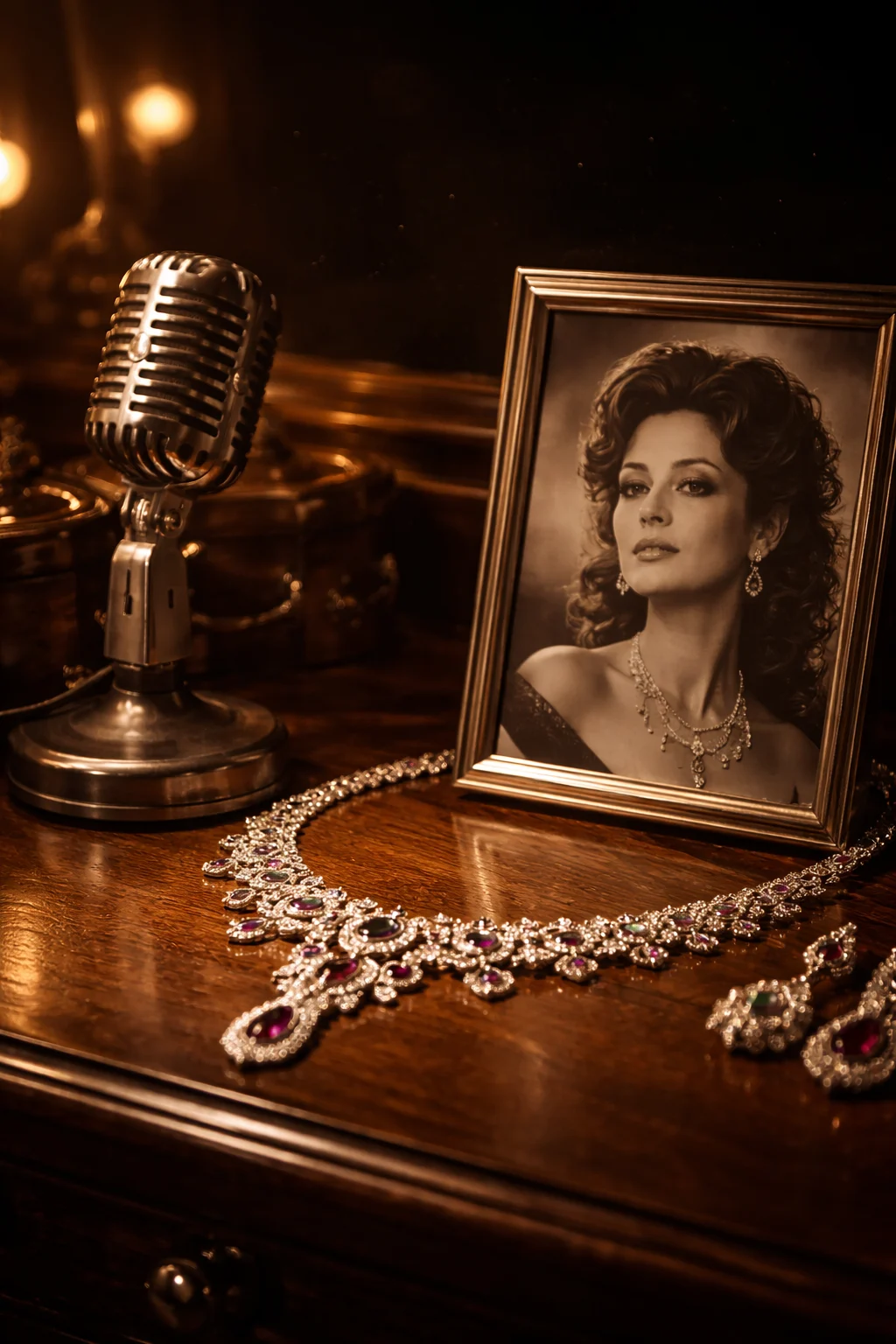
Released in 1957, El último cuplé became an extraordinary box-office success. It remained in theaters for extended runs, circulated throughout numerous countries, and transformed Montiel into a superstar across the Spanish-speaking world.
The film also created enormous demand for her recordings. Cinema and the record industry began reinforcing one another: audiences watched María Luján on the screen and then took Sara Montiel’s voice home with them.
Its success altered the Spanish musical-film industry. Producers recognized that an entire film could be organized around the personality of a singer-actress and that nostalgic repertory still possessed enormous commercial potential (Lomas Martínez & Gil Vázquez, 2023).
Montiel decided to remain in Spain. She did not return because she had failed in Hollywood but because Spanish cinema offered her the absolute center of every project.
In the United States, she was a supporting player in large films. In Spain, she could be the film.
A Body That Made Francoism Uncomfortable
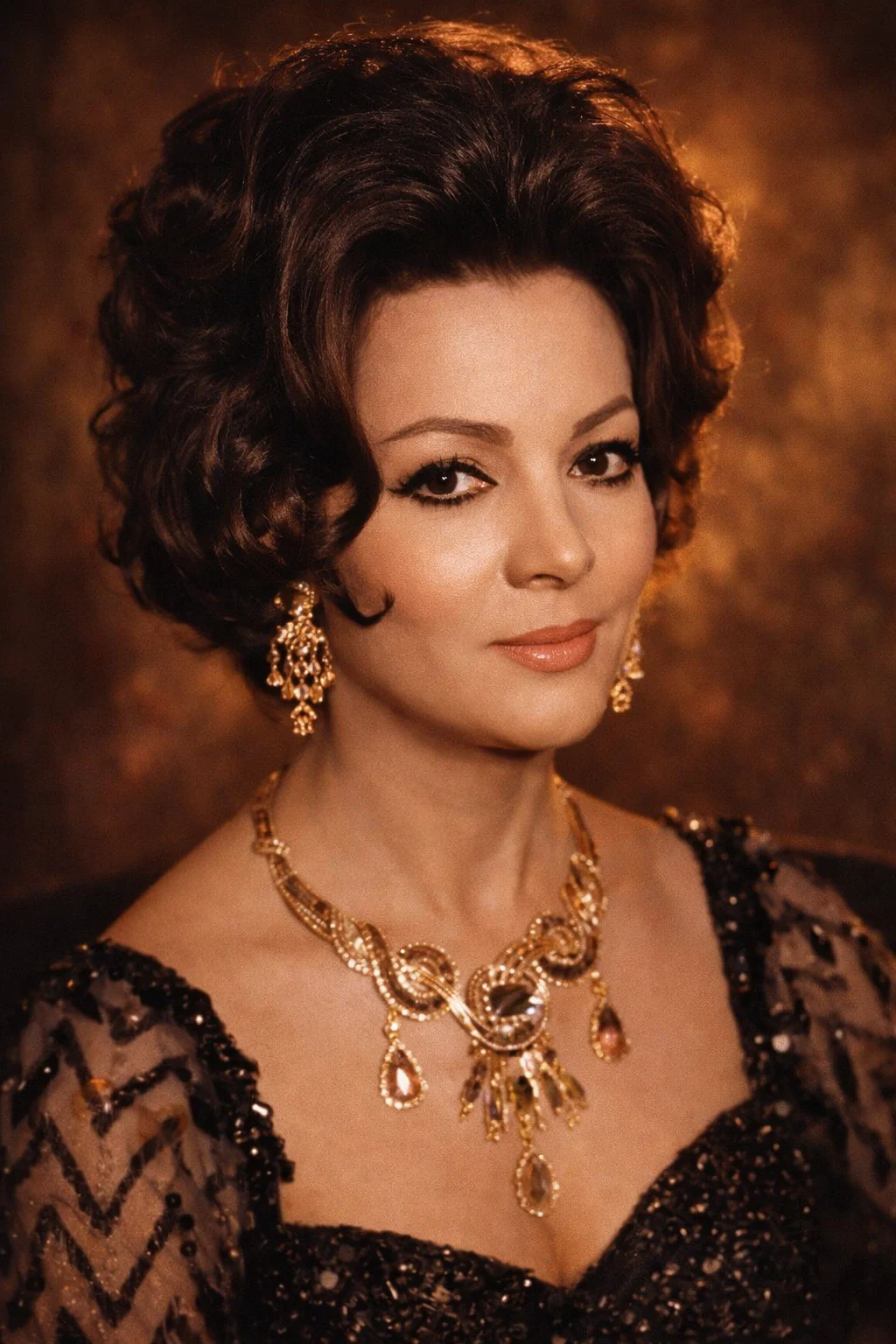
Montiel’s success contained a contradiction. Her films were produced, authorized, and exhibited under the Franco dictatorship, but her image did not fit comfortably within the regime’s official model of womanhood.
Official discourse expected the ideal woman to be modest, maternal, religious, and subordinate. Montiel appeared in fitted gowns, smoked before the camera, looked directly at men, and turned desire into a form of authority.
The plots often punished her characters. María Luján pays a price for professional success and emotional freedom; other heroines enter convents, lose the men they love, or end in repentance. Narrative morality could restore order, but Montiel’s body and voice had occupied the center of the film for nearly its entire duration.
Studies of her stardom describe her as the first great female sexual myth of the Franco era and argue that her image, although commercialized for the male gaze, also offered an unusual form of agency within Spanish cinema (Álvarez Rodrigo, 2020).
She was simultaneously an object of desire and a conscious manager of that desire.
The Star Who Learned to Control Production
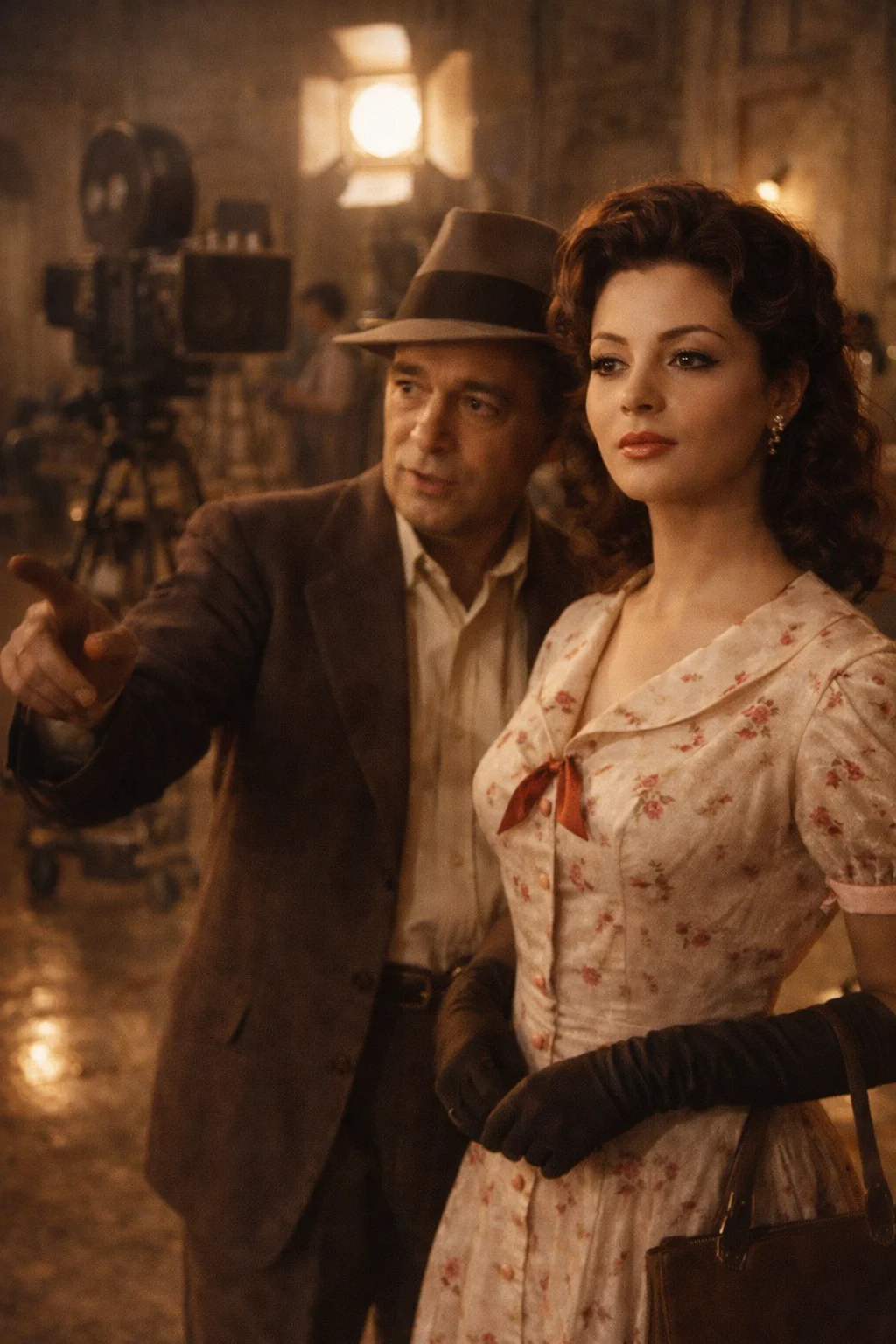
After El último cuplé came La violetera, Carmen la de Ronda, Mi último tango, Pecado de amor, La bella Lola, and La reina del Chantecler. Her films repeated recognizable elements: songs, impossible love stories, historical settings, spectacular costumes, and carefully lit close-ups.
Critics dismissed this repetition as a commercial formula. Recent scholarship, however, has emphasized Montiel’s capacity to intervene in the creative and industrial decisions shaping her career. She selected repertory, supervised her image, and negotiated from a position of authority unusual for a Spanish actress (Lomas Martínez & Gil Vázquez, 2023).
She was not a film author in the traditional sense of writing or directing all her projects. Yet her persona organized them. Producers were not simply selling a story; they were selling “a Sara Montiel film.”
In 1969, she starred in Mario Camus’s Esa mujer, and in 1971 she worked with Juan Antonio Bardem on Varietés. These collaborations attempted to place her screen personality within different kinds of filmmaking, although audiences and the industry continued to associate her with the world created after 1957.
The Life Behind Saritísima
Sara Montiel married four times. Her marriage to Anthony Mann ended in 1963. She later married José Vicente Ramírez Olalla briefly and then Giancarlo Viola.
In 1979, she married Mallorcan businessman and journalist José Tous. Together they adopted two children, Thais and Zeus. Tous’s death in 1992 was one of the deepest losses of Montiel’s life.
Her romantic history occupied countless magazine covers, but the attention devoted to her marriages often displaced analysis of her work. Men of her generation were permitted to accumulate romances as part of their legend. For a woman, relationships became a total explanation of her personality.
Montiel contributed to this exposure because she understood the commercial value of autobiography. She could transform an interview into a performance and narrate her life with the same theatricality she brought to a song. Controlling the character, however, did not always mean controlling what the media did with it.
From Star to Caricature
Montiel left filmmaking as her principal activity during the 1970s and concentrated on recordings, concerts, theater, and television. She continued performing before audiences in Spain and Latin America.
In her later years, some television programs treated her less as a historical figure than as an eccentric personality. They repeatedly focused on her opinions, age, cosmetic procedures, cigars, and romantic relationships. The woman who had worked with Robert Aldrich, Samuel Fuller, Anthony Mann, Mario Camus, and Juan Antonio Bardem was frequently reduced to a collection of gestures.
She also experienced a punishment reserved for many female stars: she was expected to disappear as she aged. Because she refused, her continued public presence was presented as excess.
That late visibility nevertheless allowed new generations to recognize her as a camp, queer, and deliberately artificial icon. Her exaggeration became a form of resistance against the requirement that an older woman remain discreet.
A Star Who Sustained More Than One Industry
Sara Montiel died in Madrid on April 8, 2013, at the age of eighty-five. Her death closed a career spanning postwar Spanish cinema, the Golden Age of Mexican film, Hollywood’s studio era, Francoist musical melodrama, television, and modern celebrity culture.
Her significance does not rest on being “the first Spanish woman in Hollywood,” a claim that erases earlier performers. It lies in connecting three film industries and converting that international experience into professional power within Spain.
She helped revive the cuplé, strengthened the commercial relationship between cinema and recorded music, and demonstrated that an actress could build a recognizable brand around her voice, body, and professional choices.
She was massively popular yet frequently dismissed by critics because her films were commercial, musical, and melodramatic. That contradiction explains her place among the forgotten women who sustained history: everyone knew her face, but few recognized the work required to keep it at the center of the screen.
Before she became a caricature, Sara Montiel had already created Sara Montiel. She did so at a time when many women could become stars, but very few were allowed to decide what kind of star they wanted to be.
References
- Academia de las Artes y las Ciencias Cinematográficas de España. (2013, April 8). Fallece Sara Montiel, un mito nacional. https://www.academiadecine.com/2013/04/08/fallece-sara-montiel-un-mito-nacional/
- Álvarez Rodrigo, Á. (2020). El cuerpo como desafío al ideal de feminidad franquista: Sara Montiel, la estrella española que vino de Hollywood (1950–1957). Arenal: Revista de Historia de las Mujeres, 27(2), 355–381. https://doi.org/10.30827/arenal.v27i2.8493
- Biblioteca Nacional de España. (n.d.). Canciones de la película El último cuplé. https://datos.bne.es/resource/biso0000656414
- Lomas Martínez, S., & Gil Vázquez, A. (2023). Authorship and female stardom in Spanish cinema under Franco: Sara Montiel and Marujita Díaz. Feminist Media Studies, 23(2), 623–638. https://doi.org/10.1080/14680777.2021.1979066
- Montiel, S., & Víllora, P. M. (2000). Vivir es un placer: Memorias. Plaza & Janés.
- Vernon, K. M. (2004). Theatricality, melodrama, and stardom in El último cuplé. In S. Marsh & P. Nair (Eds.), Gender and Spanish cinema (pp. 184–199). Berg.
More from this collection
María Félix: The Woman Who Chose to Conquer Europe Rather Than Obey Hollywood
Read story →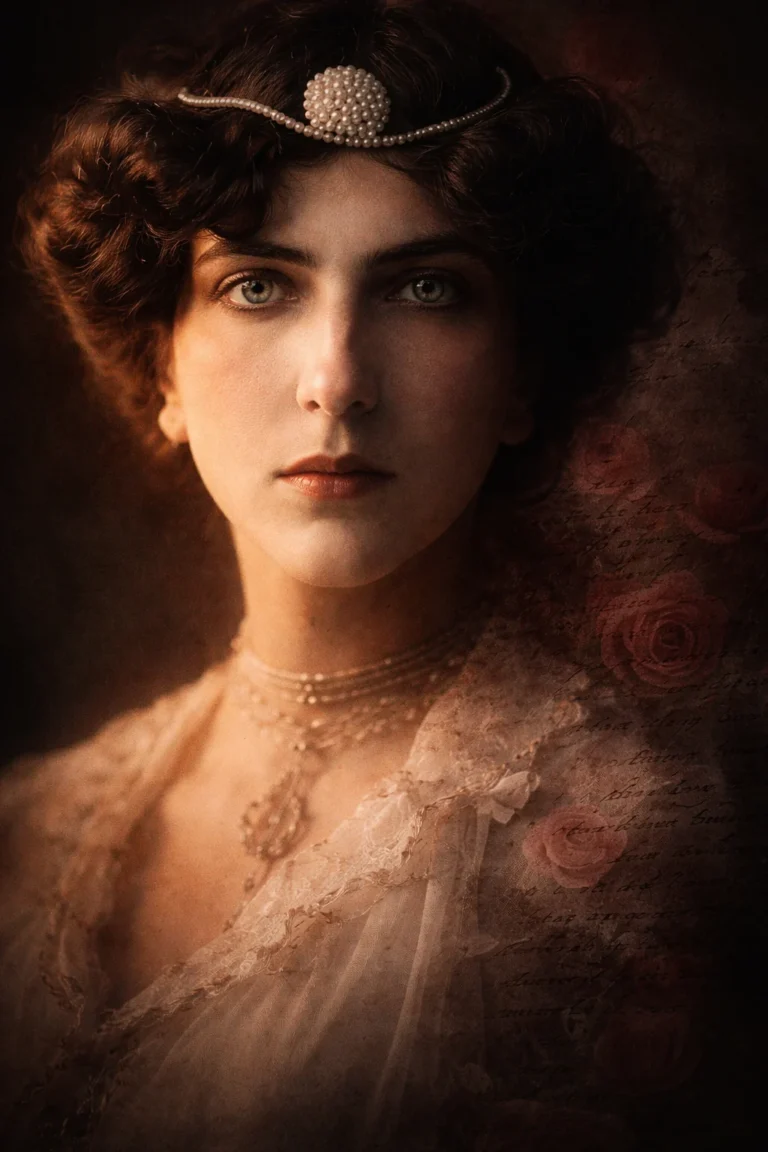
Delmira Agustini: The Poet Who Turned Female Desire into an Insurrection
Read story →