
Tadao Ando: the underground museum that lets daylight in
Burying a museum solved one problem: preventing it from dominating the landscape. But it created another. How could paintings devoted to light be experienced inside an underground building?
Tadao Ando confronted that paradox at the Chichu Art Museum, which opened in 2004 on Naoshima, Japan. Most of the building was placed underground to reduce its visual impact on the Seto Inland Sea landscape. Inside, works by Claude Monet, James Turrell, and Walter De Maria received spaces designed specifically for them.
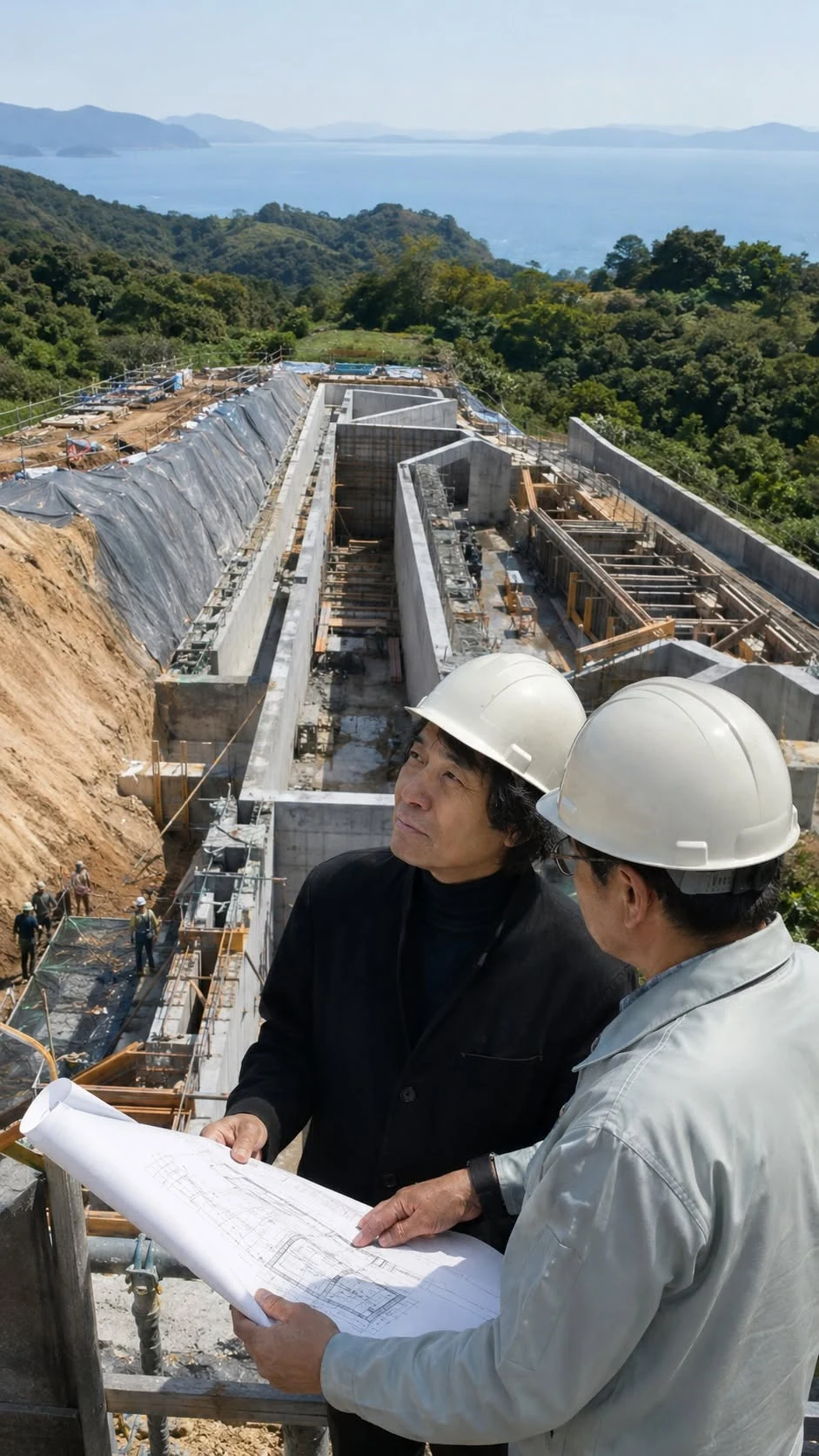
The challenge becomes especially clear in the Monet room. Providing walls for his Water Lilies was only the beginning: the designers had to decide how daylight would reach the paintings and spread through the room.
A room designed by measuring light
According to the museum’s archive, the team explored different layouts using models. Design decisions continued even after construction began. Tests on the building site examined how the height and size of the dropped ceiling affected natural illumination.
This was more than an aesthetic question. The space needed to let the paintings retain their presence without being overshadowed by the architecture.
Rounded corners, white surfaces, and natural light drew on Monet’s ideas for displaying his large compositions. Underground, visitors encountered a room whose appearance still depended on the world outside.
700,000 pieces underfoot
The floor introduced another scale of work: around 700,000 pieces of Bianco Carrara marble, each approximately two centimeters square, were laid by hand. The pieces had no sharp corners.
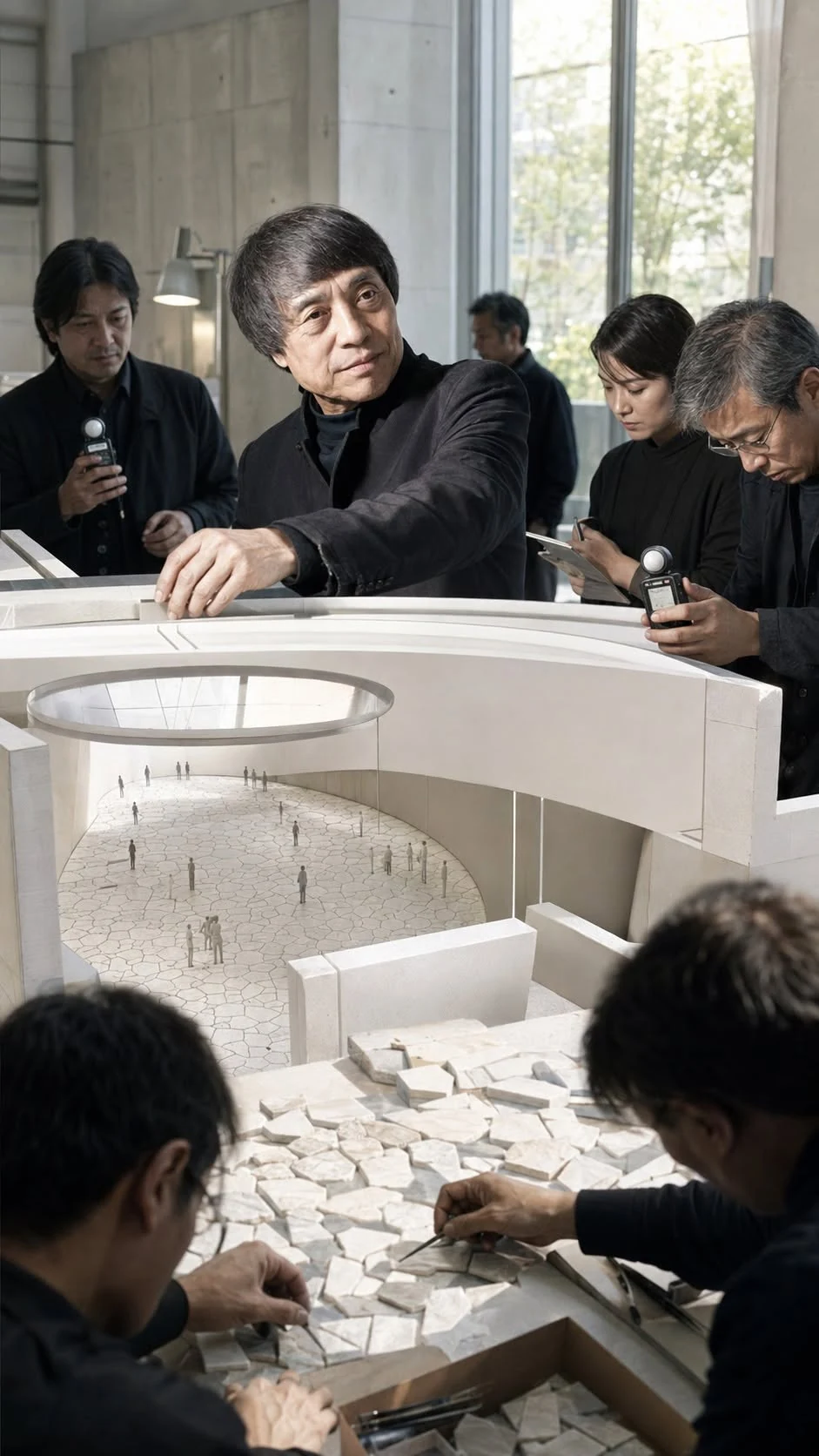
That detail matters because the experience involves more than looking at a painting. Walls, flooring, and light create surroundings that influence how we perceive it. The same painting can leave a different impression as the weather changes or the day progresses.
Chichu did not sever its connection with the landscape by hiding beneath it. It brought that relationship indoors, where the sky continues to shape the visit.
Ando’s best-known gesture was burying the building. The less visible work was ensuring that, down there, light would remain central to the experience.
What surprises you more: building underground, or designing a room around the daylight it receives?
Read the full story of Tadao Ando →
Sources
- Benesse Art Site Naoshima — The Claude Monet room. View source
- Benesse Art Site Naoshima — Chichu Art Museum. View source
- Tadao Ando Architect & Associates — Chichu Art Museum: Invisible Architecture. View source