
Joseph Paxton and the Girl on the Waterlily That Helped Inspire the Crystal Palace
A little girl dressed as a fairy stood on a floating leaf without sinking. Beneath that plant lay a structure that would help inspire one of the nineteenth century’s most remarkable buildings.
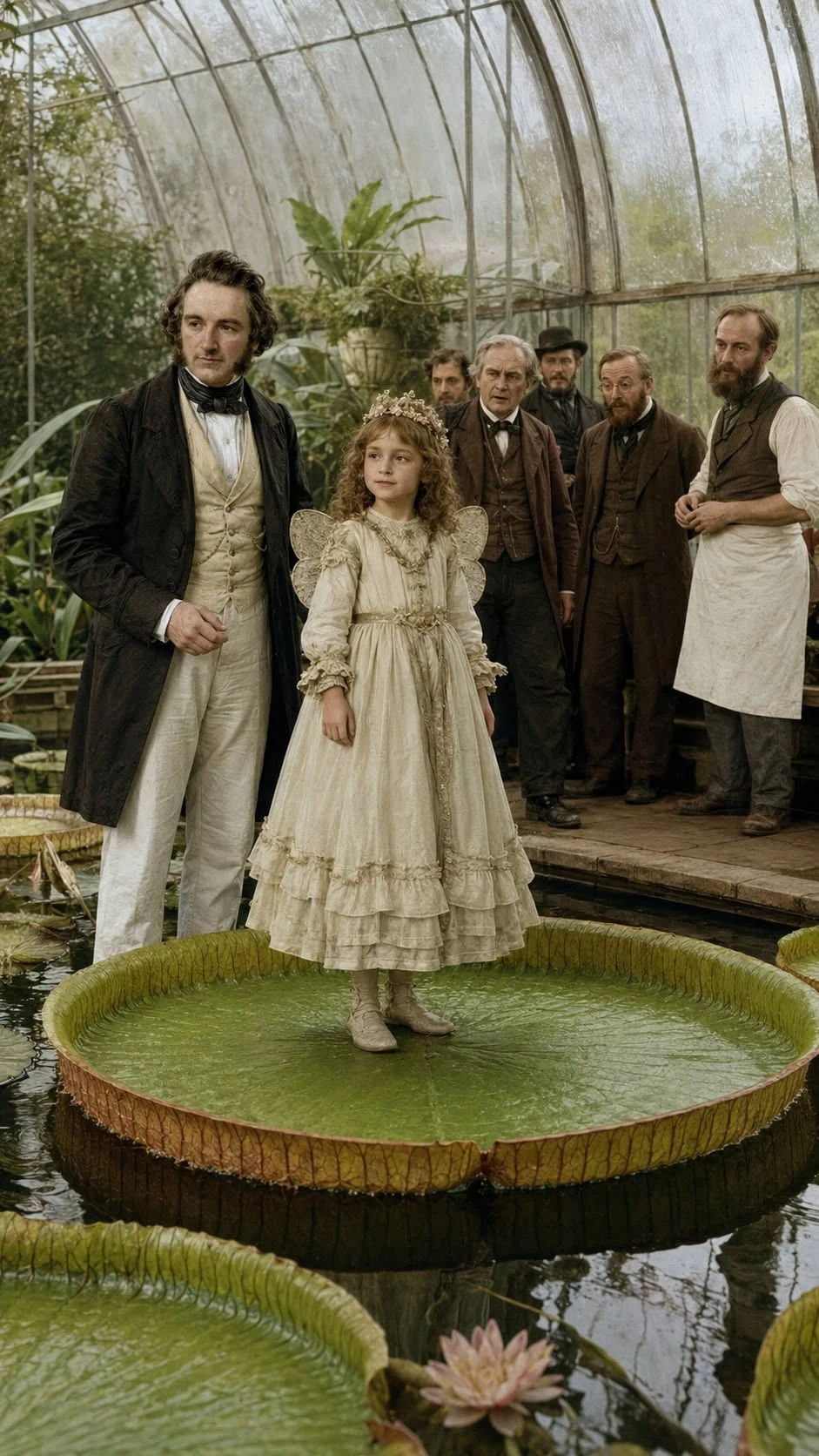
A demonstration at Chatsworth
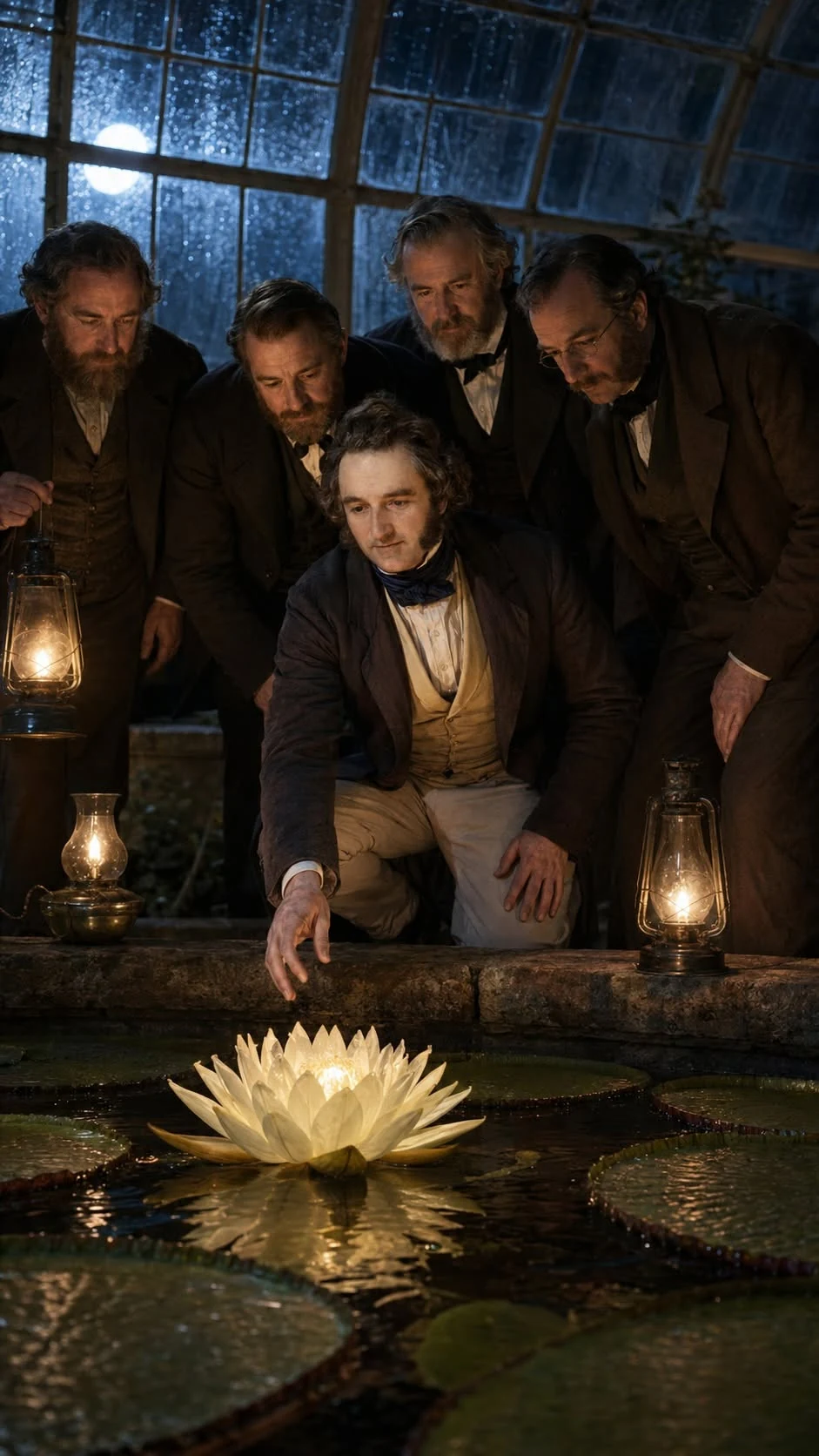
In 1849, Britain was fascinated by a giant South American waterlily, then known as Victoria regia and now called Victoria amazonica. After several unsuccessful attempts, living seeds had reached Kew, which distributed plants for cultivation.
Joseph Paxton, head gardener at Chatsworth, prepared a heated tank for it. In November that year, his team achieved the species’ first recorded flowering in England.
But its flowers were not the only remarkable feature. The leaves looked delicate from above; underneath, a network of radiating and crosswise ribs provided stiffness without making them heavy.
To demonstrate their strength, Paxton placed his daughter Annie on one of the leaves, with a support to distribute her weight. Dressed as a fairy, the girl appeared to be standing on the water.
The scene reached the illustrated press: The Illustrated London News published an engraving on 17 November 1849. It was not magic. It demonstrated how a carefully organized form could carry a surprising load.
From a leaf to a palace of glass
Paxton had spent years experimenting with greenhouses, glass roofs and ways of creating bright interior spaces. The waterlily offered a natural reference for thinking about light but strong structures.
In 1850, he designed the building that would house London’s Great Exhibition of 1851: the Crystal Palace. Its repeated iron and glass components made it possible to erect an enormous enclosure without massive masonry walls.
The connection with the plant is compelling, but it deserves a qualification: the building was not a literal copy of a leaf. It also grew out of Paxton’s experience at Chatsworth, prefabrication techniques and the work of those who made its construction possible.
The image of Annie helps us remember that connection without turning it into a miracle. The gardener observed a solution in nature and brought it into a search he had already been pursuing for years.
Before raising a palace of glass, Paxton had learned to look at what held a leaf together.
Did you imagine that an Amazonian waterlily had influenced the architecture of the industrial age?
Sources
- Royal Botanic Gardens, Kew — Victoria amazonica — inspiring a nation. View source
- Victoria and Albert Museum — Flowers fit for a crystal palace. View source
- Chatsworth — Joseph and Sarah Paxton: an Introduction. View source
- Romantic Circles — To Miss Annie Paxton… — Blanche Paxton Album. View source