In this storyOpen index
Buster Keaton: The Man Who Lost Control of His Films and Quietly Rebuilt Himself
The world could collapse around him, but Buster Keaton remained still. He survived the dangers of silent cinema; what nearly destroyed him was losing the right to decide how his own films should be made.
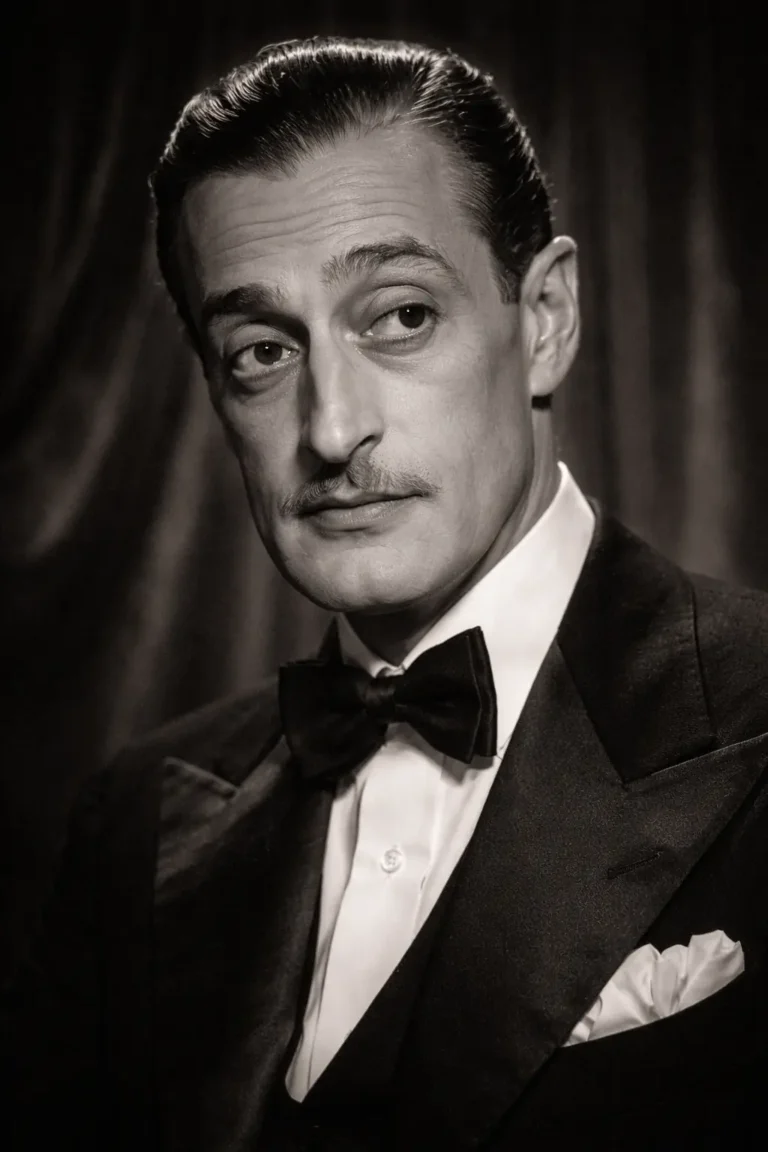
Featured historical fact: After losing his independence as a filmmaker and being dismissed by MGM, Buster Keaton did not disappear from cinema. He returned to the same studio as a comedy writer, creating gags for performers such as the Marx Brothers and Red Skelton, frequently without receiving screen credit.
A wall weighing more than a ton fell directly on Buster Keaton.
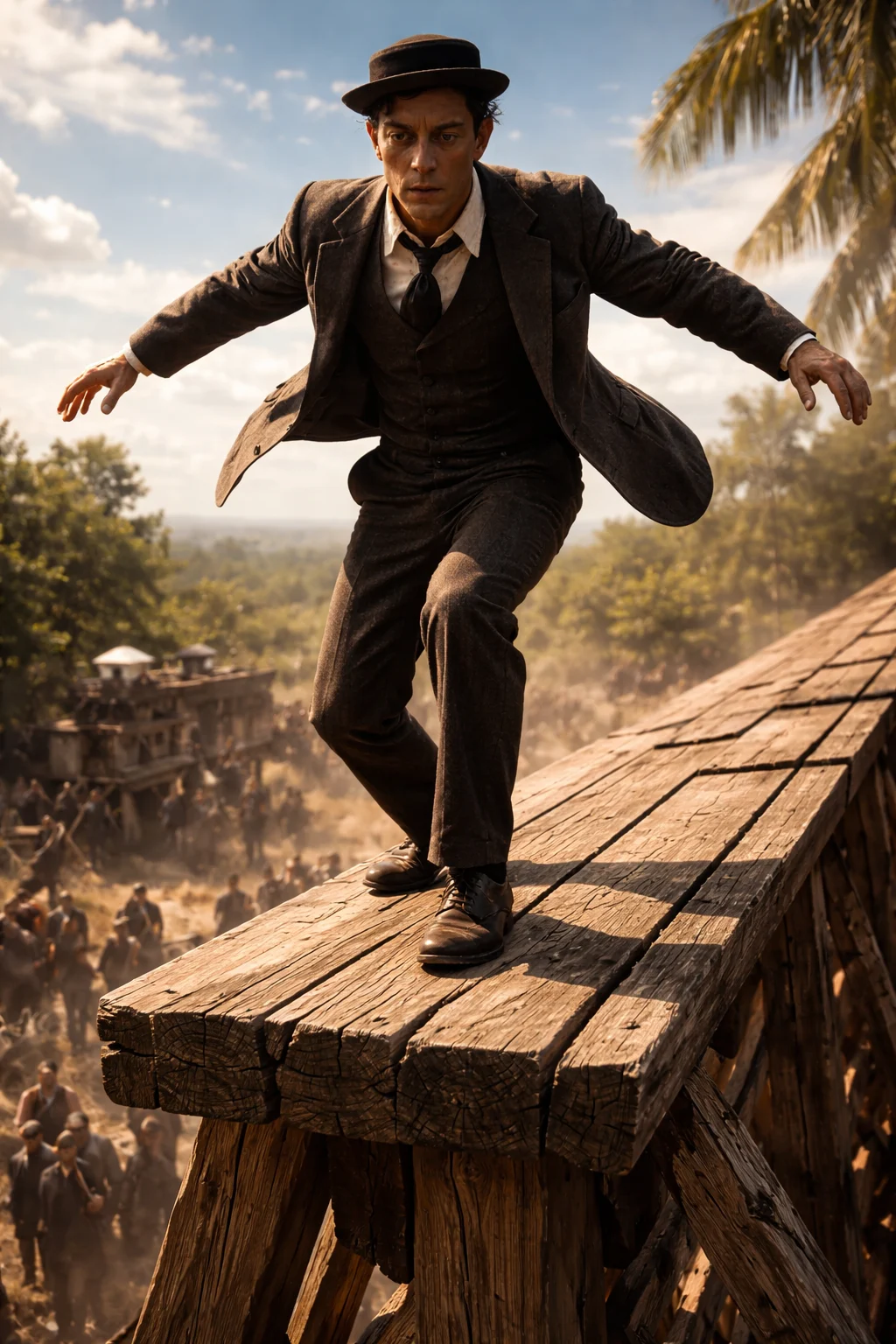
He did not run. He stood still as the front of a house collapsed around him. A small open window in the structure passed precisely over the place where he was standing. An error of only a few inches could have killed him.
The sequence from Steamboat Bill, Jr., released in 1928, summarizes his approach to comedy: the world might collapse, but his character would remain calm.
Keaton survived that wall. What nearly destroyed him was losing the right to decide how his own films should be made.
Buster Keaton: the man who always stood up
Discover this story on our YouTube channel.
A life told through places and turning points

Enter the archive
An authentic object preserved by a cultural institution brings us closer to the world behind this life.
- Collection
- Library of Congress
- Rights
- See the Library of Congress rights advisory
Library of Congress, Prints and Photographs Division
The child who learned how to fall
Joseph Frank Keaton was born on October 4, 1895, in Piqua, Kansas, into a vaudeville family. His parents, Joe and Myra Keaton, traveled constantly with different shows. The stage became his first home and his first school.
He began performing as a small child in an act called The Three Keatons. The family routine involved arguments and simulated accidents during which his father threw him across the stage, into the scenery, or toward the orchestra pit.
Authorities investigated the act several times over suspicions of child abuse. The Keatons insisted that the boy knew how to fall without being injured. Although the physical violence of the performance was real and difficult to imagine by modern standards, Buster developed extraordinary control over his body and learned how to absorb impacts.
He also discovered something important: audiences laughed less when he smiled. He therefore began keeping a serious expression while enormous disasters unfolded around him.
A frequently repeated story claimed that Harry Houdini gave him the nickname “Buster” after seeing him fall down a flight of stairs without injury. Keaton himself told versions of the anecdote, but modern researchers consider some of its details doubtful. Like many vaudeville stories, it was probably improved with each retelling.
What is certain is that the nickname quickly replaced Joseph. To audiences, he was no longer an ordinary child. He was Buster: someone who could take a blow, stand up, and continue.
A camera dismantled in a hotel room
In 1917, Keaton met Roscoe “Fatty” Arbuckle, one of the leading comedy stars of the period. Arbuckle offered him a part in the short film The Butcher Boy. Keaton accepted and discovered that cinema allowed him to accomplish things that were impossible onstage.
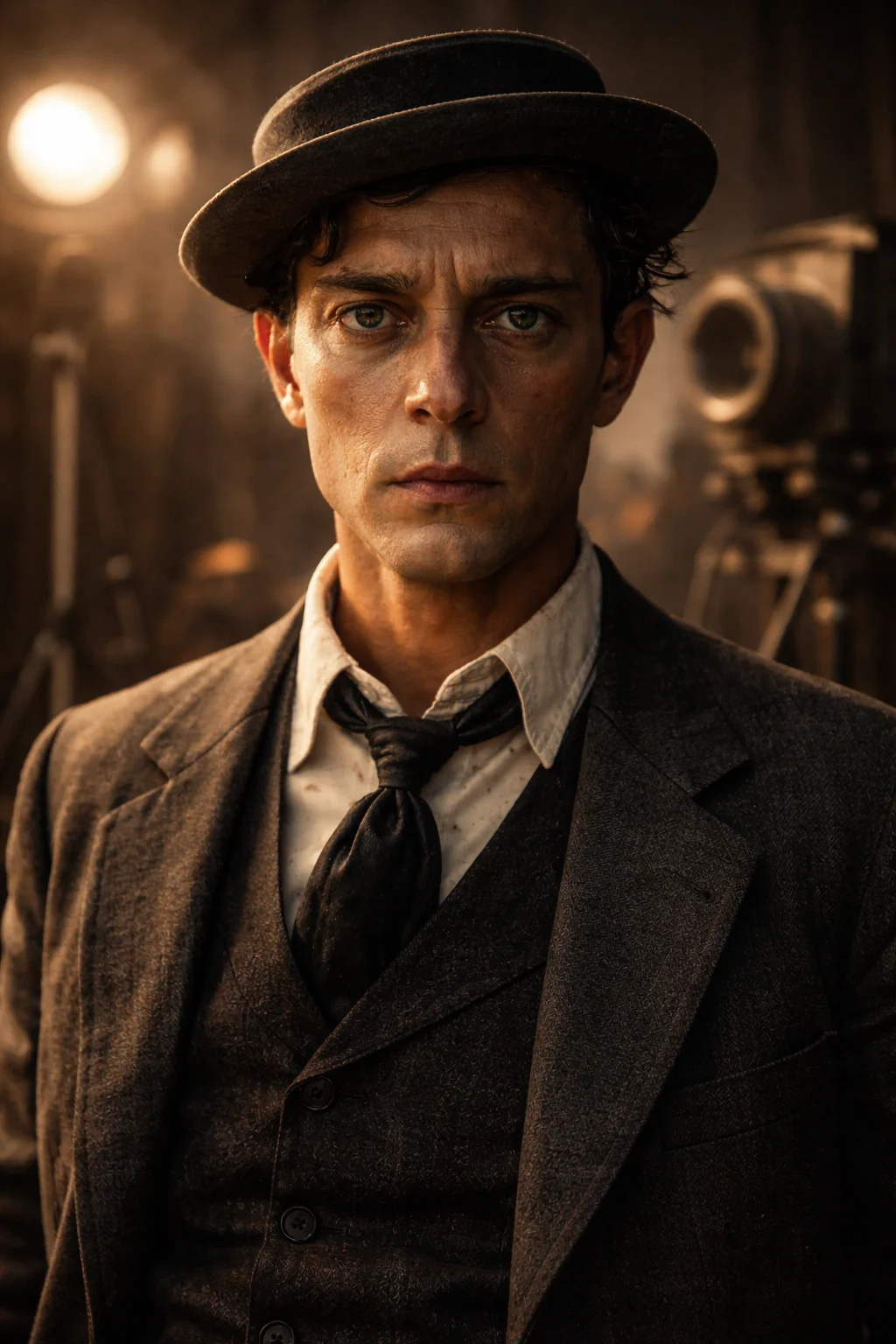
His curiosity extended beyond acting. After his first day, he borrowed a motion-picture camera, carried it back to his room, dismantled it, and reassembled it so that he could understand how it worked.
That gesture reveals an essential distinction. Keaton was not simply a comedian photographed by other people. He wanted to understand the machine, the editing process, the angles, and the physical possibilities of cinematic space.
He worked with Arbuckle in numerous short films and learned how to construct comedy specifically for the camera. After serving in the United States Army during the First World War, he returned to filmmaking and began developing his own creative operation.
In 1920, he gained access to a studio and an exceptional degree of independence. Over the following eight years, he made nineteen silent shorts and ten silent features. It became one of the most remarkable periods of creative freedom in the history of screen comedy.
The still face before disaster
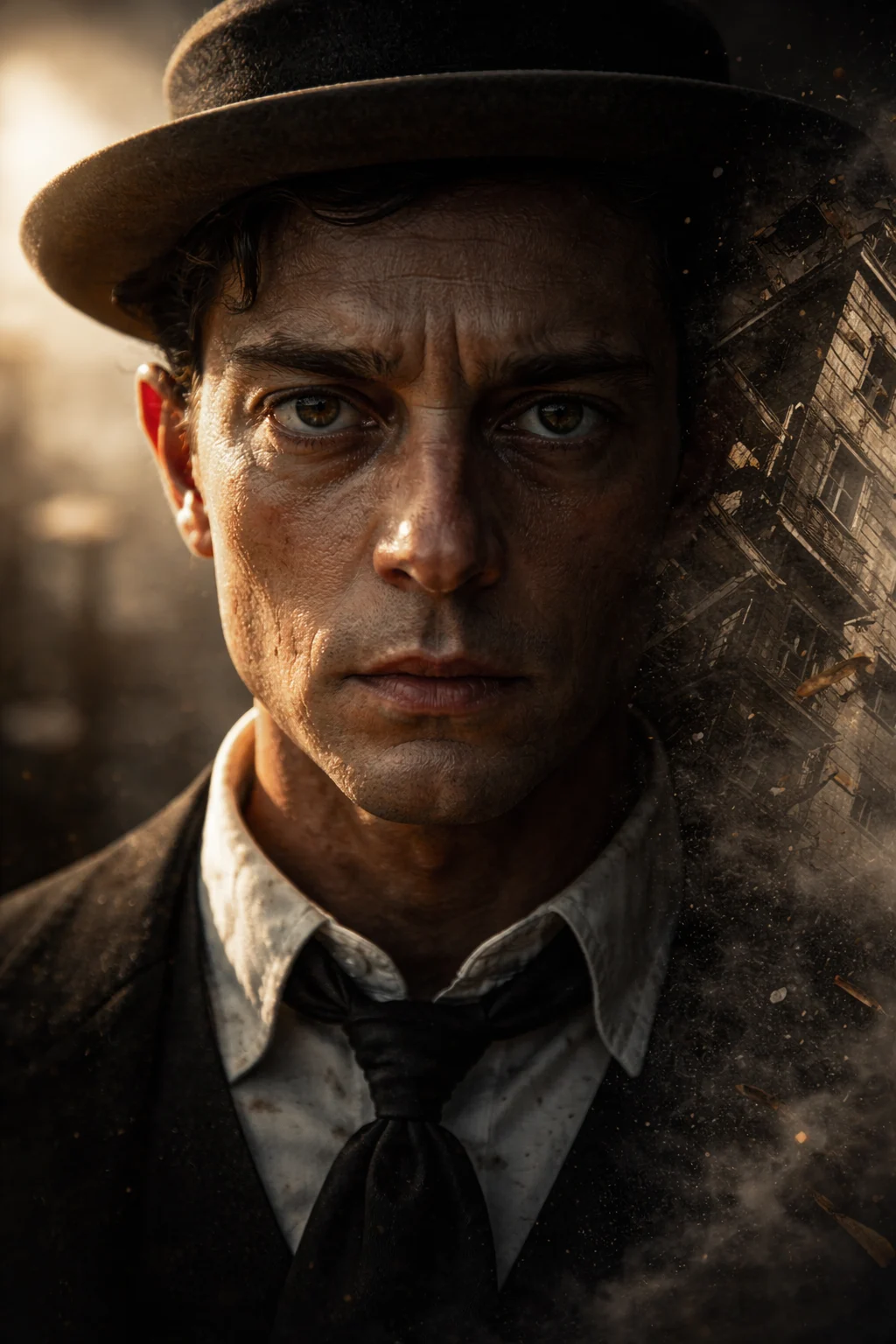
Charlie Chaplin created a sentimental tramp searching for affection in an unjust world. Keaton invented something different: a small, solemn, practical man attempting to understand a reality governed by machines, crowds, and accidents.
His nearly expressionless face later earned him the nickname “the Great Stone Face.” His characters were not without emotion, however. A glance, a posture, or a movement could communicate confusion, fear, desire, or determination without exaggerated gestures.
In One Week, a couple attempts to assemble a house whose parts have been incorrectly numbered. In Sherlock Jr., a projectionist enters the movie he is showing. In The Navigator, two people find themselves alone aboard an enormous drifting ship. In The General, a railroad engineer pursues a stolen locomotive during the American Civil War.
Keaton did not place gags on top of a story as interruptions. He designed the entire film like a mechanism in which every object might trigger the next accident. A door, staircase, train, or house was never merely scenery. It became a companion, an adversary, and a comic machine.
The injury discovered years later
Keaton’s physical discipline did not eliminate danger.
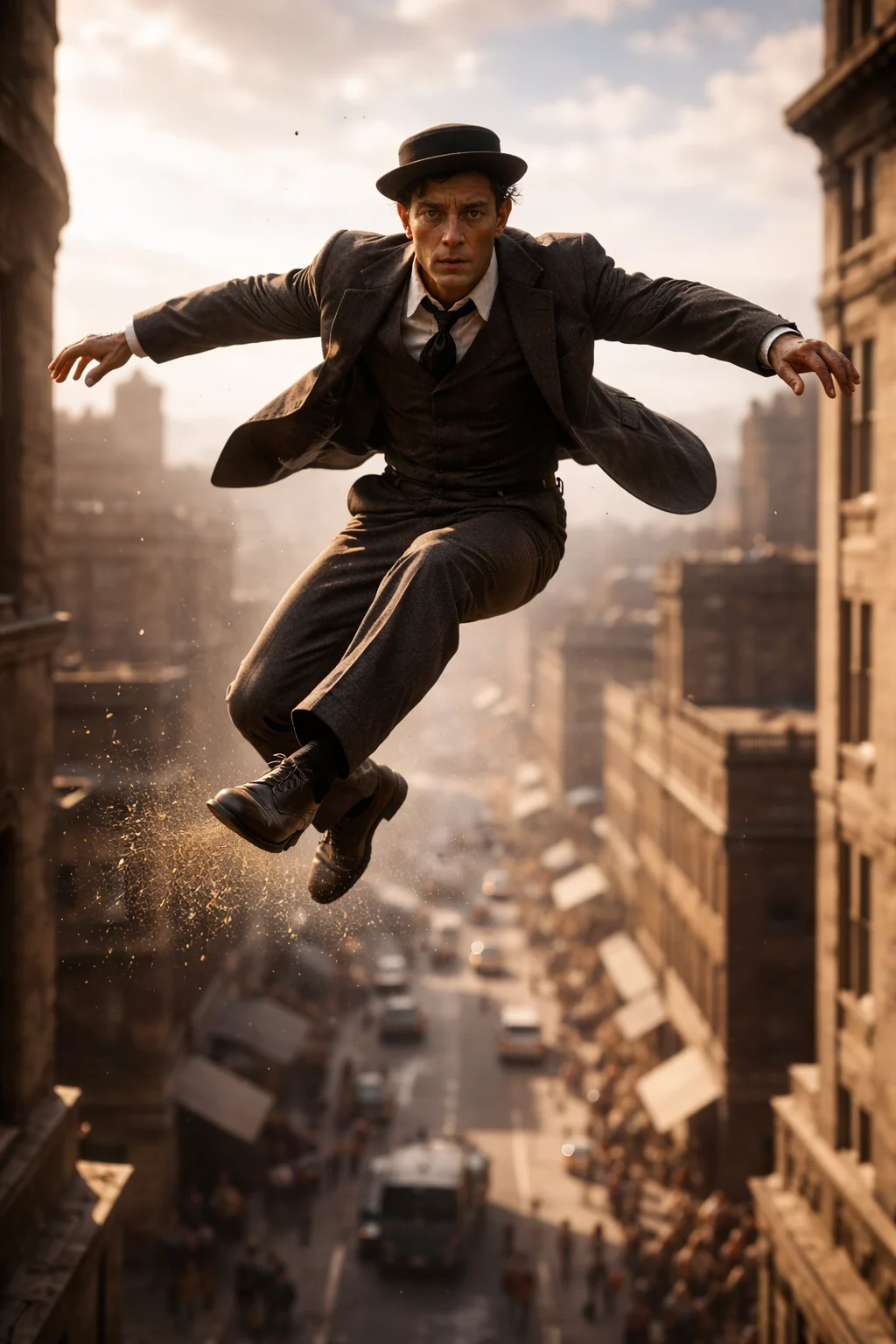
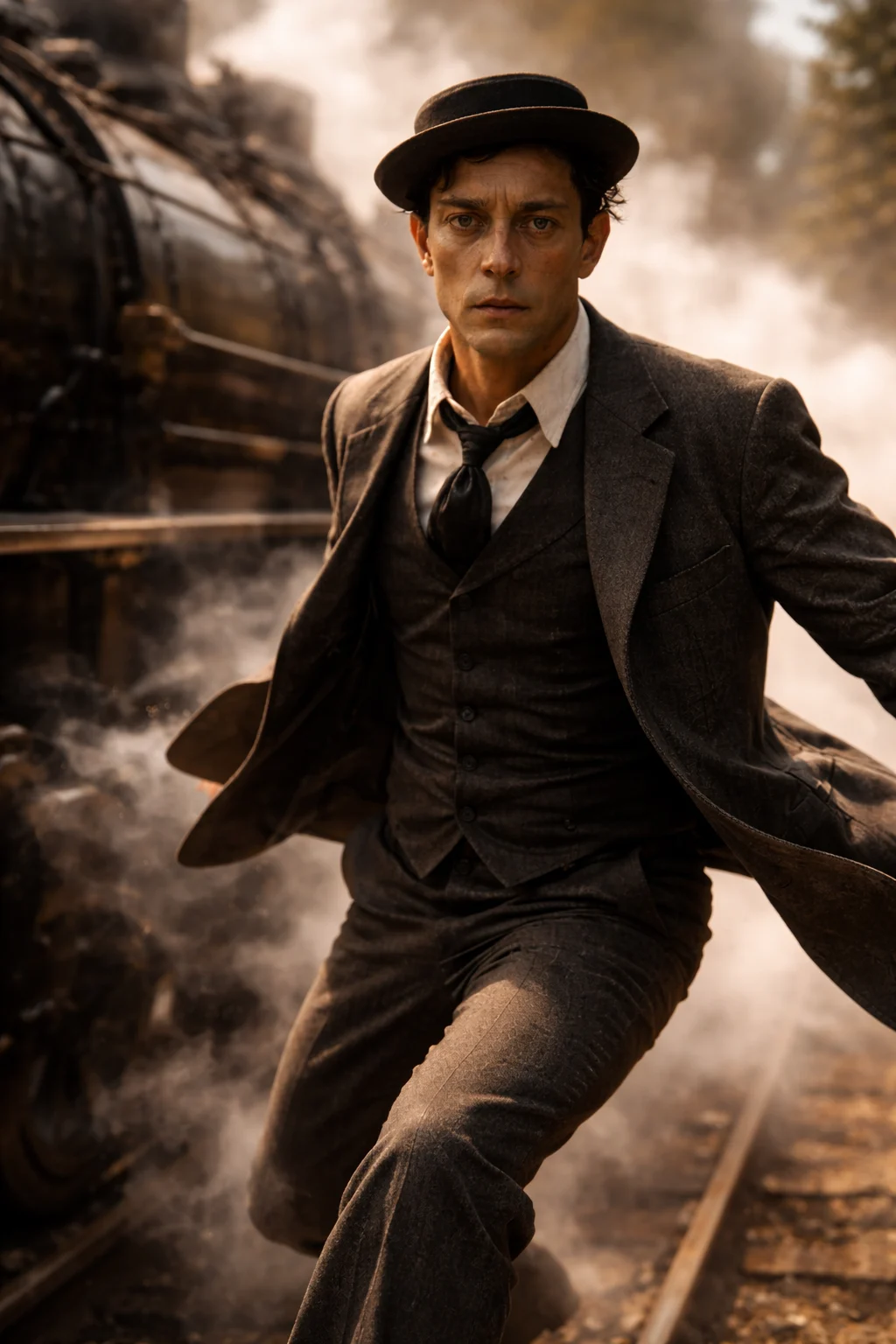
While filming Sherlock Jr. in 1924, he ran along the roof of a train and grabbed the pipe of a railroad water tower. The force of the water knocked him down onto the tracks. He got up, continued working, and believed he had suffered little more than a severe headache.
Years later, a physician examining him found evidence of an old fracture in one of his neck vertebrae. Keaton concluded that it had probably occurred during that accident.
For The General, he sent an actual locomotive across a burning bridge and into a river. In Steamboat Bill, Jr., he used a real building façade to execute the celebrated falling-wall stunt.
He did not work this way simply to demonstrate courage. Keaton understood that audiences could perceive the difference between a physical location and a poorly disguised trick. Reality gave his films a tension that made the laughter more powerful.
The masterpiece that almost damaged his career
Today, The General is considered one of the greatest films of the silent era. Its reception in 1926 was considerably less enthusiastic. Its high cost, negative reviews, and disappointing box office weakened Keaton’s position.
The film must also be viewed within its historical context. Its protagonist serves the Confederacy during the American Civil War, and the story contains elements of the romanticized vision of the South then common in American cinema. Its technical brilliance does not erase the historical and racial limitations of that perspective.
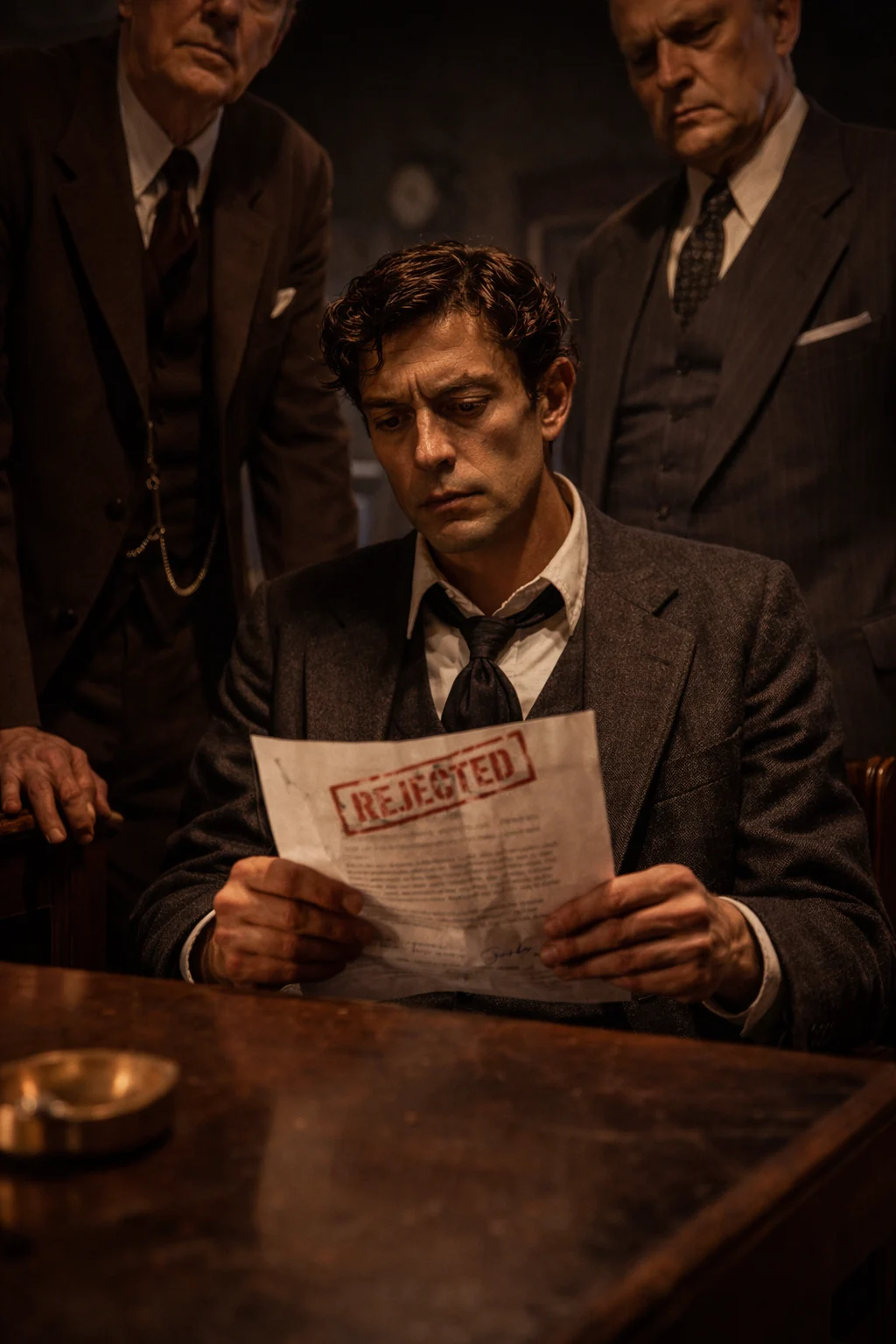
After The General, producers watched Keaton’s budgets more carefully. The independence that had allowed him to experiment began to disappear. In 1928, Keaton signed a contract with Metro-Goldwyn-Mayer. He would later describe the decision as the worst mistake of his professional life.
The factory enters his films
MGM possessed resources, stars, and a powerful distribution network. It also operated through a rigid division of labor. Writers wrote, directors directed, and actors were expected to follow the studio’s established plan.
Keaton was accustomed to developing stories during production, testing objects, changing scenes, and discarding any gag that failed to work. At MGM, he lost much of that control.
His first film for the studio, The Cameraman, still preserved many qualities of his greatest work. His later projects, however, were increasingly subjected to fixed scripts, supervisors, and administrative decisions.
The arrival of sound did not automatically destroy his career. Keaton could speak, sing, and work within the new medium. Some of his sound films with Jimmy Durante were commercially successful. His voice was not the central problem. The problem was that he was no longer the author of his own world.
The fall beyond the screen
As his professional autonomy disappeared, Keaton’s personal life also deteriorated. His marriage to actress Natalie Talmadge ended in a bitter divorce. He became separated from his sons, and his problems with alcohol grew increasingly severe.
Keaton began arriving late, missing work, and appearing in a condition the studio considered unacceptable. MGM dismissed him in 1933.
That moment is often presented as the end of his career, but this version is inaccurate. Keaton continued working. He starred in shorts for Educational Pictures and Columbia, participated in European productions, and accepted supporting roles.
He had not lost his ability to create laughter. What he had lost was the power, prestige, and visibility he had possessed during the 1920s.
The invisible creator of someone else’s comedy
By the end of the 1930s, Keaton had returned to MGM, but not as a star. He worked behind the camera in the studio’s gag department.
He contributed comedy material to the final films the Marx Brothers made at MGM, including At the Circus, Go West, and The Big Store. He also developed gags for Red Skelton and advised other performers.
His name rarely appeared onscreen. Millions of spectators could laugh at an idea devised by Keaton without realizing that he was still working in Hollywood.
This period is one of the lesser-known chapters of his life. The man who had once directed locomotives, ships, and entire buildings was reduced to suggesting individual moments for films controlled by other people. Nevertheless, he continued observing, inventing, and searching for the precise logic of every gag.
In 1940, he married Eleanor Norris, a young MGM dancer. The marriage gave him a stability he had lacked for years. Eleanor remained with him for the rest of his life and joined him in stage acts and television appearances.
The return of the Great Stone Face
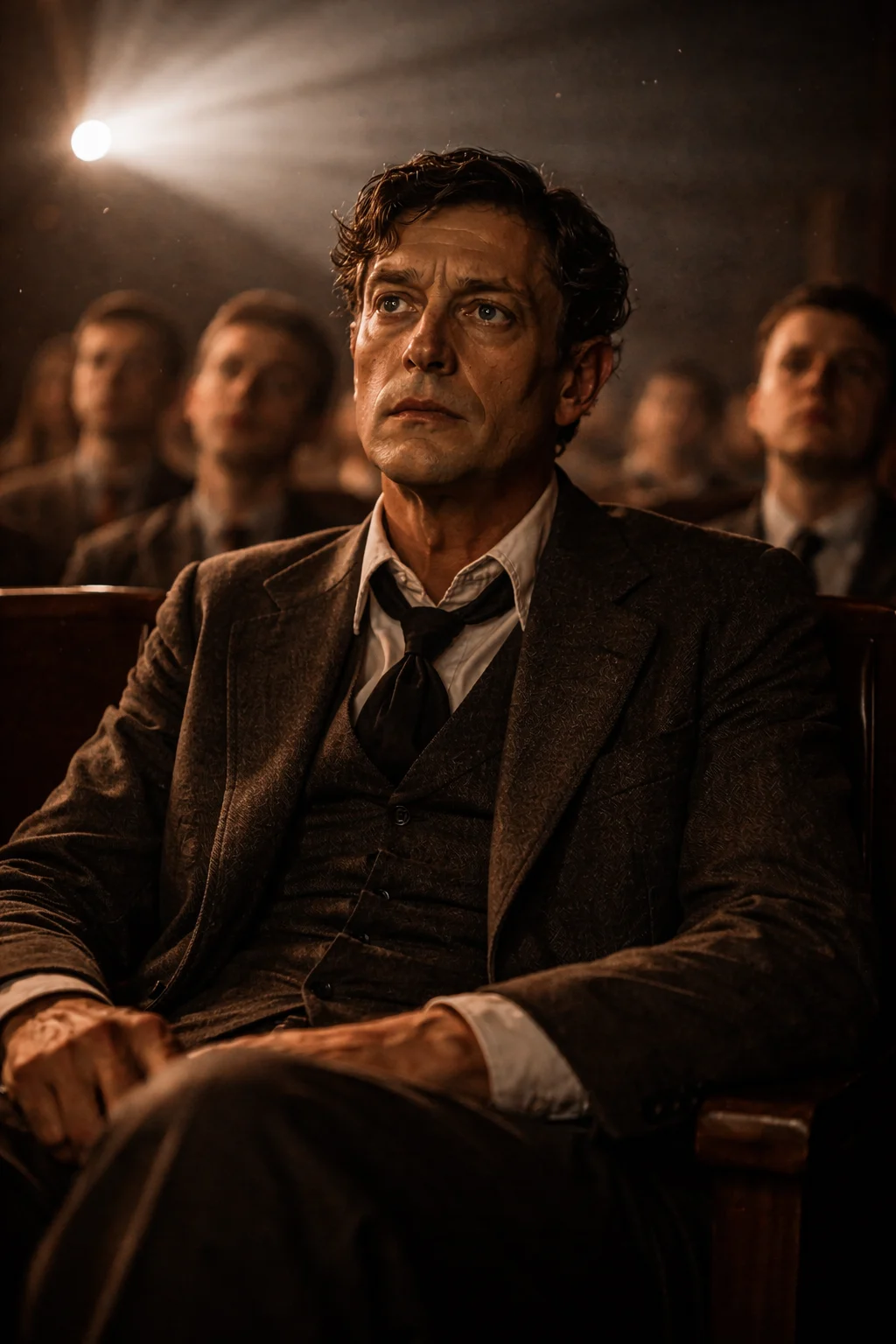
A reassessment of Keaton’s work began in the late 1940s. His early films were shown again, and a new generation of critics and filmmakers recognized the modernity of his visual language.
Keaton appeared briefly as one of the former silent stars playing cards in Sunset Boulevard in 1950. Two years later, he shared a scene with Chaplin in Limelight. It was the only time the two great comedians performed together in a commercial motion picture.
Television provided another stage. His physical routines needed little explanation and worked for audiences who had never seen his silent features. He also appeared in commercials, variety programs, and small movie roles.
In 1960, Keaton received an honorary Academy Award for his contribution to screen comedy. During his last years, he starred in Film, an experimental work written by Samuel Beckett, and crossed Canada aboard a small railway speeder for The Railrodder.
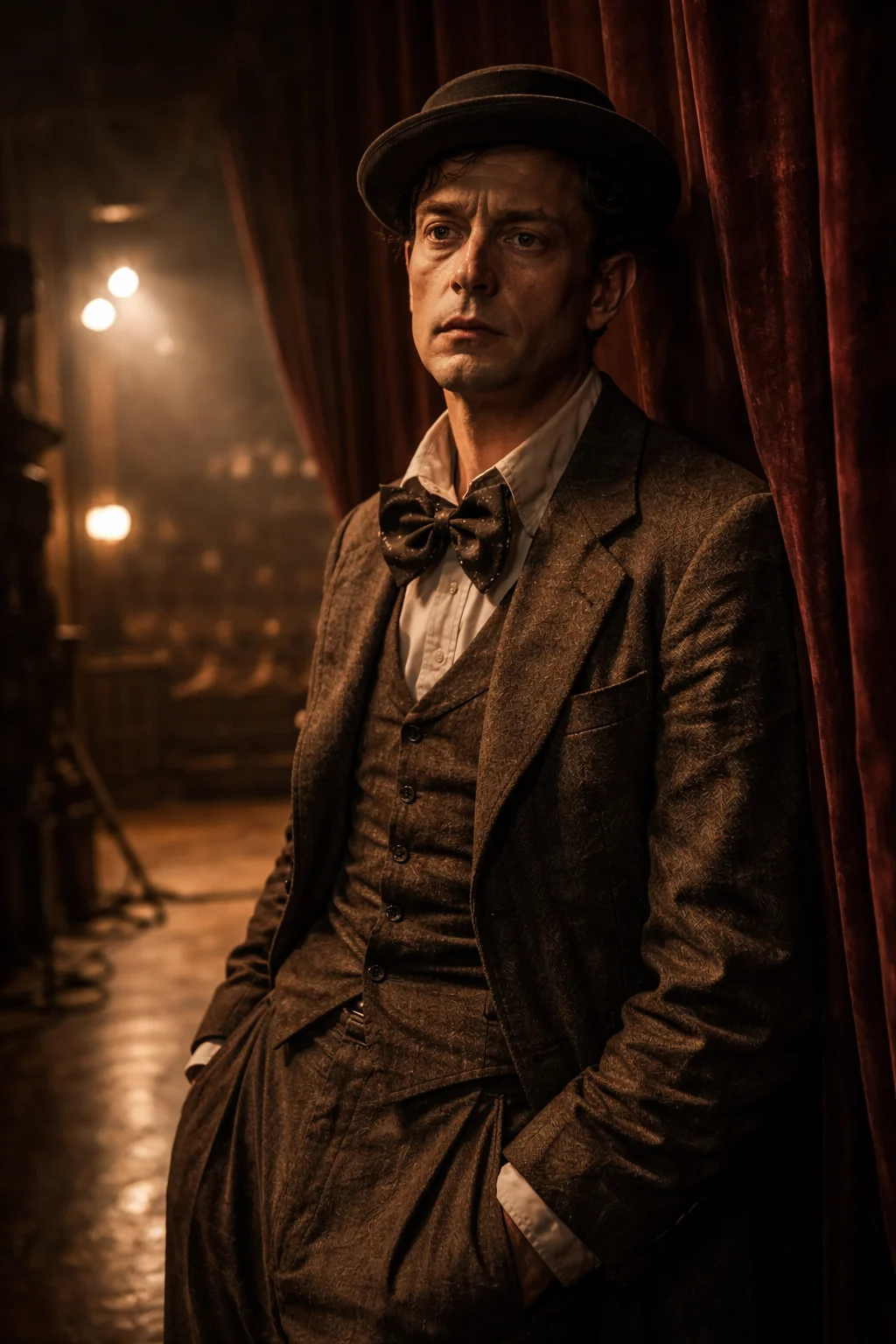
The man who always stood up
Buster Keaton died of lung cancer on February 1, 1966. He was seventy and had continued working almost until the end.
For many years, his story was told as an inevitable decline caused by the arrival of sound. The truth was more complicated. He did not lose his position because his voice was unsuitable, but because the studio system deprived him of creative control while alcohol and personal crises deepened his collapse.
Nor did he completely disappear. He wrote, performed, advised other comedians, and gradually rebuilt his life. The recovery of his films proved that he had never been merely an acrobat with a solemn face. He was a director, editor, visual inventor, and one of the first complete auteurs of American cinema.
His characters never controlled the world. Trains, storms, crowds, and buildings conspired against them. Their only advantage was an ability to observe, adapt, and rise after every blow.
That was also what Keaton did beyond the screen.
The industry brought down upon him a structure far more dangerous than the façade in Steamboat Bill, Jr. For a time, it appeared to crush him. But after the dust cleared, Buster Keaton was still standing.
Serious, motionless, and ready to continue.
References
- Academy Museum of Motion Pictures. (n.d.). Buster Keaton Studio. Academy Museum.
- Curtis, J. (2022). Buster Keaton: A filmmaker’s life. Alfred A. Knopf.
- International Buster Keaton Society. (n.d.). The life of Buster Keaton. Buster Keaton Society.
- Keaton, B., & Samuels, C. (1960). My wonderful world of slapstick. Doubleday.
- Knopf, R. (1999). The theater and cinema of Buster Keaton. Princeton University Press.
- McPherson, E. (2005). Buster Keaton: Tempest in a flat hat. Newmarket Press.
- Meade, M. (1995). Buster Keaton: Cut to the chase. HarperCollins.
More from this collection
Lillian Gish: The Face That Taught Cinema to Think in Silence
Read story →
Roscoe “Fatty” Arbuckle: The Face Hollywood Condemned After Justice Acquitted Him
Read story →