In this storyOpen index
Edith Head: The Woman Who Dressed Hollywood’s Dreams
Eight Oscars, unforgettable images, and a collective craft behind the glamour of the stars.
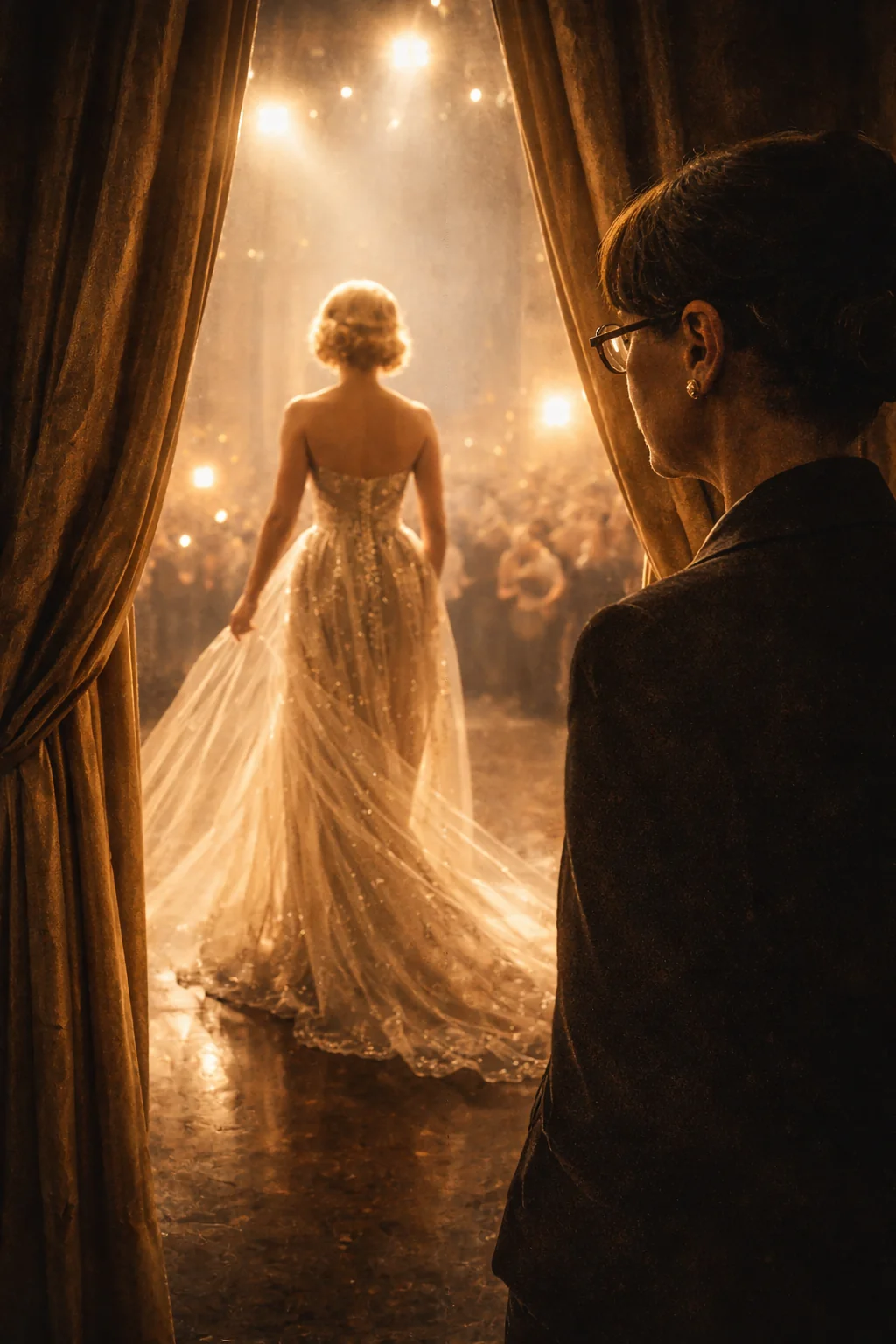
Before Grace Kelly entered a room, before Audrey Hepburn became a princess, and before Gloria Swanson descended a staircase like an ancient goddess of cinema, someone had decided how each woman should appear before the audience.
Edith Head
Between the workshop and the screen
The 1968 memorandum
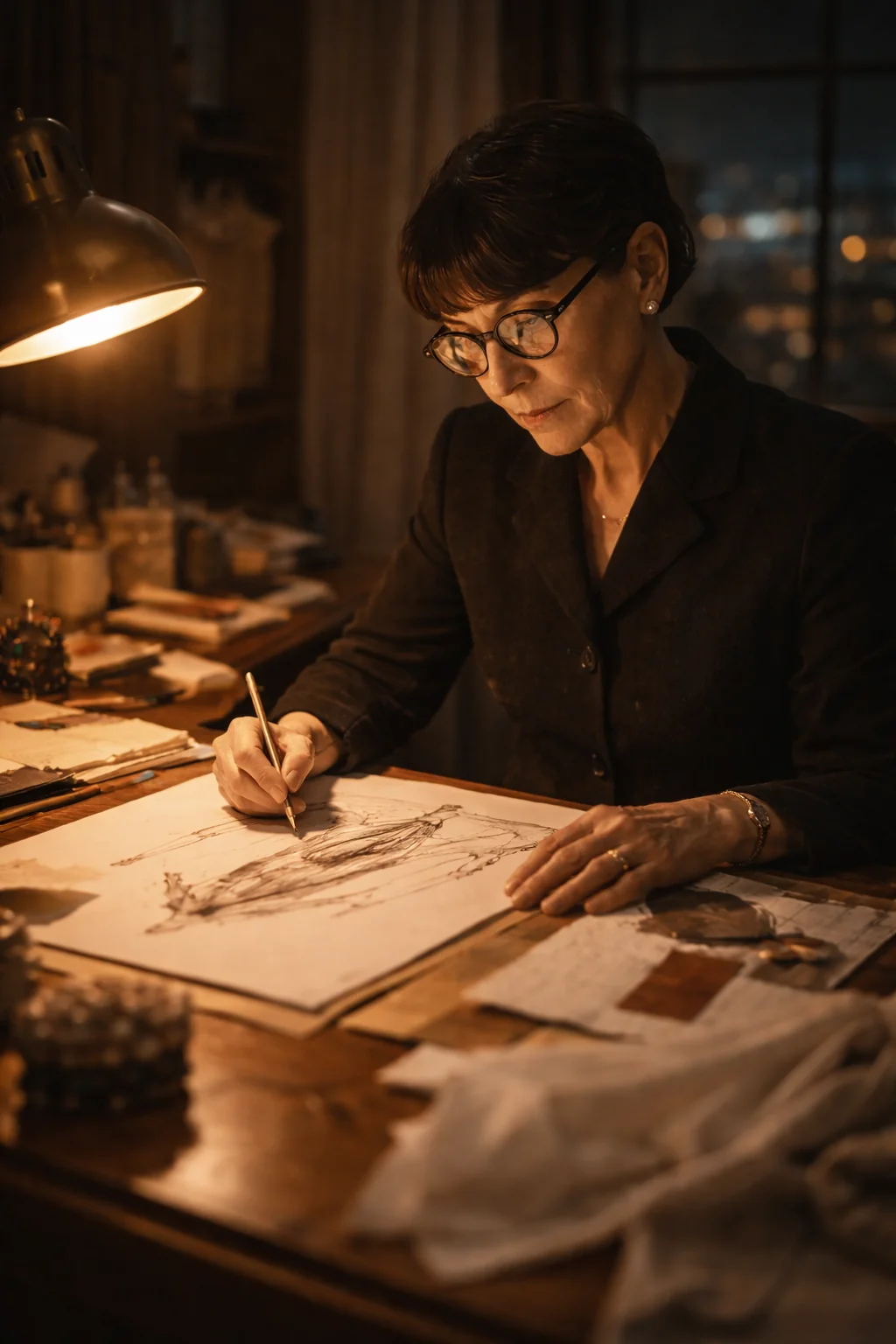
The Academy preserves a 1968 memorandum containing Head’s advice for Oscar attendees. This working document provides evidence of her role in the ceremony beyond the awards she received. This card’s illustration evokes the craft; the link leads to the document reproduced by the institution (Academy of Motion Picture Arts and Sciences, 2015).
1. The Woman Behind the Star
Costume design is not simply the selection of beautiful clothes. Fabric can reveal wealth, fear, desire, danger, or transformation before a character speaks. For more than five decades, Edith Head turned that largely invisible profession into one of classical Hollywood’s most powerful storytelling tools.
The Academy records 35 nominations and eight costume-design Oscars. Her uninterrupted run of nominations covered nineteen ceremonies, from 1949 to 1967, recognizing films from 1948 through 1966. Distinguishing the two calendars prevents a film’s release year from being mistaken for the date of its award (Academy of Motion Picture Arts and Sciences, 2015; Wisconsin Center for Film and Theater Research, n.d.-a).
Despite her fame, Head practiced an art intended to disappear behind other people’s faces. Audiences remembered the gown, the actress, and the scene. They seldom considered the woman who had constructed the illusion.
2. From Spanish Teacher to Designer
Edith Claire Posener was born on October 28, 1897, in San Bernardino, California, according to the Wisconsin Center for Film and Theater Research biography. She spent part of her childhood in mining communities associated with her stepfather’s work. The path that led her to filmmaking began in classrooms, rather than in a couture workshop.
Head studied at the University of California, Berkeley, and received a master’s degree in French from Stanford University. Her first professional positions were teaching French, Spanish, and art at girls’ schools. She knew considerably more about languages than drawing, so she enrolled in evening classes at the Otis Art Institute and the Chouinard Art School (Wisconsin Center for Film and Theater Research, n.d.-b).
In 1924, she saw an advertisement seeking costume sketch artists at Paramount. Doubting her own abilities, she assembled a portfolio that included work borrowed from several Chouinard classmates. Howard Greer, the studio’s costume director, was impressed by its apparent variety and hired her.
Head soon admitted that she had not created every drawing. Greer kept her because her daily work proved that she possessed talent, discipline, and an exceptional capacity to learn. The future holder of costume design’s Oscar record had entered Hollywood with a partly borrowed portfolio (Pignuolo, 2024).
3. Learning to Survive the Studio
At Paramount, Head began by sketching and creating costumes for extras and minor characters. She learned under Howard Greer and later Travis Banton, one of the leading designers of the 1930s.
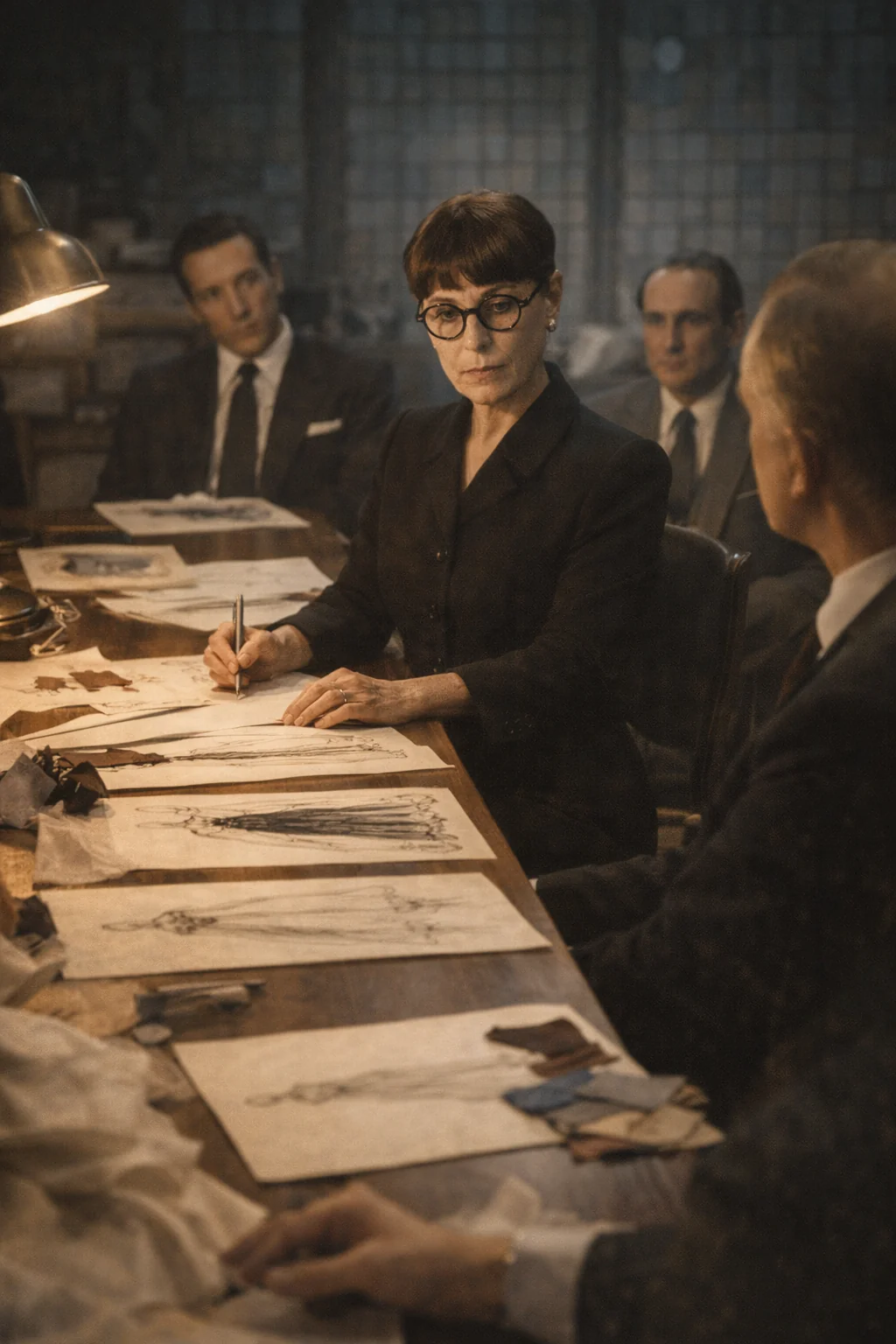
The studio system was an industrial structure. Designers, sketch artists, cutters, tailors, seamstresses, embroiderers, and fabric specialists worked on multiple productions simultaneously. Although the department head’s name appeared in the credits, every picture emerged from a vast collective operation.
Head understood that success required more than drawing attractive gowns. She had to interpret scripts, satisfy directors, remain within budgets, coordinate workshops, and earn the confidence of stars who knew that a camera could magnify every feature of their bodies.
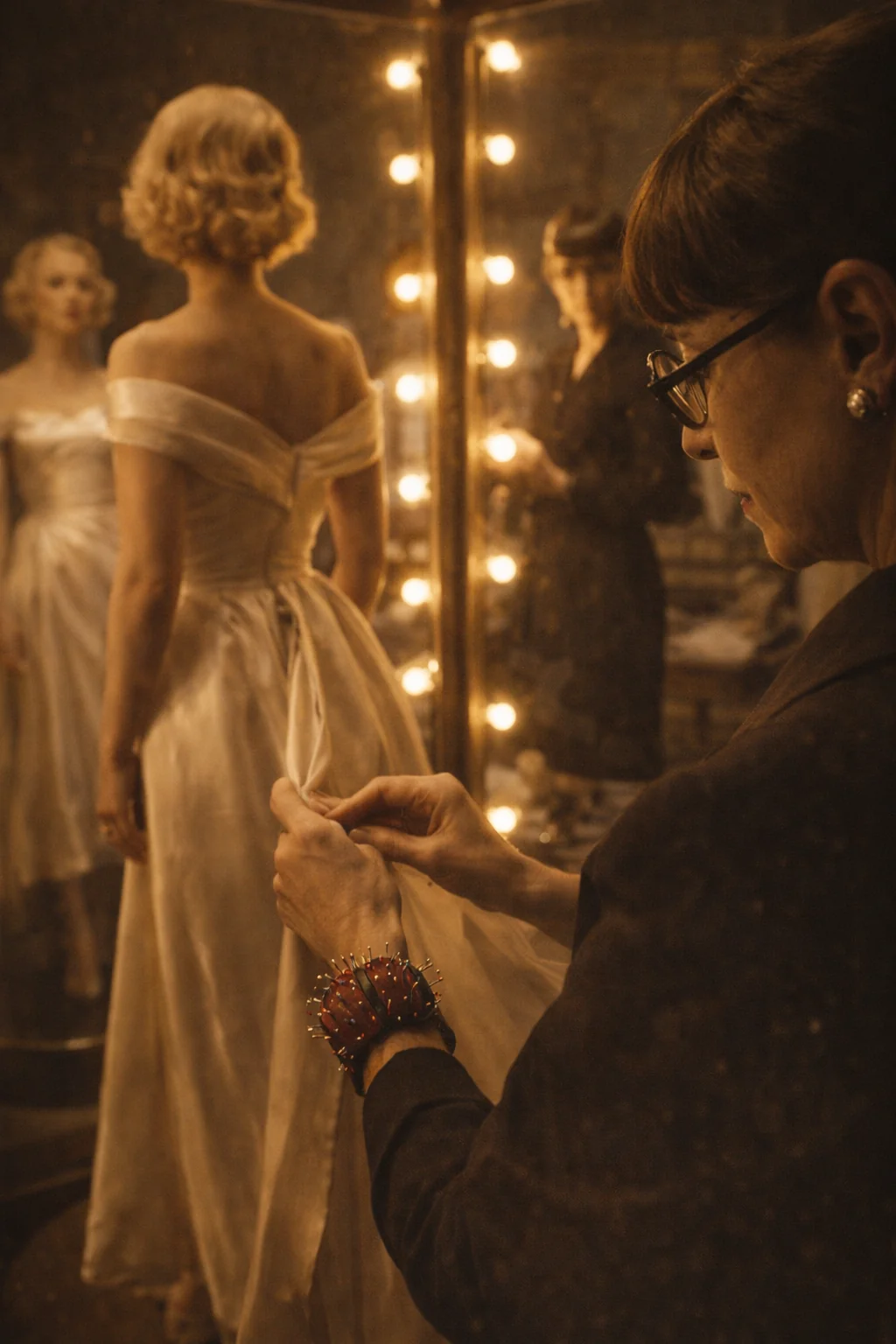
A costume fitting was also a negotiation: a garment had to work for the actress, the character, and the camera. Trust did not replace technical work, but helped make it possible. A silhouette might flatter a star while contradicting the character’s social position or emotional state; finding a balance was part of the craft.
After Banton left in 1938, Head became Paramount’s head designer. The promotion gave her authority within a system that demanded coordination of teams and productions as well as the conception of individual garments (Wisconsin Center for Film and Theater Research, n.d.-b).
4. Dressing the Character, Not Merely the Actress
Head believed that costume should help a performer become someone else. Her purpose was not to display fashion independently of the story but to construct a visible identity.
In The Heiress (1949), the wardrobe accompanies Olivia de Havilland’s movement from insecurity toward emotional hardness. Head received her first Oscar at the 1950 ceremony, sharing the award with Gile Steele. The award recognizes a collaboration, not work executed by one person alone (Academy of Motion Picture Arts and Sciences, 1950).
In All About Eve (1950), clothes communicate theatrical hierarchies and rivalries. Bette Davis’s off-the-shoulder gown helps establish Margo Channing’s presence: elegance, authority, and vulnerability can coexist in one image. Head shared the black-and-white costume Oscar with Charles LeMaire in 1951 (Academy of Motion Picture Arts and Sciences, 1951).
Elizabeth Taylor’s pale gown in A Place in the Sun (1951) offers another contrast: its delicacy contributes to the promise of a life beyond the protagonist’s reach. The Academy’s collection includes materials from this production. Studying them makes it possible to examine costume as part of the staging, rather than as a list of attractive garments (Academy of Motion Picture Arts and Sciences, n.d.).
5. What Clothes Communicate Before Dialogue
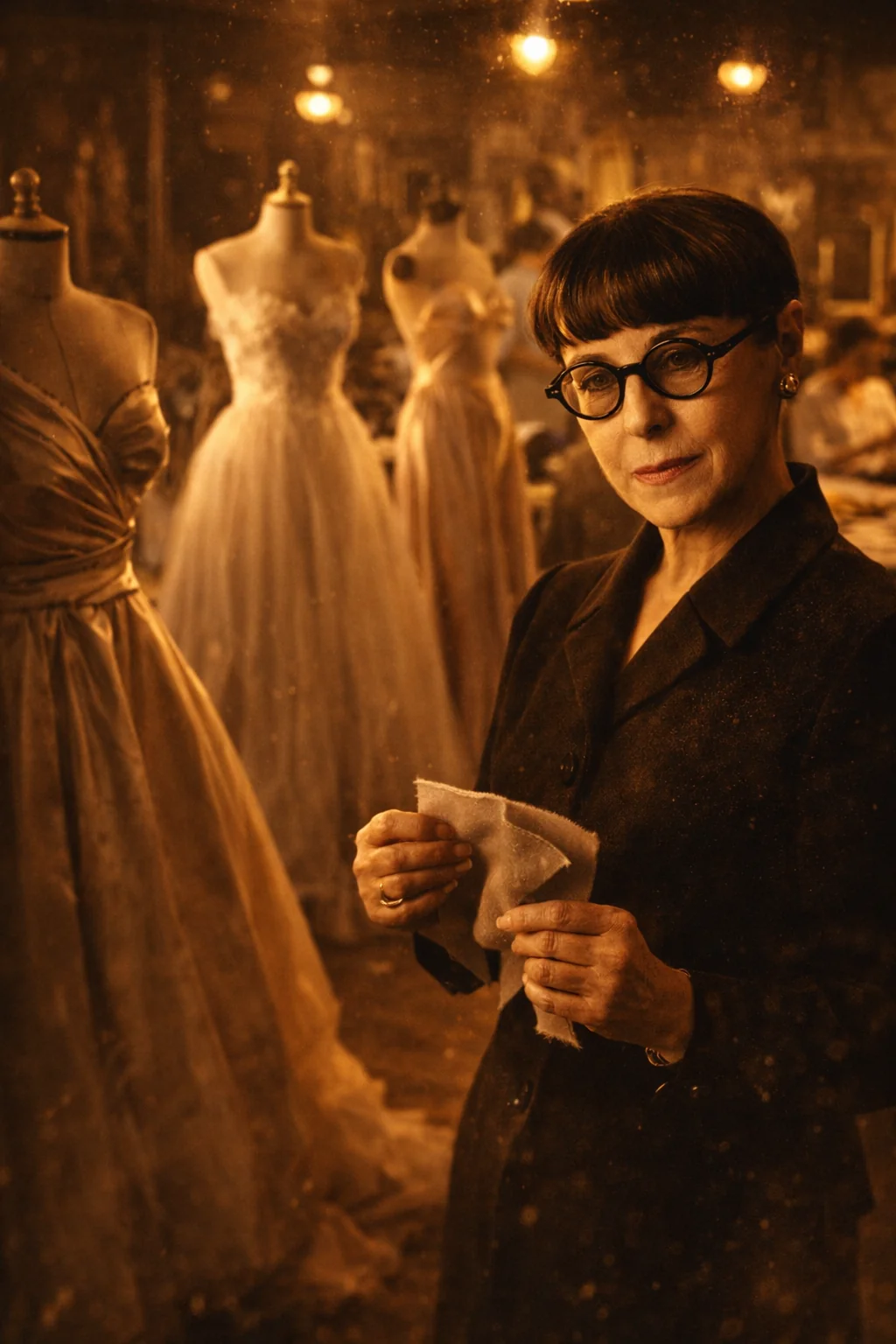
Costume directs the eye. A defined waist, a stiff fabric, or a skirt that occupies space changes how we perceive a body within the frame. There is no universal dictionary in which every color always means the same thing: its effect depends on lighting, setting, movement, and the story.
To read Head’s work, it helps to compare scenes rather than isolate dresses. Who can move freely? Who appears uncomfortable? Does a change of clothing accompany a genuine transformation or a performed identity? Such questions invite viewers to analyze what they see without presenting an interpretation as the designer’s documented intention.
There is also a difference between a sketch and the garment that appears on film. Fittings, materials, workshops, and decisions made during production intervene between them. A surviving drawing is evidence of one stage of the process; it does not, on its own, prove that every detail reached the screen unchanged.
6. Grace Kelly and Costume as Suspense
Head’s collaboration with Alfred Hitchcock demonstrated how clothing could participate directly in storytelling. She designed for eleven of his films, including Notorious, Rear Window, To Catch a Thief, Vertigo, and The Birds (Deutsche Kinemathek, n.d.).
In Rear Window (1954), Grace Kelly plays Lisa Fremont, an elegant woman connected to the fashion world who enters the confined apartment of an injured photographer. In her opening appearance, Lisa wears a black bodice and a voluminous white tulle skirt. Her wardrobe appears to belong to a luxurious world entirely separate from the protagonist’s domestic confinement.
The contrast between Lisa’s sophisticated clothes and her dangerous actions can be read as one of the film’s tensions. Her development should not be reduced to a straight progression from luxury to practicality: she also acts while wearing an elegant dress. Costume helps challenge the photographer’s first impression of a woman whose capacity to enter his world he underestimates.
In Vertigo, Kim Novak’s gray suit suggests control, artificiality, and obsession. In The Birds, Tippi Hedren’s green ensemble remains largely unchanged while the surrounding world collapses into chaos. The clothing becomes a stable surface upon which fear, violence, and deterioration accumulate.
7. The Sabrina Controversy
Sabrina (1954) raises an uncomfortable question: what does a single screen credit mean when several people contribute to a wardrobe? Audrey Hepburn approached Hubert de Givenchy for her character’s Paris clothes. The Oklahoma museum describes conflicting accounts of the extent of his contribution; Head received the credit and Oscar, while Givenchy received no screen credit (Pignuolo, 2024).
The official credit identifies who was recognized, but does not automatically settle the authorship of every garment. That distinction matters: Givenchy should not be erased, and a disputed allocation of designs should not be presented as settled fact.
The issue reappears with The Sting. Pignuolo (2024) identifies contributions by Peter Saldutti, Vincent Dee, and Andrea Weaver that were overshadowed by Head’s credit and award. Acknowledging these tensions does not erase her career; it allows us to examine how a department head’s fame could concentrate recognition for collective work.
8. Eight Oscars and a Manufactured Identity
Head won Academy Awards for The Heiress, Samson and Delilah, All About Eve, A Place in the Sun, Roman Holiday, Sabrina, The Facts of Life, and The Sting. Her 35 nominations and eight victories made her the Academy’s most honored individual woman for decades and the record holder in Costume Design (Wisconsin Center for Film and Theater Research, n.d.-a).
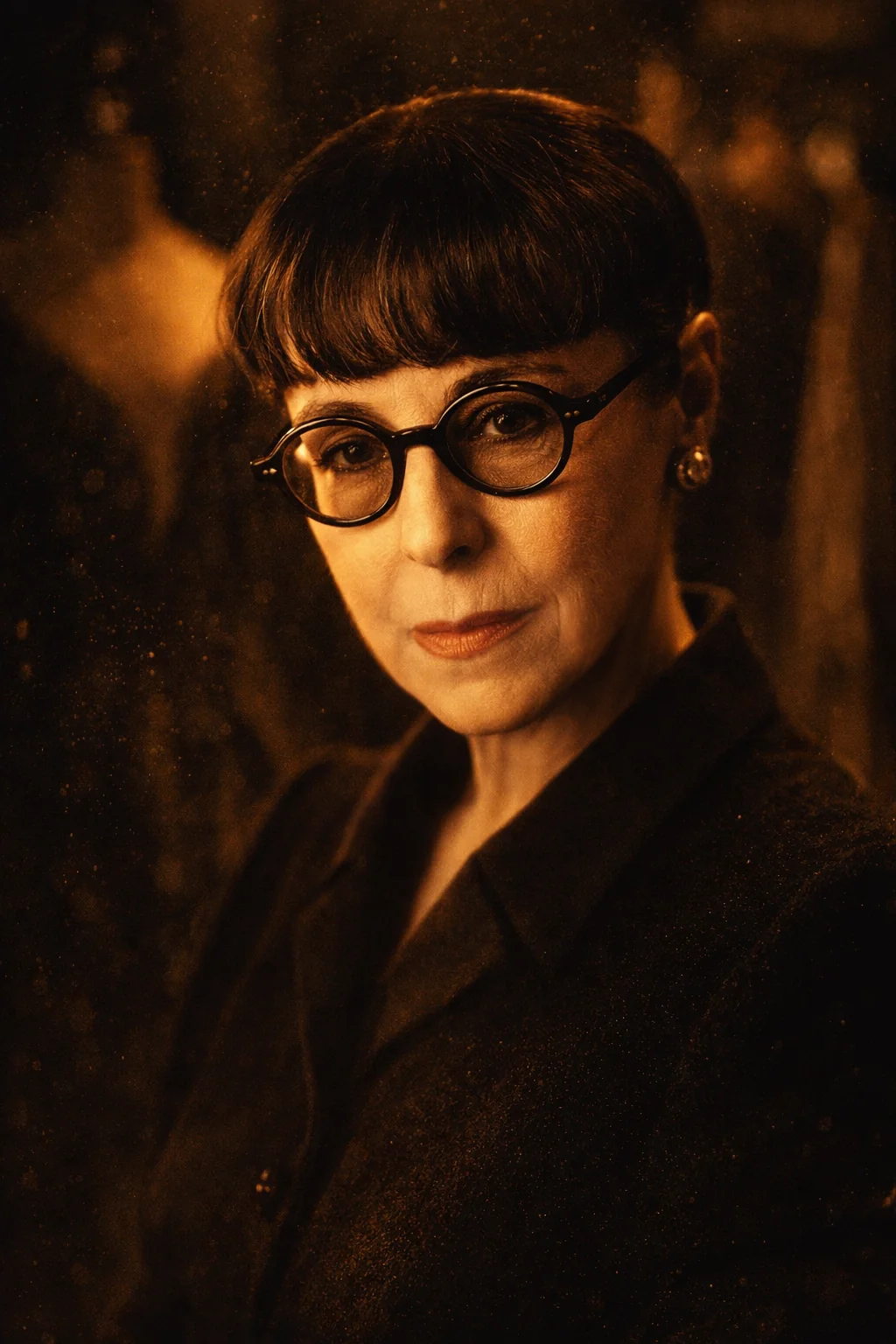
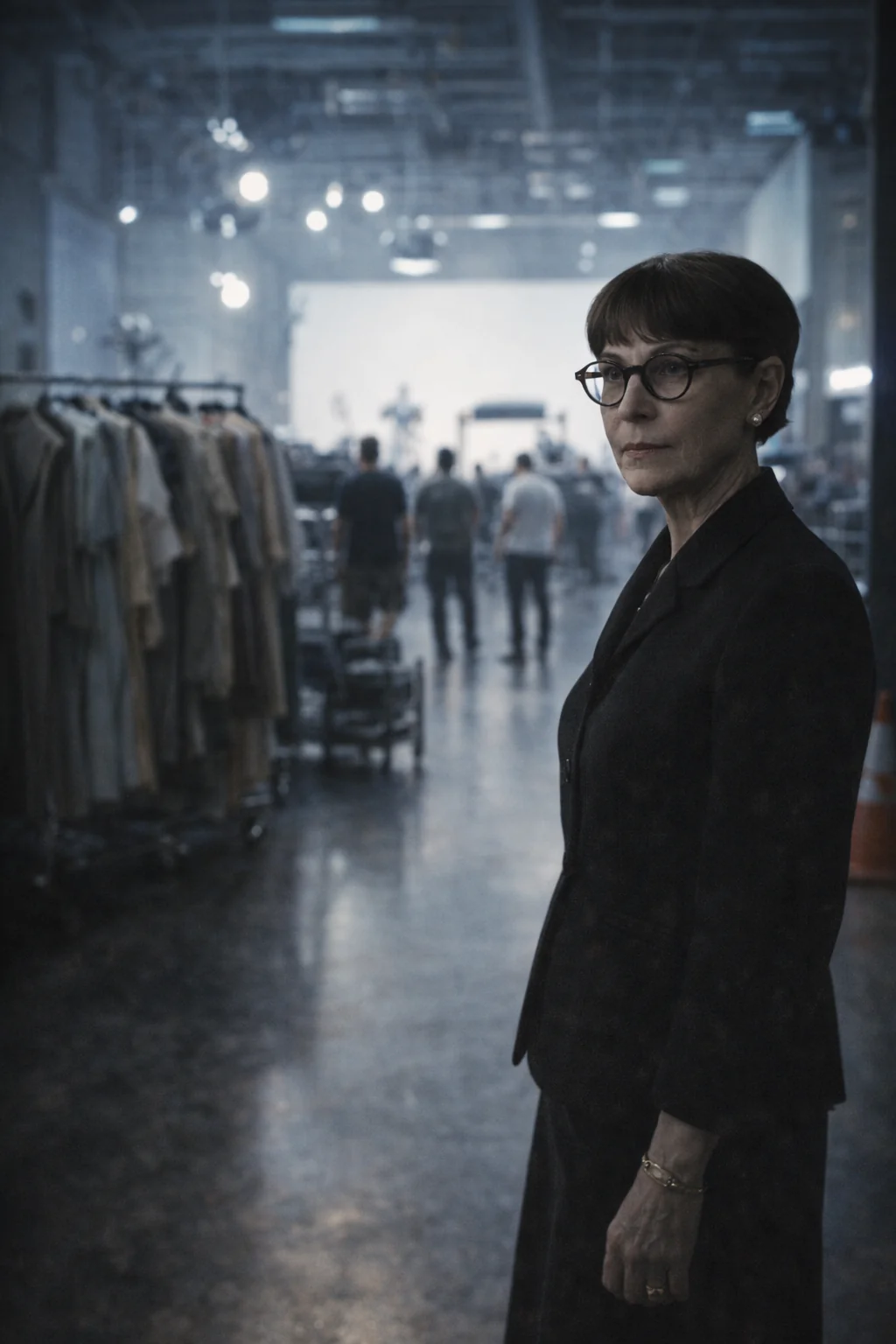
Her fringe, glasses, and restrained suits created a recognizable silhouette. The Academy connects that image with Edna Mode in The Incredibles, but the connection is treated here as a cultural association rather than exclusive authorship of the character’s inspiration. The same profile notes her personal preference for black, white, beige, and brown (Academy of Motion Picture Arts and Sciences, n.d.).
That visibility carried her authority beyond the studios. She wrote books and appeared on radio and television, bringing wardrobe advice to audiences who would never enter a Paramount fitting room. Technical celebrity had an ambiguous consequence: it could make a profession visible while once again allowing one person to stand in for an entire team (Wisconsin Center for Film and Theater Research, n.d.-b).
9. The Little-Known Fact: She Dressed the Oscars Too
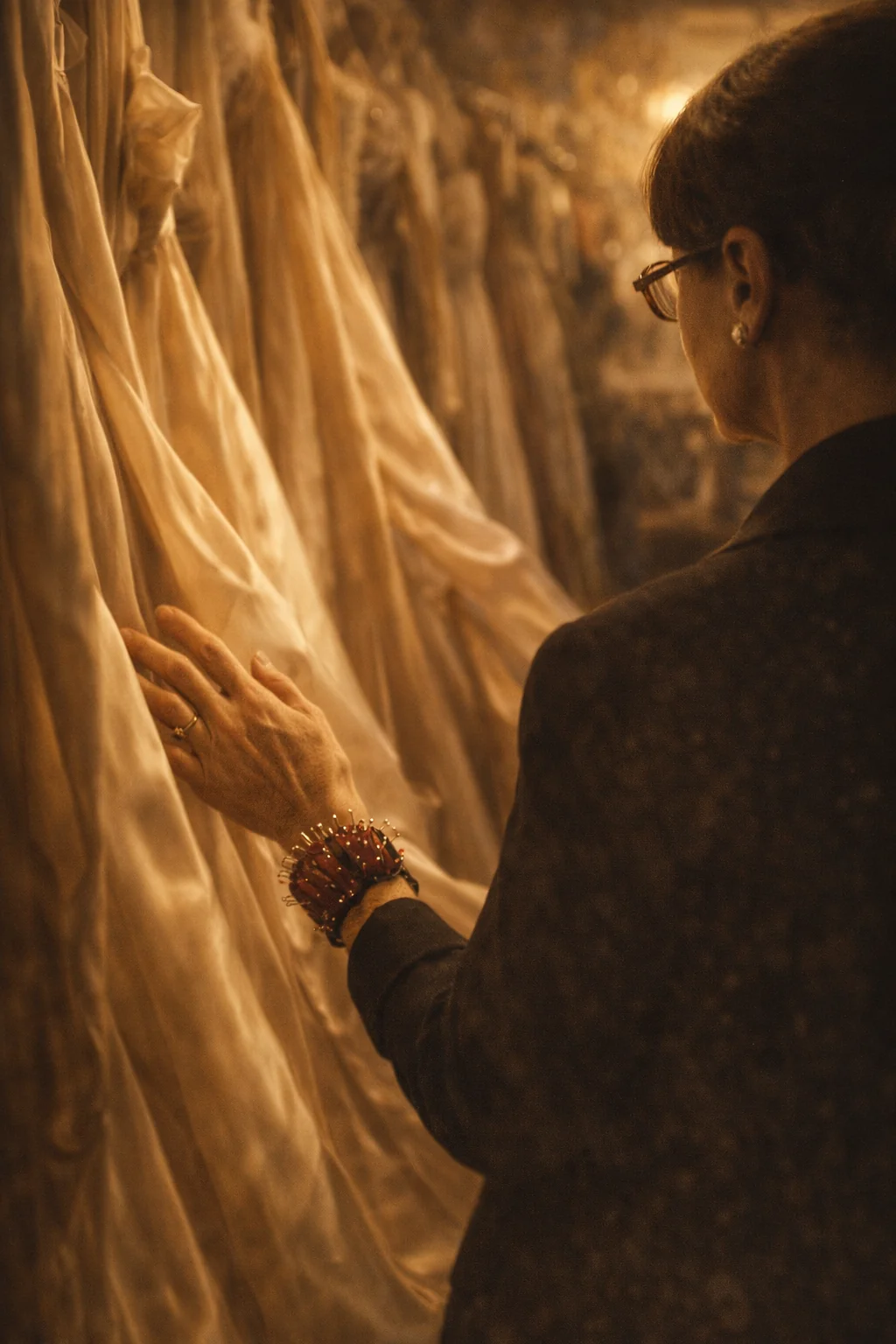
During the 1950s, Head became a fashion consultant for the Academy Awards ceremony itself. Her responsibilities extended far beyond recommending gowns. She had to understand how colors, fabrics, and jewelry would behave under television cameras.
The transition from black-and-white to color television required different judgments. Head recommended pastels and warned about reflections from rhinestones; concerns about red related to reproduction problems with early color television cameras. Conflating the two technologies changes the meaning of her advice. Her responsibilities also included emergency backstage repairs (Academy of Motion Picture Arts and Sciences, 2015).
The woman who won eight Oscars therefore helped determine the visual appearance of the ceremony presenting them. Her influence extended from cinematic fiction to the public spectacle constructed around the movies.
10. The Final Stitch
In 1967, after more than four decades at Paramount, Head moved to Universal. Her Hollywood Walk of Fame star was dedicated on April 24, 1974. That same year she received her final Oscar for The Sting (1973), not in 1976. The ceremony record and the Walk of Fame register establish the two dates independently (Academy of Motion Picture Arts and Sciences, 1974; Hollywood Walk of Fame, n.d.).
Her final production was Dead Men Don’t Wear Plaid, a film-noir parody starring Steve Martin. The unusual assignment required her to create new garments that could visually match footage taken from older films. Edith Head died on October 24, 1981, only weeks after completing her work. The film, released in 1982, was dedicated to her (American Film Institute, n.d.).
The stars she dressed remained famous, while many of the people who cut, stitched, embroidered, and fitted their clothes remained anonymous. Head partially escaped that invisibility, but her story also represents the hidden machinery that sustained Hollywood’s image.
She did not merely place clothes on celebrated bodies. She created characters, transformed insecurities into silhouettes, and turned fabric into memory. Whenever audiences remember Grace Kelly’s entrance, Audrey Hepburn’s transformation, or the dangerous elegance of a Hitchcock heroine, they are still looking at the work of Edith Head.
Timeline
| Year | Event |
|---|---|
| 1897 | Born on October 28. |
| 1924 | Joins Paramount. |
| 1938 | Becomes head designer. |
| 1950 | Receives her first Oscar for The Heiress, with Gile Steele. |
| 1967 | Moves to Universal. |
| 1968 | Writes the memorandum for Oscar attendees. |
| 1974 | Wins for The Sting and receives her Hollywood star. |
| 1981 | Dies on October 24. |
| 1982 | Dead Men Don’t Wear Plaid is released. |
Sources
- Academy of Motion Picture Arts and Sciences. (1950). The 22nd Academy Awards.
- Academy of Motion Picture Arts and Sciences. (1951). The 23rd Academy Awards: Memorable moments.
- Academy of Motion Picture Arts and Sciences. (1974). The 46th Academy Awards.
- Academy of Motion Picture Arts and Sciences. (2015, February 11). How to dress for the Oscars.
- Academy of Motion Picture Arts and Sciences. (n.d.). Edith Head.
- American Film Institute. (n.d.). Dead Men Don’t Wear Plaid (1982). AFI Catalog of Feature Films.
- Deutsche Kinemathek. (n.d.). Casting a shadow—Creating the Alfred Hitchcock film.
- Hollywood Walk of Fame. (n.d.). Edith Head.
- Pignuolo, K. (2024, July 29). Edith Head’s controversies. Oklahoma City Museum of Art.
- Wisconsin Center for Film and Theater Research. (n.d.-a). Edith & Oscar: An overview. University of Wisconsin–Madison.
- Wisconsin Center for Film and Theater Research. (n.d.-b). Personal papers: Biography of Edith Head. University of Wisconsin–Madison.
More from this collection
Florence Nightingale: The Woman Behind the Lamp and the Numbers
Read story →
Dolores del Río: The Star Who Conquered Hollywood and Returned to Mexico to Become an Actress
Read story →