In this storyOpen index
Mata Hari: The Woman Behind the Myth of the Irresistible Spy
Between stage reinvention and wartime archives: the documented story behind the legend.
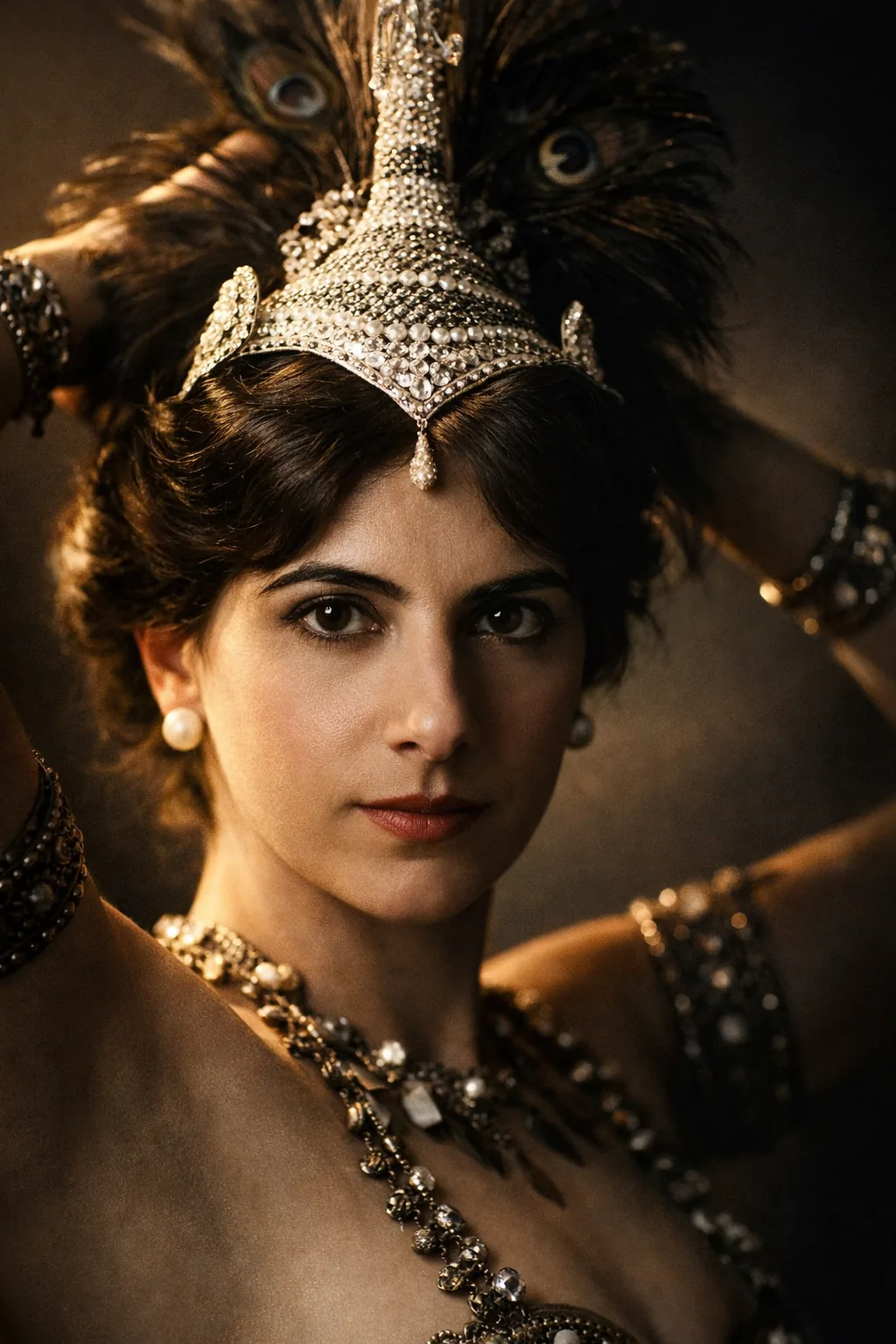
At dawn on October 15, 1917, Margaretha Geertruida Zelle was taken before a firing squad at Vincennes, outside Paris. France was enduring one of the most difficult moments of the First World War. Casualties were mounting, morale had collapsed, and fear of spies had become a national obsession. That morning, it was not only a woman convicted of espionage who died. A legend also began to take its definitive form.
The world would remember her as Mata Hari: exotic dancer, courtesan, seducer of military officers, and alleged double agent responsible for thousands of deaths. Yet documents preserved in French, British, and Dutch archives tell a far less spectacular story. Mata Hari accepted German money, entered into dealings with French intelligence, and made dangerously reckless decisions during wartime. What was never proved was that she obtained or transmitted decisive military information.
Her story raises an uncomfortable question: how much of her reputation as a spy came from her actions, and how much from the legend others built around her?
Mata Hari
A life told through stages, borders, and archives
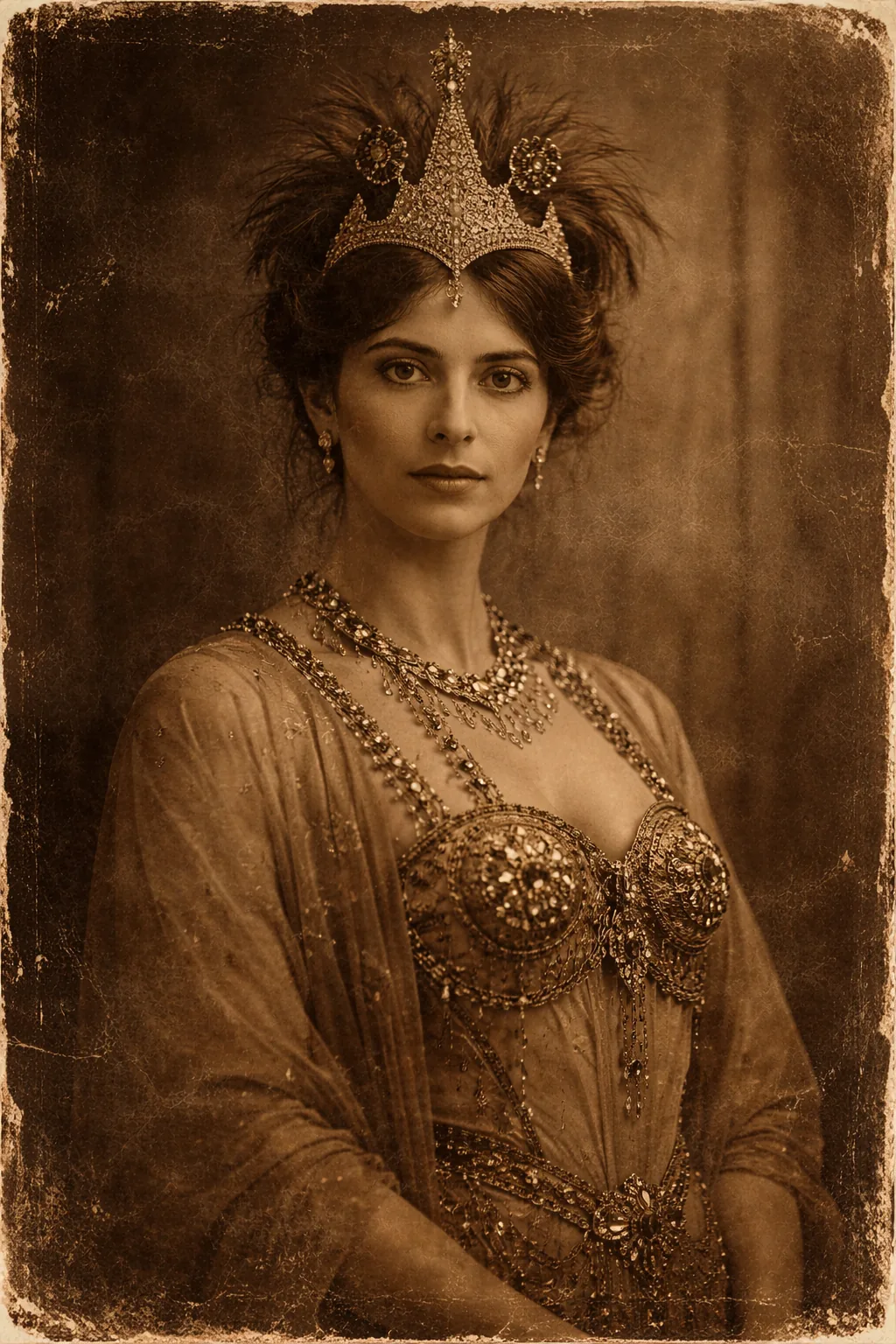
Mata Hari’s scrapbooks
The Fries Museum preserves scrapbooks of press coverage of her career. The collection offers a view of the public persona she built before espionage overshadowed her life. This card’s illustration is a recreation; the link leads to the museum collection.
From Margaretha Zelle to Mata Hari
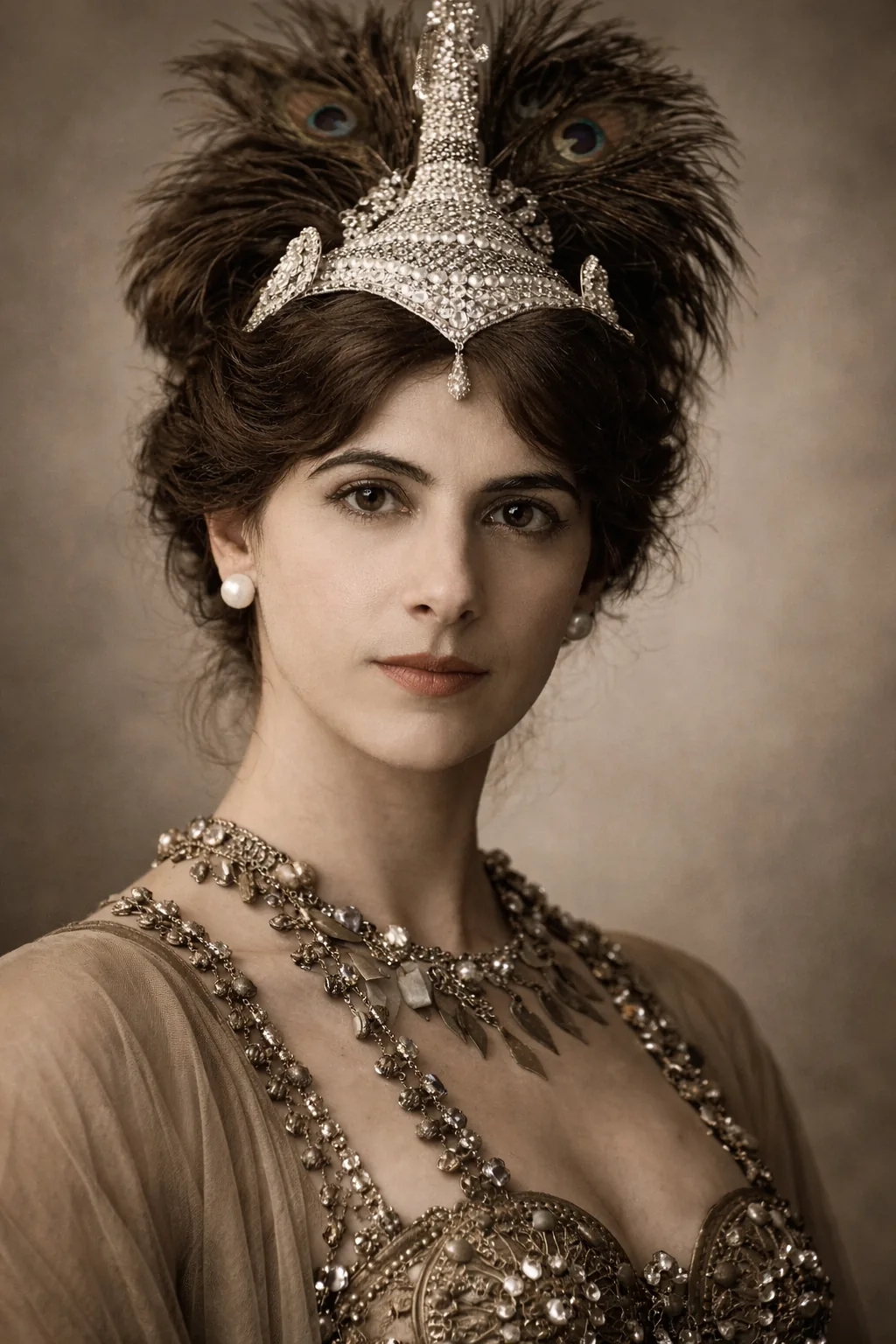
Margaretha was born on August 7, 1876, in Leeuwarden, the Netherlands. Her father, Adam Zelle, had achieved a degree of prosperity as a merchant, but his businesses eventually failed. When Margaretha was thirteen, the family’s security collapsed. Her parents separated and her mother died shortly afterward. The girl was sent to live with different relatives, an experience that may have encouraged her later determination to reinvent herself.
At eighteen, she answered a matrimonial advertisement placed by Rudolf MacLeod, a considerably older officer in the Dutch colonial army. They married in 1895. Their son Norman was born in the Netherlands before the family moved to the Dutch East Indies, now Indonesia, in 1897. Their daughter Jeanne was born later in Java.
The marriage was violent and unhappy. Their young son Norman died in 1899; the circumstances of his death remain disputed.
After returning to Europe, the couple separated. Although initially awarded custody of her daughter, Margaretha became separated from her and tried to regain her. She arrived in Paris in 1903 with little money and began seeking a new life.
Inventing an Eastern Princess
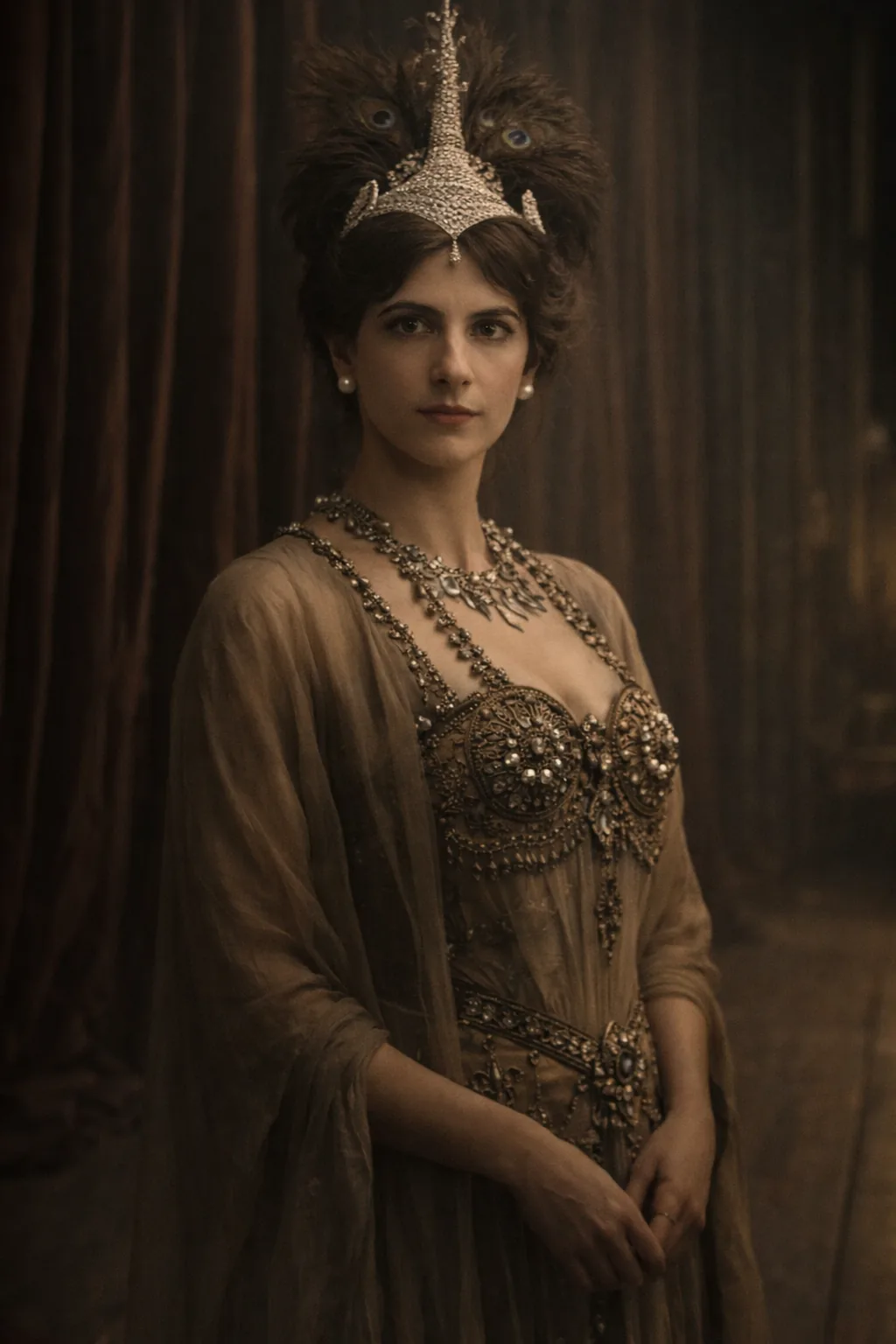
Paris was fascinated by everything Europeans regarded as “exotic.” Colonial exhibitions, reconstructed Asian temples, and Orientalist performances encouraged fantasies about territories most spectators had never visited. Margaretha understood that appetite and created a character capable of satisfying it.
In 1905, she began performing under the name Mata Hari, a Malay expression generally translated as “eye of the day” or “sun.” She claimed to have been born in Java and initiated into sacred dancing as a child. None of that was true. Identity documents preserved by the French Historical Defence Service clearly established her Dutch origins, but European audiences preferred the legend.
Her performances combined movements loosely inspired by Asian dance with carefully staged nudity. She was not the first performer to use her body as part of a theatrical spectacle, but she displayed an unusual ability to transform her identity into a work of art. She appeared in prominent European theaters and private salons, was widely photographed, received expensive gifts, and associated with diplomats, financiers, aristocrats, and military officers.
Mata Hari did not ask permission to invent herself. Her success, however, also depended on colonial stereotypes that depicted Asian women as mysterious, sensual, and potentially dangerous. Years later, those same fantasies made it easier to portray her as a seductress who extracted military secrets in the bedroom.
By about 1910, her dancing career was declining. She continued to support herself through relationships with wealthy men, but her expenses remained high while her income became increasingly uncertain.
A War That Turned Travel into Suspicion
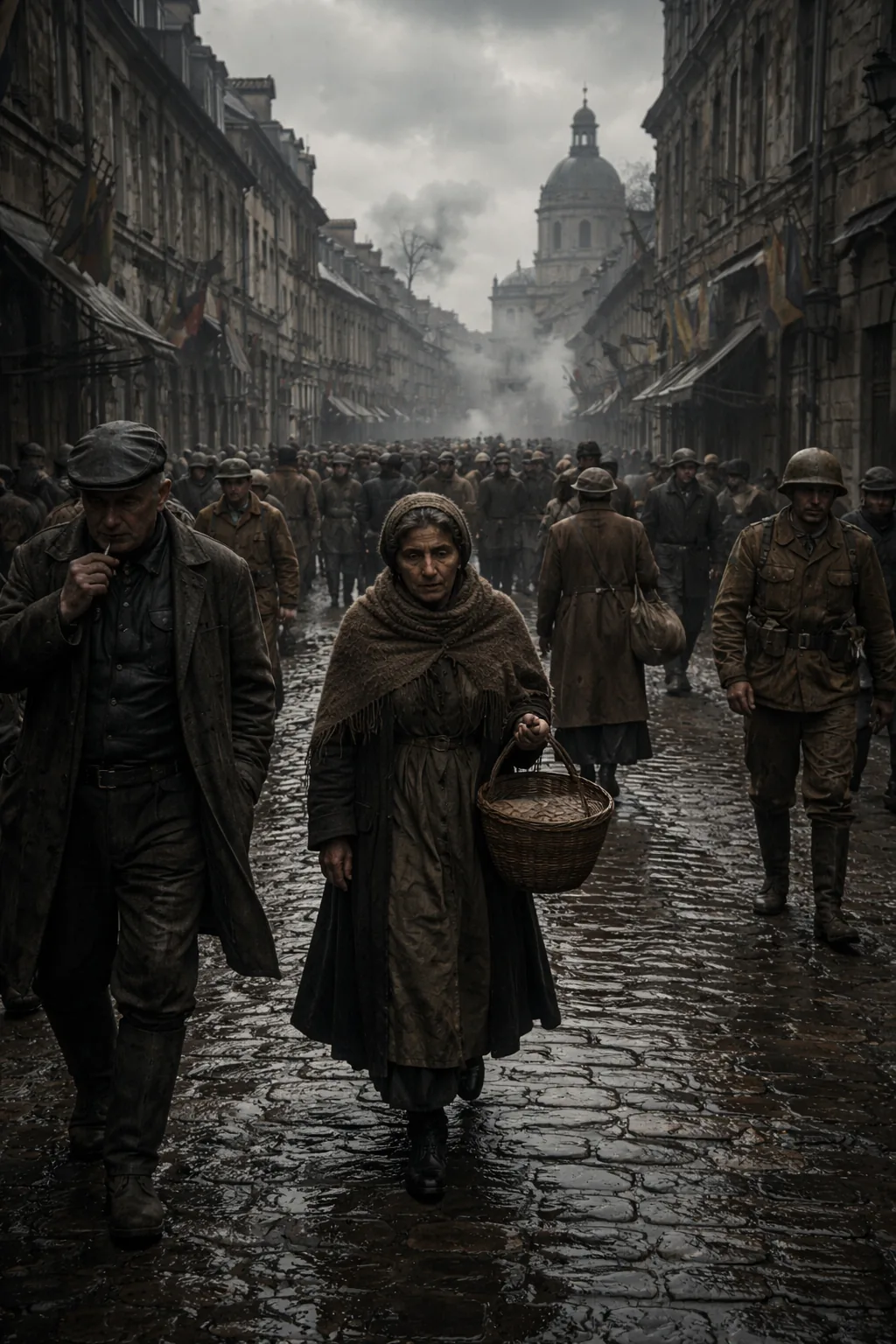
When the First World War began, Mata Hari was in Berlin. German authorities withheld some of her property, and she returned to the Netherlands. As the citizen of a neutral country, she could move across Europe more freely than people belonging to the belligerent nations. What had once been a professional advantage now made her suspicious.
She had relationships with officers of several nationalities, traveled frequently, and constantly needed money. German intelligence considered her a possible informant. Mata Hari later admitted accepting German money and receiving the identification H21. She claimed that she regarded the payment as compensation for property seized in Germany and insisted that she had supplied no important intelligence.
Her connection with German intelligence is documented; the later portrait of a decisive agent is another matter. The Service historique de la Défense notes that, after the war, neither side could demonstrate that she had supplied vital information.
British authorities also watched her. In December 1915, she was detained and questioned during one of her journeys, but investigators found no compromising documents. British files depict her less as a formidable professional spy than as a confused, indiscreet amateur.
The Little-Known Story: A Love Affair That Led to French Intelligence
One of the less familiar episodes in her life began with Vadim Maslov, a young Russian officer serving with the French forces. Mata Hari fell in love with him when she was approaching forty and he was much younger. Maslov was wounded in combat and sent to recover at Vittel, a restricted military area.
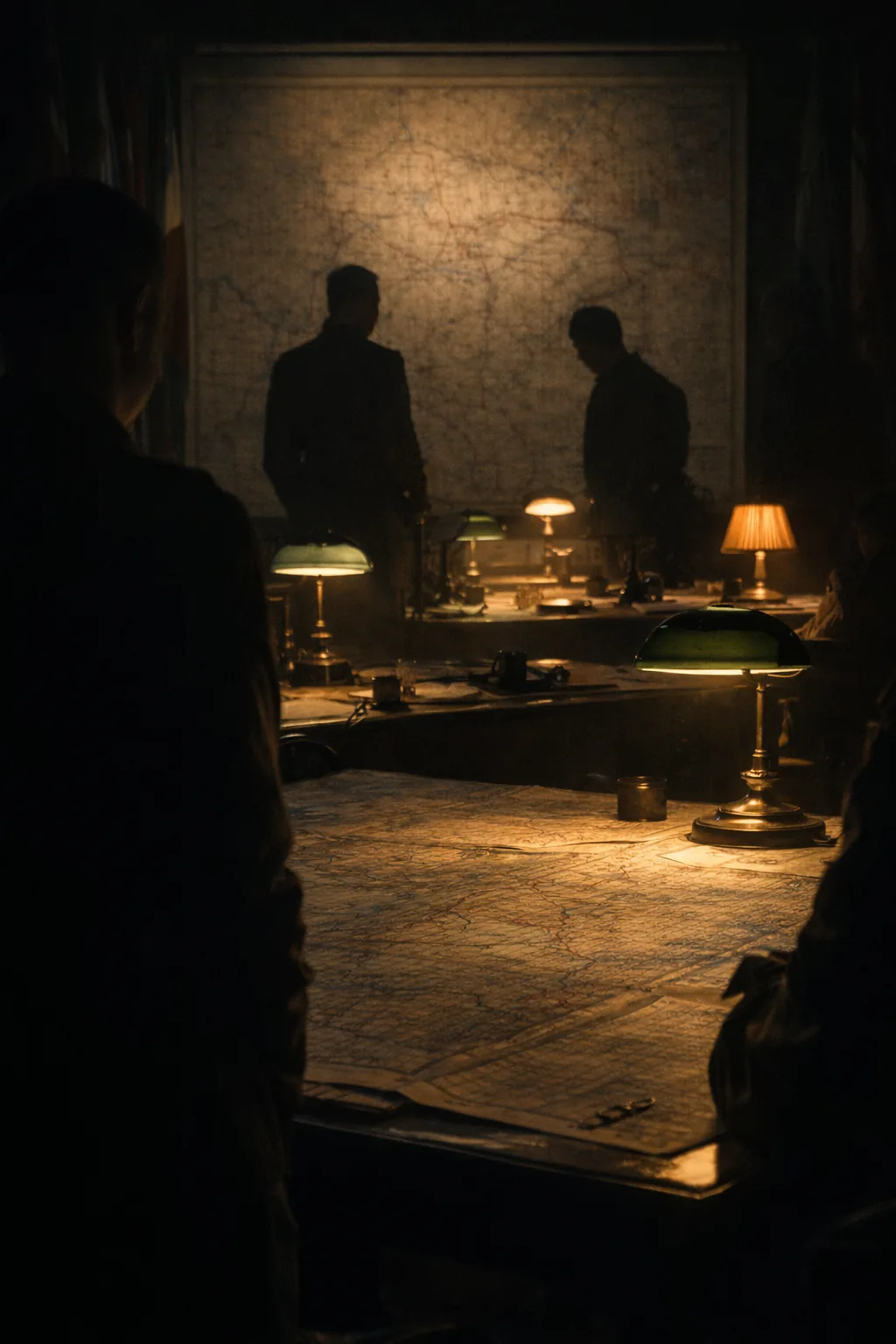
Mata Hari desperately wanted to visit him. To obtain authorization, she approached Captain Georges Ladoux, who headed a French counterintelligence section. Their conversations led to an extraordinary proposal: she offered to work for France and requested an enormous payment, possibly hoping to retire and begin a new life with Maslov. The pass Ladoux granted her to visit the wounded officer demonstrates how closely her involvement in French espionage was tied to that romantic relationship.
In Spain she tried to cultivate the German military attaché Arnold Kalle. German messages concerning Agent H21 were intercepted by the French. The theory that Germany deliberately exposed her must be distinguished from the documented interception.
The 1917 Trial and Its Limits
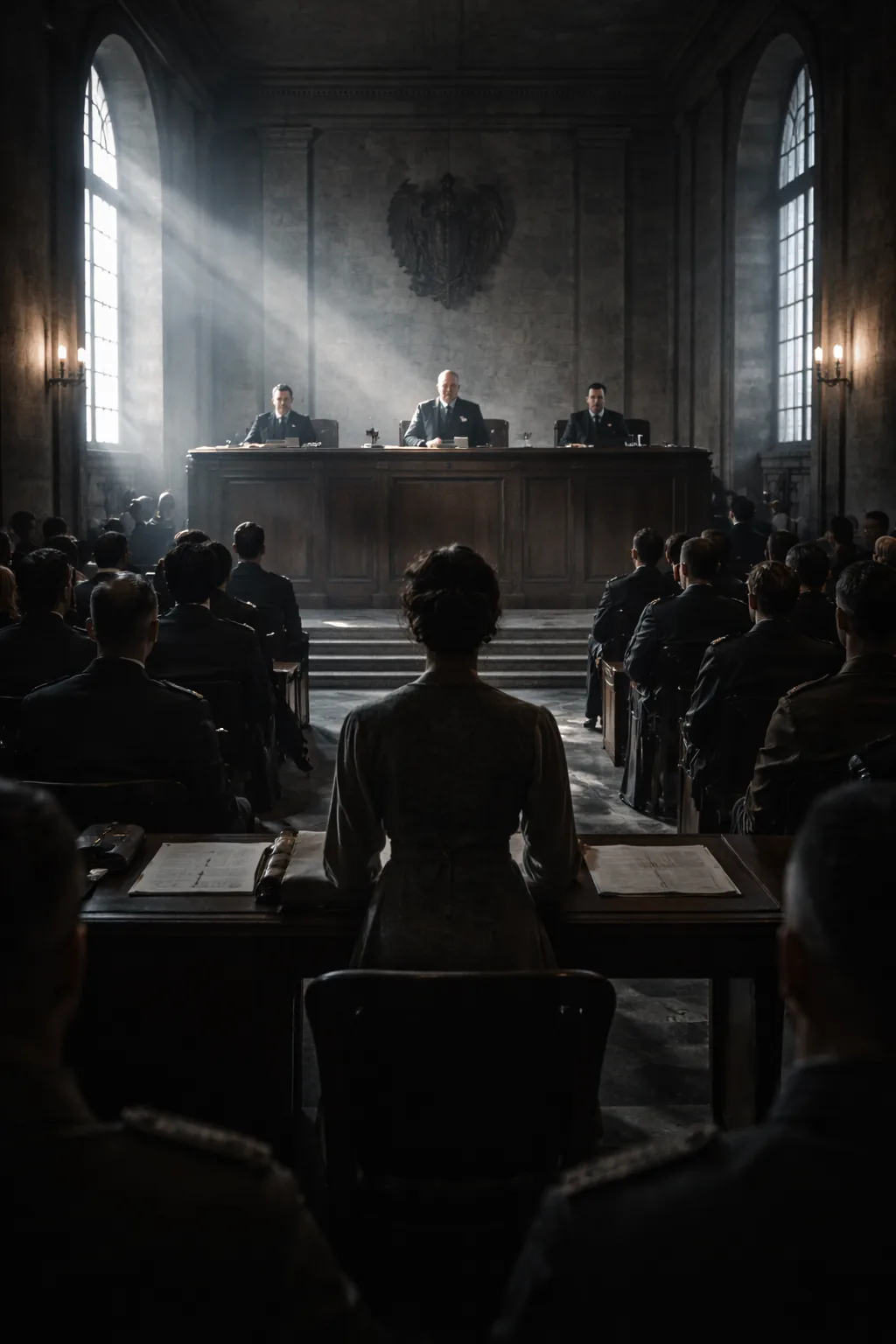
Mata Hari was arrested in Paris on February 13, 1917. Captain Pierre Bouchardon interrogated her for months. She admitted accepting German money but denied delivering secrets that had harmed France.
Her military trial opened on July 24 and lasted two days behind closed doors. The prosecution examined her contacts, journeys, and German payments. The court convicted her of espionage and dealings with the enemy; the actual importance of any secrets she transmitted remains the most disputed part of the case.
The claim that her betrayals caused the deaths of fifty thousand soldiers, repeated for decades, has no solid documentary foundation. It belonged to the propaganda image of a super-spy far more powerful than the woman revealed in the archives.
She was convicted on July 25. A review of the judgment was rejected, and President Raymond Poincaré denied clemency. On October 15, she was executed by firing squad.
The Woman Behind a Useful Legend
Mata Hari accepted German money and negotiated with French intelligence. Those facts alone do not establish the later image of an extraordinary agent capable of determining the outcome of military operations.
There is no convincing evidence that she stole decisive plans through seduction or caused the deaths of thousands of soldiers. French archival research acknowledges that, even after the war, neither the Germans nor the French could demonstrate that she had supplied truly vital intelligence.
Her foreign nationality, independence, and sexual life helped shape a public image of danger. Reading her case as scapegoating is a historical interpretation; it does not replace scrutiny of the records or erase her decisions.
Margaretha Zelle created Mata Hari to escape a life defined by abandonment, violence, and dependence. That invention brought her fame and a measure of freedom. When war came, the same identity was turned against her.
She did not ask permission to change her name, cross borders, or invent a stage identity. Understanding her end requires distinguishing Margaretha Zelle from the two legends that came to obscure her: the Eastern princess and the irresistible spy.
Sources
- Finn, T. (2017, October 13). Mata Hari: the execution of an alleged international spy-mistress.
- Fries Museum. (n.d.). The real story of Mata Hari.
- Fries Museum. (n.d.). Mata Hari: het mysterie.
- Service historique de la Défense. (n.d.). Mata Hari: dossiers du Conseil de guerre et du service de renseignements.
- Service historique de la Défense. (n.d.). L’exécution de la danseuse Mata Hari.
More from this collection
Hannah Arendt: The Woman Who Refused to Think as She Was Told
Read story →
Edith Stein: The Woman Who Dared to Think at the Edge of the Abyss
Read story →