
In this storyOpen index
Agatha Christie: The Woman Who Turned Uncertainty into the Perfect Crime
The life of Agatha Christie: her disappearance in 1926, the creation of Poirot and Miss Marple, and the private worlds of Mary Westmacott.
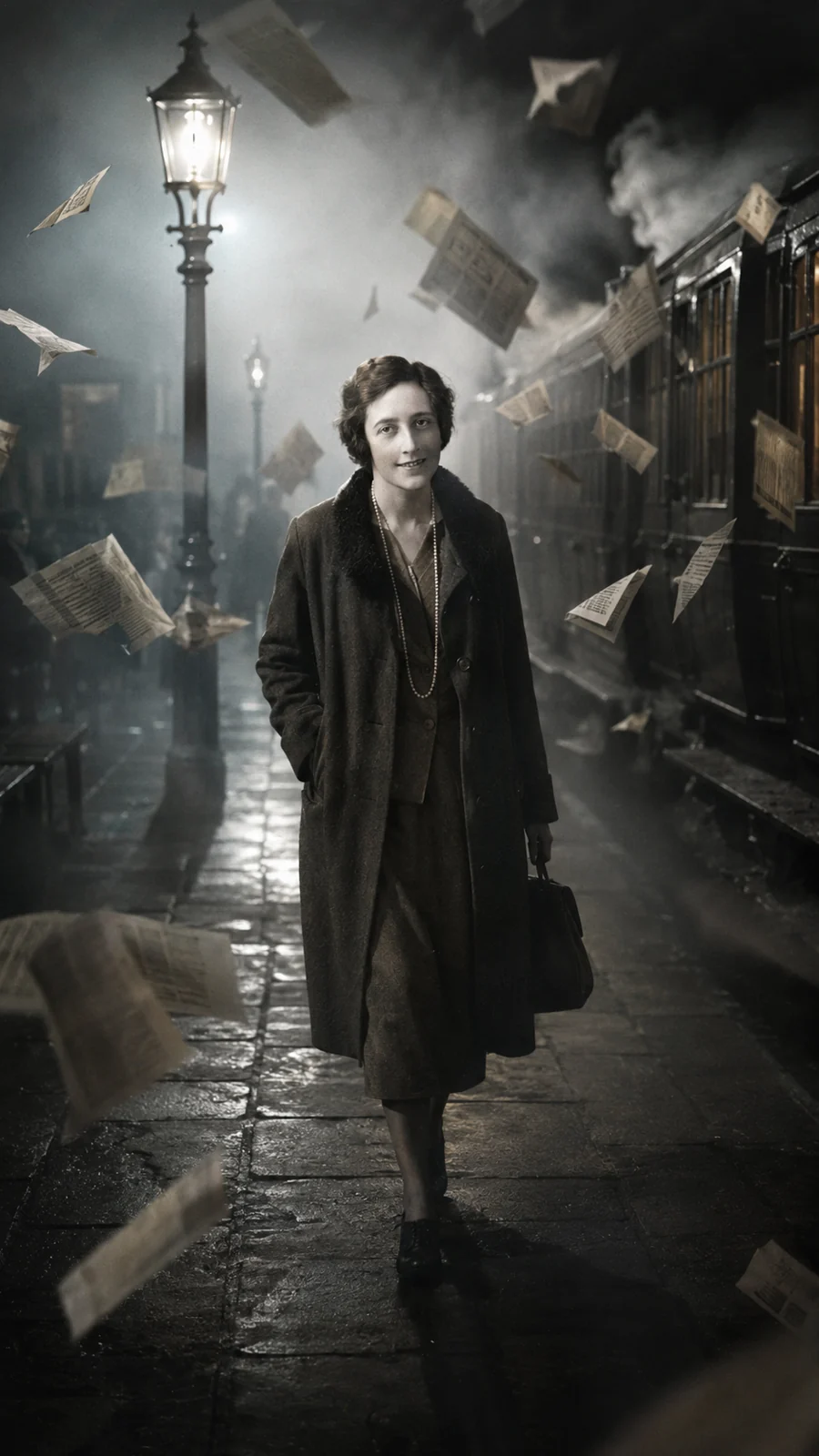
When Agatha Christie disappeared in December 1926, England believed it had entered one of her plots. There was an abandoned car, a missing writer and a marriage falling apart. Yet the story lacked what her novels always promised: a definitive explanation.
The woman who taught millions of readers that every mystery could be solved left an unsolved mystery at the center of her own life.
Agatha Christie
A life beyond the mystery
The disappearance in the archives
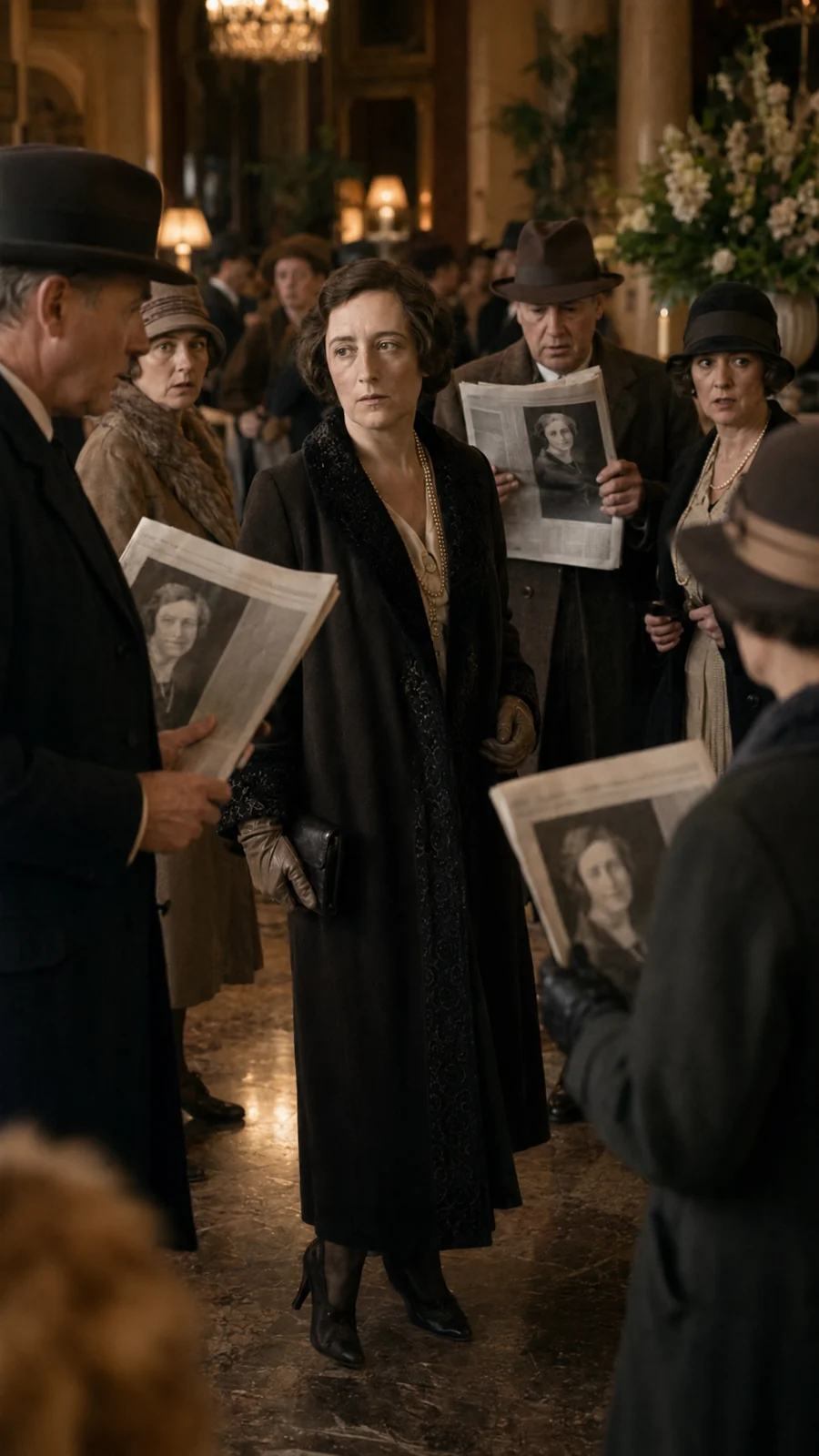
The National Archives preserves a police report about Agatha Christie’s disappearance in December 1926. The document brings readers closer to the investigation and provides a basis for comparing the record with later accounts of the episode. It does not, by itself, establish a definitive explanation of her motives or state of mind. The image is an AI recreation; the link leads to the historical document.
A childhood among stories
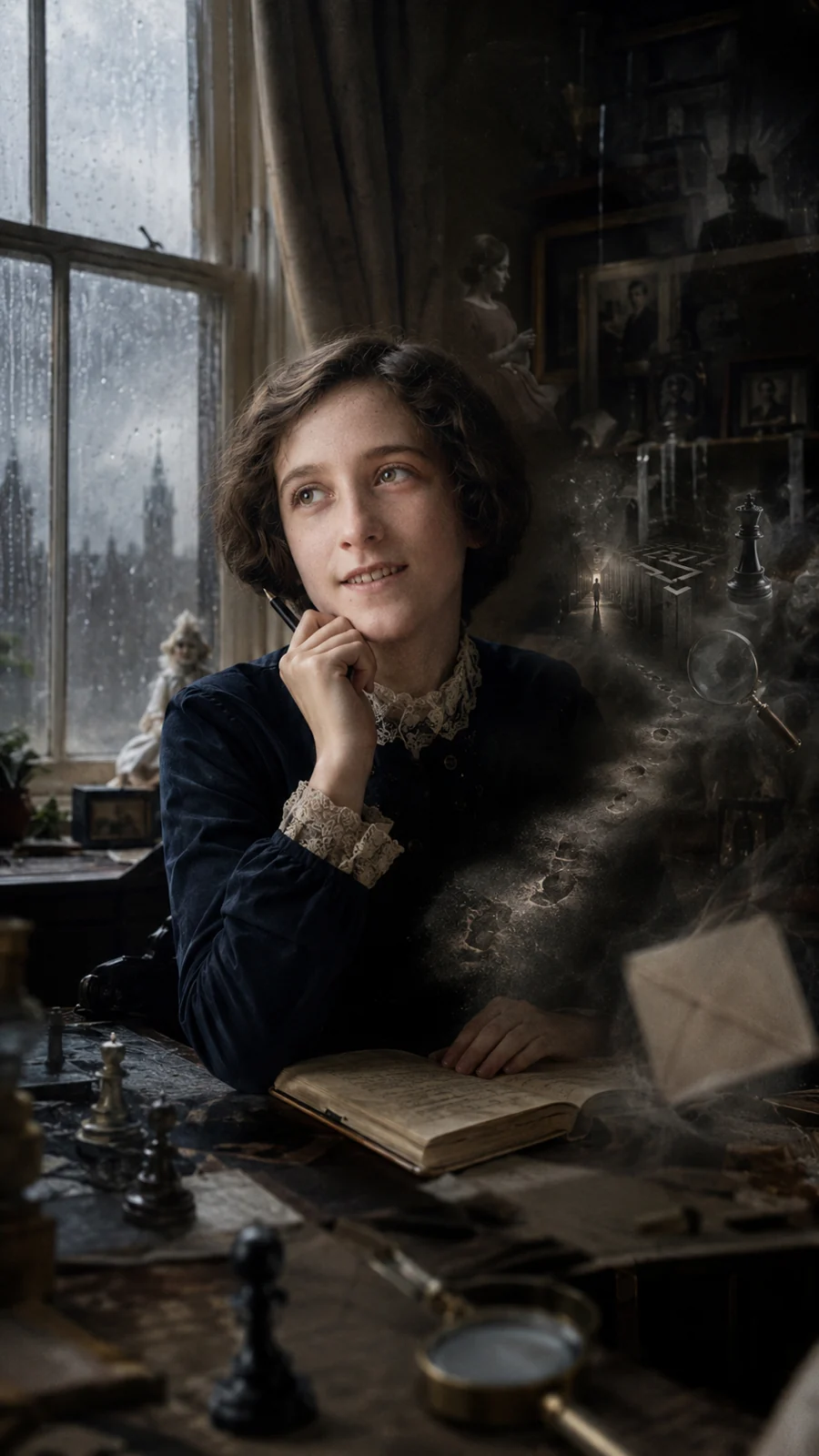
Agatha Mary Clarissa Miller was born on September 15, 1890, in Torquay, a seaside town in southern England. She was the youngest of three children and grew up at Ashfield, a house surrounded by gardens that would later reappear, transformed, in many of her fictional settings.
Her education was unconventional. She was taught mainly at home and learned to read by herself before her mother believed she should. From an early age, she invented imaginary companions and private worlds. She never attended university or received systematic literary training; she built her education by reading from her father’s library and observing the people around her (Christie, 1977).
That childhood ended abruptly when her father, Frederick Miller, died in 1901. The family was left in uncertain financial circumstances. Agatha was eleven and began to understand something that would later become essential to her fiction: behind the appearance of a respectable home could lie fear, fragility and the threat of losing everything.
As a young woman, she studied music in Paris. She possessed talent as a pianist and singer, but her extreme shyness made a performing career difficult to imagine. Writing offered another possibility: she could express herself without standing exposed before an audience.
War and the science of poison
She married Archibald Christie, an aviator in the Royal Flying Corps, on December 24, 1914, after the First World War had already begun. While Archie served in France, Agatha worked as a volunteer nurse at a hospital in Torquay. She later transferred to its dispensary, where she trained as an apothecary’s assistant and learned how medicines were prepared.
That experience transformed her writing. Christie did not use poisons merely as exotic devices: she understood their effects, their doses and the symptoms that could reveal them. Strychnine, arsenic, morphine, cyanide and digitalis appeared in her fiction with unusual accuracy (Harkup, 2015).
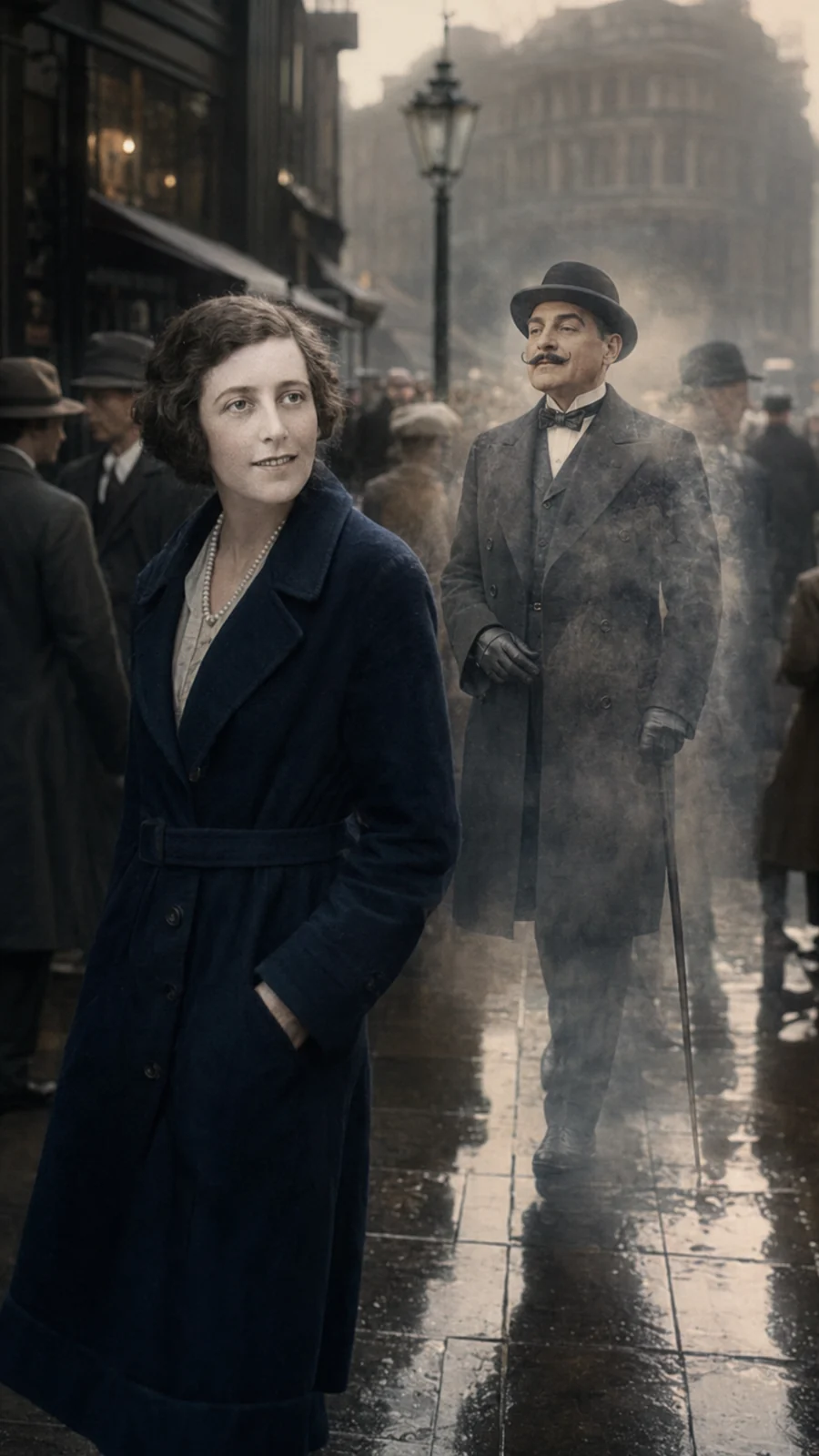
During the war, she began writing The Mysterious Affair at Styles. As she later recalled, her sister Madge had challenged her to produce a detective novel. Christie chose poison as the murder method and created Hercule Poirot, a retired Belgian police officer living as a refugee in England. Belgian refugees staying in Torquay during the war helped inspire the character’s nationality (Christie, 1977).
Several publishers rejected the manuscript. It eventually appeared in the United States in October 1920 through John Lane, followed by the British edition from The Bodley Head in January 1921. Its financial terms were not particularly generous to the author, but the novel began one of the most remarkable careers in crime fiction.
The detective she could not abandon
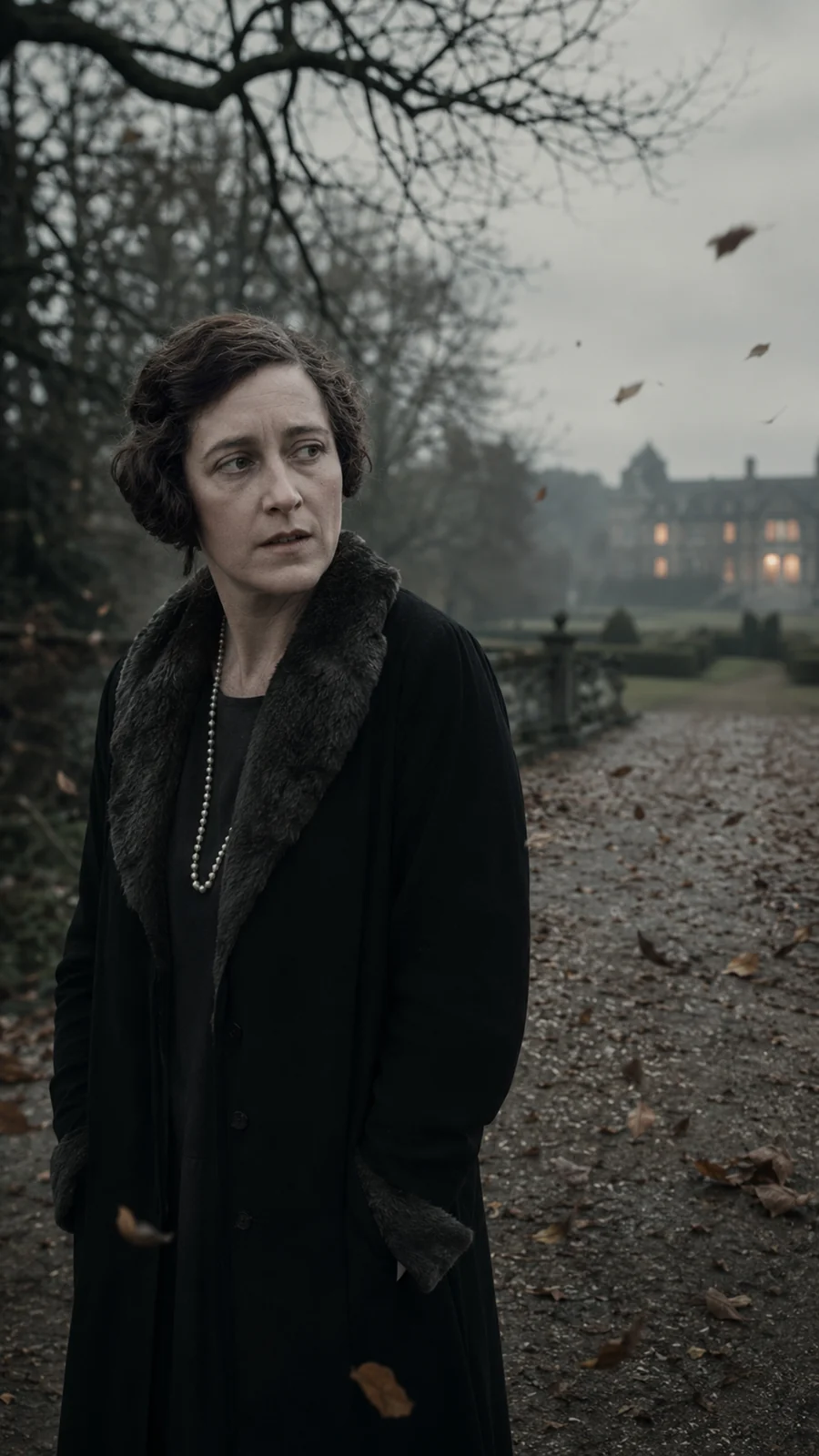
Poirot was meticulous, proud and theatrical. He trusted his “little grey cells” more than physical clues. Christie eventually grew tired of him and privately described him as insufferable, but she understood that her readers needed him.
In 1926 she published The Murder of Roger Ackroyd. The novel broke one of the genre’s fundamental expectations by manipulating the bond of trust between narrator and reader. Some critics accused Christie of cheating; others understood that she had demonstrated how completely a story depends on what its narrator chooses not to reveal. The book secured her reputation and is now regarded as a landmark of detective fiction (Curran, 2009).
Her professional breakthrough, however, coincided with the most painful period of her life.
Eleven days without Agatha Christie
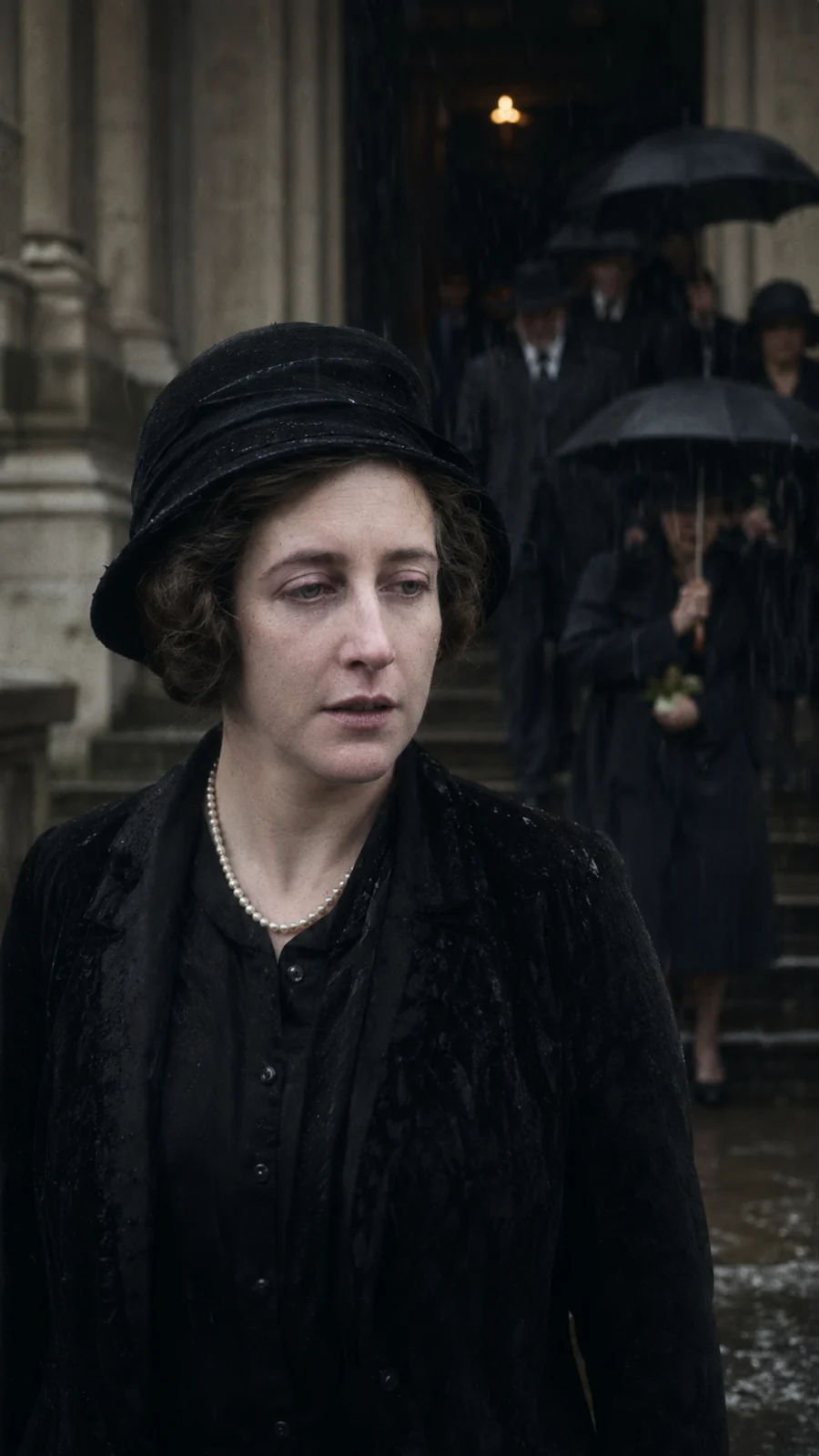
Christie’s mother, to whom she was deeply attached, died in 1926. While Agatha was grieving and attempting to clear the family home, Archie Christie told her that he had fallen in love with another woman, Nancy Neele. He wanted a divorce.
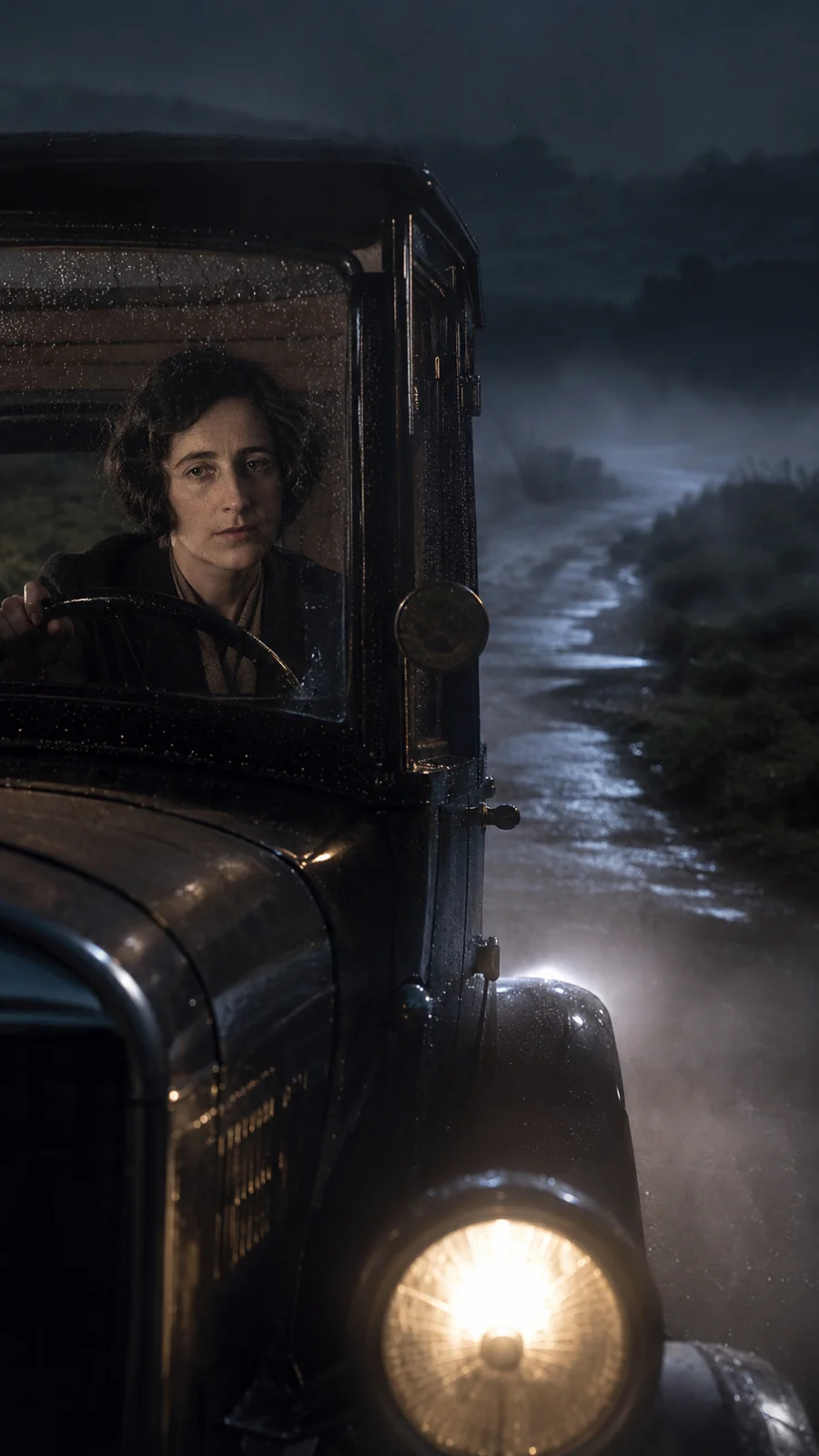
On the evening of December 3, after an argument, Agatha drove away from her home. The next morning her car was discovered near Newlands Corner in Surrey. Clothes and personal documents had been left inside.
Her disappearance triggered a nationwide search involving police officers, volunteers and tracking dogs. Newspapers turned the investigation into a public spectacle. Arthur Conan Doyle, by then strongly interested in spiritualism, even gave one of Christie’s gloves to a medium in the hope of finding a clue.
Eleven days later, Christie was located at the Swan Hydropathic Hotel in Harrogate. She had registered as “Teresa Neele,” using the surname of her husband’s mistress. Archie said that she was suffering from memory loss, and two physicians publicly supported that account. Christie omitted the entire episode from her autobiography.
Many explanations have since been proposed: a dissociative fugue caused by trauma, a suicide attempt, an act of revenge against Archie or a publicity stunt. None has been conclusively proven. Police records and contemporary newspapers can reconstruct the search, but they cannot reveal Christie’s state of mind with certainty (Thompson, 2007; The National Archives, n.d.).
To present any of those theories as fact would be to invent the ending she chose not to write.
Reconstructing a life
Agatha and Archie divorced in 1928. Two years later, while traveling in the Middle East, she met the archaeologist Max Mallowan. He was nearly fourteen years younger than she was. They married in September 1930 and remained together until her death.
The relationship opened a new period of companionship, travel and shared work, while offering an entirely new set of literary landscapes.
She accompanied Mallowan on excavations in Iraq and Syria, helping to photograph, catalogue and conserve finds. Those experiences fed novels such as Murder in Mesopotamia, Death on the Nile and Appointment with Death. Travel and excavation widened her range of settings, from an archaeological expedition to a Nile cruise or a visit to Petra.
She also published Come, Tell Me How You Live, a memoir of the expeditions. Beneath its light tone lies her constant observation of the rivalries, habits and minor tensions produced by communal life.
Miss Marple and the violence behind the curtains
The Murder at the Vicarage, the first Miss Marple novel, appeared in 1930, although the character had already featured in short stories.
Jane Marple looked like a harmless elderly woman interested in knitting and village gossip. Her power came precisely from being underestimated. Christie gave her an unsentimental understanding of human nature: Miss Marple knew that small communities were not innocent and that the same human behavior repeated itself under different names.
Through her, Christie transformed places traditionally associated with safety—the home, the garden, the parish and the tea table—into settings for greed, resentment and murder. Evil did not always arrive from outside. Often, it was already sitting in the drawing room.
Mary Westmacott: writing without the protection of murder
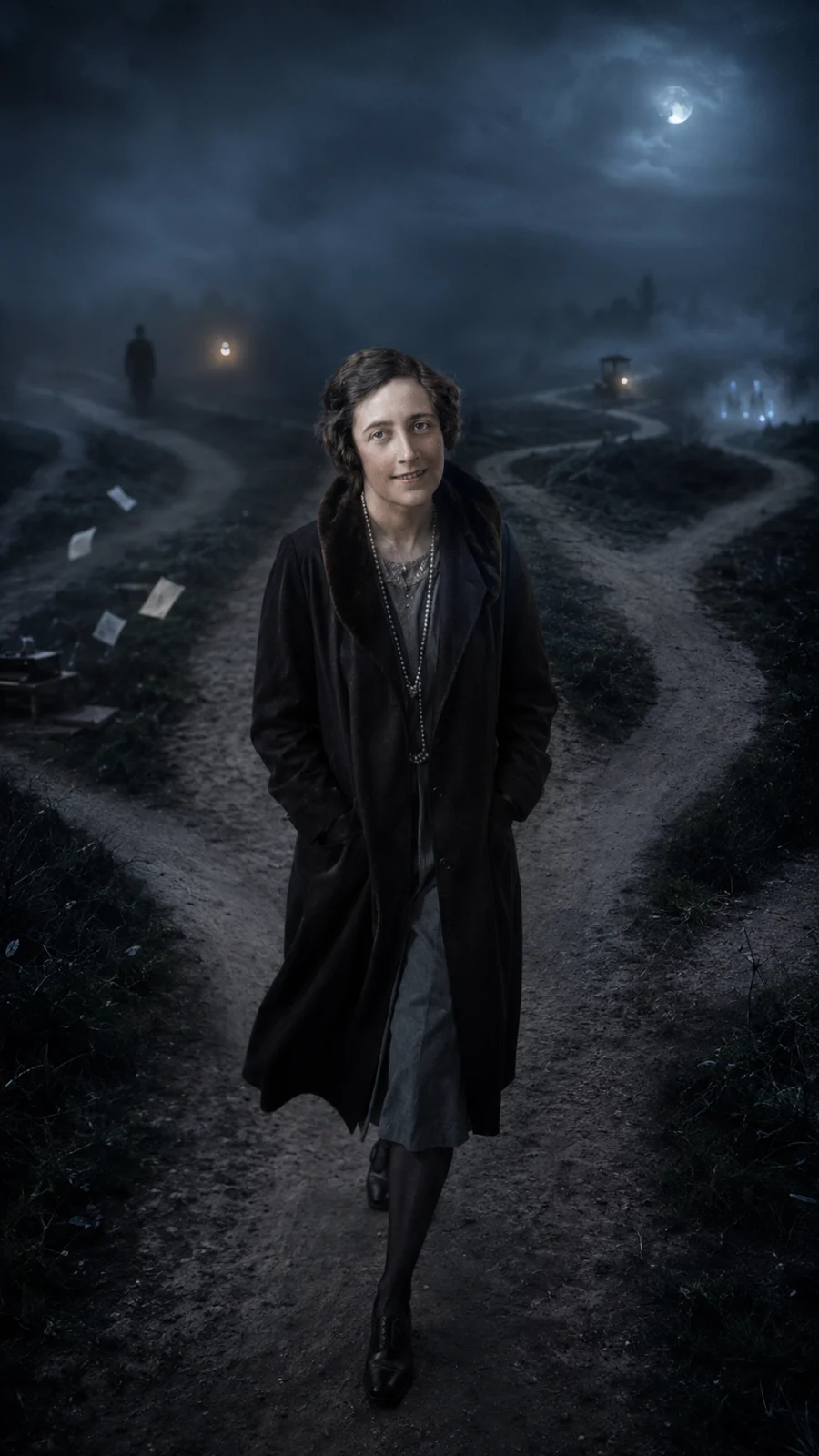
Christie published six novels under the name Mary Westmacott. They were not conventional romances. They explored frustration, guilt, emotional dependence, motherhood and the price of surrendering one’s own life.
The pseudonym allowed Christie to write without the expectations attached to the “Queen of Crime.” In Unfinished Portrait, published in 1934, a woman devastated by the collapse of her marriage contemplates suicide. Its closeness to Christie’s own crisis has led many biographers to regard it as one of her most personal works, although fiction should not be mistaken for literal confession (Thompson, 2007).
In her mysteries, pain could be organized through clues and deduction. As Westmacott, Christie wrote about wounds for which no detective could provide a solution.
War and two novels kept for the future
During the Second World War, Christie again volunteered in a hospital pharmacy. London was being bombed, and Max Mallowan was serving overseas.
In those uncertain circumstances, she wrote Curtain, Poirot’s final investigation, and also set aside Sleeping Murder, which would become the last published Miss Marple novel. She did not publish them immediately. The manuscripts were stored away for decades to provide financial security for her daughter Rosalind and for Mallowan if Christie failed to survive the war.
Curtain appeared in 1975, shortly before Christie’s death. Sleeping Murder was published posthumously in 1976. She had written the endings of her two great detectives while more than three decades of her own working life still remained (Christie, 1977; Agatha Christie Limited, n.d.).
The fictional poison that helped save lives
One of the lesser-known events in Christie’s legacy sounds as though it belongs in one of her novels.
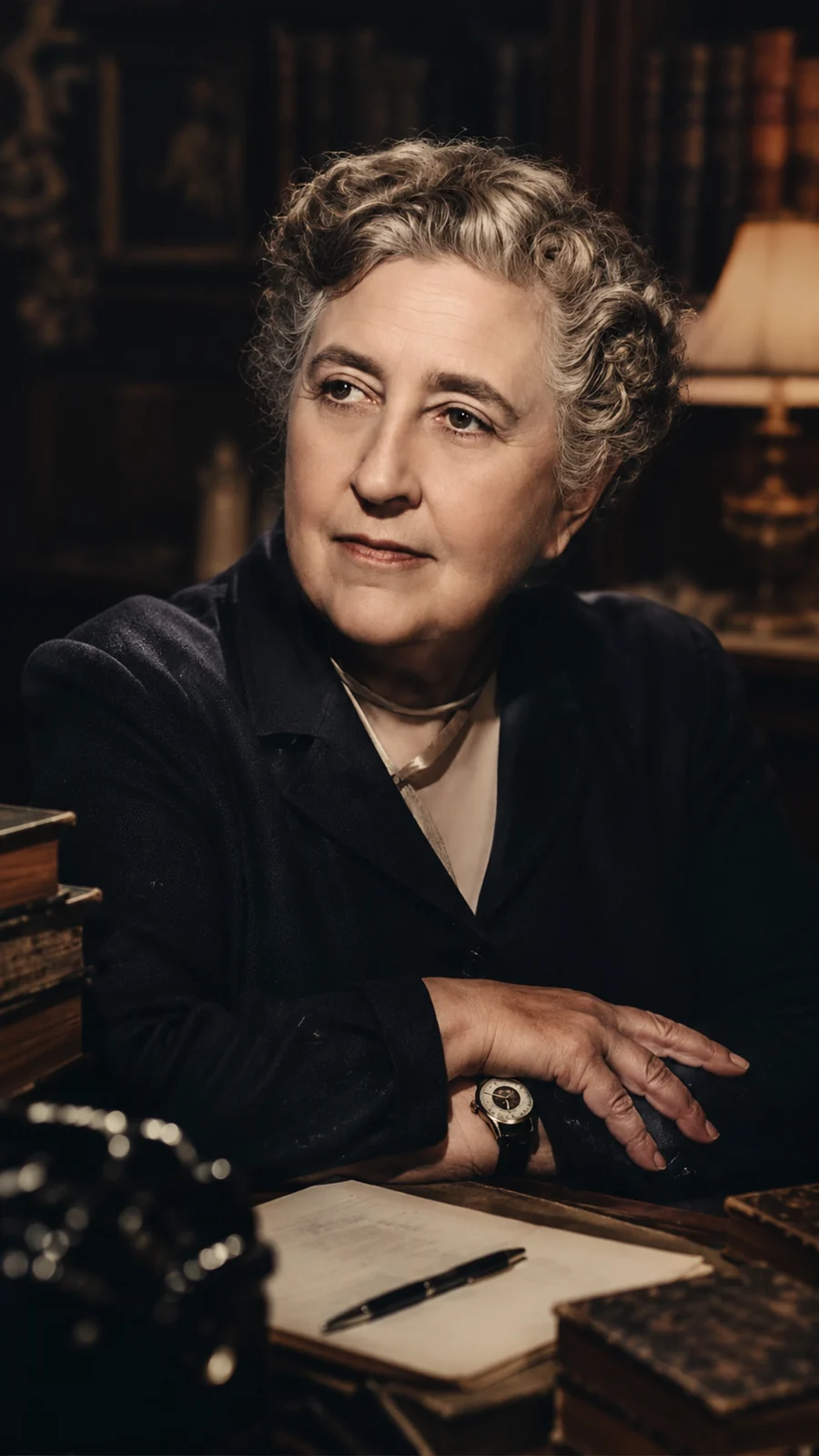
In The Pale Horse, published in 1961, Christie described the symptoms of thallium poisoning, including its characteristic hair loss. Her account was so accurate that it helped people recognize real cases.
In 1977, British nurse Marsha Maitland was caring for a critically ill child. Remembering Christie’s novel, she suggested that thallium might be responsible. Tests supported her suspicion, and the patient received treatment. Other doctors and readers reported cases in which the book similarly guided them toward the correct diagnosis (Harkup, 2015).
Knowledge Christie had acquired in a wartime dispensary had crossed the boundary of fiction and contributed, decades later, to saving lives.
The stage that spanned generations
The Mousetrap opened in 1952 after beginning as a radio play written at the request of Queen Mary. Christie did not expect it to remain onstage for long, yet it became the world’s longest continuously running play. The London run was suspended in March 2020 because of the pandemic and resumed in May 2021.
The play endured because it reproduces one of Christie’s essential mechanisms: it traps a group of strangers together, reveals that each has something to conceal and forces the audience to distrust every statement.
The writer behind the mask
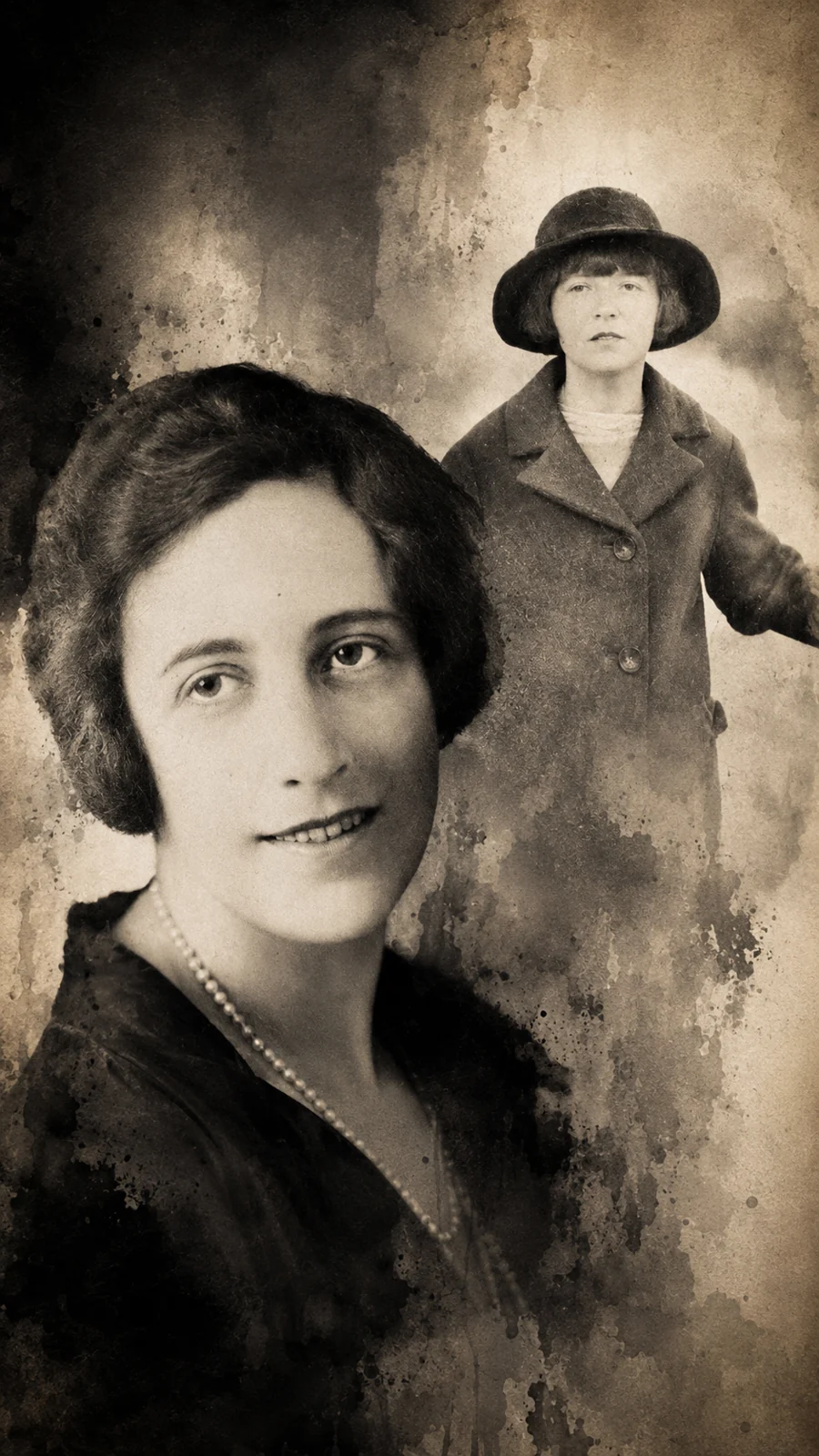
Agatha Christie was appointed Dame Commander of the Order of the British Empire in 1971. She died at her home at Winterbrook, near Wallingford, on January 12, 1976. She was eighty-five.
Her enormous success can obscure the complexity of her writing. Christie did not merely create puzzles. She wrote about families preserving grievances for decades, marriages that had become prisons, manufactured identities and communities determined to protect their respectable appearances.
She experienced bereavement, marital betrayal, public exposure and the disturbing discovery that other people’s rumors could replace her own version of events. After 1926, she rebuilt her life without giving the world the confession it demanded.
Perhaps this is the deepest wound running through her books: the knowledge that a person may live surrounded by others and remain fundamentally unknown.
In her novels, Poirot or Miss Marple gathers the suspects and restores order through an explanation. In life, Agatha Christie reserved the right to remain unexplained.
References
- Agatha Christie Limited. (n.d.). About Agatha Christie. View source
- Agatha Christie Limited. (2016). Book of the month: The Mysterious Affair at Styles. View source
- Agatha Christie Limited. (n.d.). The Pale Horse. View source
- Christie, A. (1977). An autobiography. Collins.
- Curran, J. (2009). Agatha Christie’s secret notebooks: Fifty years of mysteries in the making. HarperCollins.
- Harkup, K. (2015). A is for arsenic: The poisons of Agatha Christie. Bloomsbury Sigma.
- The Mousetrap. (n.d.). About Agatha Christie’s The Mousetrap. View source
- The National Archives. (n.d.). Police report on the disappearance of Agatha Christie. View source
- Thompson, L. (2007). Agatha Christie: An English mystery. Headline Review.