
Antonio Canova and the Statue of Napoleon That Ended Up in the Home of the Man Who Defeated Him
Napoleon commissioned a statue intended to glorify his power. He rejected it when he saw the finished work. Years later, that colossal image of the emperor ended up in the home of one of the men who defeated him.
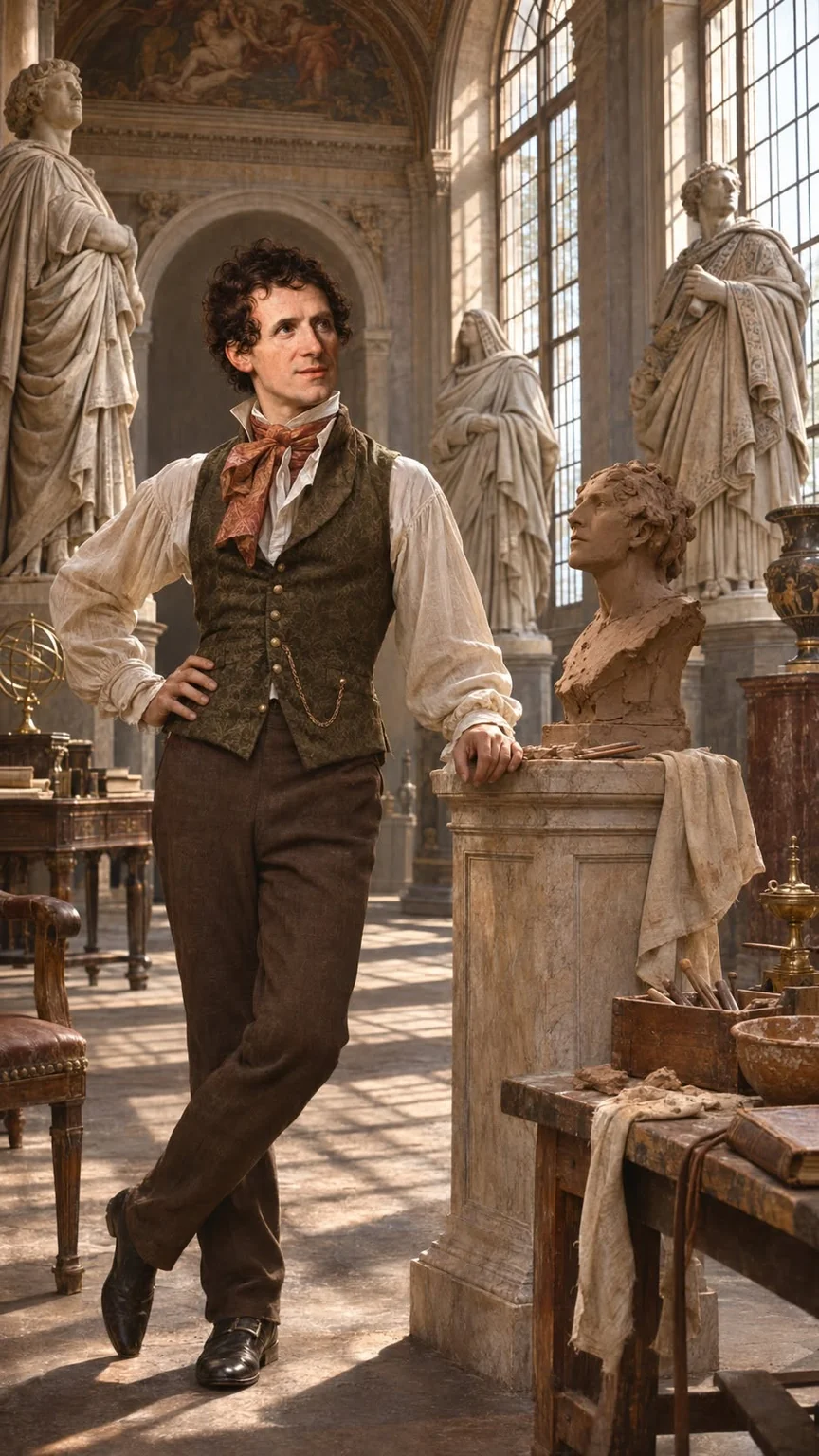
A ruler transformed into a god
In 1802, Napoleon Bonaparte was still First Consul of France and wanted to consolidate his image as a ruler, military victor, and protector of peace. To portray him, he chose Europe’s most celebrated sculptor: Antonio Canova.
Canova traveled to France and studied Napoleon’s face. But he did not intend to produce merely a portrait in military uniform. He wanted to transform his subject into a hero of antiquity.
The sculptor represented him as Mars, the Roman god of war, in the role of a peacemaker. The paradox lay in the title itself: military power was presented as the guarantor of peace.
Napoleon is nude, following the tradition of the heroic nude in classical sculpture. In one hand he holds a spear; in the other, a globe crowned by a small winged figure of Victory. His sword rests to one side, as though Mars no longer needed to fight.
The marble statue stood more than three meters tall. Canova worked on it for several years and completed it in 1806.
The result did not reproduce Napoleon’s actual body. It presented a tall, muscular figure shaped according to Greco-Roman ideals of beauty. For the sculptor, raising a contemporary ruler to the status of myth required something beyond reproducing his everyday appearance.
“Too athletic”
The sculpture took several years to reach Paris. When it was finally presented to Napoleon in 1811, the emperor did not react as Canova had hoped. He considered it “too athletic.”
That phrase captures a clash between two ways of constructing a public image. Canova had chosen the language of the idealized body and ancient mythology. Napoleon did not accept the result.
The distance between the man and his representation was unmistakable. The marble proposed timeless youth and physical perfection: not a uniform, a campaign, or a political office, but the presence of an ancient god.
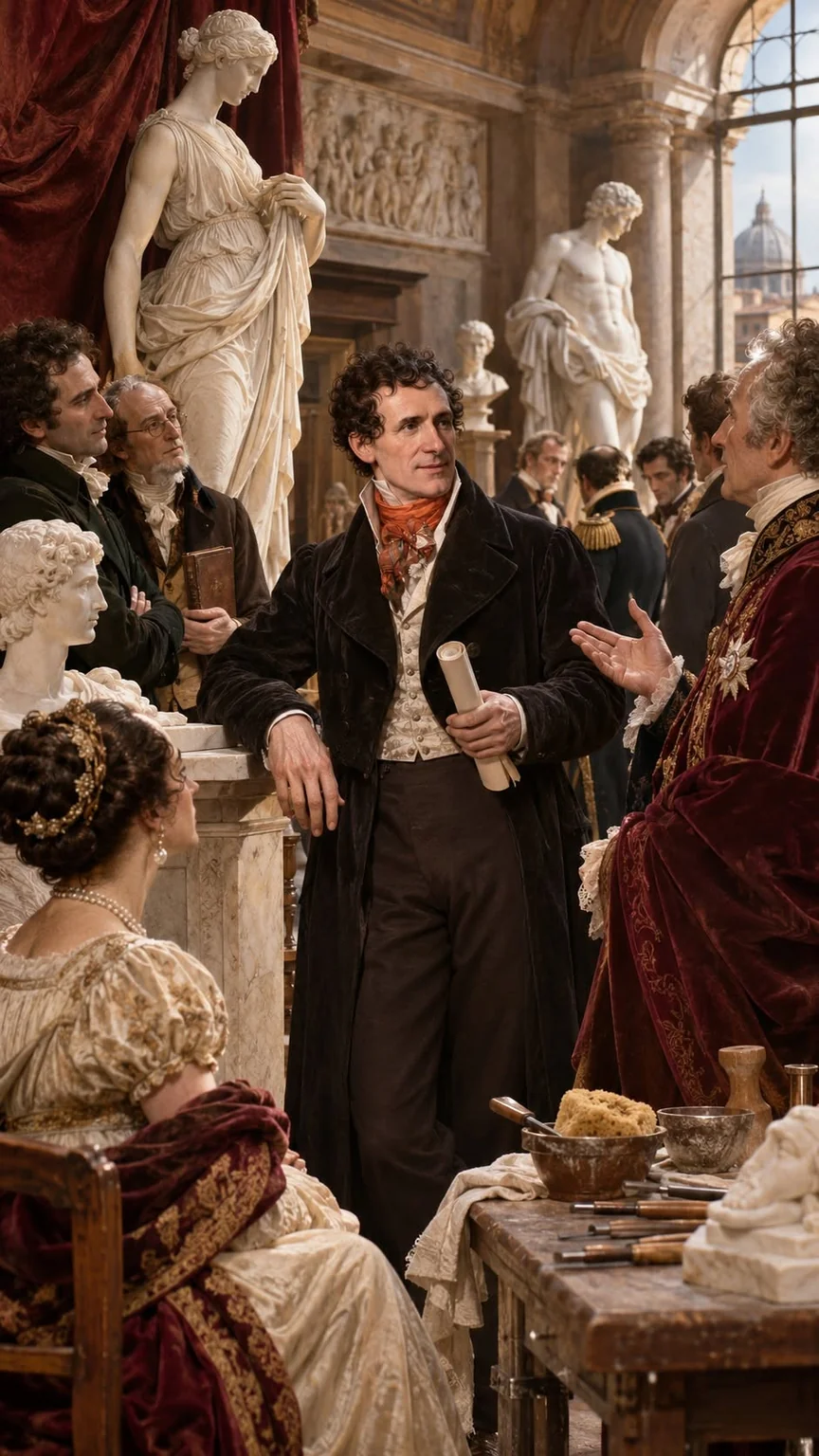
What can be established is that the monumental statue intended to exalt him was not publicly displayed as planned. The image of a victorious Mars was set aside while its subject still ruled.
A gift for Wellington
After Napoleon’s defeat at Waterloo in 1815, the allied armies entered Paris. Claims began for the return of artworks removed by France during the Napoleonic Wars, while the restored monarchy sought to remove images of Bonaparte from royal residences.
Following negotiations, the British government purchased the sculpture. In 1816, the Prince Regent—the future George IV—presented it to the Duke of Wellington.
Wellington had commanded the allied army that fought Napoleon at Waterloo, where the intervention of Blücher’s Prussian army was also decisive. Victory had not been the achievement of a single man, but the duke became one of its greatest symbols.
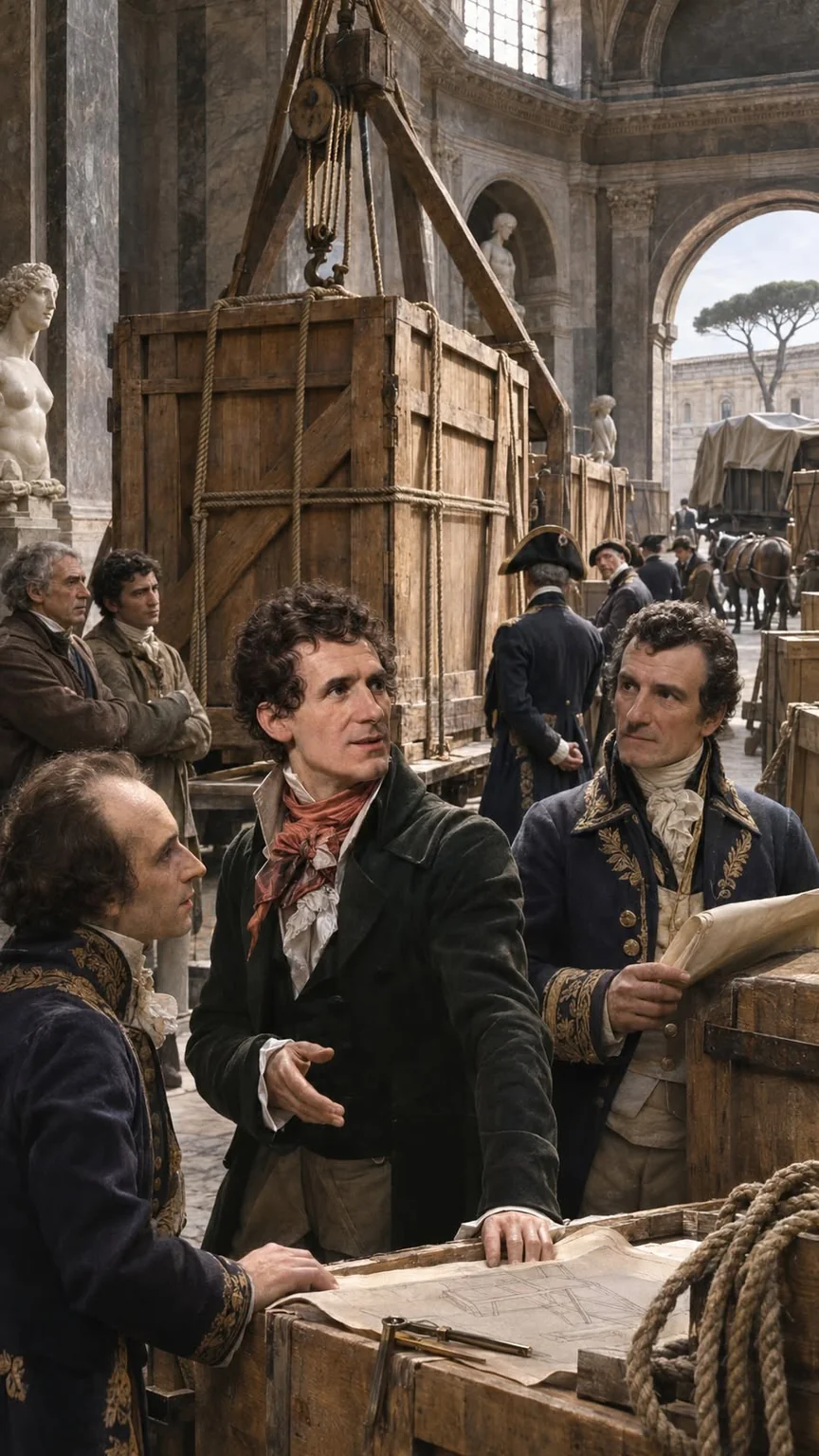
The irony was difficult to miss. The naked emperor, represented as a god imposing peace, passed into the possession of one of his victors. The sculpture had changed owners, and its meaning had changed with them.
A colossus above the wine cellar
The statue was installed at Apsley House, beside Hyde Park, the London residence Wellington purchased in 1817. Its destination posed a problem far more material than imperial vanity: its enormous weight.
The suitable position was at the foot of the grand staircase, but the wine cellar lay beneath it. The structure had to be strengthened to support the colossus. The image conceived to hold the world symbolically needed a floor capable of holding it.
Napoleon has remained there ever since, carrying the globe and Victory in a house inseparable from Wellington’s memory. The work outlived the emperor, Canova, and the duke himself, and remains part of the Apsley House collection.
Napoleon wanted to use Canova’s talent to build his legend. He rejected the idealized figure he received. In the end, the sculpture told another story: that of a ruler whose monumental image ended up in the residence of a man who had helped defeat him.
Would you have displayed the statue, or hidden it too?
Read the full story of Antonio Canova
Sources
- English Heritage — Apsley House Collection Highlights. View source
- The Wellington Collection — Napoleon as Mars the Peacekeeper. View source
- English Heritage — History of Apsley House. View source
- National Army Museum — Battle of Waterloo. View source