
In this storyOpen index
Ava Gardner: The Woman Hollywood Turned into a Legend Before Hearing Her Voice
Ava Gardner beyond the legend: her discovery by MGM, her film career, her years in Spain, and her support for civil rights.
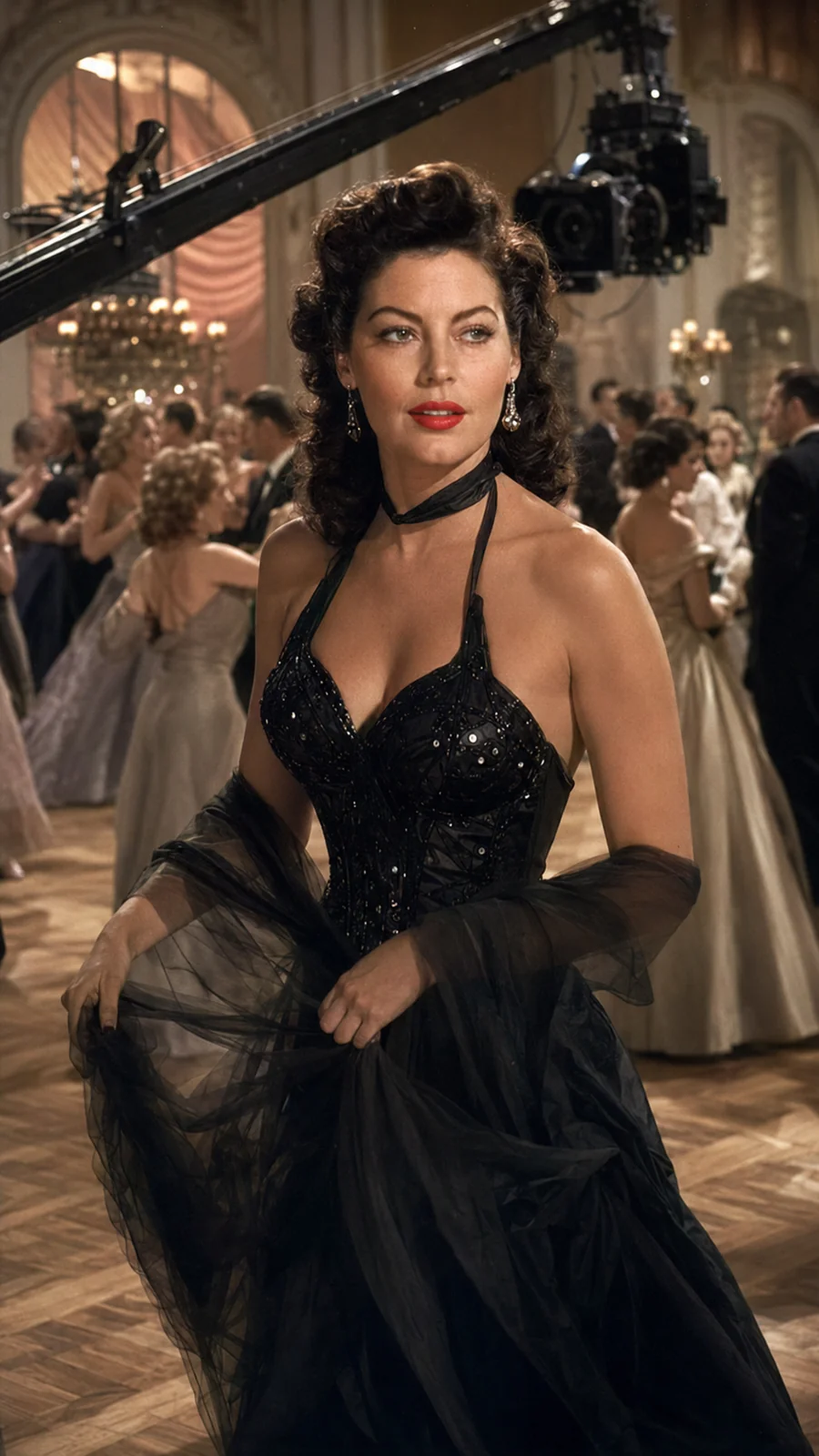
Hollywood discovered her face first and only afterward attempted to determine what it could do with the woman behind it.
Before traveling to Hollywood in 1941, Ava Gardner attended an MGM screen test in New York. According to the Ava Gardner Museum, the studio representative struggled to understand her North Carolina accent. Their solution was simple and cruelly revealing: they filmed her without sound. They did not need to hear her. Looking at her was enough.
For years, the studio presented her as an exotic, dangerous, almost uncontrollable beauty. Behind that publicity construction, however, was a shy woman raised in poverty, uncertain about her talent, and far more conscious of her country’s injustices than her “love goddess” image suggested.
Gardner became one of the most magnetic figures of classical cinema. She also paid for that image through broken marriages, a private life turned into public entertainment, and a career in which her beauty frequently mattered more than her ability to act.
Ava Gardner
The woman behind the legend
Her NAACP lifetime membership certificate
The Ava Gardner Museum preserves the certificate dated August 1968. Her $500 contribution documents a commitment often left out of accounts of her films and marriages.
The Girl Who Preferred Walking Barefoot
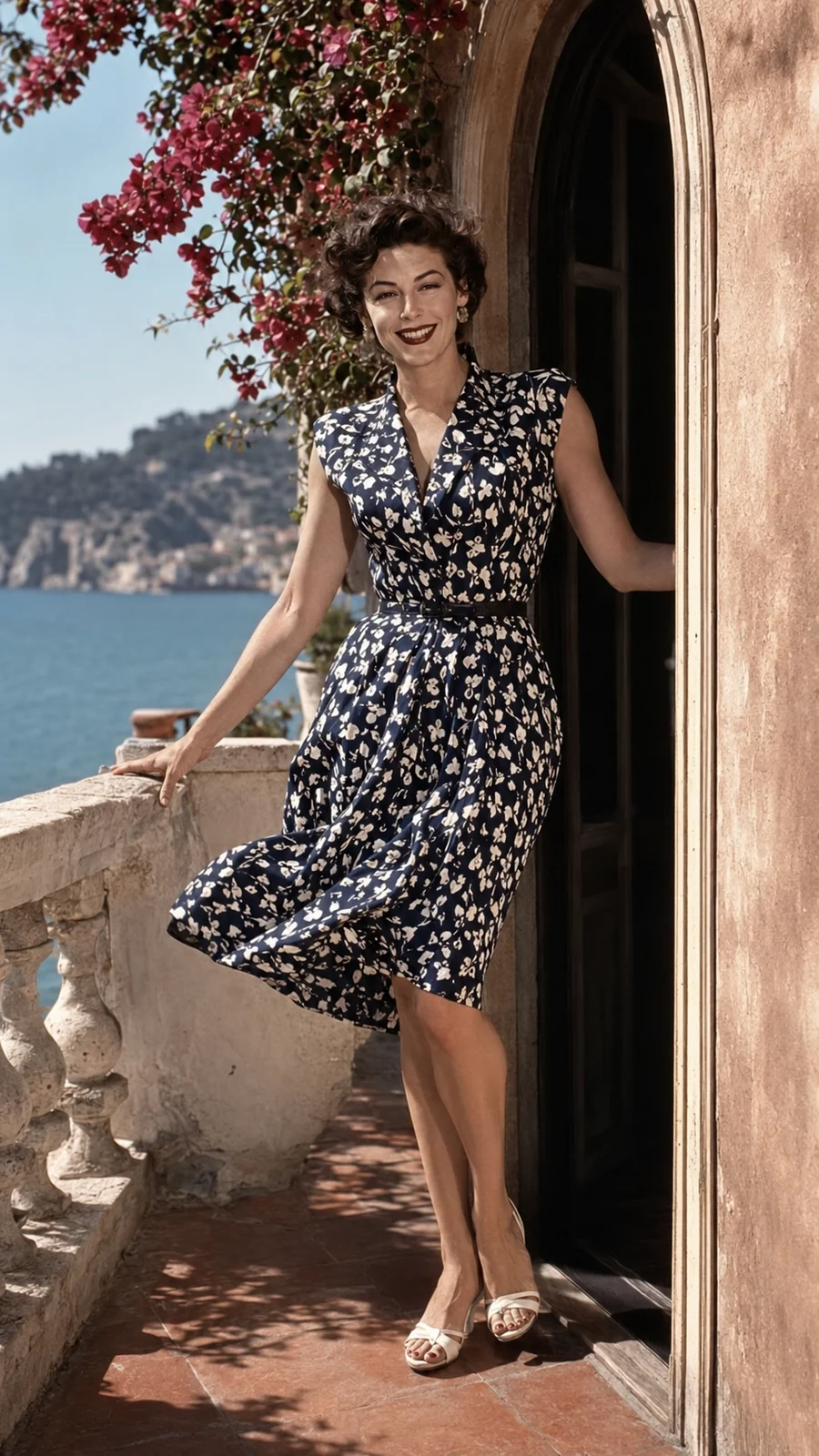
Ava Lavinia Gardner was born on December 24, 1922, in Grabtown, a small rural community near Smithfield, North Carolina. She was the youngest of the seven children of Jonas and Mary Elizabeth “Mollie” Gardner.
The family cultivated tobacco and cotton. A fire in 1925 and the later hardships of the Great Depression led to successive moves. Mollie managed boarding houses to help support the family.
Ava grew up amid economic hardship but retained a powerful connection to the countryside. Her rural upbringing would later contrast with the sophistication MGM tried to teach her.
Her father became ill while the family was living in Newport News, Virginia, and died in 1938. Ava was fifteen. After his death, her mother returned to North Carolina with the children and managed another boarding house for teachers.
Gardner graduated from high school and began taking secretarial courses at Atlantic Christian College, now Barton College. Nothing suggested a future in motion pictures. She had no formal training in acting, singing, or dancing. Her entrance into Hollywood began with a photograph displayed in a studio window.
The Photograph That Reached MGM
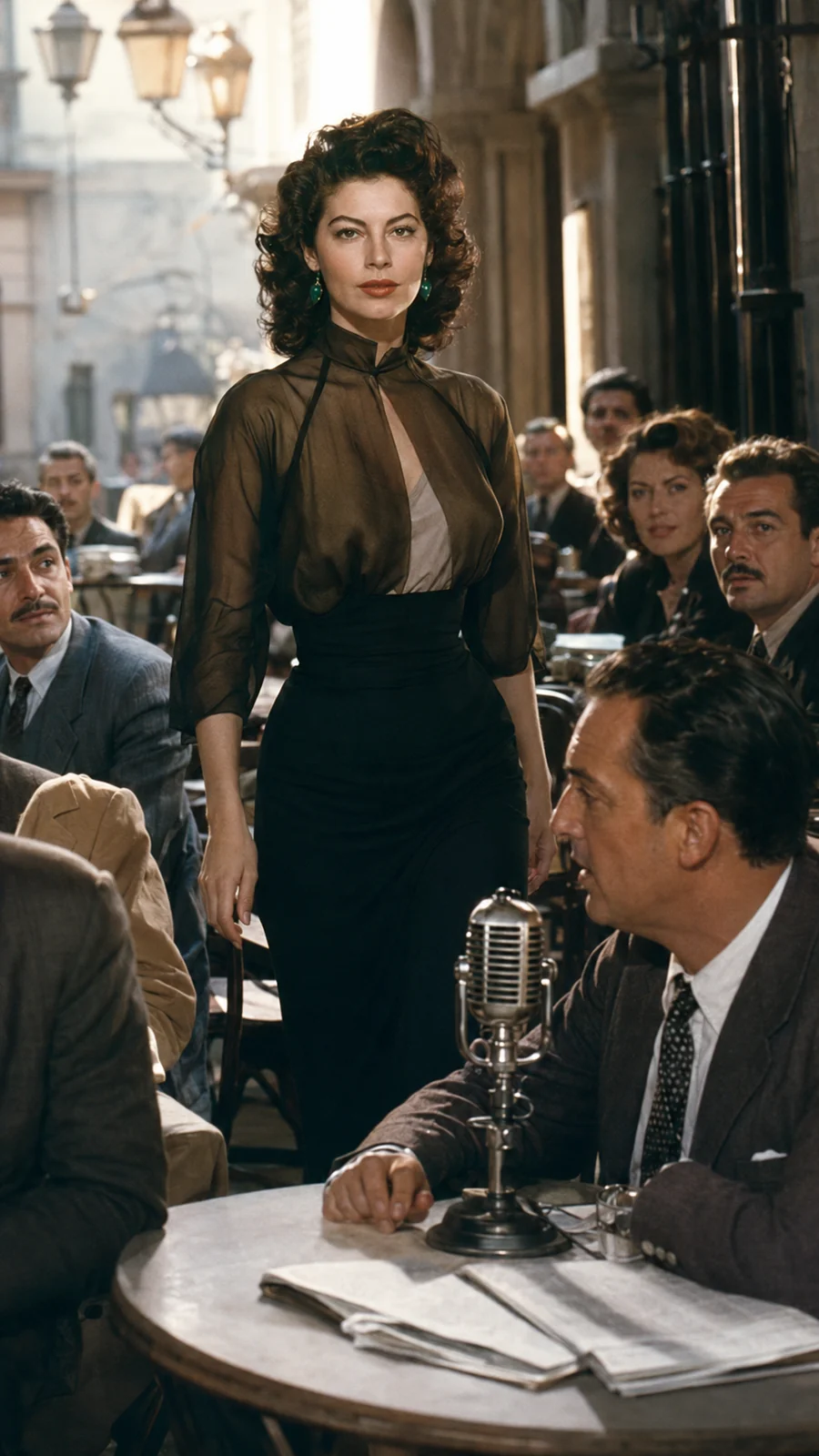
The museum dates Ava’s visit to her older sister Beatrice, known as “Bappie,” and Bappie’s husband, photographer Larry Tarr, in New York to the summer of 1939. Impressed by his sister-in-law’s beauty, Tarr made several portraits and displayed one in the window of his Fifth Avenue studio.
The photograph attracted the attention of Barnard Duhan, an employee in the legal department of Loews Theatres, the company connected to MGM. Duhan attempted to obtain Ava’s telephone number by presenting himself as someone who could introduce her to the studio. The receptionist refused to give him her number. Larry and Bappie then prepared prints, which Tarr delivered to MGM’s New York office.
The studio requested a screen test.
According to the museum, Marvin Schenck proposed a silent screen test after hearing her read a script. The footage was sent to Hollywood and helped secure MGM’s contract offer.
MGM offered Gardner a contract in 1941. Because she was only eighteen and her mother refused to allow her to travel alone, Bappie accompanied her to California (North Carolina Department of Natural and Cultural Resources, 2016).
The episode is often presented as a fairy tale: an unknown girl, a photograph, and a movie contract. In reality, the test anticipated the conflict that would shape Gardner’s career. Hollywood selected her for her appearance before determining whether she could act and began constructing a personality that did not necessarily resemble her own.
A Star Who Took Five Years to Appear
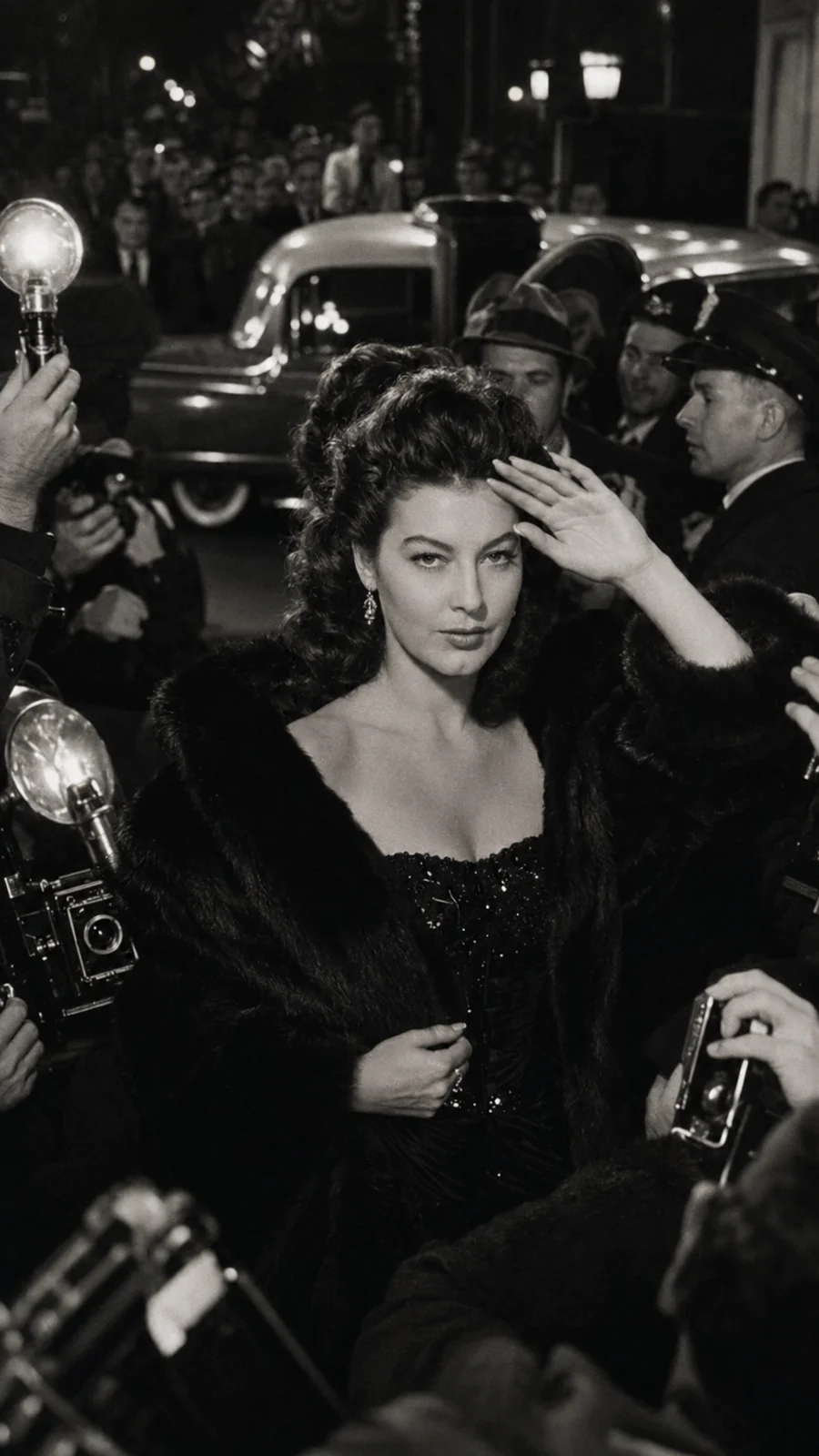
MGM did not know what to do with her. Gardner spent her first years studying diction, acting, and movement while appearing in small roles, many of them uncredited.
The studio attempted to neutralize her Southern accent, alter her speech, and teach her how a movie star should behave. The young woman who had walked barefoot through North Carolina had to learn to embody Hollywood’s manufactured ideal of female sophistication.
Between 1941 and 1945, she appeared in numerous productions without receiving a role that revealed her personality. Her opportunity came outside MGM when she was loaned to Universal to play Kitty Collins in The Killers (1946), directed by Robert Siodmak and starring Burt Lancaster.
Kitty was seductive, mysterious, and destructive. In her most memorable entrance, she appeared dressed in black while singing at a party. The film made Gardner a star and established the type of character audiences would associate with her: a woman whose beauty could lure men toward destruction.
Gardner was not Kitty Collins. The press rarely cared about the distinction.
Three Marriages and a Life Turned into Entertainment
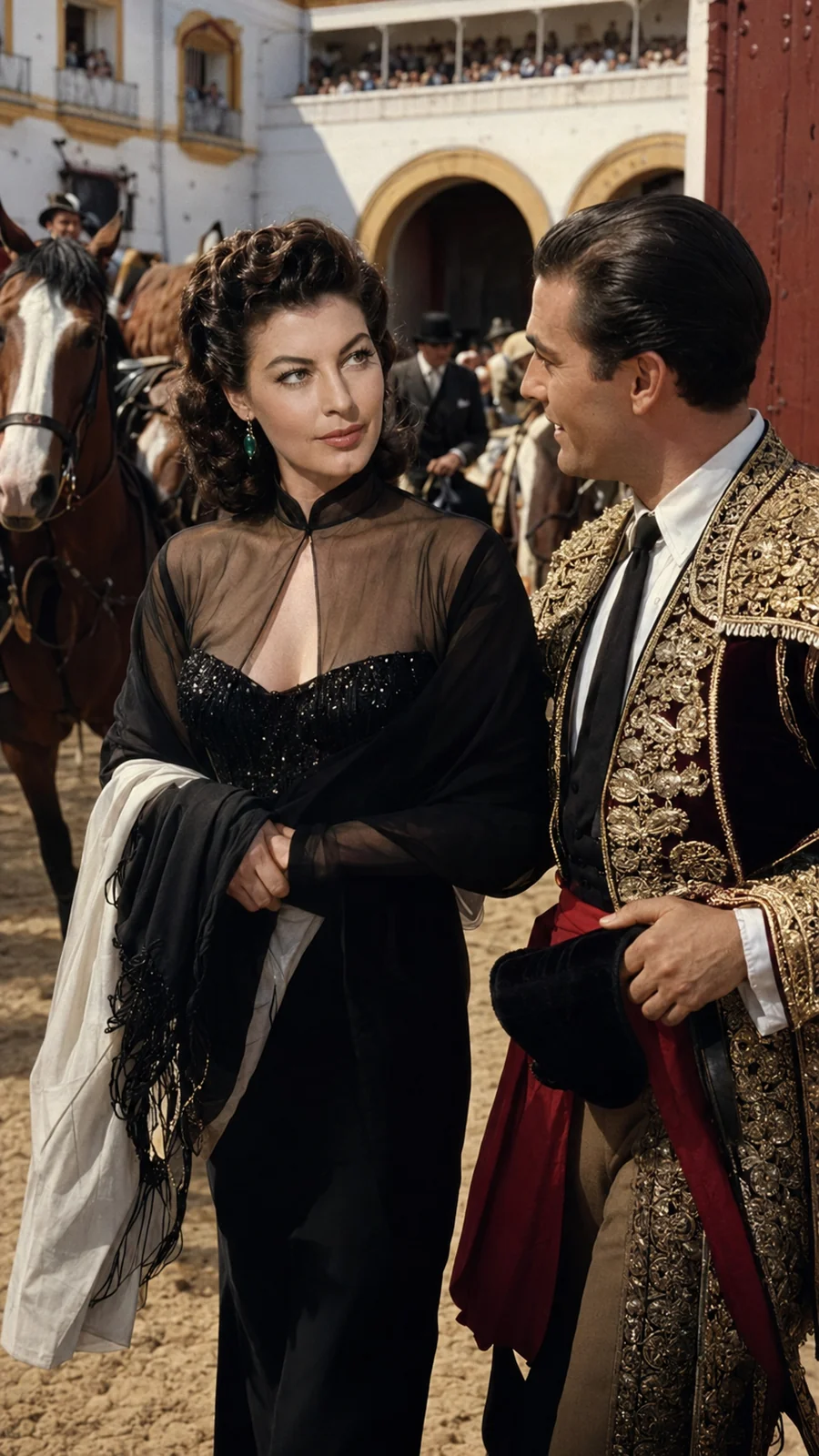
Gardner met Mickey Rooney shortly after arriving in Hollywood. They married on January 10, 1942, when he was twenty-one and she was nineteen.
Their marriage drew public attention, and the couple were photographed at Hollywood parties and nightclubs. The relationship was brief. Gardner later described Rooney’s infidelities and behavior as decisive reasons for its failure. They divorced in 1943.
In 1945, she married musician and bandleader Artie Shaw. Gardner admired his intelligence but eventually felt intellectually inferior and perpetually judged. Their marriage ended in 1946.
Her most famous relationship was with Frank Sinatra. When their romance began, Sinatra was still married to Nancy Barbato, the mother of his three children. The scandal brought relentless attacks from the press, religious organizations, and Hollywood columnists.
Gardner and Sinatra married in November 1951, only days after his divorce was completed. Their attraction was intense, but so were their jealousy, arguments, separations, and exposure to the press.
It is often claimed that Gardner personally secured Sinatra’s role as Angelo Maggio in From Here to Eternity (1953), the performance that revived his career and won him an Oscar. She supported his efforts and used her contacts to help him, but no solid evidence demonstrates that she single-handedly forced Columbia Pictures to cast him. The story has become entangled with the popular legend that inspired a scene in The Godfather.
Gardner and Sinatra separated in 1953, although their divorce was not finalized until 1957. They remained in contact for decades. Reducing their relationship to a passionate romance conceals a history of emotional dependency, mutual damage, and persistent affection that neither could transform into a stable marriage (Ava Gardner Museum, n.d.-a).
The Actress Who Emerged from Behind the Beauty
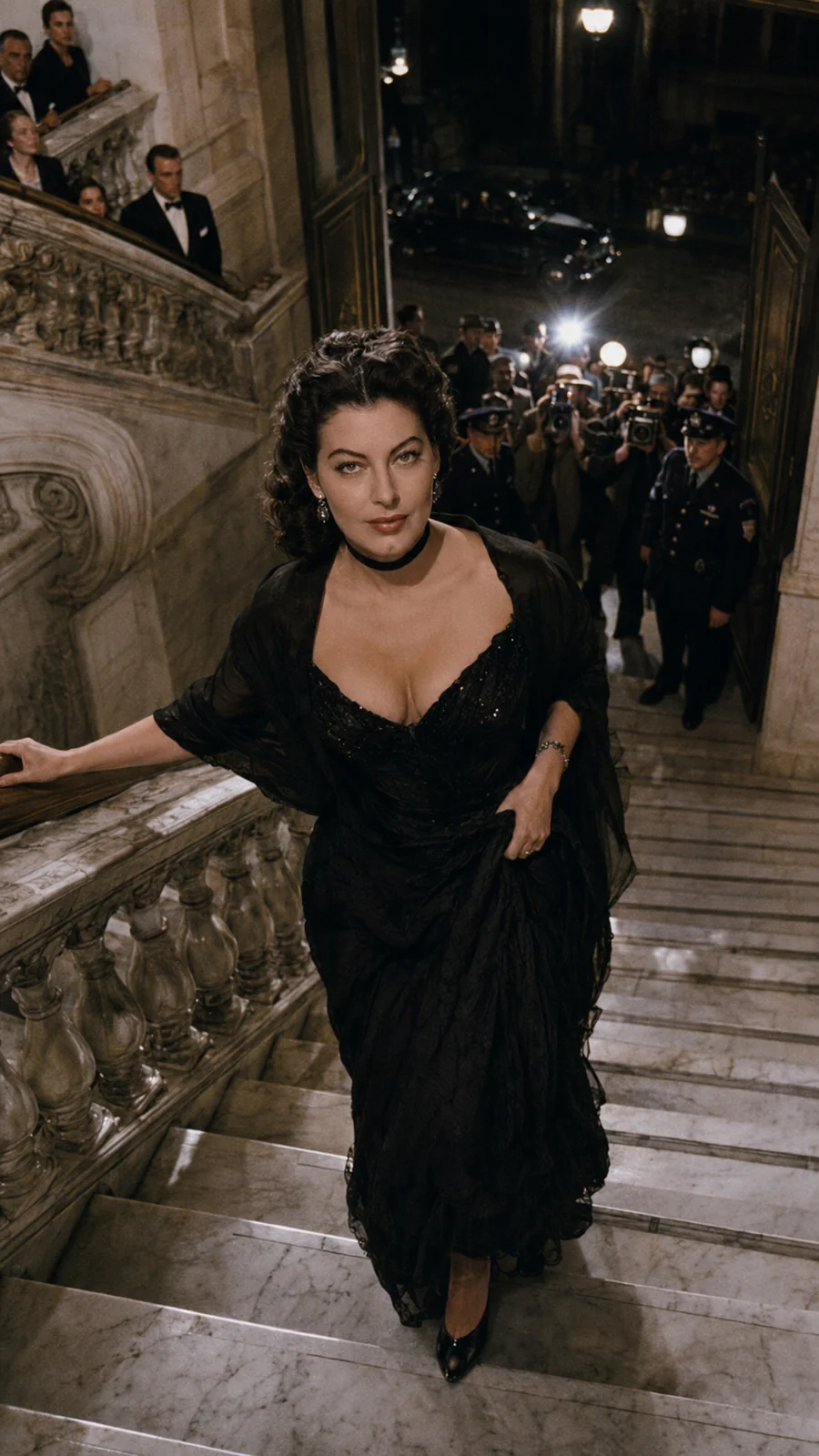
During the 1950s, Gardner began receiving more demanding roles. In Pandora and the Flying Dutchman (1951), she played a singer trapped in a story of desire and fatality. Filmed partly in Tossa de Mar, it began her profound connection with Spain.
She worked with Gregory Peck in The Snows of Kilimanjaro (1952). The following year, John Ford directed her in Mogambo, alongside Clark Gable and Grace Kelly.
Her performance as Eloise “Honey Bear” Kelly—a lively woman concealing vulnerability beneath humor and provocation—earned Gardner her only Academy Award nomination for Best Actress, at the 1954 ceremony. She did not win, but the nomination demonstrated that she could offer something more complex than the sensuality MGM’s publicity department had constructed around her (Ava Gardner Museum, 2023; Academy of Motion Picture Arts and Sciences, n.d.).
In Joseph L. Mankiewicz’s The Barefoot Contessa (1954), she played Maria Vargas, a Spanish dancer transformed into a film star whose life is controlled by powerful men. The story seemed to reflect Gardner’s own experience with unsettling accuracy: a woman of humble origins turned into an international object of desire, unable to find freedom within the world that created her.
Her mature work emerged in films such as On the Beach (1959), a drama about the last survivors of nuclear war; The Night of the Iguana (1964), John Huston’s adaptation of Tennessee Williams; and Seven Days in May (1964), a political thriller in which she portrayed a woman scarred by a destructive relationship.
As time passed, Gardner’s face acquired the fatigue and experience the studios had attempted to hide during her youth. Paradoxically, the further she moved from the ideal of perfect beauty, the greater the emotional depth she could display as an actress.
Spain: Personal Freedom Under a Dictatorship
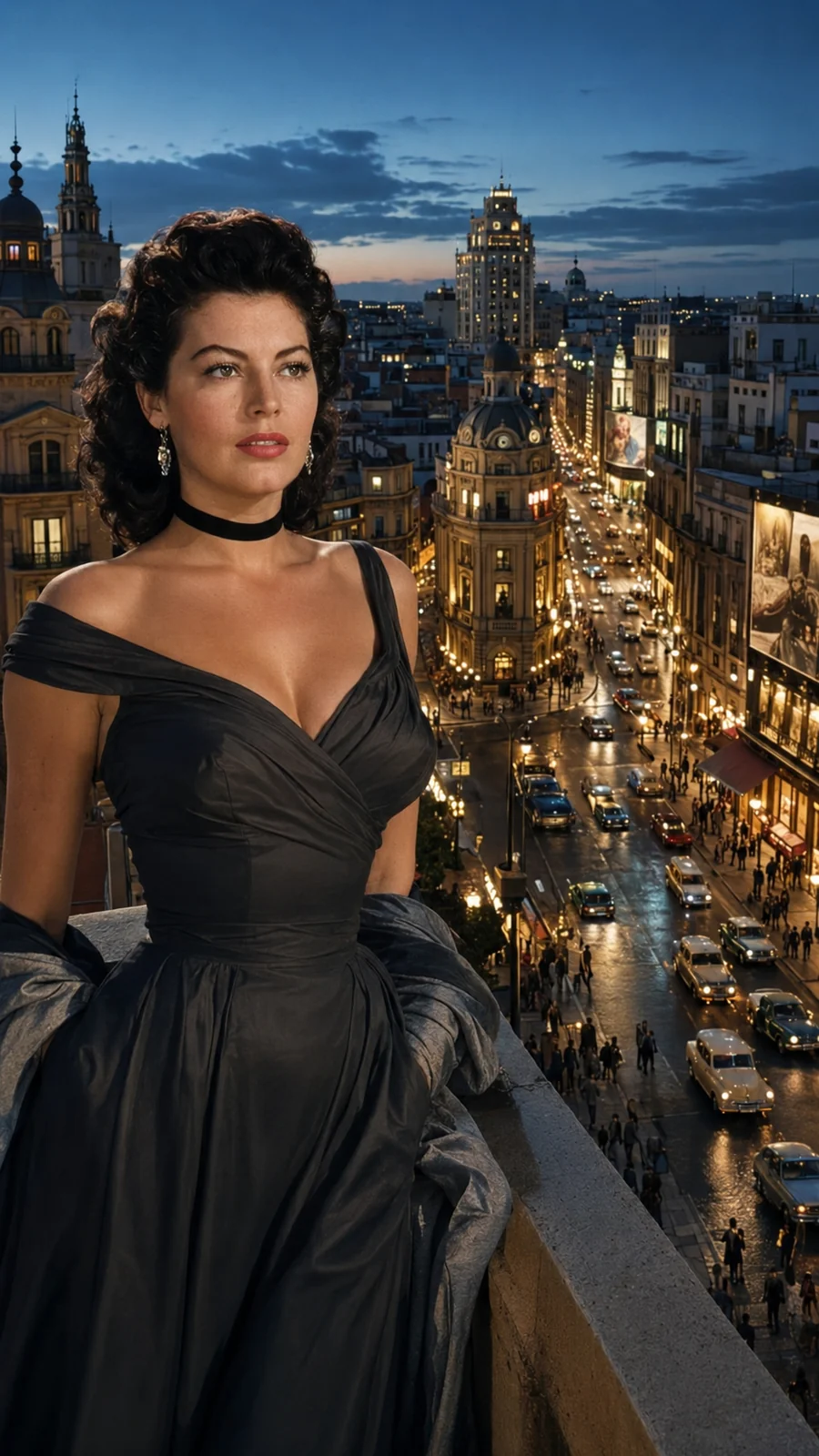
Gardner moved to Madrid in 1955, partly to escape Hollywood, the press, and the collapse of her marriage to Sinatra. She fell in love with Spanish music, late-night cafés, flamenco, and bullfighting. She had relationships with bullfighters, including Luis Miguel Dominguín, and became friends with Ernest Hemingway.
The image of Ava moving through Madrid’s nightlife became legendary. Neighbors and biographers described extended parties, music, alcohol, and fast cars. Her years in Spain, however, contained a profound contradiction.
Gardner sought personal freedom in a country ruled by Francisco Franco’s dictatorship. As a wealthy foreign celebrity, she enjoyed a degree of independence unavailable to much of the Spanish population. That contradiction does not invalidate her love for Spain, but it prevents those years from being treated as a simple romantic adventure (Miller, 2019).
In Madrid, she could partly escape the studio machinery, but she could not escape her own image. She remained Ava Gardner even when she wanted to become an anonymous woman seated at a quiet table.
The Commitment That Did Not Fit Her Legend
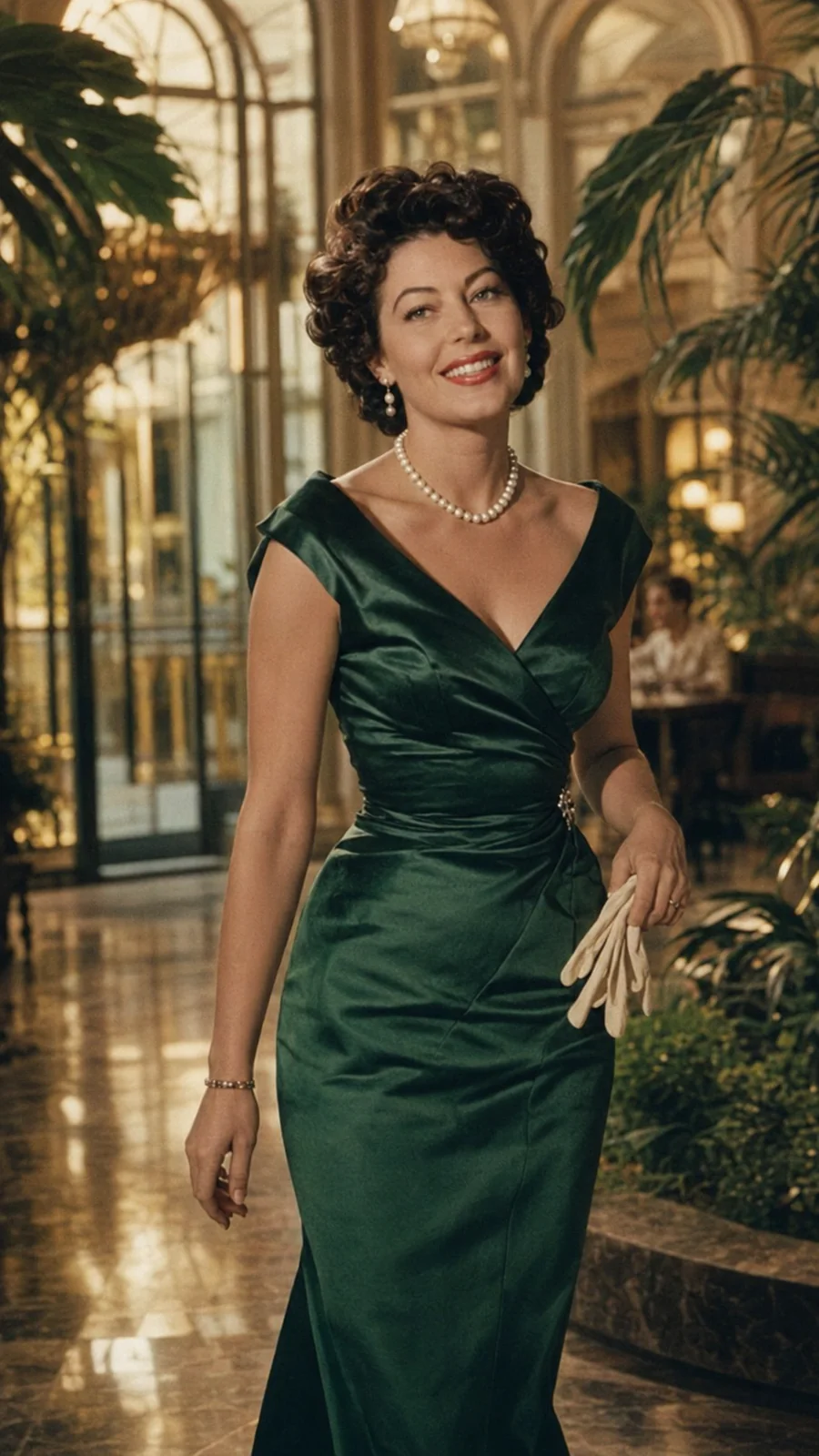
One of the lesser-known aspects of Gardner’s life was her support for the African American civil rights movement.
Gardner had grown up in the segregated American South. Her political position, however, moved against that system. She supported progressive causes, formed friendships with Black performers such as Lena Horne, and rejected racial restrictions intended to determine where her companions could enter or sit.
In 1968, she became a lifetime member of the National Association for the Advancement of Colored People by contributing $500. In 1969 she co-chaired a fundraiser for the Free Southern Theatre, which brought free theater to mostly Black communities in the rural South (Ava Gardner Museum, 2020).
The detail matters because Gardner rarely used politics to improve her public image. Her commitment received nothing like the publicity devoted to her marriages, romances, and parties. For the media, presenting her as a fatal beauty was more profitable than describing a white Southern movie star who rejected segregation.
This aspect of her life reveals someone beyond MGM’s invented character. The woman supposedly interested only in love, alcohol, and adventure also made moral choices that contradicted the society in which she had been raised.
London and the Slow Fading of a Star
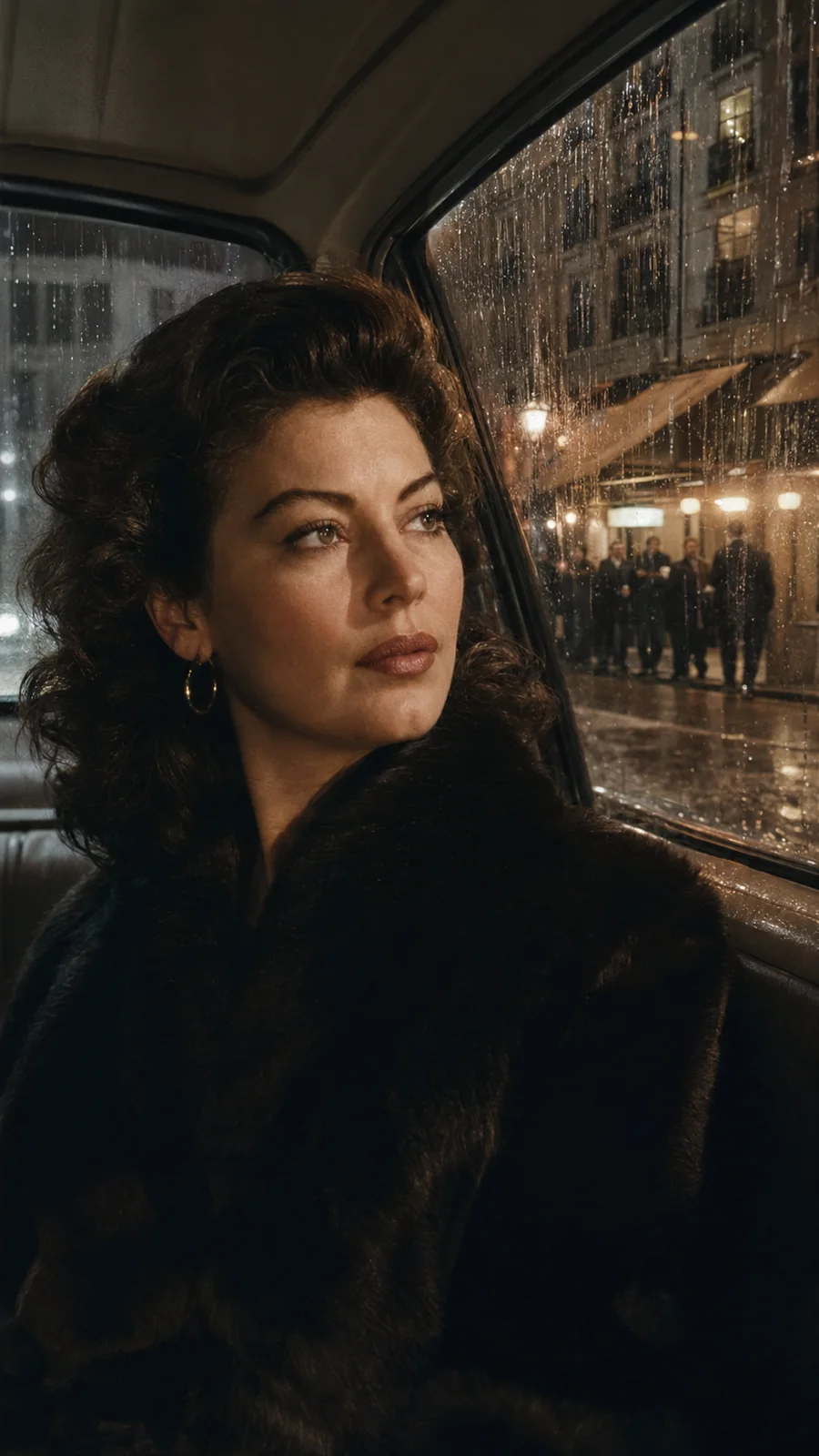
In 1968, Gardner left Spain and settled in London. According to her museum’s biography, she was seeking a quieter, more private life.
She continued working in film and television, appearing in productions such as The Life and Times of Judge Roy Bean (1972), Earthquake (1974), The Cassandra Crossing (1976), and the television series Knots Landing during the 1980s.
Alcohol and decades of smoking damaged her health. In 1986, she suffered a stroke that weakened the left side of her body. Even while partially paralyzed, she attempted to maintain her independence inside her London apartment.
Gardner died of pneumonia on January 25, 1990, at the age of sixty-seven. She was buried at Sunset Memorial Park near Smithfield beside her parents and siblings. After almost half a century away, she had chosen to return to the North Carolina landscape from which Hollywood had taken her (Ava Gardner Museum, n.d.-a).
The Woman Behind the Photograph
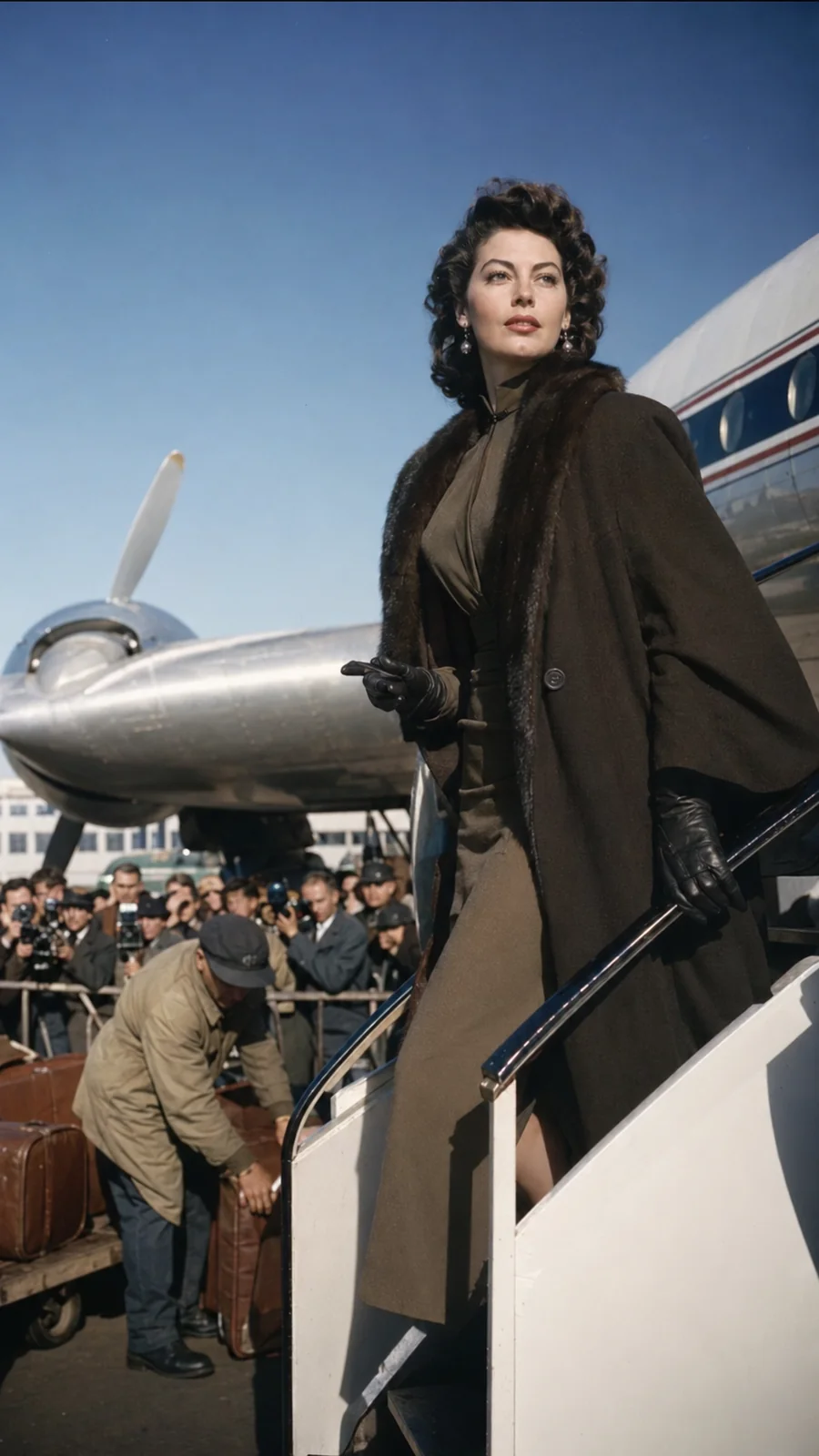
Ava Gardner’s story is frequently narrated through the men who loved her: Mickey Rooney, Artie Shaw, Frank Sinatra, Howard Hughes, bullfighters, actors, and writers. But telling her life that way repeats the very mechanism that restricted her career.
Gardner existed before and beyond them.
She was an untrained young woman who learned in front of the camera; an actress forced to struggle against the publicity character designed around her body; a woman who abandoned Hollywood while still one of its most recognizable stars; and a celebrity who preferred living far from the country that had turned her into a commodity.
She never appeared to believe completely in her own talent. Her statements contain a mixture of humor, insecurity, and contempt for the industry that elevated her. That insecurity was encouraged by a system that first hired her without listening and then insisted that her greatest value was being watched.
The camera nevertheless captured something MGM could not manufacture. In her finest performances, Gardner communicated weariness, pride, desire, defiance, and a sadness that seemed to exist before any particular character.
Hollywood saw a perfect face. Time revealed a far more interesting woman: contradictory, vulnerable, politically conscious, and capable of leaving the places where everyone wanted to possess her.
Ava Gardner shone too brightly because the industry turned her life into fuel for its own legend. Yet even within that blinding light, she preserved something the studios never completely controlled: the decision to walk away.
References
Academy of Motion Picture Arts and Sciences. (n.d.). The 26th Academy Awards | 1954. https://www.oscars.org/oscars/ceremonies/1954
Ava Gardner Museum. (2020, February 13). Celebrating Black History Month at the Ava Gardner Museum. https://www.johnstoncountync.org/ava-gardner/blog/post/celebrating-black-history-month-at-the-ava-gardner-museum/
Ava Gardner Museum. (2023, March 7). Adventure and acclaim: Ava Gardner in Mogambo. https://www.johnstoncountync.org/ava-gardner/blog/post/adventure-acclaim-ava-gardner-in-mogambo/
Ava Gardner Museum. (n.d.-a). Ava’s life story. https://www.johnstoncountync.org/ava-gardner/avas-life/
Ava Gardner Museum. (n.d.-b). Ava Gardner frequently asked questions. https://www.johnstoncountync.org/ava-gardner/avas-life/ava-gardner-faqs/
North Carolina Department of Natural and Cultural Resources. (2016, December 24). Ava Gardner born. https://www.dncr.nc.gov/blog/2016/12/24/ava-gardner-born
Miller, F. (2019, August 8). Ava Gardner, the gypsy of Hollywood. Turner Classic Movies. https://www.tcm.com/articles/1525970/ava-gardner-the-gypsy-of-hollywood